
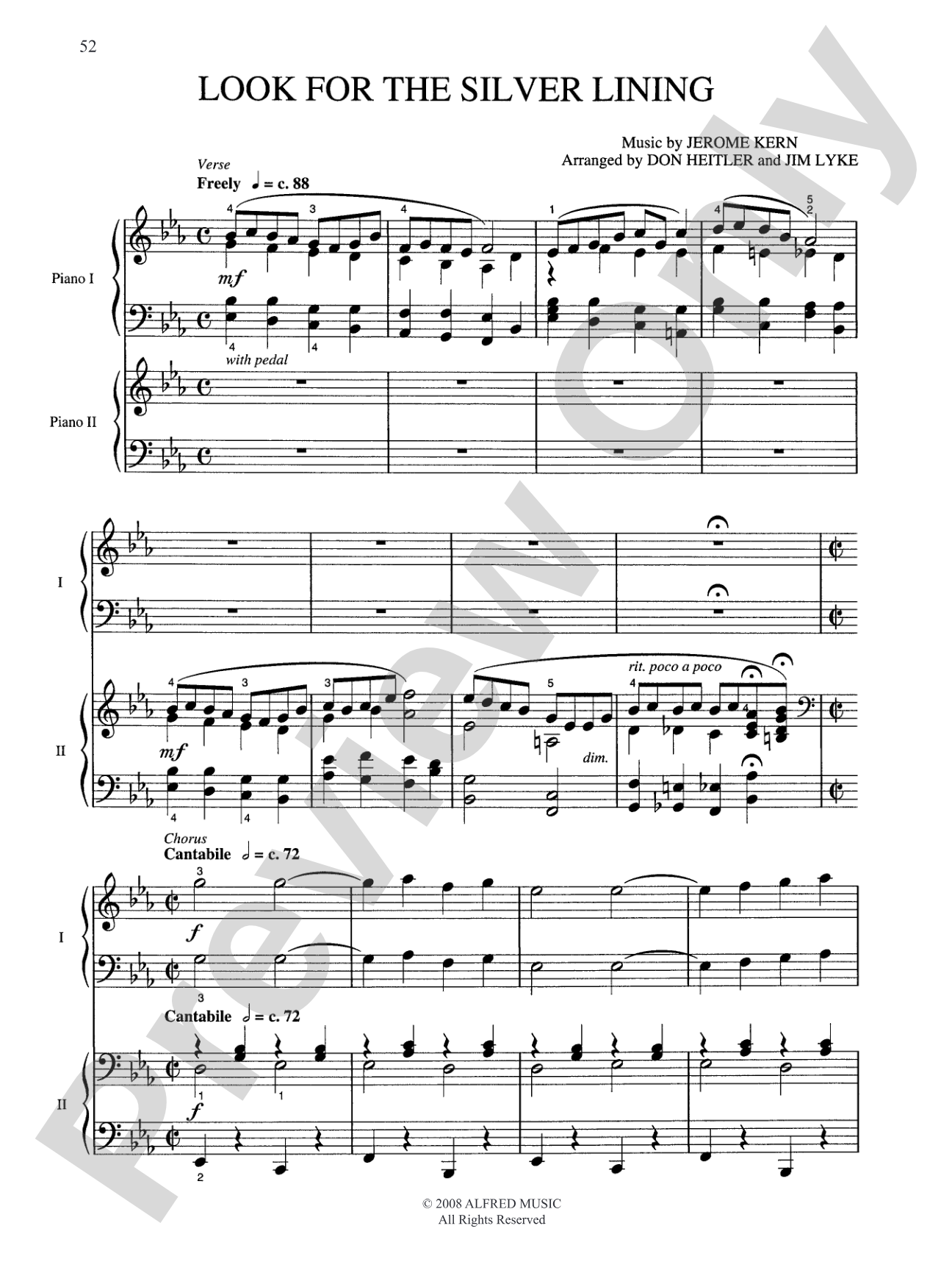
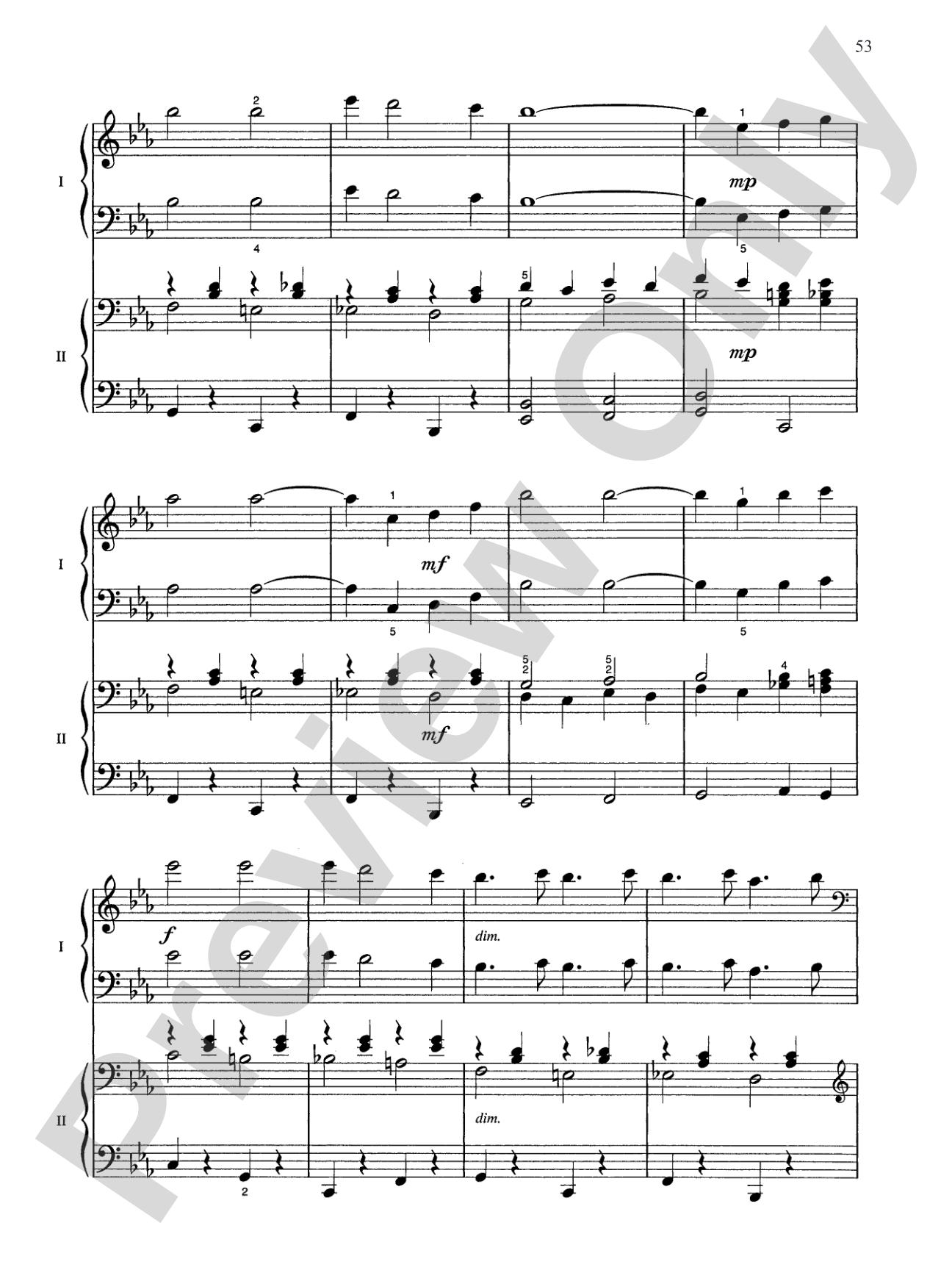

Look for the Silver Lining - Piano Duo (2 Pianos, 4 Hands): Piano Duo (2 Pianos, 4 Hands)
Selections by George and Ira Gershwin, Thomas "Fats" Waller, Scott Joplin, Irving Berlin, Jerome Kern and More
Arr. Jim Lyke, Geoff Haydon, Don Heitler, and John Arpin
Level: Intermediate / Late Intermediate
Item: 00-PS-0017300
$5.99
One moment…
Related Items
Ain't Misbehavin' (from "Ain't Misbehavin'") - Piano Duo (2 Pianos, 4 Hands): Piano Duo (2 Pianos, 4 Hands) |
$5.99
|
View | |
Alexander's Ragtime Band - Piano Duo (2 Pianos, 4 Hands): Piano Duo (2 Pianos, 4 Hands) |
$9.99
|
View | |
America, the Beautiful - Piano Duo (2 Pianos, 4 Hands): Piano Duo (2 Pianos, 4 Hands) |
$5.99
|
View | |
By Strauss (from "The Show Is On") - Piano Duo (2 Pianos, 4 Hands): Piano Duo (2 Pianos, 4 Hands) |
$5.99
|
View | |
Everybody's Doing It Now - Piano Duo (2 Pianos, 4 Hands): Piano Duo (2 Pianos, 4 Hands) |
$5.99
|
View | |
I Want to Be Happy (from "No, No, Nanette") - Piano Duo (2 Pianos, 4 Hands): Piano Duo (2 Pianos, 4 Hands) |
$5.99
|
View | |
Nobody but You (from "La La Lucille") - Piano Duo (2 Pianos, 4 Hands): Piano Duo (2 Pianos, 4 Hands) |
$4.99
|
View | |
Pineapple Rag - Piano Duo (2 Pianos, 4 Hands): Piano Duo (2 Pianos, 4 Hands) |
$9.99
|
View | |
Solace - A Mexican Serenade - Piano Duo (2 Pianos, 4 Hands): Piano Duo (2 Pianos, 4 Hands) |
$9.99
|
View | |
Swanee - Piano Duo (2 Pianos, 4 Hands): Piano Duo (2 Pianos, 4 Hands) |
$5.99
|
View | |
The Easy Winners - Piano Duo (2 Pianos, 4 Hands): Piano Duo (2 Pianos, 4 Hands) |
$9.99
|
View | |
When the Midnight Choo Choo Leaves for Alabam' - Piano Duo (2 Pianos, 4 Hands): Piano Duo (2 Pianos, 4 Hands) |
$5.99
|
View | |
15 Arrangements of American Classics for Two Pianos, Four Hands: Piano Duo (2 Pianos, 4 Hands) Book (2 copies required) |
$17.95
|
View |
Description
The 15 American classics in this collection have been masterfully arranged for two pianos, four hands. Titles: Ain't Misbehavin' (Fats Waller) * Alexander's Ragtime Band (Irving Berlin) * America, the Beautiful (Katherine Lee Bates and Samuel A. Ward) * By Strauss (George Gershwin and Ira Gershwin) * The Easy Winners (Scott Joplin) * Everybody's Doing It Now (Irving Berlin) * Gladiolus Rag (Scott Joplin) * I Want to be Happy (Vincent Youmans) * Look for the Silver Lining (Jerome Kern) * Medley: Yankee Doodle Boy; Over There; You're a Grand Old Flag (George M. Cohan) * Nobody But You (George Gershwin) * Pineapple Rag (Scott Joplin) * Solace (Scott Joplin) * Swanee (George Gershwin) * When the Midnight Choo-Choo Leaves for Alabam' (Irving Berlin). 128 pages. A Federation Festivals 2024-2028 selection.


Discover MakeMusic Cloud: thousands of interactive titles your students can play along with today.
Sample Audio
No sample audio found.
Sample Video
No sample videos found.
Additional Details
Series:
Alfred's Classic Editions
Publisher:
Alfred Music
Page Count:
128
SKU:
00-PS-0017300
More about this title
About the Composer: Jerome Kern
Jerome Kern (1885-1945) fundamentally shaped American musical theater through his gift for memorable melody and sophisticated harmonic language. His songwriting partnerships with lyricists like Oscar Hammerstein II produced standards that remain central to the American songbook, from Show Boat to Roberta, influencing generations of composers who followed.
Kern's ability to craft songs that work equally well in intimate piano settings and grand theatrical productions makes his music ideal for music education. His melodies balance accessibility with genuine musical substance, allowing students to engage with material that sounds both familiar and worthy of serious study.
Why we love this
This collection pairs well-known American standards with piano duo writing that genuinely enriches the original melodies rather than simply transcribing them. The arrangements by Heitler and Lyke give each pianist equally musical parts, making ensemble balance natural rather than forced. A Federation Festivals selection for 2024-2028, this book offers your studio or young ensemble students repertoire with real historical weight and immediate appeal.
What to expect
Opening these pages feels like stepping into an American songbook written specifically for two people at the keyboard. Rags sparkle with rhythmic interplay; standards breathe with the kind of harmonic sophistication Kern brought to Broadway. Every piece invites both pianists into genuine musical conversation.
Who it's for
Intermediate to late intermediate piano students preparing duet repertoire for recitals, festivals, or ensemble classes. Pairs especially well for pianists in the same studio or music program seeking material that develops ensemble listening and partnership without excessive technical barriers.
How to get the most out of it
- Balance the melodic lines between the two pianos rather than defaulting to primo-secondo hierarchy. Many of these arrangements distribute thematic material fluidly, and sharing the spotlight creates a more integrated sound.
- Listen closely to how the arrangers use the two instruments for rhythmic and harmonic layering in the rags. Scott Joplin's syncopation gains clarity when each pianist locks into their rhythmic role with precision.
- Treat the ragtime selections with rhythmic specificity rather than looseness. These pieces have published tempo standards; finding the groove takes steady pulse work between both pianists before adding stylistic flexibility.
- Consider the emotional arc of non-ragtime pieces like Look for the Silver Lining and I Want to be Happy. The piano duo format allows for subtle dynamic conversations that a single pianist cannot achieve.
How to use it
Feature these arrangements in a recital dedicated to American musical theater, pairing them with vocal performances of the same songs to show how the instrumental writing complements the lyrical tradition. The variety of styles within the collection also works well as a sampler: choose 3-4 contrasting pieces for a shorter recital program rather than performing all 15 selections.
Skills your students will build
- Ensemble listening and balance between two equal instrumental voices
- Rhythmic precision in syncopated passages and ragtime idioms
- Coordination of shared accompaniment patterns across two keyboards
- Style-specific interpretation of early-20th-century American songwriting
- Navigation of fast harmonic rhythm in Gershwin and Kern standards