
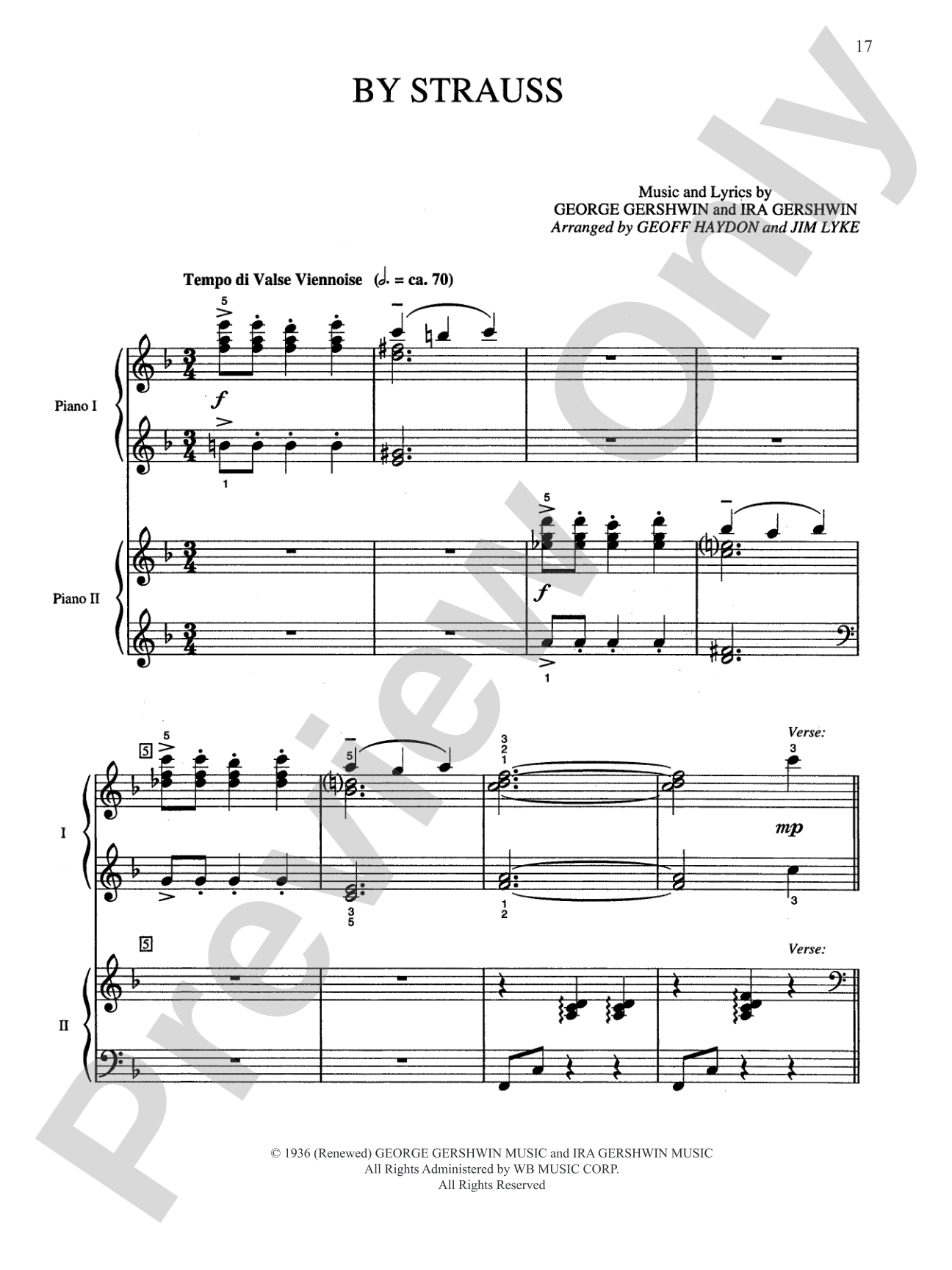
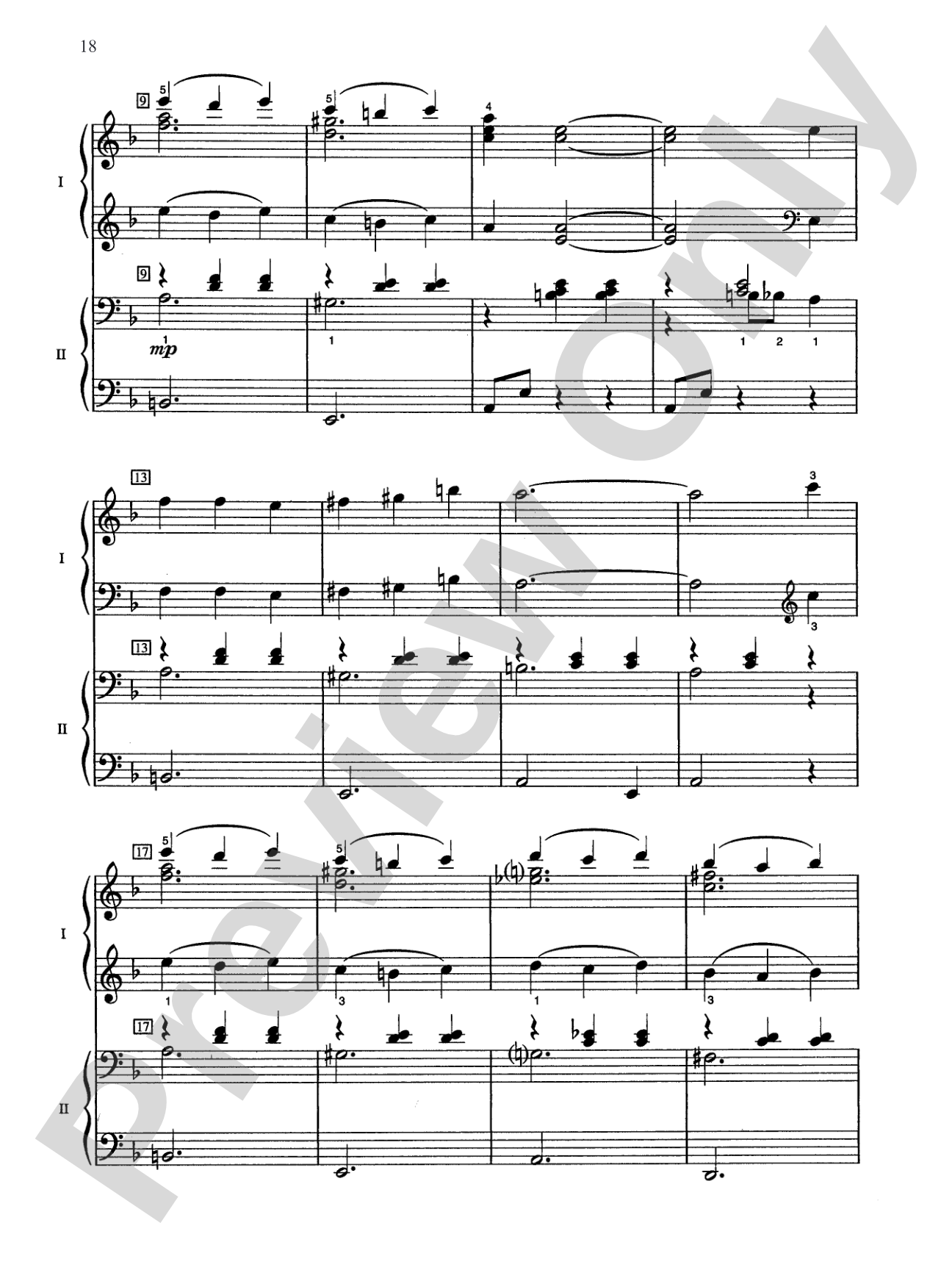

By Strauss (from "The Show Is On") - Piano Duo (2 Pianos, 4 Hands): Piano Duo (2 Pianos, 4 Hands)
Selections by George and Ira Gershwin, Thomas "Fats" Waller, Scott Joplin, Irving Berlin, Jerome Kern and More
Arr. Jim Lyke, Geoff Haydon, Don Heitler, and John Arpin
Level: Intermediate / Late Intermediate
Item: 00-PS-0017297
$5.99
One moment…
Related Items
Ain't Misbehavin' (from "Ain't Misbehavin'") - Piano Duo (2 Pianos, 4 Hands): Piano Duo (2 Pianos, 4 Hands) |
$5.99
|
View | |
Alexander's Ragtime Band - Piano Duo (2 Pianos, 4 Hands): Piano Duo (2 Pianos, 4 Hands) |
$9.99
|
View | |
America, the Beautiful - Piano Duo (2 Pianos, 4 Hands): Piano Duo (2 Pianos, 4 Hands) |
$5.99
|
View | |
Everybody's Doing It Now - Piano Duo (2 Pianos, 4 Hands): Piano Duo (2 Pianos, 4 Hands) |
$5.99
|
View | |
I Want to Be Happy (from "No, No, Nanette") - Piano Duo (2 Pianos, 4 Hands): Piano Duo (2 Pianos, 4 Hands) |
$5.99
|
View | |
Look for the Silver Lining - Piano Duo (2 Pianos, 4 Hands): Piano Duo (2 Pianos, 4 Hands) |
$5.99
|
View | |
Nobody but You (from "La La Lucille") - Piano Duo (2 Pianos, 4 Hands): Piano Duo (2 Pianos, 4 Hands) |
$4.99
|
View | |
Pineapple Rag - Piano Duo (2 Pianos, 4 Hands): Piano Duo (2 Pianos, 4 Hands) |
$9.99
|
View | |
Solace - A Mexican Serenade - Piano Duo (2 Pianos, 4 Hands): Piano Duo (2 Pianos, 4 Hands) |
$9.99
|
View | |
Swanee - Piano Duo (2 Pianos, 4 Hands): Piano Duo (2 Pianos, 4 Hands) |
$5.99
|
View | |
The Easy Winners - Piano Duo (2 Pianos, 4 Hands): Piano Duo (2 Pianos, 4 Hands) |
$9.99
|
View | |
When the Midnight Choo Choo Leaves for Alabam' - Piano Duo (2 Pianos, 4 Hands): Piano Duo (2 Pianos, 4 Hands) |
$5.99
|
View | |
15 Arrangements of American Classics for Two Pianos, Four Hands: Piano Duo (2 Pianos, 4 Hands) Book (2 copies required) |
$17.95
|
View |
Description
The 15 American classics in this collection have been masterfully arranged for two pianos, four hands. Titles: Ain't Misbehavin' (Fats Waller) * Alexander's Ragtime Band (Irving Berlin) * America, the Beautiful (Katherine Lee Bates and Samuel A. Ward) * By Strauss (George Gershwin and Ira Gershwin) * The Easy Winners (Scott Joplin) * Everybody's Doing It Now (Irving Berlin) * Gladiolus Rag (Scott Joplin) * I Want to be Happy (Vincent Youmans) * Look for the Silver Lining (Jerome Kern) * Medley: Yankee Doodle Boy; Over There; You're a Grand Old Flag (George M. Cohan) * Nobody But You (George Gershwin) * Pineapple Rag (Scott Joplin) * Solace (Scott Joplin) * Swanee (George Gershwin) * When the Midnight Choo-Choo Leaves for Alabam' (Irving Berlin). 128 pages. A Federation Festivals 2024-2028 selection.


Discover MakeMusic Cloud: thousands of interactive titles your students can play along with today.
Sample Audio
No sample audio found.
Sample Video
No sample videos found.
Additional Details
Series:
Alfred's Classic Editions
Publisher:
Alfred Music
Page Count:
128
SKU:
00-PS-0017297
More about this title
About the Composer: George Gershwin
George Gershwin (1898-1937) bridged classical music and American vernacular idioms with unprecedented sophistication. His gift for melody and rhythmic vitality made him one of the most performed composers in concert halls and on Broadway, influencing generations of musicians who came after him.
Gershwin's piano writing was idiomatic and pianistic; he understood the instrument from both a composer's and performer's perspective. His works for piano, whether solo pieces or arrangements, remain central to American music education because they teach students how to write and play with both structural clarity and spontaneous-sounding expressiveness.
Why we love this
This collection gives intermediate piano duos immediate access to genuine American classics without dumbing down the music. Haydon and Lyke's arrangements preserve the melodic character and harmonic inventiveness of the originals while creating engaging interplay between the two pianos; neither part sits in a secondary role for long.
What to expect
These arrangements sparkle with the rhythmic energy and melodic warmth of early-to-mid-twentieth-century American song and dance music. Playing them creates an immediate sense of style and swing; the two pianos together generate the texture and momentum of a full ensemble without needing one.
Who it's for
Intermediate to late intermediate piano students who have the technical facility to play at this level and the musical maturity to handle syncopation and jazz-inflected harmonies. This repertoire suits music students preparing for duet festivals, recitals, or collaborative performances where they want to showcase American musical heritage.
How to get the most out of it
- Balance the melodic line between pianos as it passes from one player to the other. Mark these handoffs clearly in rehearsal so both players hear where the primary voice lives in each phrase.
- Establish a steady tempo before the first rehearsal and stick to it until both players feel confident. These pieces contain syncopation and ragtime rhythms that can wander if the foundation isn't rock solid.
- Pay attention to the articulation markings in both parts simultaneously. Gershwin's rhythmic vitality depends on precise note lengths, not just correct pitches.
- Listen for the harmonic colors created when both pianos voice chords together. The arrangement's effectiveness comes from how the voicings complement and enrich each other.
How to use it
Use this collection for duo recitals, multi-piano showcases, or festival competitions where period repertoire is valued. The variety of moods and styles (rags, show tunes, patriotic songs) makes it possible to program pieces individually across different concert contexts or to present several together as a thematic set celebrating American popular music.
Skills your students will build
- Reading syncopated rhythms and jazz-inflected figures in ensemble context
- Balancing melodic lines between two pianos while maintaining textural clarity
- Coordinating tempo and articulation between independent players
- Voicing harmonies across two keyboards to create blended sonority
- Interpreting swing and rhythmic lift in early American music styles
- Managing piece-to-piece style shifts from ragtime to show tunes to patriotic material