
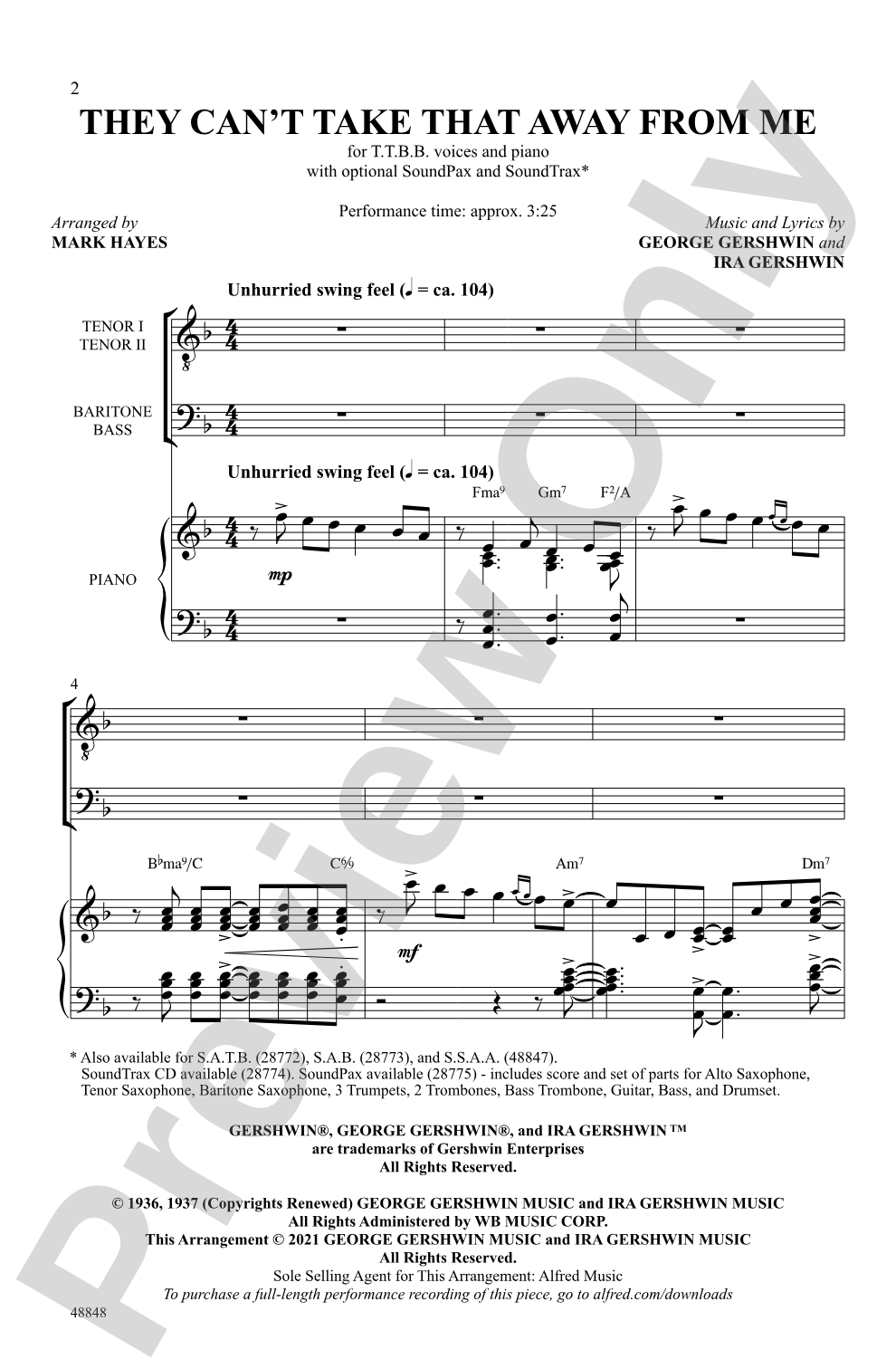

They Can't Take That Away from Me: TTBB Choral Octavo
Music and lyrics by George Gershwin and Ira Gershwin / arr. Mark Hayes
Item: 00-PO-0006643
$2.10
Minimum order quantity: 20 copies
One moment…
Related Items
They Can't Take That Away from Me: SoundTrax Digital Audio Download |
$27.99
|
View | |
They Can't Take That Away from Me: SATB Choral Octavo |
$2.10
|
View | |
They Can't Take That Away from Me: SAB Choral Octavo |
$2.25
|
View | |
They Can't Take That Away from Me: SSAA Choral Octavo |
$2.10
|
View | |
They Can't Take That Away from Me: Choral SoundPax |
$45.00
|
View | |
They Can't Take That Away from Me: SATB Choral Octavo |
$2.10
|
View | |
They Can't Take That Away from Me: SAB Choral Octavo |
$2.25
|
View | |
They Can't Take That Away from Me: SSAA Choral Octavo |
$2.10
|
View | |
They Can't Take That Away from Me: TTBB Choral Octavo |
$2.10
|
View | |
They Can't Take That Away from Me: Choral Octavo SoundTrax CD |
$27.99
|
View | |
They Can't Take That Away from Me: Choral SoundPax |
$45.00
|
View |
Description
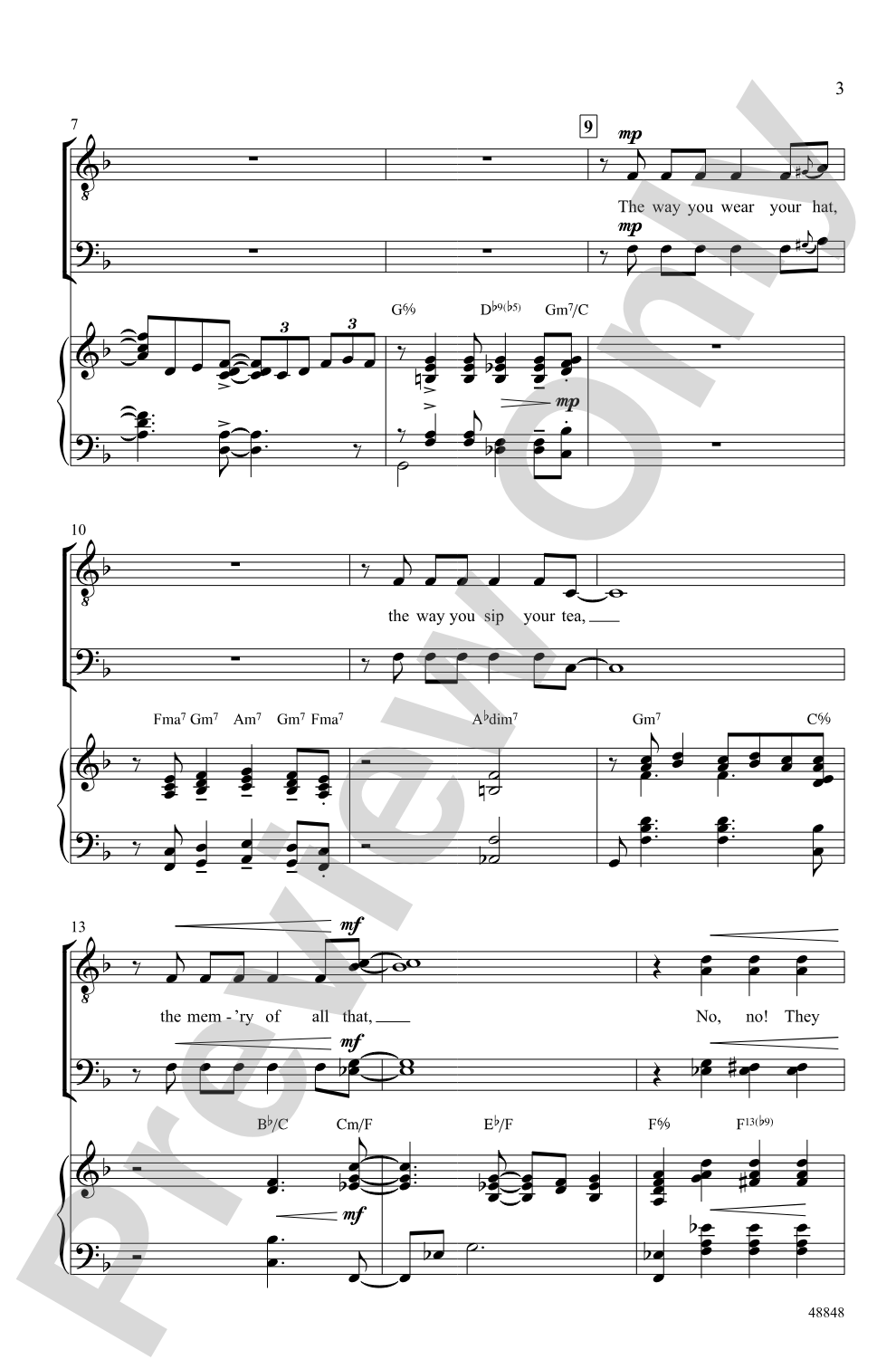
Now available S.S.A.A. and T.T.B.B. One of the most charming songs from the great era of American popular song. "The way you wear your hat, the way you sip your tea . . . no, no, they can't take that away from me." The unhurried swing feel of this arrangement is right on target for the sophisticated Gershwin style. Strong voice writing and supportive piano accompaniment. A classic!


They Can't Take That Away from Me: TTBB Choral Octavo isn't in MakeMusic Cloud just yet...but it could be. Let us know you'd like to see it, and you'll help shape what comes next. In the meantime, start a free trial and dive into thousands of interactive titles your students can play along with today.
Request This Title
Tell us you want it.
Start Your Free Trial
Explore everything that's ready to play right now.
Sample Audio
1
Audio File
--:--
0:00
0:00
Sample Video
Additional Details
Series:
Alfred Pop Choral Series
Publisher:
Alfred Music
Page Count:
12
SKU:
00-PO-0006643
More about this title
About the Composer: George Gershwin
George Gershwin (1898-1937) bridged classical and popular music in ways that still define American composition. His gift for melody and sophisticated harmonies made standards like this one endure across generations of singers and musicians.
Gershwin's work demonstrated that jazz idioms and songwriting craft belonged in concert halls and on recital programs. For choral directors, his standards offer students access to music that sounds effortless but demands genuine musicianship to perform well.
Why we love this
Mark Hayes captures the languid elegance of this Gershwin gem without oversimplifying it. The voice writing is genuinely sophisticated; singers get real musical material to sink their teeth into, and the piano part breathes with the same swing sensibility the text demands. This is a standard that feels standard because it earns that status, not because it's watered down.
What to expect
Warm, conversational, and utterly confident. The melody glides over changes that shimmer with sophistication; there's an ease to the phrasing that masks real harmonic subtlety. Singing this well requires you to sound like you're simply thinking aloud about someone's mannerisms, not performing a song.
Who it's for
TTBB choirs with solid intonation and basic familiarity with jazz idioms. This is an excellent choice for groups looking to program something from the Great American Songbook that doesn't require advanced sight-reading but does respect the singers' intelligence and musicianship.
How to get the most out of it
- Anchor the rhythm section early in rehearsal. The "unhurried swing feel" only works if the rhythm is secure but never rigid; let the choir shadow the piano's phrasing rather than march behind it.
- Shape the melody with the specific lyrics in mind. "The way you wear your hat, the way you sip your tea" each deserve subtle dynamic contours that reinforce the intimacy of what's being described.
- Balance the harmonic complexity without forcing it. Hayes writes rich chords that should blend seamlessly; prioritize blend over individual voice clarity when the two conflict.
- If using the recorded accompaniment, rehearse with it regularly but not exclusively. Your choir needs to own the swing feel independently before they lock in with the track.
How to use it
Pair this with other Gershwin or Cole Porter standards to create a strong Great American Songbook set, or slot it into a jazz-inflected concert that mixes classical and popular idioms. The twelve-page length makes it manageable within a longer program, and its sophistication works particularly well as an intermission or finale piece.
Skills your students will build
- Phrasing and shaping over harmonic movement rather than downbeats
- Rhythmic precision in swing contexts without mechanical precision
- Balancing block harmony and independence in TTBB writing
- Interpretation of jazz articulation and diction in a choral setting