
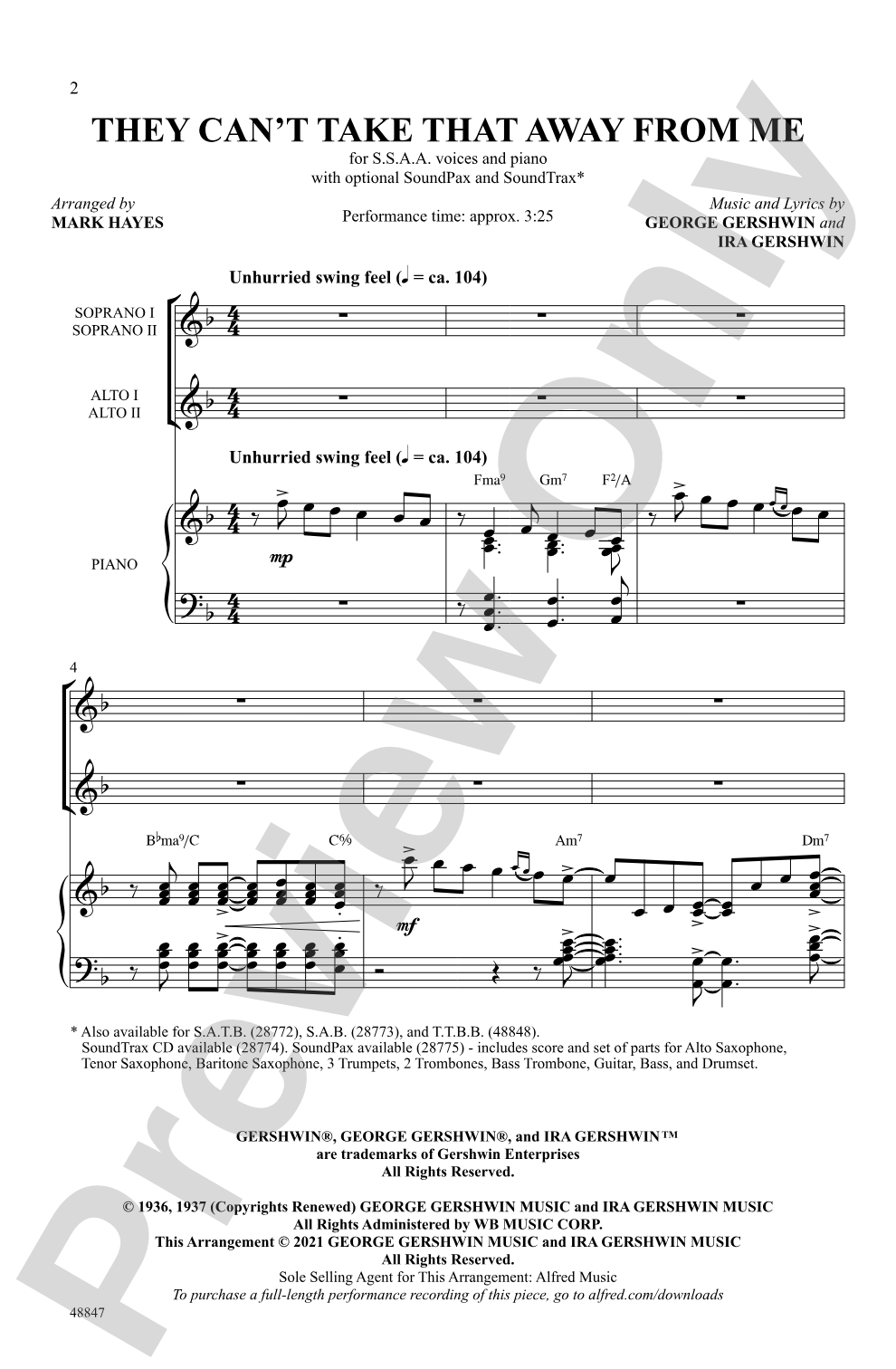
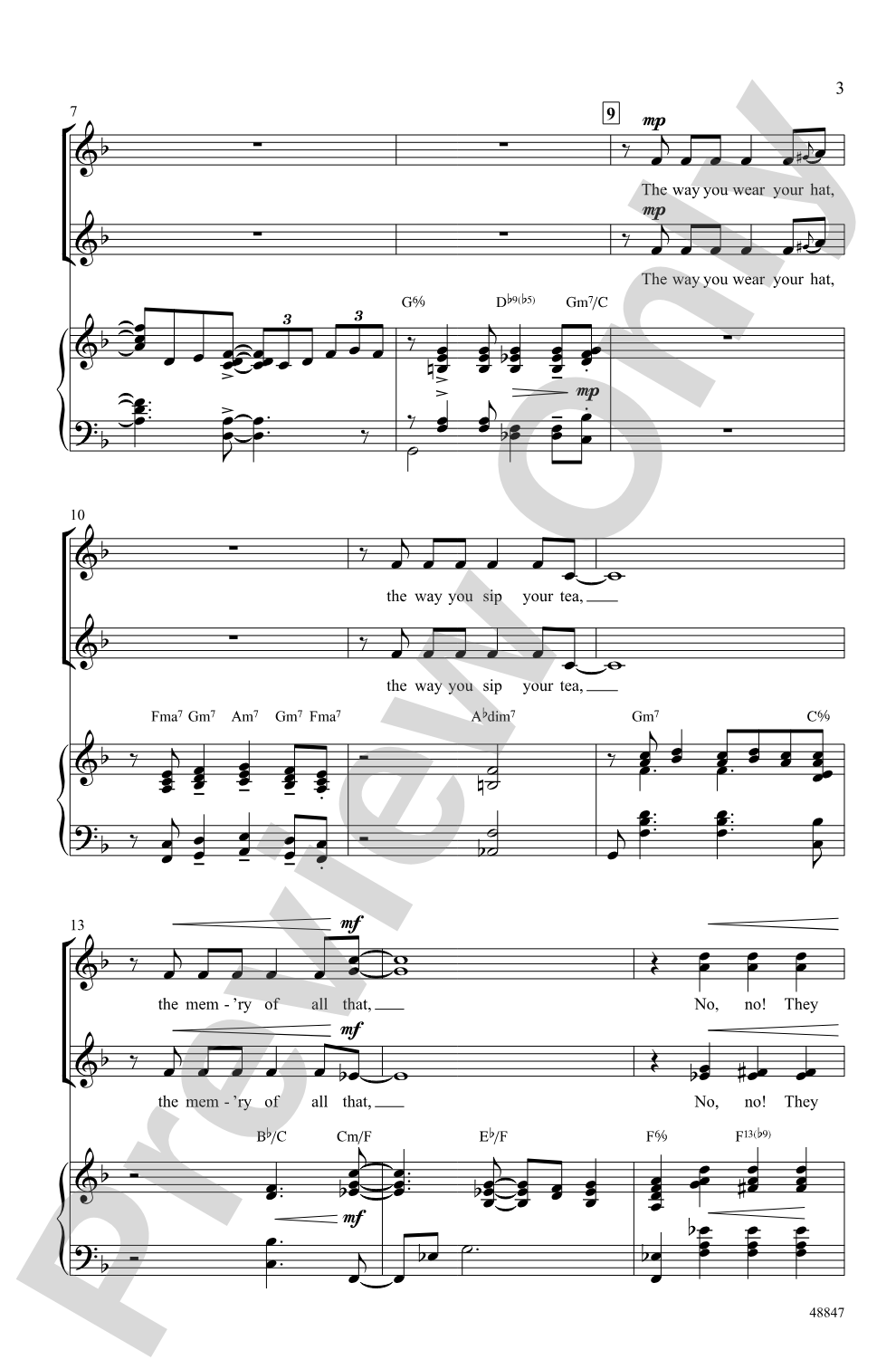

They Can't Take That Away from Me: SSAA Choral Octavo
Music and lyrics by George Gershwin and Ira Gershwin / arr. Mark Hayes
Item: 00-PO-0006642
$2.10
Minimum order quantity: 20 copies
One moment…
Related Items
They Can't Take That Away from Me: SoundTrax Digital Audio Download |
$27.99
|
View | |
They Can't Take That Away from Me: SATB Choral Octavo |
$2.10
|
View | |
They Can't Take That Away from Me: SAB Choral Octavo |
$2.25
|
View | |
They Can't Take That Away from Me: TTBB Choral Octavo |
$2.10
|
View | |
They Can't Take That Away from Me: Choral SoundPax |
$45.00
|
View | |
They Can't Take That Away from Me: SATB Choral Octavo |
$2.10
|
View | |
They Can't Take That Away from Me: SAB Choral Octavo |
$2.25
|
View | |
They Can't Take That Away from Me: SSAA Choral Octavo |
$2.10
|
View | |
They Can't Take That Away from Me: TTBB Choral Octavo |
$2.10
|
View | |
They Can't Take That Away from Me: Choral Octavo SoundTrax CD |
$27.99
|
View | |
They Can't Take That Away from Me: Choral SoundPax |
$45.00
|
View |
Description
Now available S.S.A.A. and T.T.B.B. One of the most charming songs from the great era of American popular song. "The way you wear your hat, the way you sip your tea . . . no, no, they can't take that away from me." The unhurried swing feel of this arrangement is right on target for the sophisticated Gershwin style. Strong voice writing and supportive piano accompaniment. A classic!


They Can't Take That Away from Me: SSAA Choral Octavo isn't in MakeMusic Cloud just yet...but it could be. Let us know you'd like to see it, and you'll help shape what comes next. In the meantime, start a free trial and dive into thousands of interactive titles your students can play along with today.
Request This Title
Tell us you want it.
Start Your Free Trial
Explore everything that's ready to play right now.
Sample Audio
1
Audio File
--:--
0:00
0:00
Sample Video
1 / 2
Additional Details
Series:
Alfred Pop Choral Series
Publisher:
Alfred Music
Page Count:
12
SKU:
00-PO-0006642
More about this title
About the Composer: George Gershwin
George Gershwin (1898-1937) bridged the world of concert music and popular song in ways few composers have matched. His gift for memorable melody, sophisticated harmonies, and rhythmic vitality made him one of the most influential American composers of the twentieth century. He collaborated frequently with his brother Ira, a lyricist of exceptional wit and craft, to create some of the most enduring standards of the American songbook.
For music educators, Gershwin's work offers students a window into a uniquely American musical tradition where jazz idioms, Broadway sensibility, and concert music ambitions coexist. His melodies are singable and appealing; his harmonies reward close listening. Teaching his music gives students both repertoire literacy and exposure to a composer who changed what American music could be.
Why we love this
Mark Hayes's arrangement captures the breezy sophistication of Gershwin's original without sacrificing the song's inherent charm. The voice writing sits beautifully for SSAA ensembles, and the swing rhythm keeps the piece feeling contemporary rather than nostalgia-bound. This is exactly the kind of American standard that reminds students why the songbook matters.
What to expect
Urbane and affectionate. The melody dances with ease, and there's an underlying tenderness beneath the witty lyrics. The unhurried swing rhythm invites listeners into an intimate moment, as if the singer is sharing a personal truth wrapped in charm.
Who it's for
SSAA choirs at the intermediate to advanced level will find this accessible yet rewarding. Groups comfortable with jazz swing style and interested in programming American songbook classics will connect immediately with this arrangement.
How to get the most out of it
- Nail the swing feel by treating eighth notes as triplet-based; too straight a rhythm loses the Gershwin essence.
- Balance the soprano line so it floats above rather than dominates; this is ensemble singing, not a solo with backup.
- Work the piano accompaniment as a partner, not filler. Hayes wrote it to support the harmonic sophistication, so the pianist needs to shape phrases alongside the singers.
- Take time with the lyrics. Gershwin and Ira wrote conversational, witty text. Let the emotional subtext breathe between the clever lines.
How to use it
Pair this with other Great American Songbook selections to build a standards-focused concert set, or use it as a bridge piece between classical repertoire and contemporary pop arrangements. The 12-page length makes it substantial enough to anchor a program section without overwhelming shorter choral works.
Skills your students will build
- Singing swing eighth notes and triplet-based rhythms
- Balancing harmonic layers in jazz-influenced textures
- Interpreting lyrics with conversational phrasing and subtext
- Blending treble voices in close four-part harmony
- Following a piano accompaniment that shapes harmonic color