
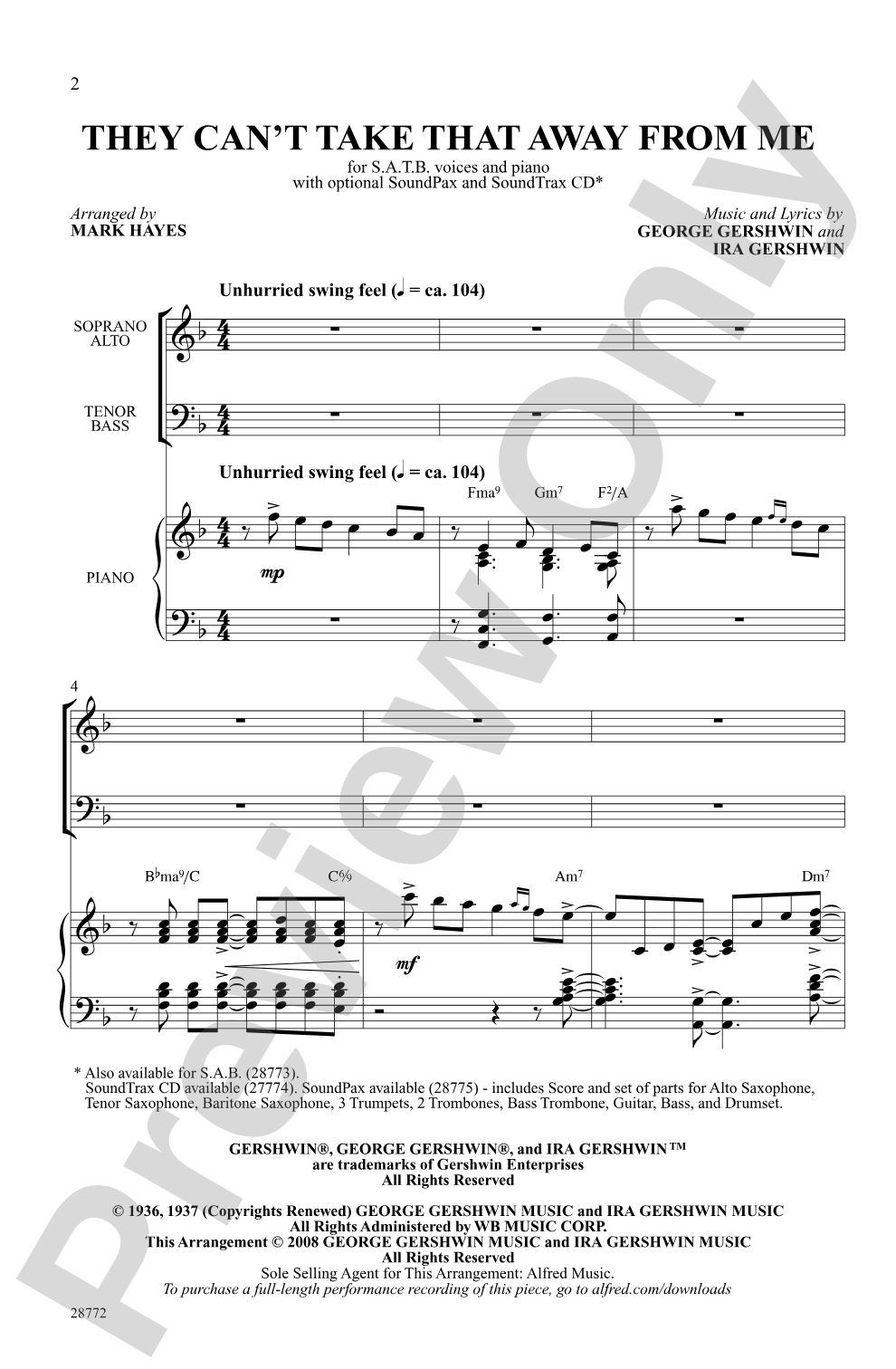

They Can't Take That Away from Me: SATB Choral Octavo
Music and lyrics by George Gershwin and Ira Gershwin / arr. Mark Hayes
Item: 00-PO-0002304
$2.10
Minimum order quantity: 20 copies
One moment…
Related Items
They Can't Take That Away from Me: SoundTrax Digital Audio Download |
$27.99
|
View | |
They Can't Take That Away from Me: SAB Choral Octavo |
$2.25
|
View | |
They Can't Take That Away from Me: SSAA Choral Octavo |
$2.10
|
View | |
They Can't Take That Away from Me: TTBB Choral Octavo |
$2.10
|
View | |
They Can't Take That Away from Me: Choral SoundPax |
$45.00
|
View | |
They Can't Take That Away from Me: SATB Choral Octavo |
$2.10
|
View | |
They Can't Take That Away from Me: SAB Choral Octavo |
$2.25
|
View | |
They Can't Take That Away from Me: SSAA Choral Octavo |
$2.10
|
View | |
They Can't Take That Away from Me: TTBB Choral Octavo |
$2.10
|
View | |
They Can't Take That Away from Me: Choral Octavo SoundTrax CD |
$27.99
|
View | |
They Can't Take That Away from Me: Choral SoundPax |
$45.00
|
View |
Description
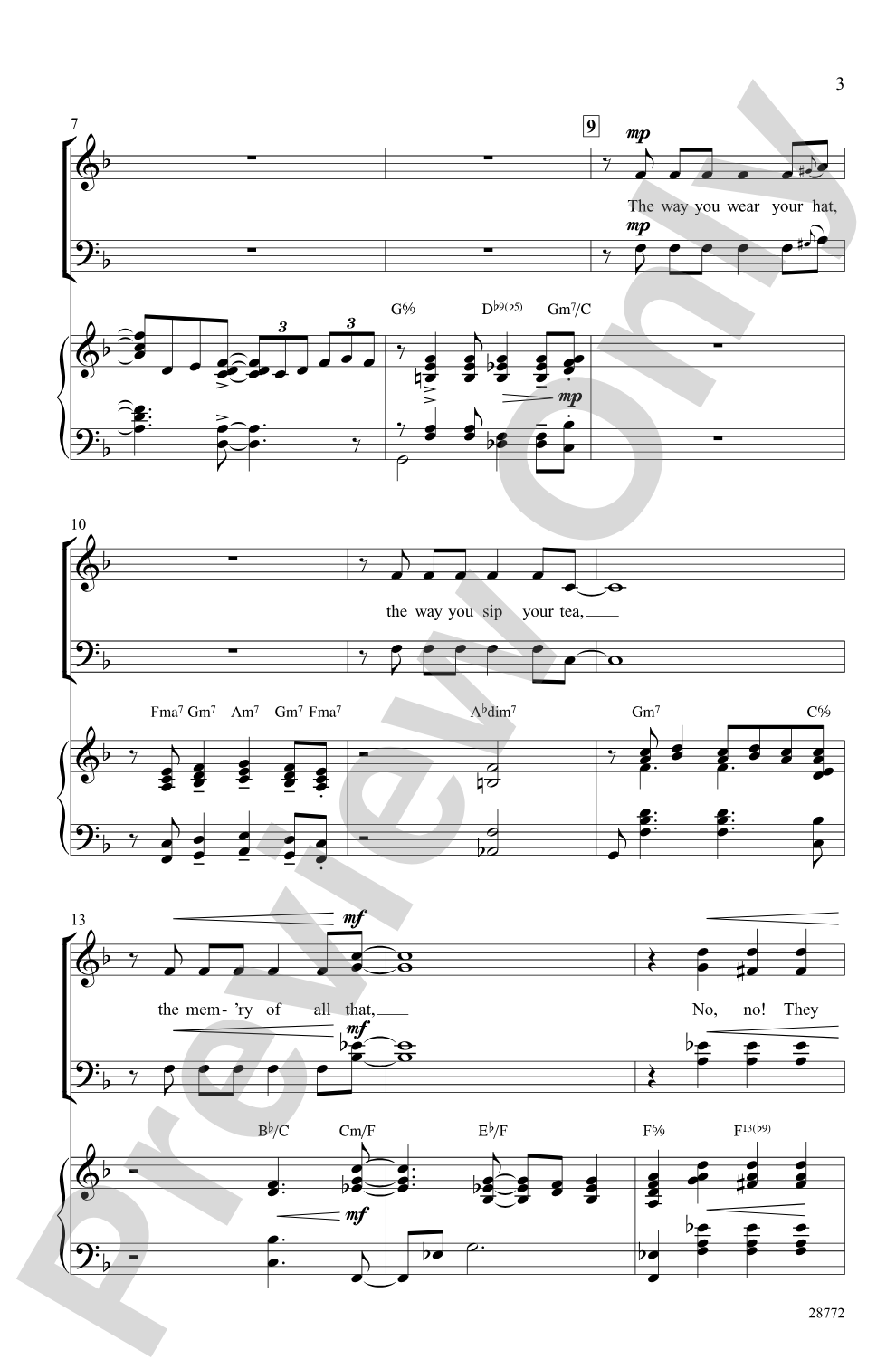
One of the most charming songs from the great era of American popular song. "The way you wear your hat, the way you sip your tea . . . no, no, they can't take that away from me." The unhurried swing feel of this arrangement is right on target for the sophisticated Gershwin style. Strong voice writing and supportive piano accompaniment.


They Can't Take That Away from Me: SATB Choral Octavo isn't in MakeMusic Cloud just yet...but it could be. Let us know you'd like to see it, and you'll help shape what comes next. In the meantime, start a free trial and dive into thousands of interactive titles your students can play along with today.
Request This Title
Tell us you want it.
Start Your Free Trial
Explore everything that's ready to play right now.
Sample Audio
1
Audio File
--:--
0:00
0:00
Sample Video
No sample videos found.
Additional Details
Series:
Alfred Pop Choral Series
Publisher:
Alfred Music
Page Count:
12
SKU:
00-PO-0002304
More about this title
About the Composer: George Gershwin
George Gershwin (1898-1937) bridged the worlds of classical music and American popular song with unprecedented sophistication. His melodies became the foundation of the Great American Songbook, and his harmonic language influenced generations of composers. In the classroom and concert hall, his work remains essential because it teaches students how to honor both accessibility and artistic integrity.
Gershwin's songs consistently appear in choral and instrumental curricula because they reward close study. The rhythmic vitality, jazz-inflected harmonies, and memorable lines make his compositions ideal teaching tools for understanding American musical idiom and the standards that define quality songwriting.
Why we love this
Mark Hayes's arrangement captures the urbane sophistication of Gershwin's original without losing the conversational ease that makes this song so enduring. The voice writing is genuinely strong; nothing feels forced or awkwardly harmonized. Choirs love this piece because audiences recognize it immediately, but singers discover there's real musical substance beneath that charm.
What to expect
Sophisticated warmth and nostalgic affection. The arrangement moves with unhurried grace, never rushing; the harmonic language is colored by blue notes and jazz sonorities that feel both familiar and subtly elegant. Singing this piece feels like inhabiting a moment of genuine tenderness, with a wink of wit never far behind.
Who it's for
This octavo works for intermediate to advanced choral ensembles with some experience in jazz-influenced repertoire and swing rhythms. It suits high school show choirs, college chorales, community choruses, and professional groups looking to program standards with substance. Singers need secure intonation and the ability to hear jazz harmonies, but the writing itself is accessible.
How to get the most out of it
- Treat the swing feel as a gentle constraint, not a driving force. The "unhurried" quality means laying back slightly on eighth-note subdivisions; let the piano anchor the rhythm while voices shape the melody with expressive flexibility.
- Balance the octavo's voice parts carefully in the opening phrase. Hayes gives each line room to breathe, so avoid blending them into uniformity; maintain clarity and independence so the harmonic sophistication comes through.
- Use the recorded accompaniment to establish the rhythmic pocket and swing inflection, especially if your ensemble is new to this style. Hearing Hayes's intended groove will settle any questions about tempo and feel.
- Shape phrases to honor Gershwin's lyrical intent. The text is conversational and affectionate, so encourage singers to think about the emotional arc of each phrase rather than mechanically executing the notes.
How to use it
Program this alongside other Gershwin-era standards or Great American Songbook selections to anchor a mid-century American popular music set. It pairs naturally with other Hayes arrangements or jazz-influenced choral works, creating a cohesive concert segment that appeals to broad audiences. The sophisticated accessibility makes it an excellent piece for pops concerts, holiday programs, or recitals celebrating American musical heritage.
Skills your students will build
- Reading and performing swing rhythms and syncopation
- Understanding jazz harmony and blue-note inflection
- Maintaining independent voice parts while blending in ensemble texture
- Interpreting lyrical phrasing and emotional subtext in popular song
- Coordinating with piano accompaniment in a jazz-influenced style