
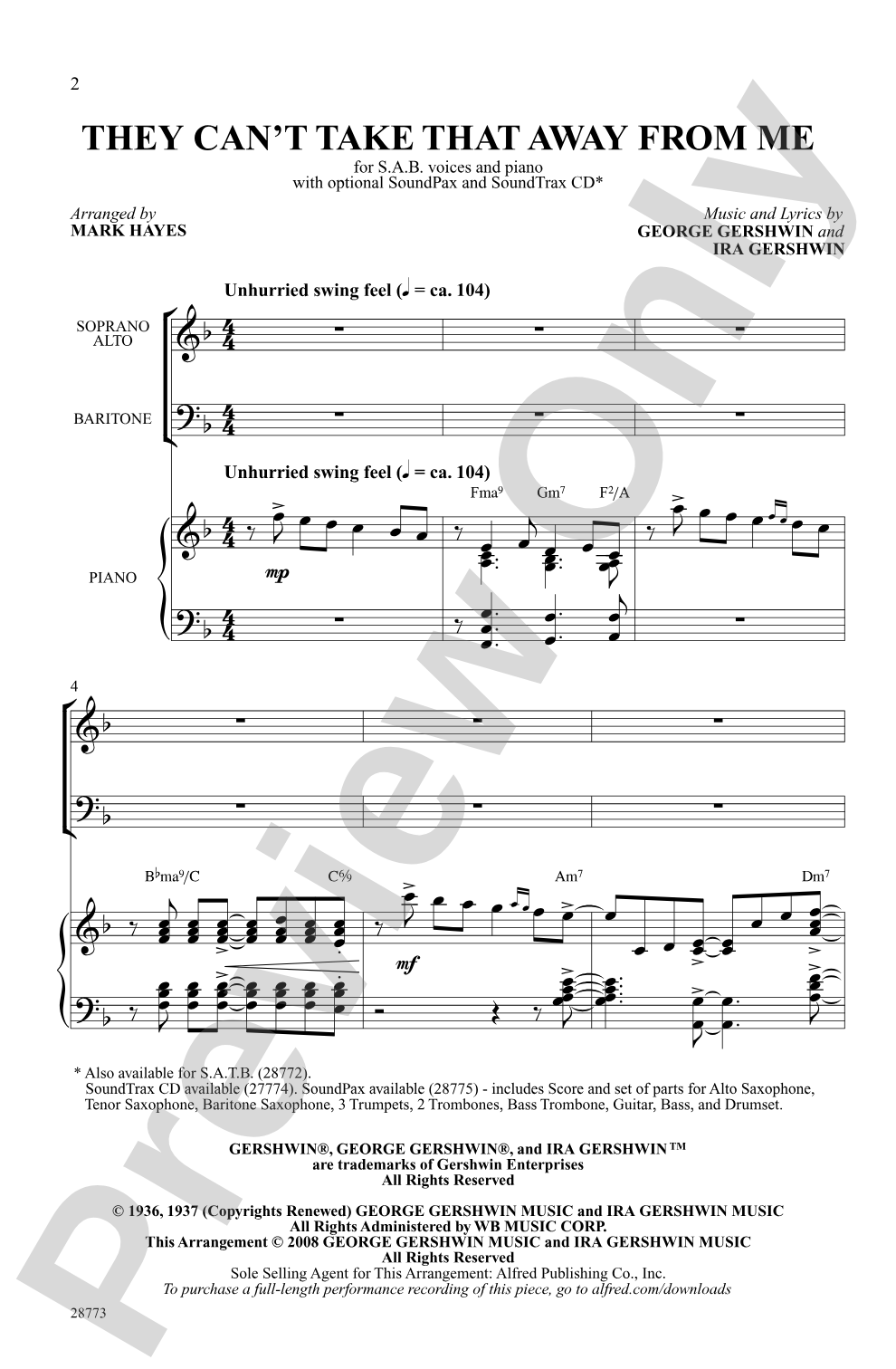
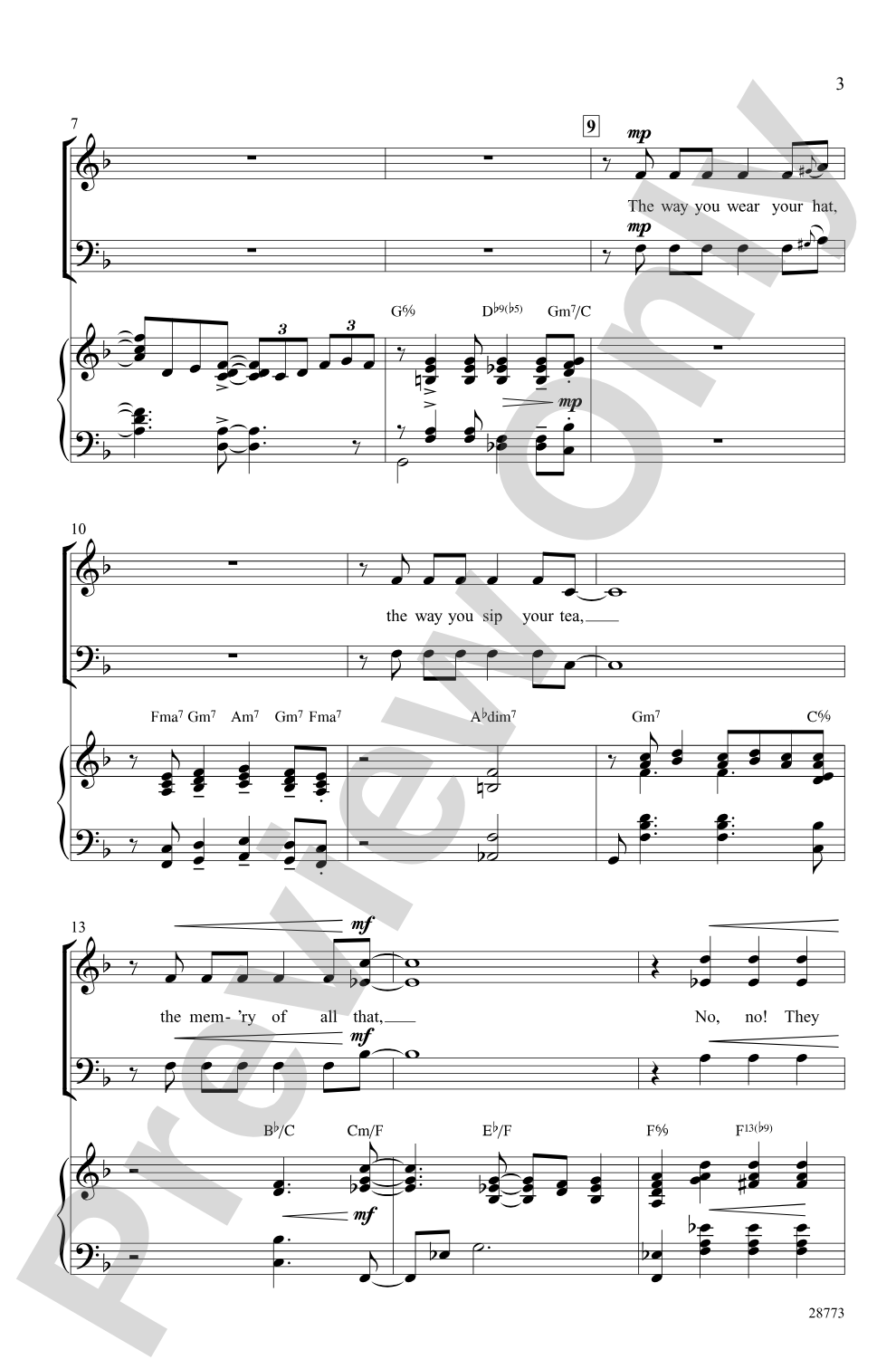

They Can't Take That Away from Me: SAB Choral Octavo
Music and lyrics by George Gershwin and Ira Gershwin / arr. Mark Hayes
Item: 00-PO-0002305
$2.25
Minimum order quantity: 20 copies
One moment…
Related Items
They Can't Take That Away from Me: SoundTrax Digital Audio Download |
$27.99
|
View | |
They Can't Take That Away from Me: SATB Choral Octavo |
$2.10
|
View | |
They Can't Take That Away from Me: SSAA Choral Octavo |
$2.10
|
View | |
They Can't Take That Away from Me: TTBB Choral Octavo |
$2.10
|
View | |
They Can't Take That Away from Me: Choral SoundPax |
$45.00
|
View | |
They Can't Take That Away from Me: SATB Choral Octavo |
$2.10
|
View | |
They Can't Take That Away from Me: SAB Choral Octavo |
$2.25
|
View | |
They Can't Take That Away from Me: SSAA Choral Octavo |
$2.10
|
View | |
They Can't Take That Away from Me: TTBB Choral Octavo |
$2.10
|
View | |
They Can't Take That Away from Me: Choral Octavo SoundTrax CD |
$27.99
|
View | |
They Can't Take That Away from Me: Choral SoundPax |
$45.00
|
View |
Description
One of the most charming songs from the great era of American popular song. "The way you wear your hat, the way you sip your tea . . . no, no, they can't take that away from me." The unhurried swing feel of this arrangement is right on target for the sophisticated Gershwin style. Strong voice writing and supportive piano accompaniment.


They Can't Take That Away from Me: SAB Choral Octavo isn't in MakeMusic Cloud just yet...but it could be. Let us know you'd like to see it, and you'll help shape what comes next. In the meantime, start a free trial and dive into thousands of interactive titles your students can play along with today.
Request This Title
Tell us you want it.
Start Your Free Trial
Explore everything that's ready to play right now.
Sample Audio
1
Audio File
--:--
0:00
0:00
Sample Video
No sample videos found.
Additional Details
Series:
Alfred Archive Edition: Alfred Pop Choral Series
Publisher:
Alfred Music
Page Count:
12
SKU:
00-PO-0002305
More about this title
About the Composer: George Gershwin
George Gershwin (1898-1937) bridged classical composition and popular song with unmatched sophistication. His melodies became the foundation of the Great American Songbook, and his harmonic language influenced generations of composers across both concert and commercial music.
For music educators, Gershwin's output represents a masterclass in craft. His songs teach voice leading through memorable countermelody, harmonic interest without complexity, and the power of a single, singable idea. Works like this one remain essential for choirs exploring the intersection of popular and concert music.
Why we love this
Mark Hayes's arrangement captures the sophisticated ease that makes Gershwin timeless. The unhurried swing feel sits perfectly in an SAB voicing, offering your singers the chance to inhabit a mature, elegant sound without requiring a large ensemble. This is the kind of piece that reminds audiences (and singers) why the Great American Songbook endures.
What to expect
This arrangement has the warmth of a 1930s jazz club and the clarity of concert singing. The piano part frames the voices with gentle sophistication while the melody floats above with the ease of someone who knows exactly how charming they are. It feels like an intimate conversation set to music.
Who it's for
This octavo works beautifully for mixed choirs at the intermediate to advanced level. Directors programming concert pops, cabaret shows, or jazz-influenced programs will find this accessible and immediately polished. The three-part voicing makes it attainable for smaller choirs or community ensembles without sacrificing the Gershwin sound.
How to get the most out of it
- Establish a relaxed swing pulse from the start. The charm lives in the unhurried quality, not in rushing the rhythm. Let the piano anchor the groove.
- Shape the phrase "the way you wear your hat" with conversational lightness. This opening sets the tone for the entire arrangement, so avoid over-singing it.
- Balance the voice parts carefully. The altos and basses support the soprano line, so check that inner voices stay in proportion and don't overshadow the melody.
- Use the recorded accompaniment to lock the ensemble's feel before performing live. The swing articulation and tempo are essential references.
How to use it
Use this as a bridge between traditional concert repertoire and contemporary popular song programming. It pairs naturally with other Great American Songbook standards or with Cole Porter and Rodgers and Hammerstein selections. Consider it for a spring pops concert, an evening of jazz and standards, or a program exploring American song traditions.
Skills your students will build
- Swing articulation and jazz rhythmic feel
- Maintaining clear voice independence in a three-part mixed voicing
- Phrasing and interpretation of American popular song idioms
- Balancing lyrical singing with rhythmic precision