The Swan Cover Image

The Swan: Piano, Solo with Piano, Book

$4.95 USD
Sale price  $4.95 USD Regular price 
Skip to product information
The Swan Cover Image

The Swan: Piano, Solo with Piano, Book

By Edmund J. Siennicki

Item: 36-10760464

$4.95
Shipped

One moment…

Description
This lyrical work is a wonderful selection for beginning musicians for contest or recital. Versions for flute, clarinet, bassoon, alto saxophone, tenor saxophone, trumpet/cornet, horn, trombone, baritone T.C./B.C., tuba, and electronic keyboard, all with the same piano accompaniment, are available from the publisher.

The Swan: Piano, Solo with Piano, Book isn't in MakeMusic Cloud just yet...but it could be. Let us know you'd like to see it, and you'll help shape what comes next. In the meantime, start a free trial and dive into thousands of interactive titles your students can play along with today.

Sample Pages

No sample pages found.

Sample Audio
No sample audio found.
Sample Video
Additional Details
Series: LudwigMasters Piano Series
Publisher: LUDWIGMASTERS
ISBN13: 978-163-361-2204
UPC: 604634047174
SKU: 36-10760464
Instrumentation: Piano Solo

More about this title

About the Composer: Edmund J. Siennicki
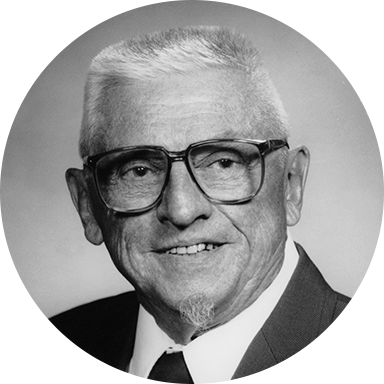
Edmund J. Siennicki

Edmund J. Siennicki grew up in Cleveland, Ohio, where a formative meeting with the legendary pianist Ignacy Jan Paderewski at age 12 shaped his artistic path. He earned his Bachelor's degree from Kent State University, where his composition "Fight on for KSU" became a stadium fixture, and later completed his MA at Teachers College, Columbia University under the mentorship of Herbert Elwell, Sergio Barroso, and Vincent Persichetti.

Siennicki's dual career as a performing musician on bassoon and piano informed his compositional voice across roughly 200 published works. His teaching tenure centered on Cleveland's junior high schools, with additional faculty positions at Michigan and Kent State University. Twice a MacDowell Colony composer in residence and a regular ASCAP award recipient, he continues to compose, lead clinics, and visit schools.

Why we love this

Siennicki's accessible lyricism makes this an ideal first recital piece for young pianists who need something genuinely musical rather than pedagogically dry. The straightforward technical demands allow students to focus on shaping the melody and responding to the piano accompaniment rather than wrestling with the instrument itself. It's the kind of piece that builds confidence and genuine musicianship in tandem.

What to expect

Graceful and introspective, this work invites quiet reflection through its singing melody line. The piano accompaniment provides warmth and support, creating an intimate performance space where the student's expressive choices become the focus.

Who it's for

Beginning pianists preparing for recitals or contests who have solid hand position and basic phrase awareness but need repertoire that doesn't overextend their technical range. Teachers seeking a lyrical solo that teaches genuine musicality without requiring advanced fingering patterns.

How to get the most out of it

  • Shape the melody in long, singing phrases rather than measure-by-measure units; let the accompaniment support and enhance your phrasing choices.
  • Balance your tone so the melody soars above the piano without forcing your hand. Young students often play too hard here.
  • Pay attention to dynamic contours written into the piece. Small crescendos and diminuendos give the piece shape and prevent it from becoming static.
  • Listen carefully to your accompanist's tempo and breathe together; this piece thrives on musical partnership, not solo dominance.

How to use it

Include this on a school recital to showcase a student's growing ability to sustain tone and shape phrases over several minutes. It pairs well alongside contemporary repertoire, offering a more traditional, melodic anchor on a diverse program. Its modest technical demands make it suitable for early in an academic year or as a bridge piece for students transitioning from method books to anthology repertoire.

Skills your students will build

  • Sustaining and shaping longer melodic lines without rhythmic fragmentation
  • Balancing solo voice with accompaniment texture and volume
  • Interpreting dynamic markings as musical decisions rather than technical instructions
  • Listening and responding to a collaborative partner's tempos and phrasing
  • Building stamina for performance over 3-5 minutes of continuous playing

You May Also Like