
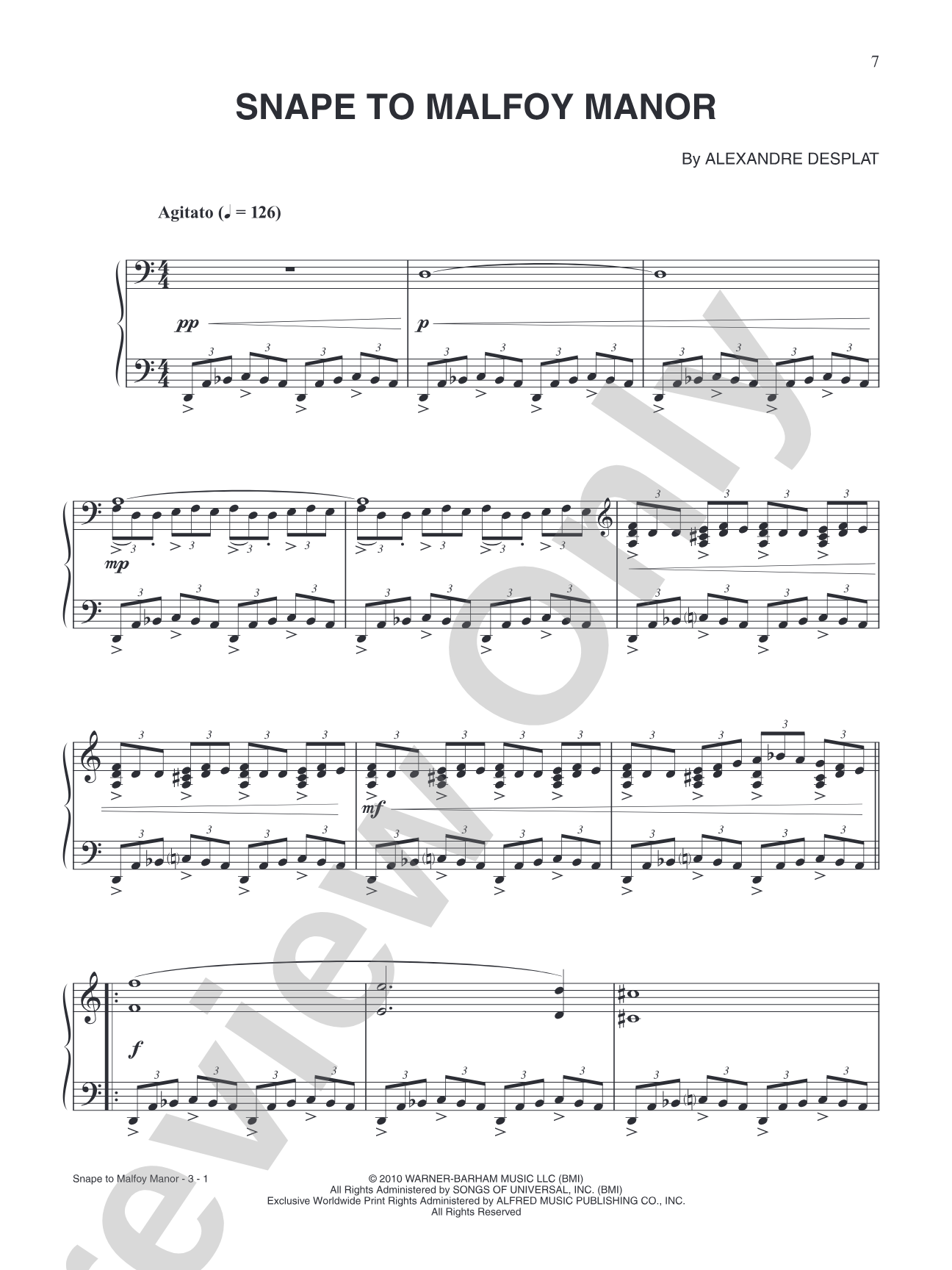

Snape to Malfoy Manor (from "Harry Potter & The Deathly Hallows: Part 1"): Piano
Selections from the Motion Picture
Music by Alexandre Desplat
Item: 00-XS-0000131
$4.99
Pickup currently not available
Related Items
Polyjuice Potion (from "Harry Potter & The Deathly Hallows: Part 1"): Piano |
$4.99
|
View | |
Ron Leaves (from "Harry Potter & The Deathly Hallows: Part 1"): Piano |
$4.99
|
View | |
Ron’s Speech (from "Harry Potter & The Deathly Hallows: Part 1"): Piano |
$4.99
|
View | |
Obliviate (from "Harry Potter & The Deathly Hallows: Part 1"): Piano |
$4.99
|
View | |
At the Burrow (from "Harry Potter & The Deathly Hallows: Part 1"): Piano |
$4.99
|
View | |
Harry and Ginny (from "Harry Potter & The Deathly Hallows: Part 1"): Piano |
$4.99
|
View | |
Godric's Hollow Graveyard (from "Harry Potter & The Deathly Hallows: Part 1"): Piano |
$4.99
|
View | |
Lovegood (from "Harry Potter & The Deathly Hallows: Part 1"): Piano |
$5.99
|
View | |
Farewell to Dobby (from "Harry Potter & The Deathly Hallows: Part 1"): Piano |
$4.99
|
View | |
Harry Potter and the Deathly Hallows, Part 1: Piano Book |
$14.99
|
View |
Description
Complete with pages of color screen shots from the film, this collectible book of 10 superb solo piano transcriptions from Alexandre Desplat's dramatic score will thrill pianists and their audiences alike. Titles: * Obliviate * Snape to Malfoy Manor * Polyjuice Potion * At the Burrow * Harry and Ginny * Ron Leaves * Godric's Hollow Graveyard * Ron's Speech * Lovegood * Farewell to Dobby.


Snape to Malfoy Manor (from "Harry Potter & The Deathly Hallows: Part 1"): Piano isn't in MakeMusic Cloud just yet...but it could be. Let us know you'd like to see it, and you'll help shape what comes next. In the meantime, start a free trial and dive into thousands of interactive titles your students can play along with today.
Request This Title
Tell us you want it.
Start Your Free Trial
Explore everything that's ready to play right now.
Sample Audio
No sample audio found.
Sample Video
No sample videos found.
Additional Details
Publisher:
Alfred Music
Page Count:
40
SKU:
00-XS-0000131
More about this title
About the Composer: Alexander Desplat
Alexandre Desplat has composed for eight of the Harry Potter films, shaping the sonic identity of the wizarding world from Half-Blood Prince through the Deathly Hallows films. His work across the series demonstrates sophisticated orchestration and a gift for writing memorable themes that anchor emotional moments without overwhelming the narrative.
Why we love this
These transcriptions capture the cinematic sweep of Desplat's orchestral writing in idiomatic piano language. A collection this generous (10 pieces, 40 pages) gives pianists real material to develop interpretive depth with film score repertoire, and the included color stills from the film create an engaging visual anchor for performance.
What to expect
Darkly introspective one moment, surging with dramatic momentum the next. Desplat's orchestrations translate to the piano with a cinematic quality: plaintive woodwind solos become singing melodic lines, while moments of tension shimmer with harmonic color and dynamic contrast. The pieces carry genuine emotional weight without relying on technical flash.
Who it's for
Intermediate to advanced pianists seeking substantial film score repertoire that sits at a musically sophisticated level. This collection works equally well for recital performance, competitive festivals, or pianists who want to expand beyond traditional classical and contemporary concert music.
How to get the most out of it
- Balance the layered textures in pieces like 'Snape to Malfoy Manor' by voicing inner melodic lines clearly; the orchestral source material often carries secondary themes in the middle register.
- Track the emotional arc across the suite rather than treating each piece as isolated. 'Ron Leaves' and 'Farewell to Dobby' sit in very different dramatic spaces, and the contrast sharpens when you honor the progression.
- Attend to Desplat's frequent use of rubato and rhythmic flexibility in the quieter moments (especially 'Lovegood'). These pieces ask for breathing room, not metronomic precision.
How to use it
Program one or two pieces as part of a recital exploring theme and variation in film scoring, or build an entire program around them as a showcase of modern orchestral writing. They also work well in schools featuring student composers, demonstrating how effective film scoring combines accessibility with musical sophistication.
Skills your students will build
- Translating orchestral textures and doublings to solo keyboard voice leading
- Navigating the dramatic pacing and rubato inherent in film score composition
- Reading and interpreting complex harmonic language with jazz-influenced chromaticism
- Building interpretive choices informed by visual and narrative context