
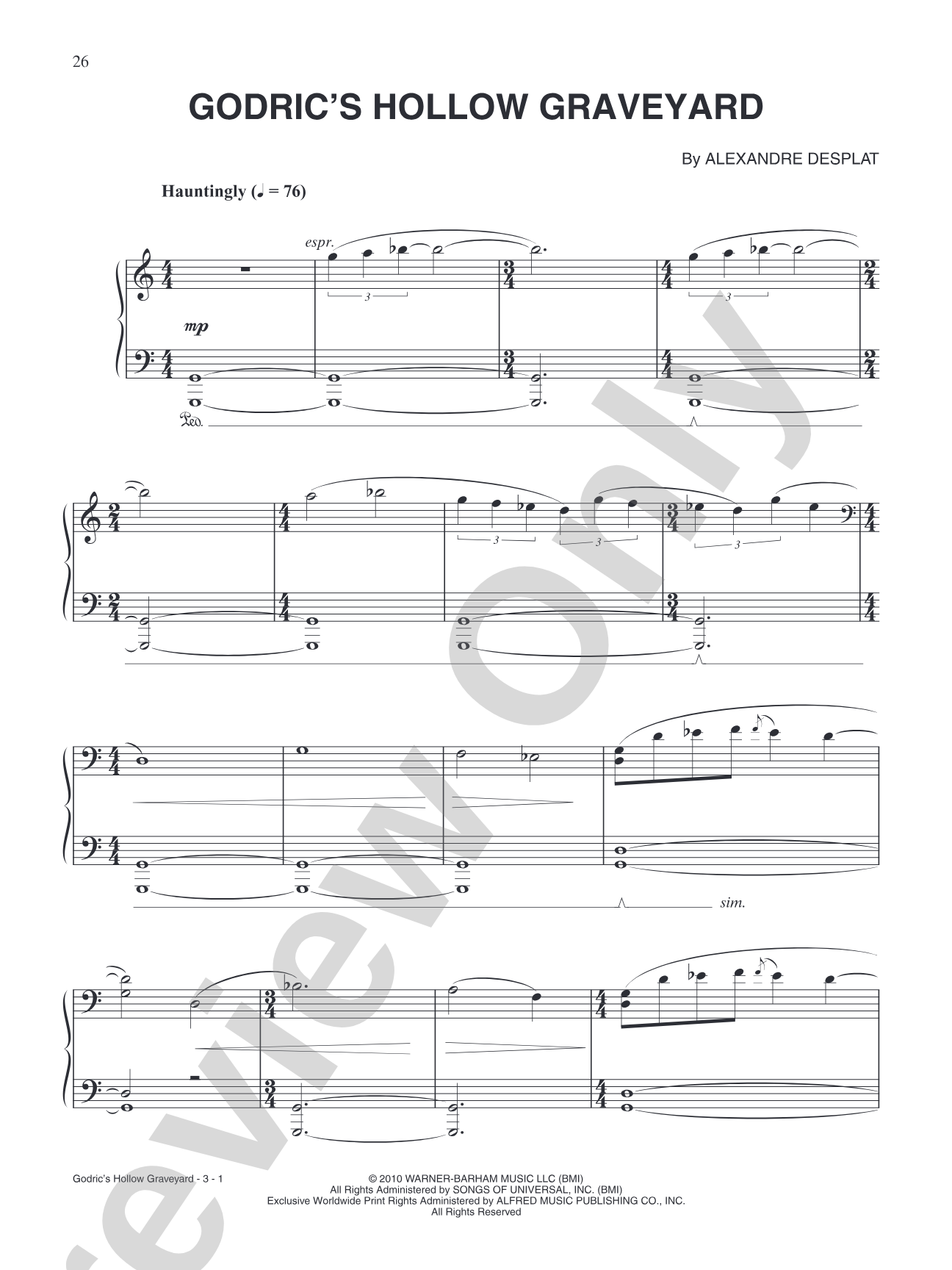

Godric's Hollow Graveyard (from "Harry Potter & The Deathly Hallows: Part 1"): Piano
Selections from the Motion Picture
Music by Alexandre Desplat
Item: 00-XS-0000138
$4.99
Pickup currently not available
Related Items
Snape to Malfoy Manor (from "Harry Potter & The Deathly Hallows: Part 1"): Piano |
$4.99
|
View | |
Polyjuice Potion (from "Harry Potter & The Deathly Hallows: Part 1"): Piano |
$4.99
|
View | |
Ron Leaves (from "Harry Potter & The Deathly Hallows: Part 1"): Piano |
$4.99
|
View | |
Ron’s Speech (from "Harry Potter & The Deathly Hallows: Part 1"): Piano |
$4.99
|
View | |
Obliviate (from "Harry Potter & The Deathly Hallows: Part 1"): Piano |
$4.99
|
View | |
At the Burrow (from "Harry Potter & The Deathly Hallows: Part 1"): Piano |
$4.99
|
View | |
Harry and Ginny (from "Harry Potter & The Deathly Hallows: Part 1"): Piano |
$4.99
|
View | |
Lovegood (from "Harry Potter & The Deathly Hallows: Part 1"): Piano |
$5.99
|
View | |
Farewell to Dobby (from "Harry Potter & The Deathly Hallows: Part 1"): Piano |
$4.99
|
View | |
Harry Potter and the Deathly Hallows, Part 1: Piano Book |
$14.99
|
View |
Description
Complete with pages of color screen shots from the film, this collectible book of 10 superb solo piano transcriptions from Alexandre Desplat's dramatic score will thrill pianists and their audiences alike. Titles: * Obliviate * Snape to Malfoy Manor * Polyjuice Potion * At the Burrow * Harry and Ginny * Ron Leaves * Godric's Hollow Graveyard * Ron's Speech * Lovegood * Farewell to Dobby.


Godric's Hollow Graveyard (from "Harry Potter & The Deathly Hallows: Part 1"): Piano isn't in MakeMusic Cloud just yet...but it could be. Let us know you'd like to see it, and you'll help shape what comes next. In the meantime, start a free trial and dive into thousands of interactive titles your students can play along with today.
Request This Title
Tell us you want it.
Start Your Free Trial
Explore everything that's ready to play right now.
Sample Audio
No sample audio found.
Sample Video
No sample videos found.
Additional Details
Publisher:
Alfred Music
Page Count:
40
SKU:
00-XS-0000138
More about this title
About the Composer: Alexander Desplat
Alexander Desplat is a French film composer whose orchestral writing combines sophisticated harmonic language with emotional directness. He has shaped the sonic identity of major film franchises, earning multiple Academy Award and Grammy nominations for his work in contemporary cinema.
Why we love this
These transcriptions preserve the dramatic weight of Desplat's orchestral writing while creating genuinely rewarding solo piano material. The collection balances accessibility with musical substance, giving pianists the chance to inhabit moments from the films without simplification that would flatten their emotional impact.
What to expect
Cinematic and introspective. Desplat's piano writing moves between moments of intimate reflection and building tension, with lush harmonic textures that evoke the film's darker emotional landscape. The music feels both orchestral in conception and idiomatic for the instrument.
Who it's for
Pianists with solid intermediate to advanced technique who want to perform music from a beloved film franchise without resorting to simplified arrangements. Teachers can use these transcriptions to engage students with contemporary film scoring while maintaining musical substance.
How to get the most out of it
- Pay close attention to Desplat's use of silence and space. These moments are as structurally important as the written notes; resist the urge to fill them.
- Layer dynamics with care. The score's emotional turns often depend on subtle shifts in volume rather than dramatic leaps. A slow crescendo from pp to p can carry more weight than a sudden jump to mf.
- Shape phrases by the emotional arc of the scene, not by the page breaks. Watch the film context if available to understand where tension builds and releases.
- Balance melody and accompaniment texture. Many pieces feature flowing accompaniment patterns that should support rather than overpower the thematic material.
How to use it
These pieces work well in recital programs as a thematic group or interspersed among classical repertoire to show the scope of contemporary composition. They can also anchor a concert theme around film scores or narrative music.
Skills your students will build
- Pedal control for sustaining complex harmonic textures
- Voicing chords to create orchestral color on a single instrument
- Managing rubato and phrasing in music that prioritizes emotional storytelling
- Reading and interpreting film music notation conventions
- Balancing accompaniment figuration with melodic content