
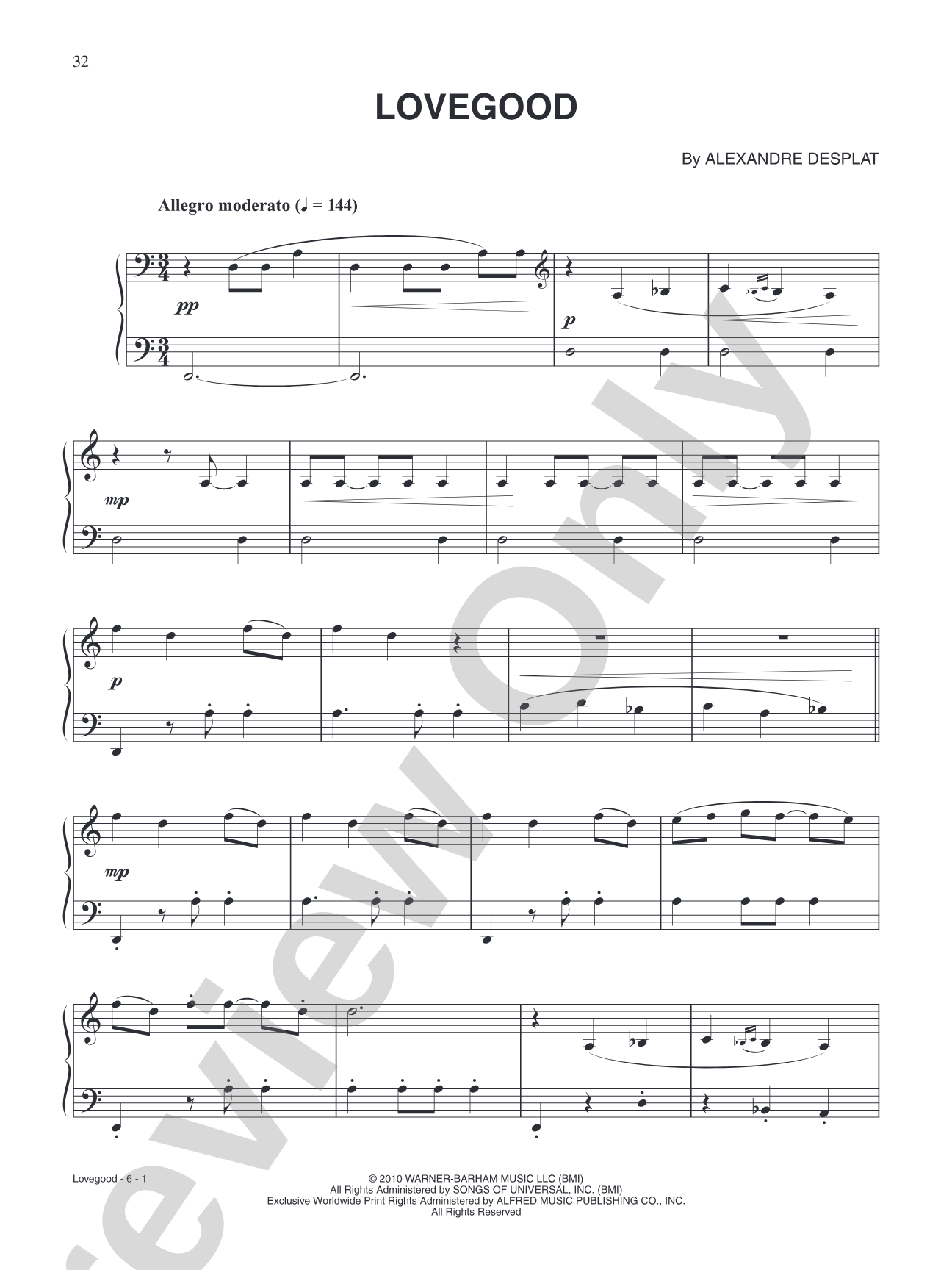
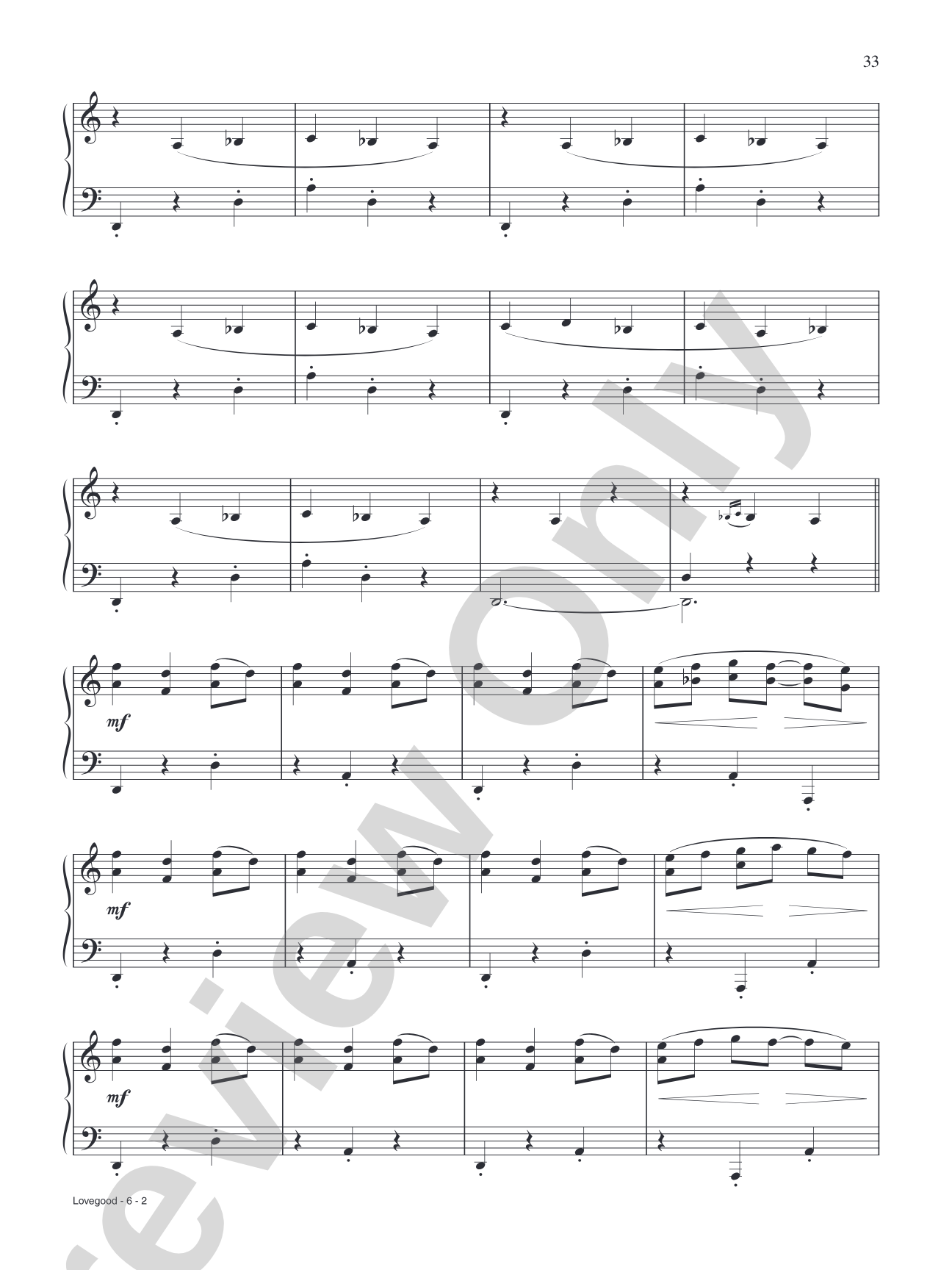

Lovegood (from "Harry Potter & The Deathly Hallows: Part 1"): Piano
Selections from the Motion Picture
Music by Alexandre Desplat
Item: 00-XS-0000139
$5.99
Pickup currently not available
Related Items
Snape to Malfoy Manor (from "Harry Potter & The Deathly Hallows: Part 1"): Piano |
$4.99
|
View | |
Polyjuice Potion (from "Harry Potter & The Deathly Hallows: Part 1"): Piano |
$4.99
|
View | |
Ron Leaves (from "Harry Potter & The Deathly Hallows: Part 1"): Piano |
$4.99
|
View | |
Ron’s Speech (from "Harry Potter & The Deathly Hallows: Part 1"): Piano |
$4.99
|
View | |
Obliviate (from "Harry Potter & The Deathly Hallows: Part 1"): Piano |
$4.99
|
View | |
At the Burrow (from "Harry Potter & The Deathly Hallows: Part 1"): Piano |
$4.99
|
View | |
Harry and Ginny (from "Harry Potter & The Deathly Hallows: Part 1"): Piano |
$4.99
|
View | |
Godric's Hollow Graveyard (from "Harry Potter & The Deathly Hallows: Part 1"): Piano |
$4.99
|
View | |
Farewell to Dobby (from "Harry Potter & The Deathly Hallows: Part 1"): Piano |
$4.99
|
View | |
Harry Potter and the Deathly Hallows, Part 1: Piano Book |
$14.99
|
View |
Description
Complete with pages of color screen shots from the film, this collectible book of 10 superb solo piano transcriptions from Alexandre Desplat's dramatic score will thrill pianists and their audiences alike. Titles: * Obliviate * Snape to Malfoy Manor * Polyjuice Potion * At the Burrow * Harry and Ginny * Ron Leaves * Godric's Hollow Graveyard * Ron's Speech * Lovegood * Farewell to Dobby.


Lovegood (from "Harry Potter & The Deathly Hallows: Part 1"): Piano isn't in MakeMusic Cloud just yet...but it could be. Let us know you'd like to see it, and you'll help shape what comes next. In the meantime, start a free trial and dive into thousands of interactive titles your students can play along with today.
Request This Title
Tell us you want it.
Start Your Free Trial
Explore everything that's ready to play right now.
Sample Audio
No sample audio found.
Sample Video
No sample videos found.
Additional Details
Publisher:
Alfred Music
Page Count:
40
SKU:
00-XS-0000139
More about this title
About the Composer: Alexander Desplat
Alexandre Desplat has established himself as one of contemporary film's most versatile composers, crafting scores for projects ranging from intimate character studies to large-scale fantasy epics. His work on the Harry Potter franchise, particularly the final installments, demonstrates his gift for writing music that deepens emotional resonance while maintaining thematic coherence across complex narratives.
Desplat's approach to film scoring emphasizes melodic clarity and orchestral sophistication, qualities that translate remarkably well to solo piano. His ability to distill cinematic moments into pianistic language makes his transcriptions accessible to intermediate and advanced players without sacrificing the dramatic weight of the original compositions.
Why we love this
These transcriptions capture some of the most emotionally pivotal moments from the film, and Desplat's writing translates beautifully to the piano. Teachers will appreciate that the collection balances showpiece territory with intimate character moments, giving recital programmers options across a range of moods and technical demands.
What to expect
These pieces move fluidly between introspection and urgency, reflecting the emotional turbulence of the narrative they underscore. The writing combines sweeping romantic gestures with moments of stark simplicity, creating a collection that feels both cinematic and deeply personal at the piano.
Who it's for
Intermediate to advanced pianists seeking substantial recital material with dramatic appeal and cultural resonance. This collection also serves teachers who want to engage students through film music while maintaining high musical standards and building serious interpretive skills.
How to get the most out of it
- Recognize the emotional architecture of each piece before diving into technique. These transcriptions are storytelling vehicles; your interpretation should reflect the narrative weight of the original scenes.
- Pay close attention to Desplat's use of ostinato and harmonic repetition, particularly in pieces like 'Polyjuice Potion' and 'At the Burrow.' Maintain clarity in accompaniment figures while bringing out melodic lines.
- Use the color images from the film as interpretive references, but trust the music itself to communicate. The visual context enriches preparation but should never override your musical instincts.
How to use it
Program individual pieces strategically throughout a recital rather than performing multiple selections consecutively. A single transcription pairs well with classical and contemporary works of similar emotional temperature, and can serve as a bridge between more traditional repertoire and modern compositions. This collection also works beautifully as a thematic program for pianists targeting fan audiences or film music enthusiasts.
Skills your students will build
- Translating cinematic orchestration into idiomatic piano writing
- Managing sustained harmonic shifts and modal movement
- Balancing melody and accompaniment across different registers
- Controlling tempo flexibility for dramatic effect
- Building interpretive choices from film context without over-relying on visual cues