
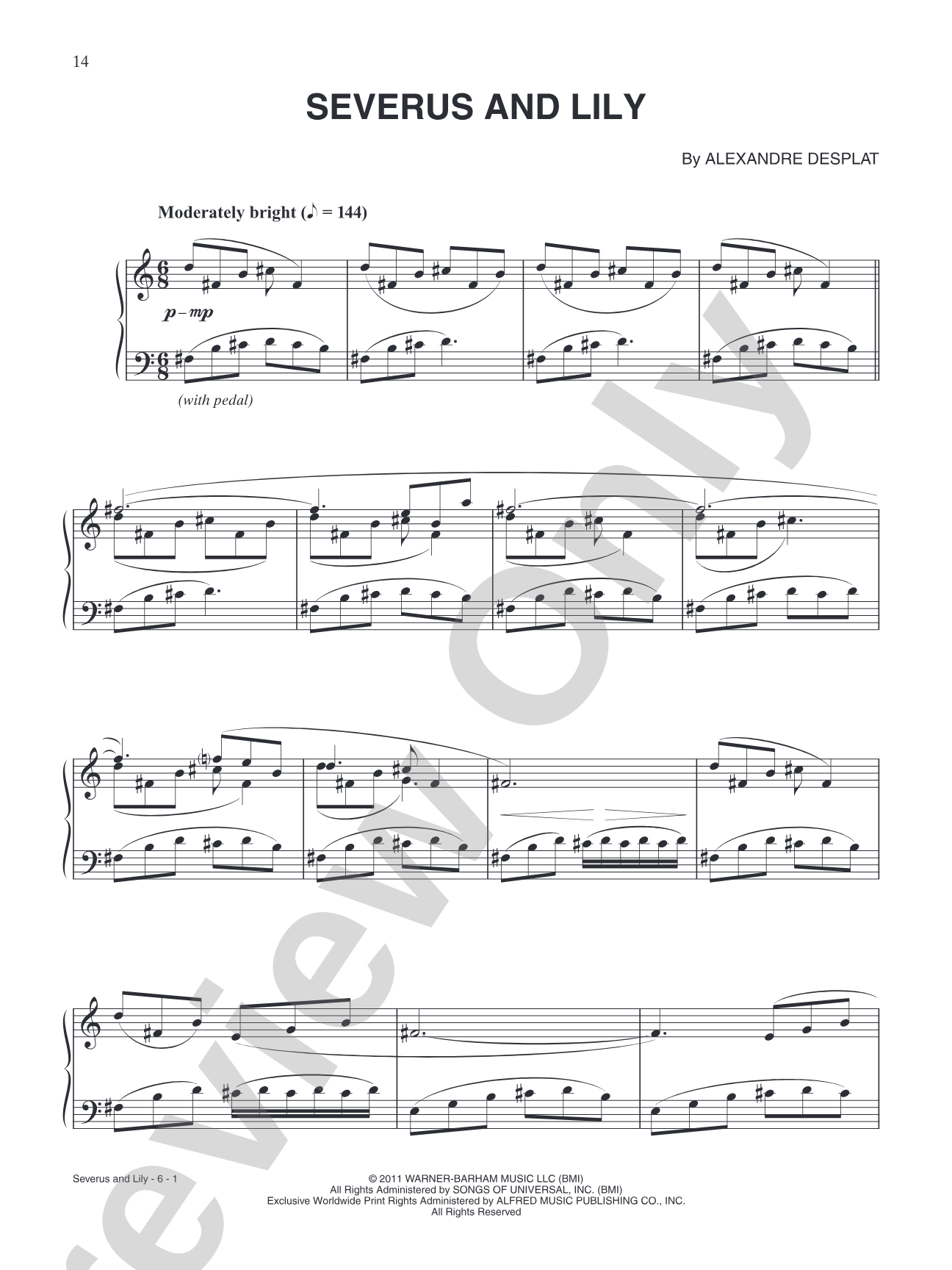
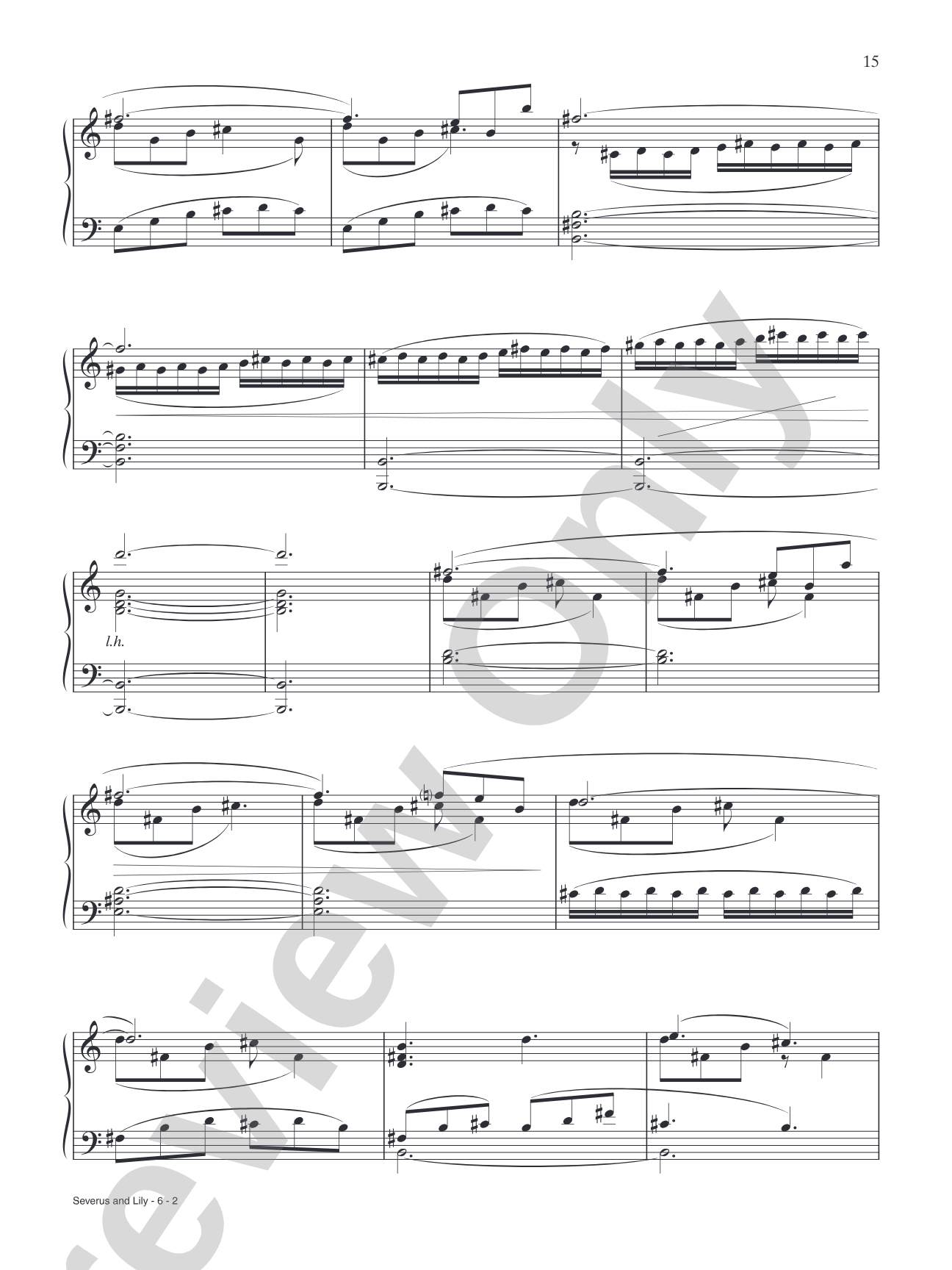

Severus and Lily (from "Harry Potter and the Deathly Hallows Part 2"): Piano
Selections from the Motion Picture
Music by Alexandre Desplat
Item: 00-XS-0000399
$5.99
Pickup currently not available
Related Items
Lily's Theme (from "Harry Potter and the Deathly Hallows Part 2"): Piano |
$4.99
|
View | |
Statues (from "Harry Potter and the Deathly Hallows Part 2"): Piano |
$4.99
|
View | |
Courtyard Apocalypse (from "Harry Potter and the Deathly Hallows Part 2"): Piano |
$4.99
|
View | |
Harry's Sacrifice (from "Harry Potter and the Deathly Hallows Part 2"): Piano |
$4.99
|
View | |
The Resurrection Stone (from "Harry Potter and the Deathly Hallows Part 2"): Piano |
$4.99
|
View | |
Neville the Hero (from "Harry Potter and the Deathly Hallows Part 2"): Piano |
$4.99
|
View | |
A New Beginning (from "Harry Potter and the Deathly Hallows Part 2"): Piano |
$4.99
|
View | |
Lily's Lullaby (from "Harry Potter and the Deathly Hallows Part 2"): Piano |
$4.99
|
View | |
Harry Potter and the Deathly Hallows, Part 2: Piano Book |
$14.99
|
View |
Description
This is the officially licensed, collectible sheet music folio from the motion picture, featuring solo piano arrangements of nine standout selections from Alexandre Desplat's acclaimed score, along with several pages of color imagery from the film. Titles: Lily's Theme * Statues * Courtyard Apocalypse * Severus and Lily * Harry's Sacrifice * The Resurrection Stone * Neville the Hero * A New Beginning * Lily's Lullaby.


Severus and Lily (from "Harry Potter and the Deathly Hallows Part 2"): Piano isn't in MakeMusic Cloud just yet...but it could be. Let us know you'd like to see it, and you'll help shape what comes next. In the meantime, start a free trial and dive into thousands of interactive titles your students can play along with today.
Request This Title
Tell us you want it.
Start Your Free Trial
Explore everything that's ready to play right now.
Sample Audio
No sample audio found.
Sample Video
No sample videos found.
Additional Details
Publisher:
Alfred Music
Page Count:
32
SKU:
00-XS-0000399
More about this title
About the Composer: Alexandre Desplat
Alexandre Desplat has become one of the most sought-after film composers of the last two decades, with a gift for writing themes that anchor entire cinematic universes. His work on the Harry Potter series, particularly the final films, demonstrates his mastery of orchestral color and emotional restraint—he knows when a single piano line carries more weight than a full orchestra.
Why we love this
These arrangements capture the emotional core of one of cinema's most beloved scores without relying on orchestral spectacle. Each piece stands alone as a complete musical thought, making this collection equally valuable for recital programming and for pianists drawn to film music that rewards careful listening.
What to expect
These arrangements balance cinematic scope with intimate piano writing. You'll find yourself moving between moments of quiet introspection and passages of real dramatic weight, all grounded in clean, singable melodies and harmonic sophistication that respects both the source material and the instrument.
Who it's for
Advanced intermediate to advanced pianists who want substantial repertoire beyond the classical canon, along with pianists interested in contemporary film music and those preparing for recitals that mix classical and modern selections. Teachers seeking accessible yet musically rewarding pieces that resonate with students who love the Harry Potter films will find genuine artistic material here.
How to get the most out of it
- Pay attention to dynamic subtlety in pieces like Lily's Theme and Lily's Lullaby; the power comes from restraint and clarity of voice leading rather than dramatic gestures.
- Use pedal judiciously to create atmosphere without blurring harmonic progressions, especially in the more contemplative selections.
- Shape phrases with the film's emotional arc in mind; these pieces were written to support specific moments, and that intention remains in the solo arrangements.
- Approach the more dramatic selections like Courtyard Apocalypse and Harry's Sacrifice with confidence in the orchestral writing translated to the keyboard—trust the harmonic and rhythmic foundation.
How to use it
Select pieces from this collection to anchor a recital program with contemporary art music, or program individual selections as emotional counterweights to classical repertoire. Students preparing for recitals that blend different eras and styles will find material here that allows genuine artistic choice while maintaining technical substance.
Skills your students will build
- Pedal control and voice independence in impressionistic harmonic contexts
- Phrasing across longer melodic lines with emotional intention
- Interpreting film-based orchestral writing translated for solo keyboard
- Dynamic contrast and tonal coloring at advanced intermediate level
- Balance between left-hand accompaniment patterns and right-hand melodic clarity