
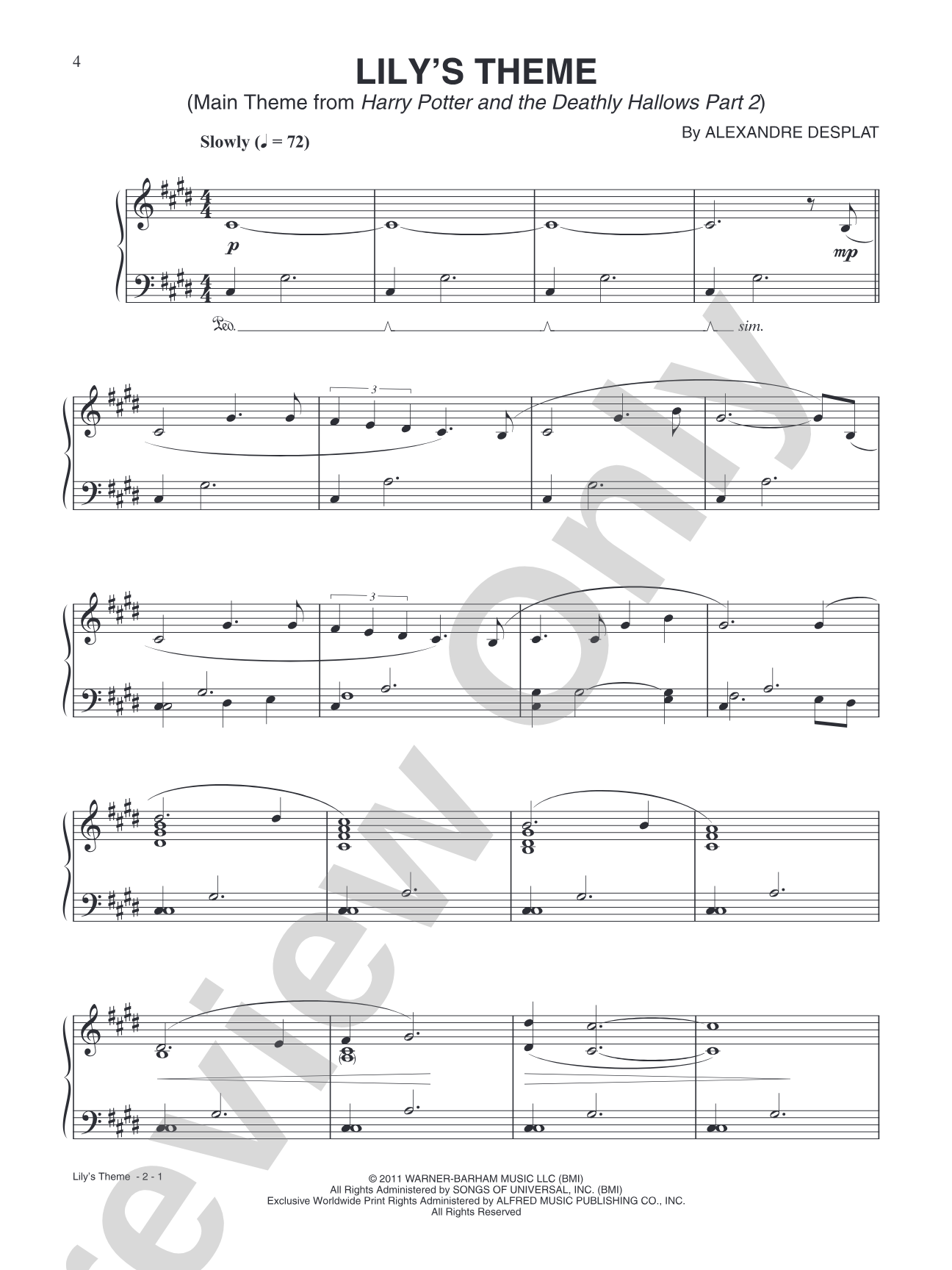

Lily's Theme (from "Harry Potter and the Deathly Hallows Part 2"): Piano
Selections from the Motion Picture
Music by Alexandre Desplat
Item: 00-XS-0000396
$4.99
Pickup currently not available
Related Items
Statues (from "Harry Potter and the Deathly Hallows Part 2"): Piano |
$4.99
|
View | |
Courtyard Apocalypse (from "Harry Potter and the Deathly Hallows Part 2"): Piano |
$4.99
|
View | |
Severus and Lily (from "Harry Potter and the Deathly Hallows Part 2"): Piano |
$5.99
|
View | |
Harry's Sacrifice (from "Harry Potter and the Deathly Hallows Part 2"): Piano |
$4.99
|
View | |
The Resurrection Stone (from "Harry Potter and the Deathly Hallows Part 2"): Piano |
$4.99
|
View | |
Neville the Hero (from "Harry Potter and the Deathly Hallows Part 2"): Piano |
$4.99
|
View | |
A New Beginning (from "Harry Potter and the Deathly Hallows Part 2"): Piano |
$4.99
|
View | |
Lily's Lullaby (from "Harry Potter and the Deathly Hallows Part 2"): Piano |
$4.99
|
View | |
Harry Potter and the Deathly Hallows, Part 2: Piano Book |
$14.99
|
View |
Description
This is the officially licensed, collectible sheet music folio from the motion picture, featuring solo piano arrangements of nine standout selections from Alexandre Desplat's acclaimed score, along with several pages of color imagery from the film. Titles: Lily's Theme * Statues * Courtyard Apocalypse * Severus and Lily * Harry's Sacrifice * The Resurrection Stone * Neville the Hero * A New Beginning * Lily's Lullaby.


Lily's Theme (from "Harry Potter and the Deathly Hallows Part 2"): Piano isn't in MakeMusic Cloud just yet...but it could be. Let us know you'd like to see it, and you'll help shape what comes next. In the meantime, start a free trial and dive into thousands of interactive titles your students can play along with today.
Request This Title
Tell us you want it.
Start Your Free Trial
Explore everything that's ready to play right now.
Sample Audio
No sample audio found.
Sample Video
No sample videos found.
Additional Details
Publisher:
Alfred Music
Page Count:
32
SKU:
00-XS-0000396
More about this title
About the Composer: Alexandre Desplat
Alexandre Desplat has become one of the most recognizable film composers of the 21st century, crafting expansive orchestral scores that define major franchises and standalone films alike. His work on the Harry Potter series (particularly the final four films) earned him a reputation for combining emotional restraint with sweeping melodic invention, allowing themes to evolve and deepen as characters and plots do the same.
Why we love this
This collection captures one of Desplat's most poignant scores at a level pianists actually want to play. The arrangements preserve the emotional architecture of the original themes while remaining musically satisfying as standalone piano works, making them ideal for recitals that blend popular culture with genuine artistry.
What to expect
These arrangements evoke the film's tonal palette: reflective and sometimes haunting, with moments of quiet triumph and deep melancholy woven throughout. You'll find yourself drawn into the emotional narratives Desplat built, even as you're navigating the keyboard's technical demands.
Who it's for
Pianists seeking repertoire that connects to widely recognized music without sacrificing musical depth will find this collection rewarding. This is equally suited to intermediate-to-advanced students building their recital programs and adult learners exploring film scoring's craft.
How to get the most out of it
- Pay close attention to the color imagery included in the folio; Desplat's orchestrations are inherently visual, and referencing the film stills while practicing will deepen your interpretive choices around pacing and rubato.
- Approach the repeated phrases with variation in touch and dynamics rather than playing them identically. Film scoring relies heavily on subtle shifts that accumulate emotional weight.
- Balance the lyrical lines against accompanying figures by allowing the melody space to breathe, especially in pieces like Lily's Lullaby where simplicity carries the emotional load.
How to use it
Sequence selections from this collection as an interdisciplinary recital set exploring narrative music, or use individual pieces as programming bookends for heavier classical repertoire. Consider pairing this with other contemporary film scores to highlight how modern composers approach emotional storytelling through instrumental writing.
Skills your students will build
- Pedal control across different dynamic ranges and harmonic contexts
- Rubato and flexibility in service of emotional phrasing
- Interpreting film music's approach to melody and accompaniment balance
- Sustaining legato over extended passages with hand shifts