
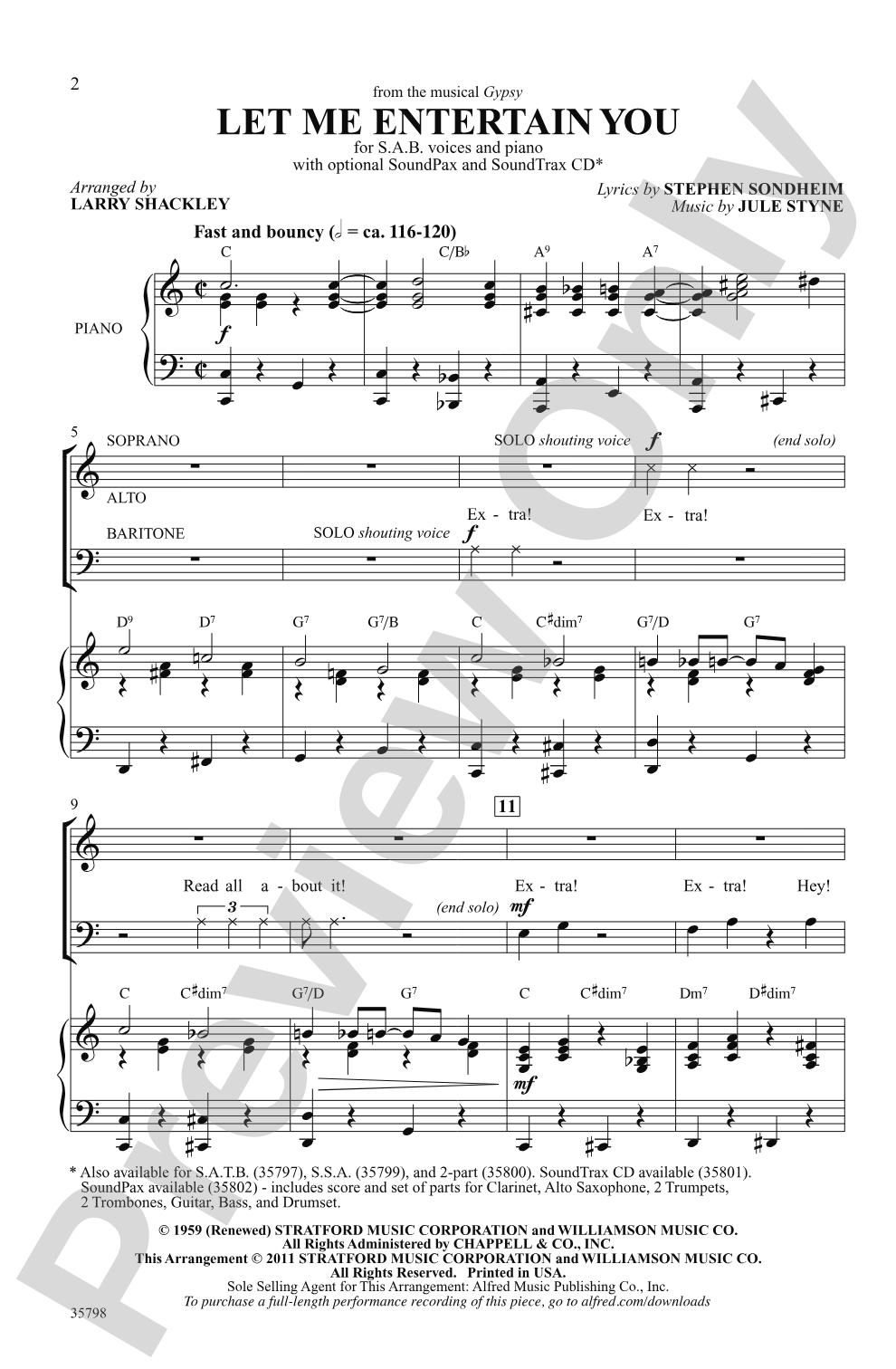
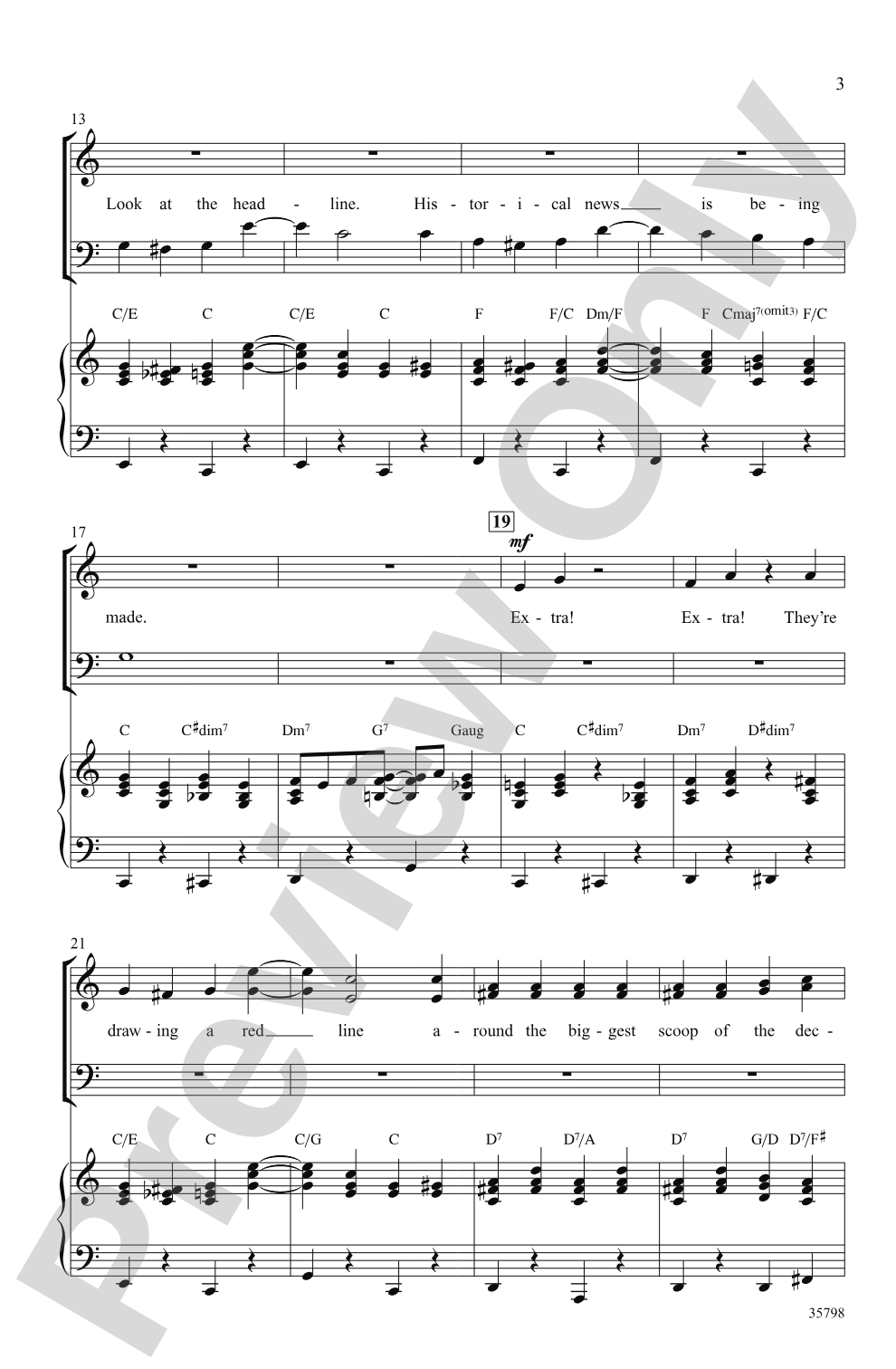
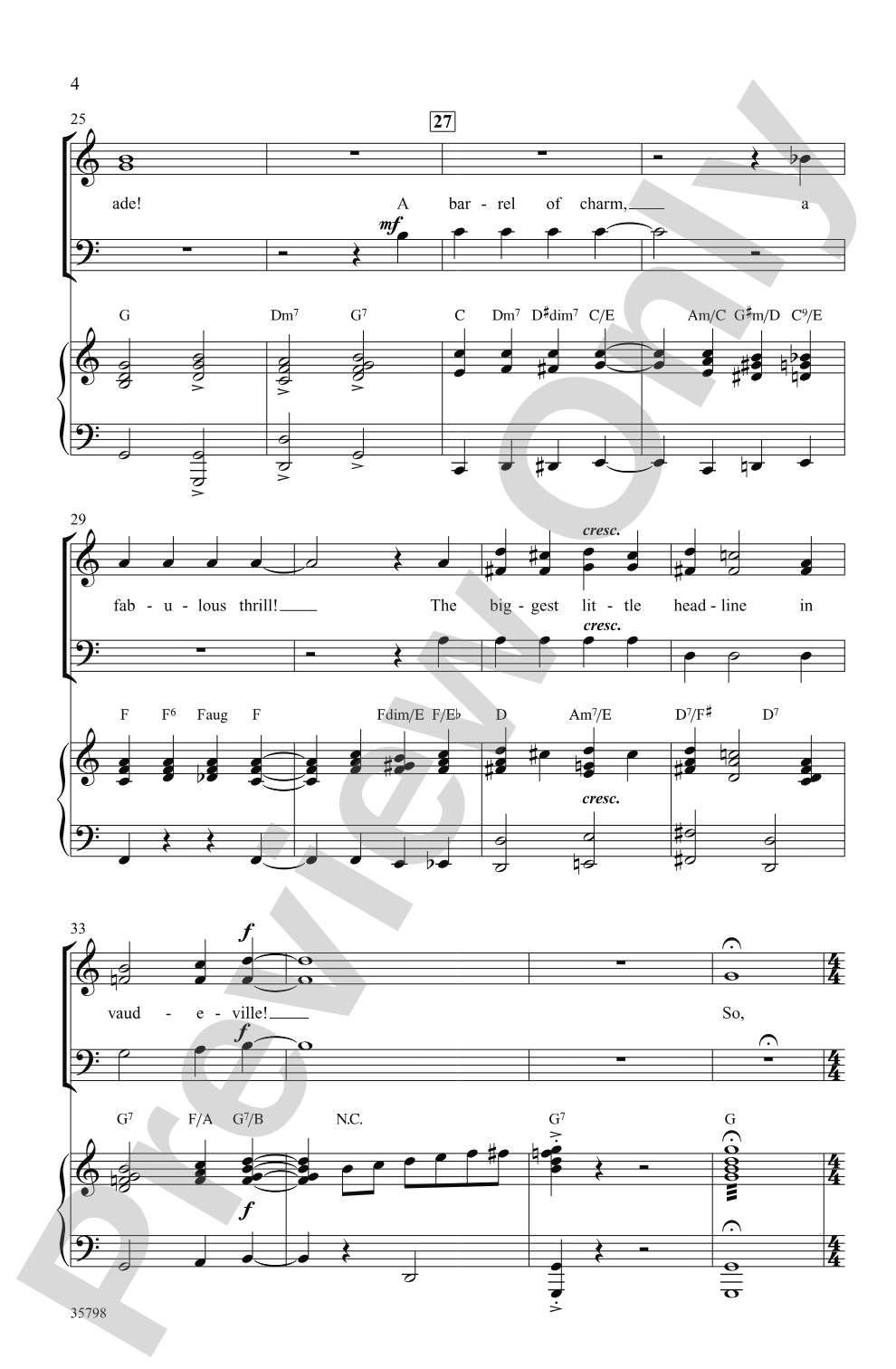

Let Me Entertain You (from Gypsy): SAB Choral Octavo
From the Musical Gypsy
Lyrics by Stephen Sondheim, music by Jule Styne / arr. Larry Shackley
Item: 00-PO-0001098
$1.90
Minimum order quantity: 20 copies
One moment…
Related Items
Let Me Entertain You: SoundTrax Digital Audio Download |
$26.99
|
View | |
Let Me Entertain You (from Gypsy): SATB Choral Octavo |
$1.90
|
View | |
Let Me Entertain You (from Gypsy): SSA Choral Octavo |
$1.90
|
View | |
Let Me Entertain You (from Gypsy): 2-Part Choral Octavo |
$1.90
|
View | |
Let Me Entertain You (from Gypsy): Choral SoundPax |
$40.00
|
View | |
Let Me Entertain You: SATB Choral Octavo |
$1.90
|
View | |
Let Me Entertain You: SAB Choral Octavo |
$1.90
|
View | |
Let Me Entertain You: SSA Choral Octavo |
$1.90
|
View | |
Let Me Entertain You: 2-Part Choral Octavo |
$1.90
|
View | |
Let Me Entertain You: Choral Octavo SoundTrax CD |
$26.99
|
View | |
Let Me Entertain You: Choral SoundPax |
$40.00
|
View |
Description
During a performance of the Tony-award winning musical Gypsy, this song is presented in many different styles. And our choral arrangement incorporates them all---from an opening 2-beat, to a gentle swing, to a lilting waltz, and then finishes with a raucous kick line! Featured on Showbiz! choral movement DVD (00-35858).


Let Me Entertain You (from Gypsy): SAB Choral Octavo isn't in MakeMusic Cloud just yet...but it could be. Let us know you'd like to see it, and you'll help shape what comes next. In the meantime, start a free trial and dive into thousands of interactive titles your students can play along with today.
Request This Title
Tell us you want it.
Start Your Free Trial
Explore everything that's ready to play right now.
Sample Audio
1
Audio File
--:--
0:00
0:00
Sample Video
No sample videos found.
Additional Details
Series:
Alfred Pop Choral Series
Publisher:
Alfred Music
Page Count:
12
SKU:
00-PO-0001098
More about this title
About the Composer: Jule Styne
Jule Styne (1905-1975) composed the scores for some of Broadway's most enduring musicals, including Gypsy, Funny Girl, and Bells Are Ringing. His gift for melody and his ability to write music that served the dramatic arc of a story made him one of the most respected theatrical composers of the mid-20th century.
Styne understood how to write for the stage in ways that revealed character and advanced plot. His songs are singable, memorable, and built to work in ensemble contexts. For music educators, his catalog offers repertoire that connects students to authentic Broadway craftsmanship while remaining accessible to young singers.
Why we love this
This arrangement captures the theatrical variety that makes the original number so effective, moving through four distinct musical styles without feeling fragmented. Larry Shackley's orchestration is idiomatic to each section, and the SAB voicing keeps the piece within reach of most mixed choirs while preserving Styne's melodic strength. It's a genuine crowd-pleaser that works as well in concert as it does for musical theater units.
What to expect
Showstopping and versatile. The piece opens with vaudeville snap, softens into sophisticated swing, floats through a ballroom moment, and erupts into pure theatrical fun. Singers experience the full range of what Broadway can ask of them: precision, elegance, swing feel, and uninhibited energy.
Who it's for
Directors programming show tunes or seeking substantial choral entertainment that doesn't require full orchestration. The SAB voicing makes it suitable for mixed choirs ranging from high school through community and adult groups, including those with limited soprano or alto depth.
How to get the most out of it
- Treat each section as its own mini-performance: the 2-beat opening needs percussive clarity; the swing requires relaxed pocket playing from the rhythm section; the waltz asks for legit vocal tone and gentle phrasing; the kick line finale demands full energy and tight rhythmic lock.
- Use the recorded accompaniment to lock into the style shifts, especially the tempo and feel changes. Rehearse with it early to build confidence in the transitions.
- Balance the voices in the waltz section so the melody sings through the accompaniment. SAB voicing can cloud if the alto or bass dominate.
- Choreograph the kick line section deliberately. Even simple synchronized movement (or a simple step-touch) transforms the ending from a vocal finish into a theatrical event.
How to use it
Program this as a headliner in a pops or Broadway-themed concert. Its structural variety and theatrical DNA make it an ideal anchor for a set of show tunes, or pair it with other Styne numbers for a focused songwriter showcase. The movement and staging opportunities also make it valuable for any director interested in integrating physical performance into choral work.
Skills your students will build
- Managing style shifts and tempo changes within a single piece
- Swing feel and rhythmic flexibility
- Vocal tone adjustment across four distinct musical contexts
- Ensemble coordination through choreographed sections
- Theatrical presence and character in performance