
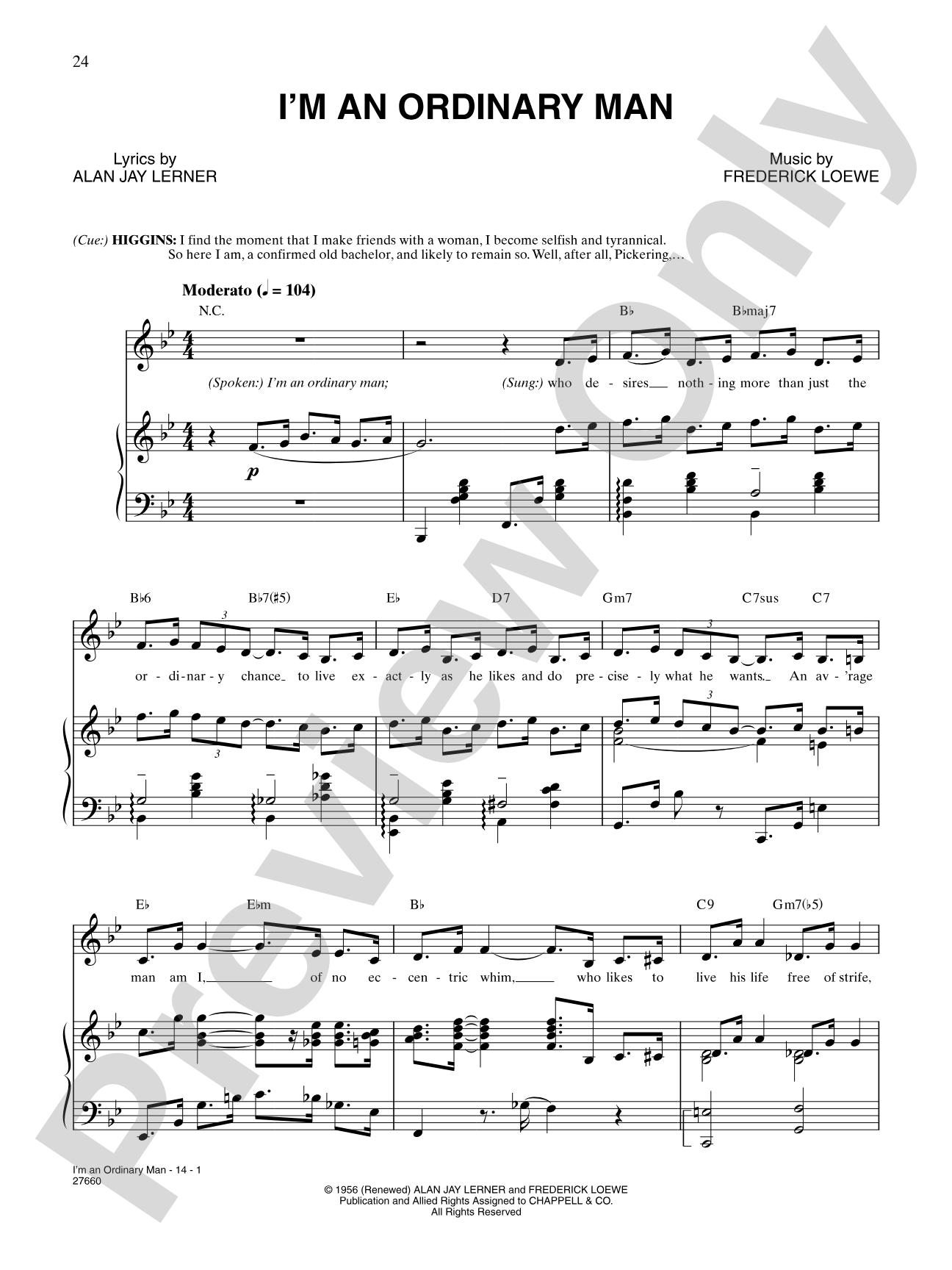
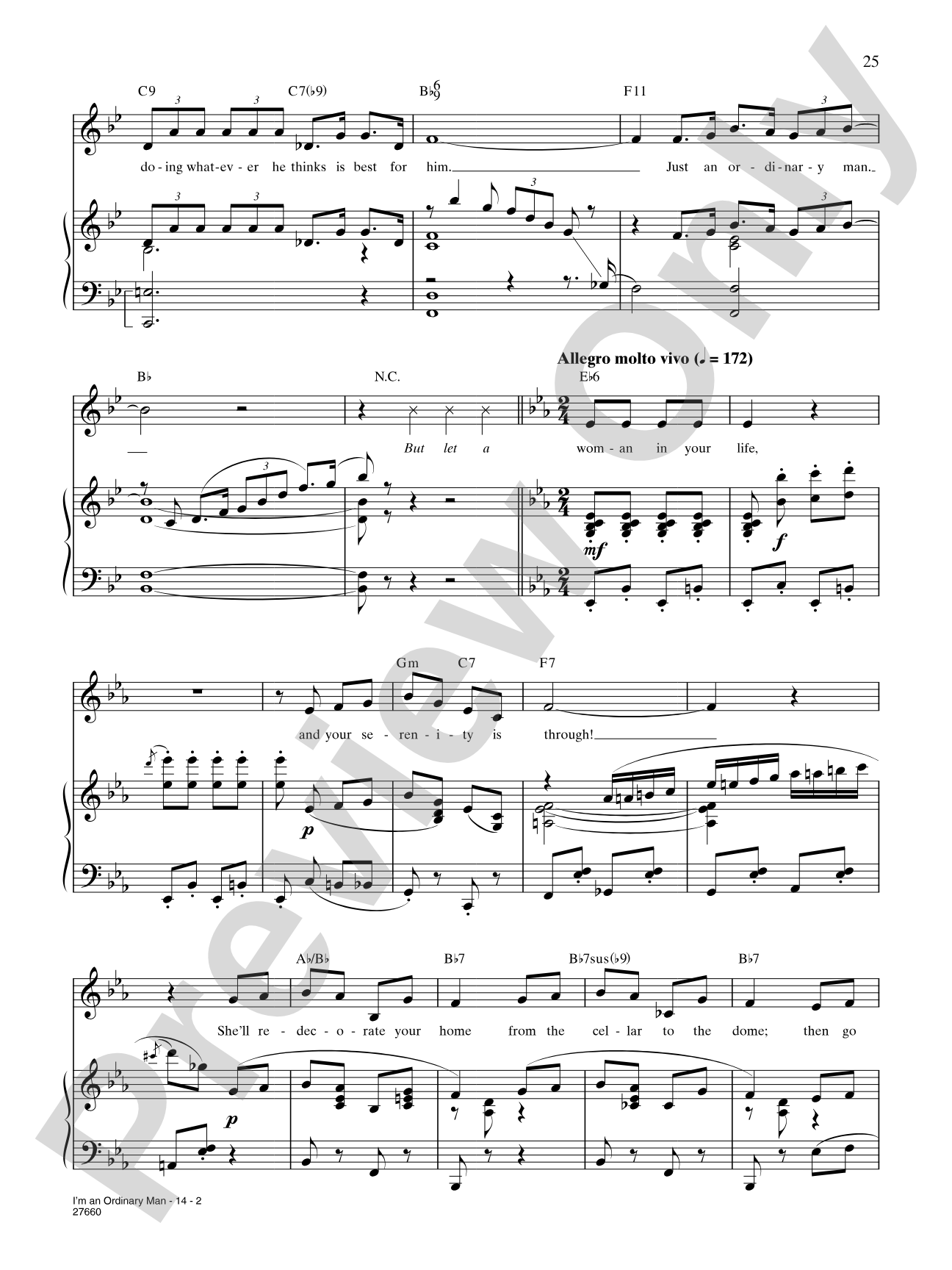
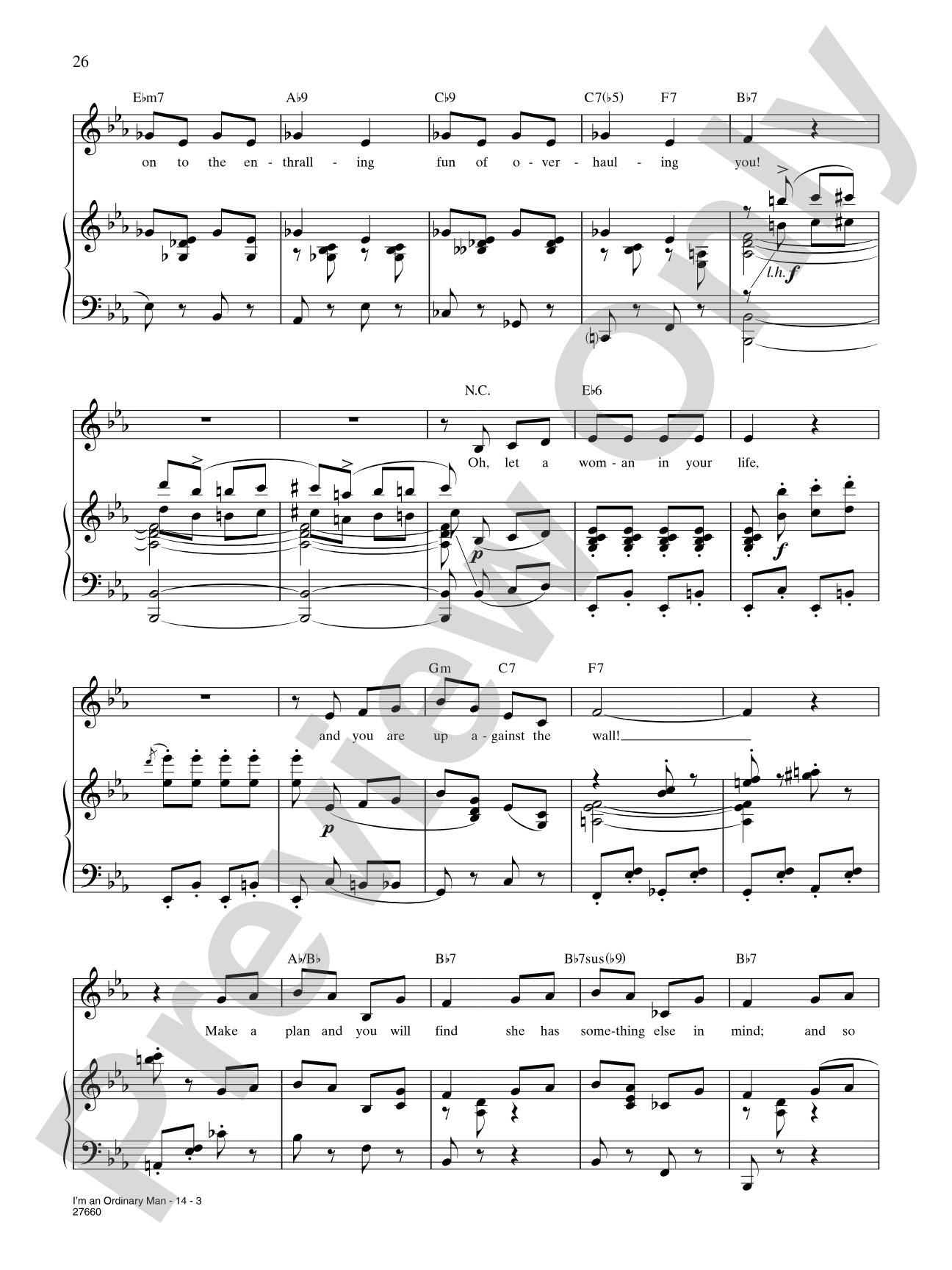

I'm An Ordinary Man (from "My Fair Lady"): Piano/Vocal/Chords
Lyrics by Alan Jay Lerner, music by Frederick Loewe
Item: 00-PSP-000197
$9.99
One moment…
Related Items
Get Me To The Church On Time (from "My Fair Lady"): Piano/Vocal/Chords |
$4.99
|
View | |
I Could Have Danced All Night
|
$5.99
|
View | |
I've Grown Accustomed To Her Face (from "My Fair Lady"): Piano/Vocal/Chords |
$9.99
|
View | |
Just You Wait (from "My Fair Lady"): Piano/Vocal/Chords |
$5.99
|
View | |
On The Street Where You Live (from "My Fair Lady"): Piano/Vocal/Chords |
$4.99
|
View | |
Show Me (from "My Fair Lady"): Piano/Vocal/Chords |
$5.99
|
View | |
The Rain In Spain (from "My Fair Lady"): Piano/Vocal/Chords |
$4.99
|
View | |
Why Can't The English? (from "My Fair Lady"): Piano/Vocal/Chords |
$5.99
|
View | |
With A Little Bit Of Luck (from "My Fair Lady"): Piano/Vocal/Chords |
$5.99
|
View | |
Without You (from "My Fair Lady"): Piano/Vocal/Chords |
$5.99
|
View | |
Wouldn't It Be Loverly (from "My Fair Lady"): Piano/Vocal/Chords |
$4.99
|
View |
Description
My Fair Lady is the classic stage musical based on George Bernard Shaw's book Pygmalion. The musical was later adapted for film, and the movie, starring Rex Harrison and Audrey Hepburn, was released in 1964. This book features selections from the musical, providing the lyrics along with piano and chord arrangements for all the songs included.
Titles: Get Me to the Church on Time * I Could Have Danced All Night * I'm an Ordinary Man * I've Grown Accustomed to Her Face * Just You Wait * On the Street Where You Live * The Rain in Spain * Show Me * Why Can't the English? * With a Little Bit of Luck * Without You * Wouldn't It Be Loverly.


Titles: Get Me to the Church on Time * I Could Have Danced All Night * I'm an Ordinary Man * I've Grown Accustomed to Her Face * Just You Wait * On the Street Where You Live * The Rain in Spain * Show Me * Why Can't the English? * With a Little Bit of Luck * Without You * Wouldn't It Be Loverly.
I'm An Ordinary Man (from "My Fair Lady"): Piano/Vocal/Chords isn't in MakeMusic Cloud just yet...but it could be. Let us know you'd like to see it, and you'll help shape what comes next. In the meantime, start a free trial and dive into thousands of interactive titles your students can play along with today.
Request This Title
Tell us you want it.
Start Your Free Trial
Explore everything that's ready to play right now.
Sample Audio
No sample audio found.
Sample Video
No sample videos found.
Additional Details
Series:
Alfred's Classic Musical Editions
Publisher:
Alfred Music
Page Count:
104
SKU:
00-PSP-000197
More about this title
About the Composer: Frederick Loewe
Frederick Loewe (1901-1988) was an Austrian-American composer whose gift for elegant melody and sophisticated harmonic writing defined the golden age of Broadway musical theater. His collaboration with lyricist Alan Jay Lerner produced some of the most enduring works in American musical history, including Brigadoon, Paint Your Wagon, Camelot, and My Fair Lady, each demonstrating his ability to craft music that serves character and story with equal brilliance.
Loewe's compositions are distinguished by their craftsmanship and emotional directness. Whether writing a witty patter song or a tender ballad, he combined influences from operetta and classical music with distinctly American sensibility, creating scores that challenge performers while remaining deeply accessible to audiences. His work continues to serve as a touchstone for understanding how music can enhance dramatic storytelling on stage.
Why we love this
My Fair Lady contains some of the most performed musical theater songs in existence, and this collection captures the full emotional and comedic range of Loewe's score. Singers and accompanists gain access to every major moment from the show, making it invaluable for audition preparation, recital programming, and educational performances. The piano-vocal arrangements preserve the sophistication of the orchestral writing while remaining playable by working pianists in a solo accompaniment context.
What to expect
My Fair Lady moves between razor-sharp wit and genuine tenderness, often within a single scene. These songs capture the delightful absurdity of Pygmalion reimagined as musical comedy alongside moments of surprising vulnerability and emotional depth. The music reflects a world of formal manners, social aspiration, and human connection, with Loewe's melodies reaching for grace and his harmonies suggesting both the playfulness and poignancy beneath the surface.
Who it's for
This collection serves singers preparing auditions for musical theater programs, performers programming recitals with Broadway material, and singers seeking repertoire that showcases both comedic and lyrical abilities. Pianists working in studio, classroom, or recital settings will find these arrangements substantial enough to hold attention while remaining accessible for daily rehearsal and performance use.
How to get the most out of it
- Treat the chord symbols as a guide rather than a limitation. Loewe's harmonic language is often richer than a single chord symbol can indicate; listen to recordings to hear the full texture and adjust your voicings accordingly.
- Shape "I've Grown Accustomed to Her Face" and "Wouldn't It Be Loverly" with particular attention to rubato and dynamic vulnerability. These moments demand emotional honesty that transcends the printed notes.
- In the patter songs like "Why Can't the English?" and "Get Me to the Church on Time," maintain rhythmic clarity in the accompaniment while allowing the vocalist room to play with text rhythms and comedic timing.
- Use the marked tempos and dynamics as starting points, but allow them to breathe. The best performances of these songs honor both the craftsmanship on the page and the theatrical instincts of the performers.
How to use it
Program selections from this collection alongside other classic musical theater material for a Broadway cabaret or review, or use individual songs in audition preparation and vocal recital settings. The full score provides excellent material for singers exploring the literature of mid-century American musicals, offering both crowd-pleasing hits and lesser-known character moments that reveal the full scope of the show.
Skills your students will build
- Reading and interpreting chord symbols in a jazz/musical theater context
- Balancing lyrical phrasing with rhythmic accuracy in accompanimental patterns
- Navigating dramatic and comedic contrast within a single song
- Sight-reading piano-vocal score layouts
- Understanding how accompaniment patterns support vocal character and story