
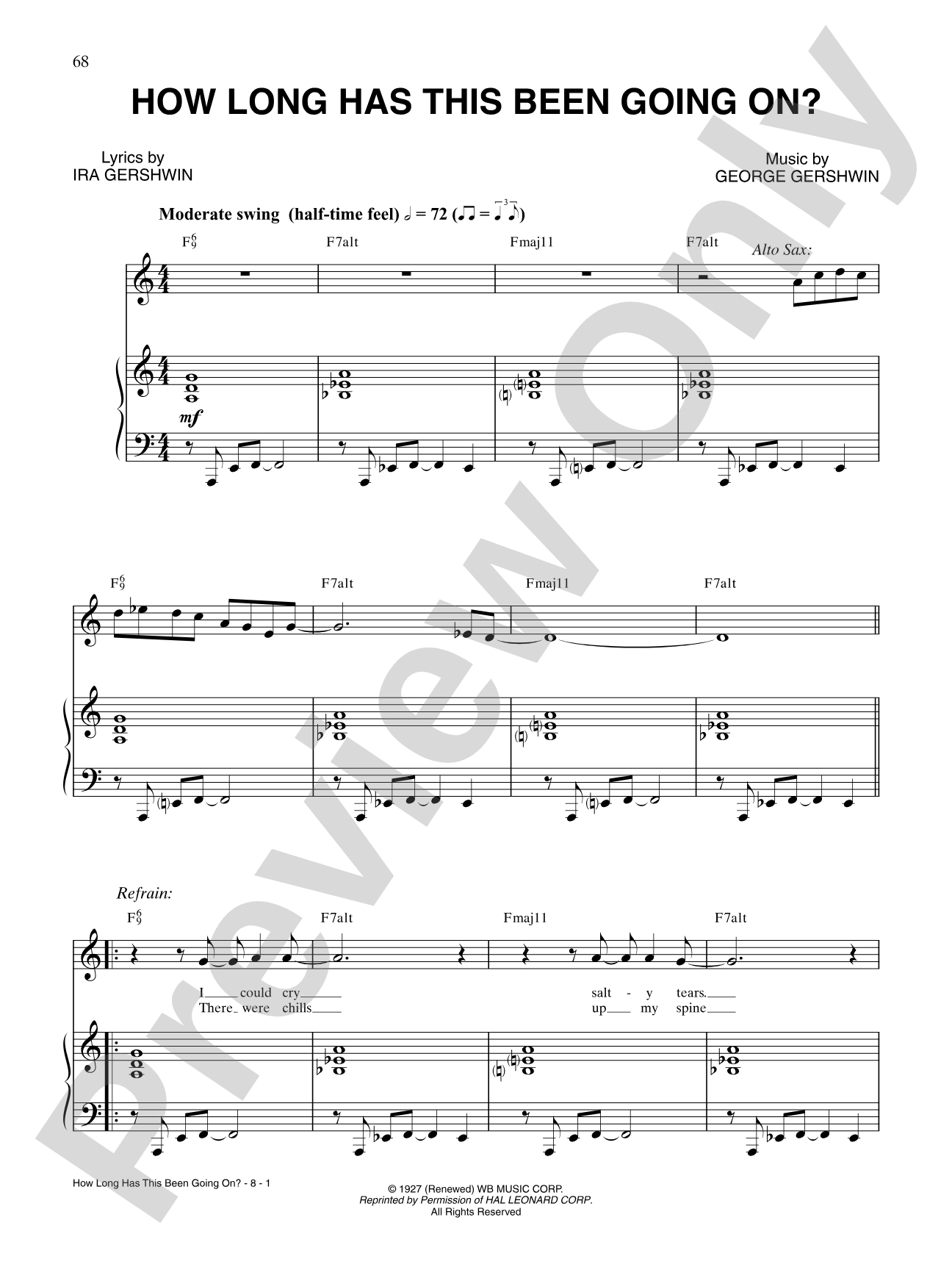
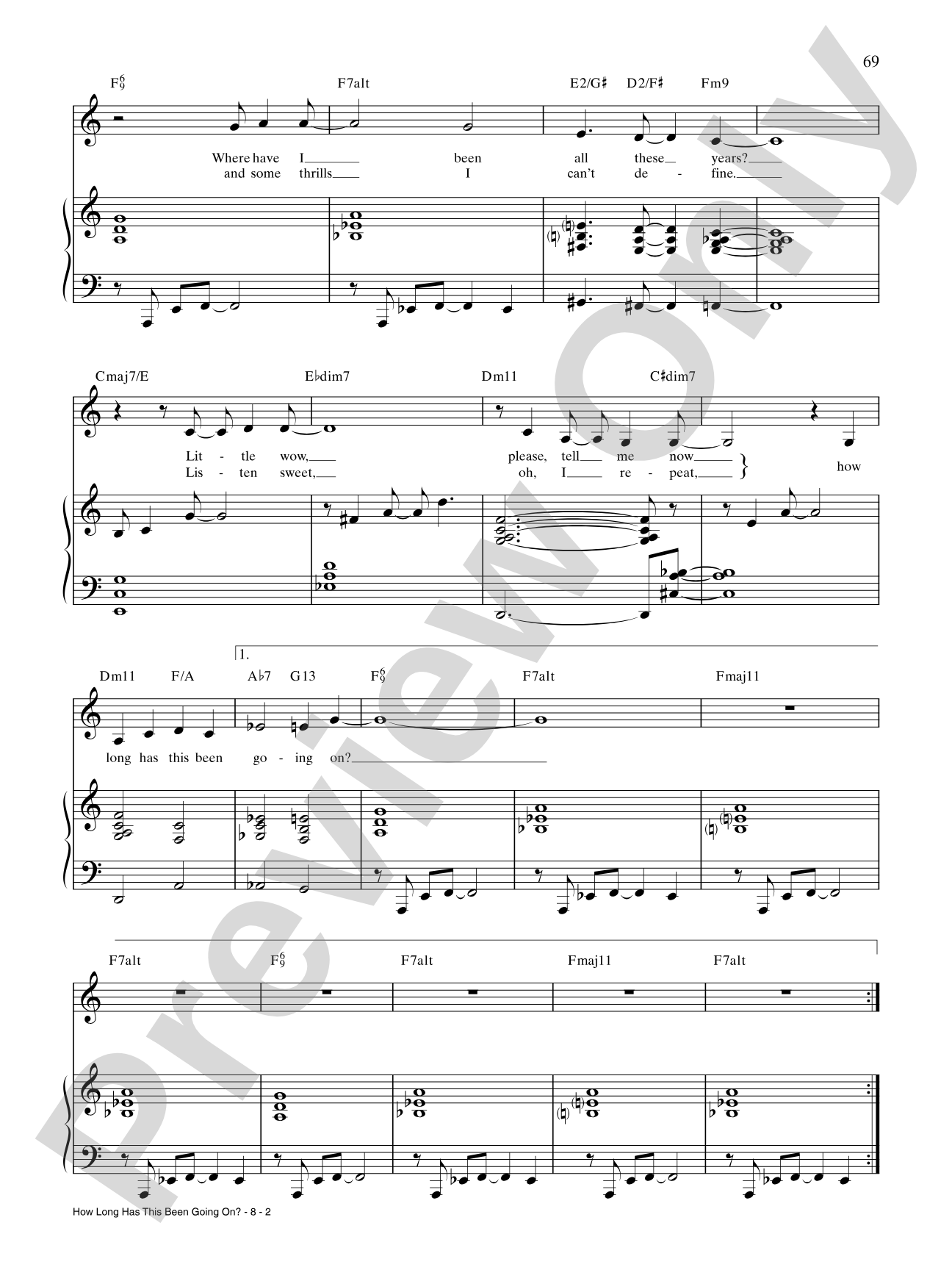

How Long Has This Been Going On?: Piano/Vocal/Chords
The music of various composers as performed by Gloria Estefan
Item: 00-PS-0015772
$5.99
One moment…
Related Items
For All We Know: Piano/Vocal/Chords |
$5.99
|
View | |
Good Morning Heartache: Piano/Vocal/Chords |
$5.99
|
View | |
I've Grown Accustomed to His Face: Piano/Vocal/Chords |
$5.99
|
View | |
They Can't Take That Away from Me: Piano/Vocal/Chords |
$9.99
|
View | |
Embraceable You: Piano/Vocal/Chords |
$4.99
|
View | |
What a Wonderful World: Piano/Vocal/Chords |
$5.99
|
View | |
They Day You Say You Love Me: Piano/Vocal/Chords |
$5.99
|
View | |
Gloria Estefan: The Standards: Piano/Vocal/Guitar Book |
$19.99
|
View |
Description
Few artists have turned out as many powerhouse albums as Gloria Estefan. With her newest release, The Standards, she has managed to capture the essence of some of the most popular and timeless songs and transform them into entirely new experiences. Now pianists can explore the rich harmonies in each original arrangement as performed by the artist. Titles: Call Me Irresponsible * Embraceable You * Eu Sei Que Vou Te Amar * For All We Know * Good Morning Heartache * How Long Has This Been Going On * I've Grown Accustomed to His Face * Sonríe * The Day You Say You Love Me * The Way You Look Tonight * They Can't Take That Away from Me * What a Difference a Day Makes * What a Wonderful World * You Made Me Love You * Young at Heart.


How Long Has This Been Going On?: Piano/Vocal/Chords isn't in MakeMusic Cloud just yet...but it could be. Let us know you'd like to see it, and you'll help shape what comes next. In the meantime, start a free trial and dive into thousands of interactive titles your students can play along with today.
Request This Title
Tell us you want it.
Start Your Free Trial
Explore everything that's ready to play right now.
Sample Audio
No sample audio found.
Sample Video
No sample videos found.
Additional Details
Publisher:
Alfred Music
Page Count:
108
SKU:
00-PS-0015772
More about this title
About the Composer: George Gershwin
George Gershwin (1898-1937) bridged the worlds of American popular song and concert music with unprecedented success. His gift for melody and harmonic sophistication shaped the Great American Songbook, and his works remain central to music education because they demand both technical facility and interpretive maturity from performers.
Gershwin's influence extends far beyond his lifetime. Pianists encounter his compositions across multiple contexts: as standalone concert pieces, as standards in jazz and pop repertoire, and as teaching tools for understanding modern harmony and song form. His ability to write singable melodies supported by rich, contemporary harmonies makes his work endlessly rewarding for students exploring the connection between classical training and vernacular music.
Why we love this
Gloria Estefan's interpretations on The Standards showcase what happens when a master vocalist reimagines these Gershwin classics through a contemporary lens. This arrangement collection preserves her distinctive phrasing and harmonic choices, giving pianists a window into how a world-class artist approaches these songs. The writing honors both the original melodies and Estefan's own artistic voice.
What to expect
These are songs steeped in longing, wit, and the particular emotional terrain of mid-century popular music. Gershwin's melodies sit naturally in the voice, but his harmonies keep surprising you; there's always a chord shift or voicing that deepens the moment. Estefan's arrangements bring warmth and directness without losing any of that harmonic sophistication.
Who it's for
This collection serves pianists who accompany singers, vocalists preparing solo recitals or cabaret-style programs, and pianists working toward a more sophisticated understanding of jazz harmony and song form. It's also valuable for music students exploring American vernacular repertoire alongside their classical training.
How to get the most out of it
- Listen closely to Estefan's recorded versions to understand her approach to phrasing and rubato; her timing often departs from strict metronomic regularity in ways that feel natural and emotionally honest.
- Attend to the chord symbols and inversions shown in the arrangements. Gershwin's harmonies are a primary feature here, and voicing choices can shift the entire character of a phrase.
- Balance the vocal melody with accompaniment texture; these arrangements support rather than compete with the singer, so maintain clarity without heaviness in the keyboard part.
- Explore the relationship between the written melody and the underlying harmony. Many of these standards reward slight variations in phrasing once you understand the harmonic architecture.
How to use it
Program individual selections from this collection as standalone vocal recital pieces, paired with other standards or contemporary art songs. The variety of moods and tempos makes these suitable for showcasing different facets of a vocalist's artistry, whether in a formal concert, a cabaret evening, or a jazz-inflected mixed recital. This also works beautifully as an accompaniment resource for music theater or applied voice students exploring the Great American Songbook.
Skills your students will build
- Reading and interpreting chord symbols and jazz-influenced harmonic progressions
- Accompanying a vocalist with sensitivity to phrasing and breath
- Understanding song form and how melody interacts with harmonic structure
- Developing interpretive choices based on a recorded reference performance
- Transposing and adapting voicings to suit the range and style of individual singers