
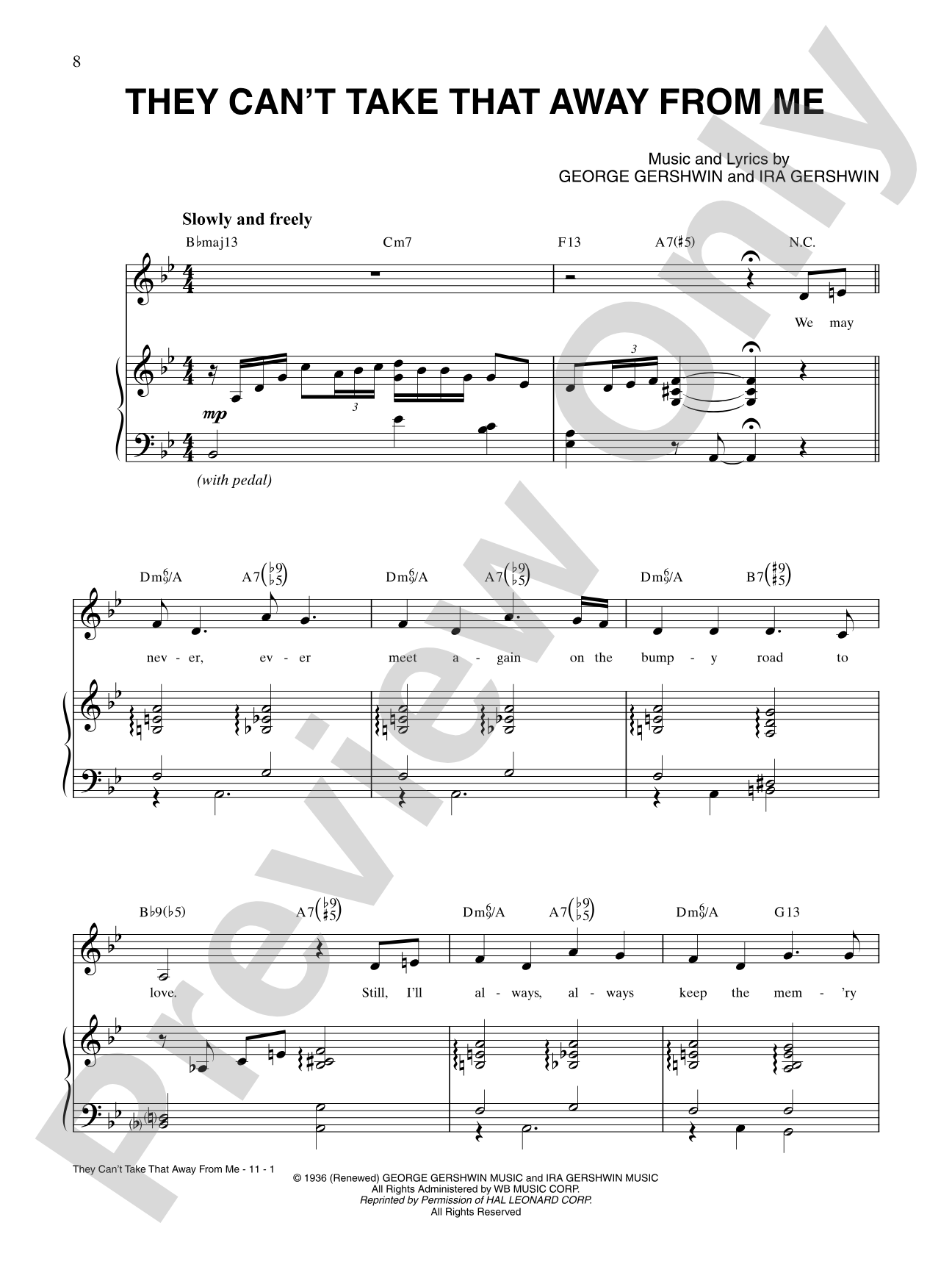
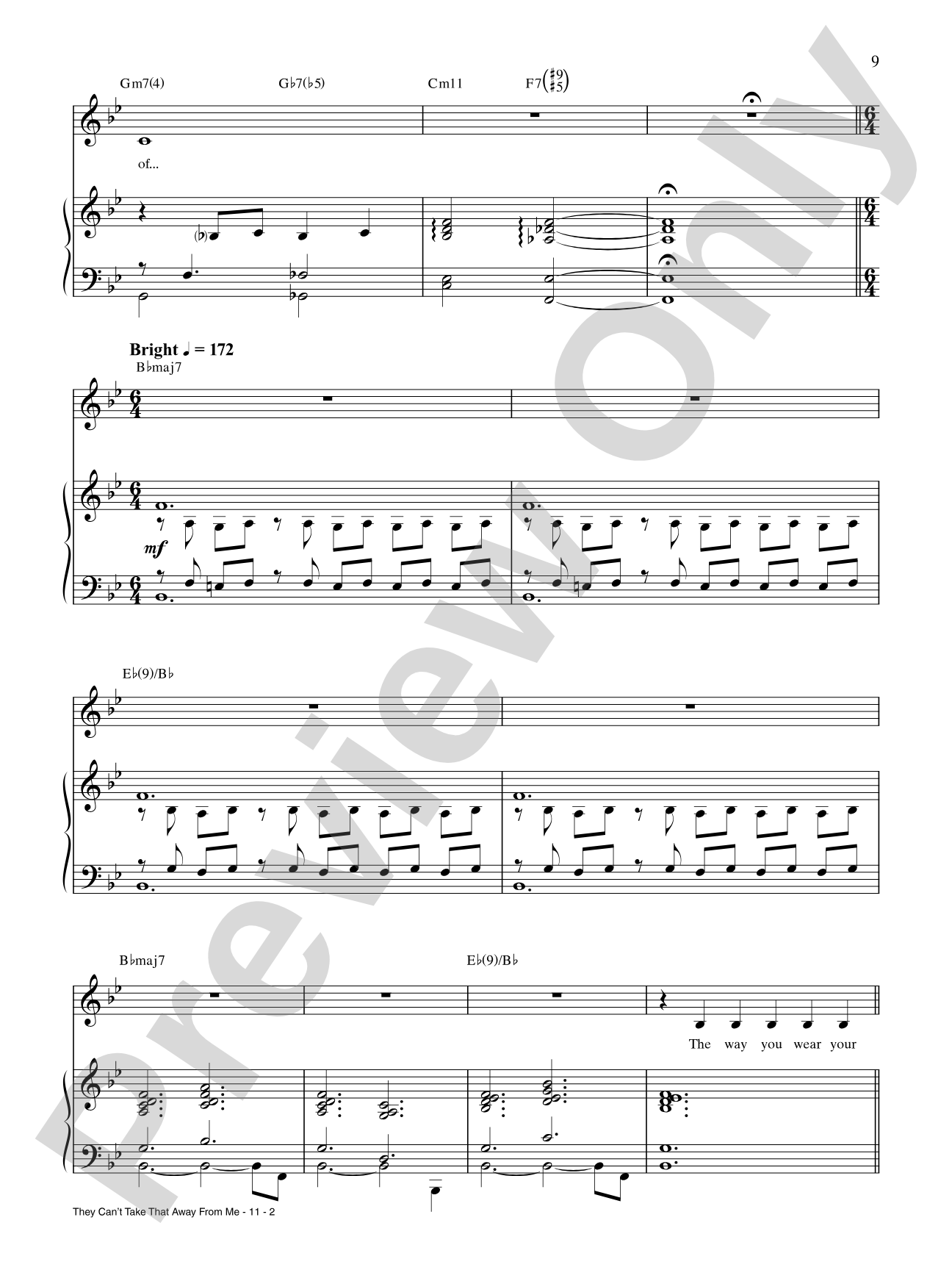
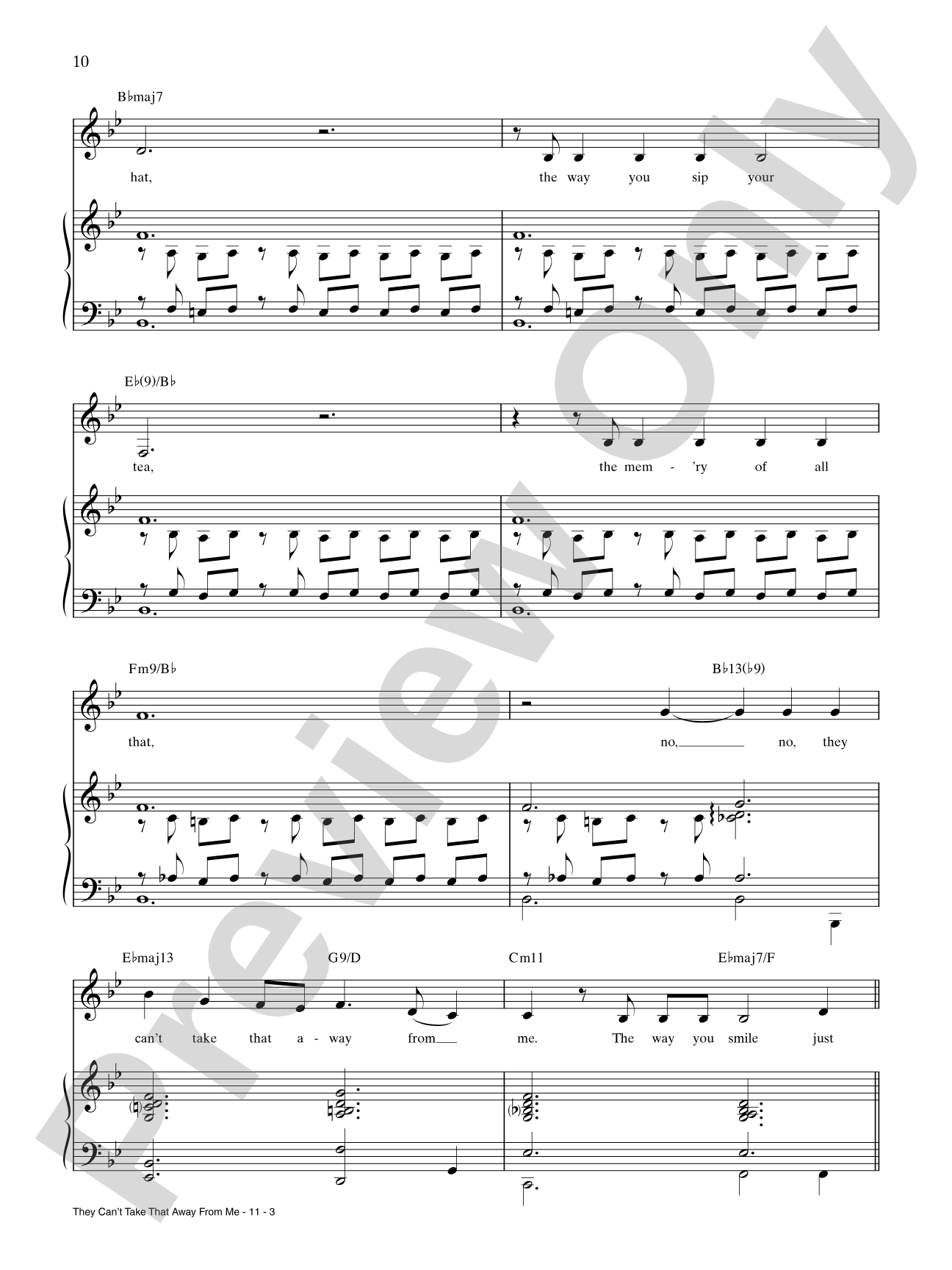

They Can't Take That Away from Me: Piano/Vocal/Chords
The music of various composers as performed by Gloria Estefan
Item: 00-PS-0015770
$9.99
One moment…
Related Items
For All We Know: Piano/Vocal/Chords |
$5.99
|
View | |
Good Morning Heartache: Piano/Vocal/Chords |
$5.99
|
View | |
I've Grown Accustomed to His Face: Piano/Vocal/Chords |
$5.99
|
View | |
Embraceable You: Piano/Vocal/Chords |
$4.99
|
View | |
How Long Has This Been Going On?: Piano/Vocal/Chords |
$5.99
|
View | |
What a Wonderful World: Piano/Vocal/Chords |
$5.99
|
View | |
They Day You Say You Love Me: Piano/Vocal/Chords |
$5.99
|
View | |
Gloria Estefan: The Standards: Piano/Vocal/Guitar Book |
$19.99
|
View |
Description
Few artists have turned out as many powerhouse albums as Gloria Estefan. With her newest release, The Standards, she has managed to capture the essence of some of the most popular and timeless songs and transform them into entirely new experiences. Now pianists can explore the rich harmonies in each original arrangement as performed by the artist. Titles: Call Me Irresponsible * Embraceable You * Eu Sei Que Vou Te Amar * For All We Know * Good Morning Heartache * How Long Has This Been Going On * I've Grown Accustomed to His Face * Sonríe * The Day You Say You Love Me * The Way You Look Tonight * They Can't Take That Away from Me * What a Difference a Day Makes * What a Wonderful World * You Made Me Love You * Young at Heart.


Discover MakeMusic Cloud: thousands of interactive titles your students can play along with today.
Sample Audio
No sample audio found.
Sample Video
No sample videos found.
Additional Details
Publisher:
Alfred Music
Page Count:
108
SKU:
00-PS-0015770
More about this title
About the Composer: George Gershwin
George Gershwin (1898-1937) bridged the worlds of popular song and concert music with unmatched sophistication. His melodies are built on jazz harmonies and blues inflections that challenge pianists to navigate unexpected chord progressions and chromatic voice leading, making his standards enduring vehicles for artistic growth.
Gershwin's output, though cut short by his death at 38, established the template for American songwriting. His brother Ira provided lyrics of wit and elegance. Together they created a catalog that rewards careful harmonic study and demands expressive maturity from performers.
Why we love this
Gloria Estefan's interpretations of these Gershwin standards reveal fresh harmonic possibilities without obscuring the originals' architectural brilliance. The arrangements respect the melodic essence while introducing contemporary voicings that give pianists permission to think beyond the page. At 108 pages, this collection offers substantial material for developing pianists to explore sophisticated harmony in a format that connects to a major artist's vision.
What to expect
These arrangements feel like walking into a room where a sophisticated musician is thinking aloud at the piano. There's elegance and restraint mixed with moments of unexpected harmonic color. The writing sits comfortably on the instrument while demanding enough pianistic and interpretive attention to feel like real work, not nostalgia.
Who it's for
Pianists and pianists/vocalists who want to deepen their command of jazz-influenced harmony and twentieth-century popular song without stepping outside the canon. This collection also serves accompanists preparing to support singers who want to tackle standards with contemporary sensibility. Music students studying the intersection of popular and classical traditions will find genuine pedagogical value in Gershwin's harmonic language and Estefan's reimagined approach.
How to get the most out of it
- Study the chord symbols carefully before diving into the written voicings. Gershwin's harmonies often move by half-step or chromatic motion, and understanding the underlying progression helps you anticipate harmonic rhythm and voice leading.
- Balance the vocal melody with richer left-hand accompaniment in these arrangements. The piano part isn't a simple support; it's a conversation partner that needs definition and independence.
- Listen to Estefan's recorded versions to absorb phrasing and timing. These standards benefit from swing and rubato that the written notation alone won't fully capture.
- Pay attention to the lyrical quality even when playing solo instrumental sections. The text underneath shapes how each phrase should breathe, especially in the more intimate ballads.
How to use it
Feature one or two selections as part of a standards-focused recital, pairing them with other American songbook classics from different eras. Alternatively, use the collection as the foundation for a themed concert celebrating Gershwin's legacy through a contemporary artist's lens. Individual pieces work well as encores or as repertoire for developing the jazz-aware classical pianist.
Skills your students will build
- Reading and executing jazz-influenced chord voicings and seventh, ninth, and eleventh chords
- Voice leading across chromatic and half-step harmonic movement
- Balancing melody, accompaniment, and chord symbol realization in piano/vocal textures
- Interpreting rubato and swing in a standards-based context
- Navigating the relationship between written notation and interpretive flexibility