
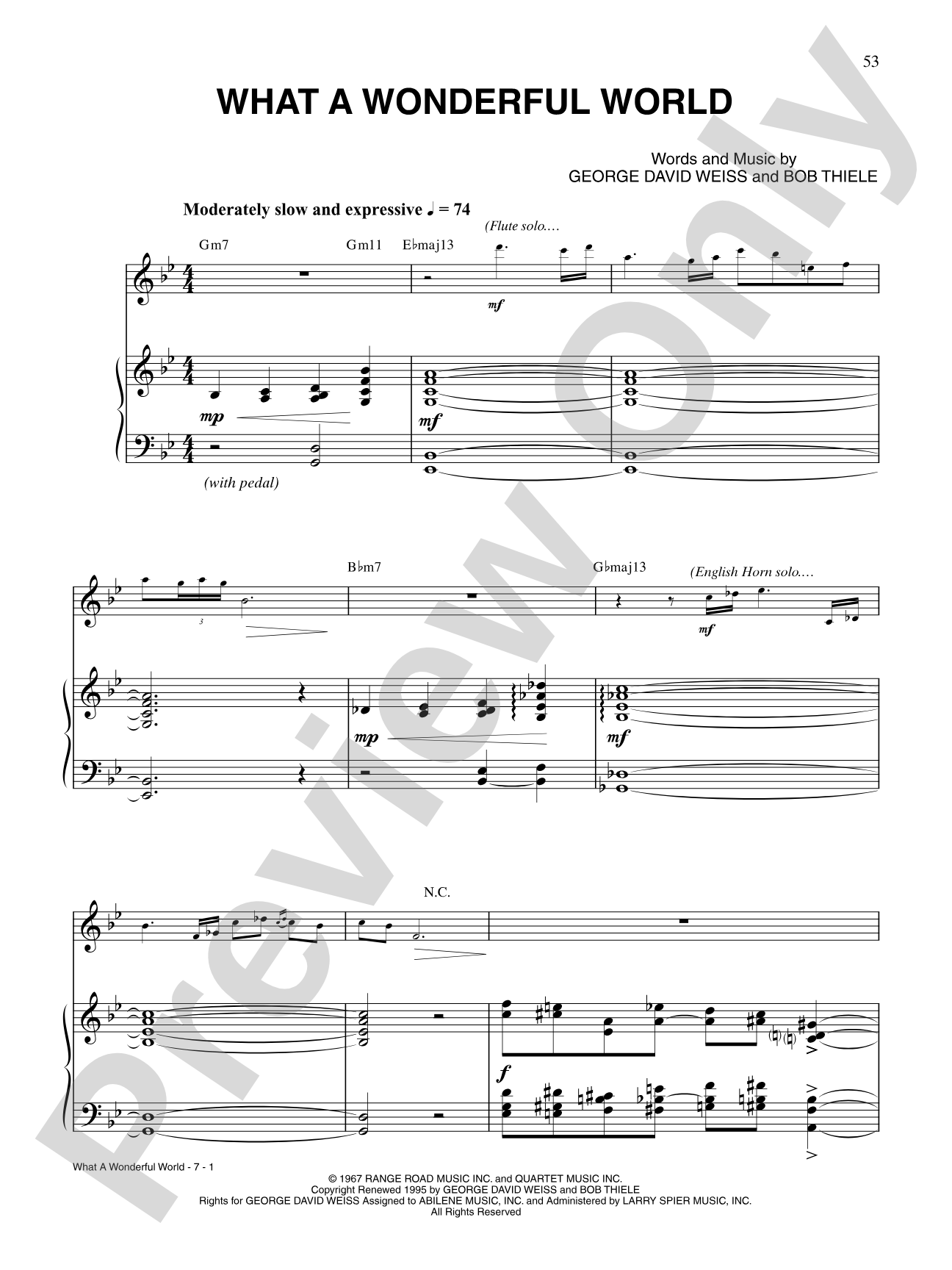
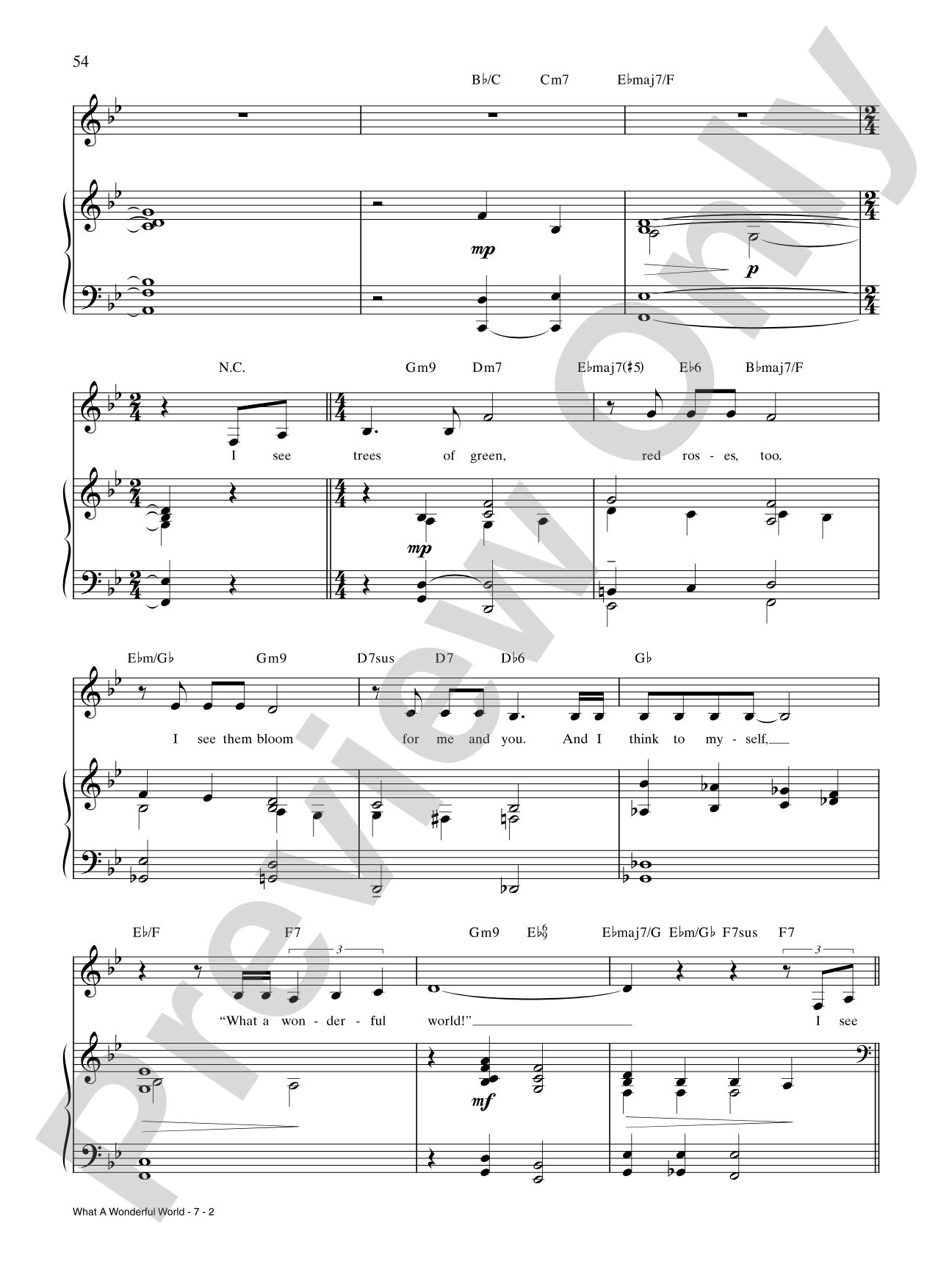

What a Wonderful World: Piano/Vocal/Chords
The music of various composers as performed by Gloria Estefan
Item: 00-PS-0015774
$5.99
One moment…
Related Items
For All We Know: Piano/Vocal/Chords |
$5.99
|
View | |
Good Morning Heartache: Piano/Vocal/Chords |
$5.99
|
View | |
I've Grown Accustomed to His Face: Piano/Vocal/Chords |
$5.99
|
View | |
They Can't Take That Away from Me: Piano/Vocal/Chords |
$9.99
|
View | |
Embraceable You: Piano/Vocal/Chords |
$4.99
|
View | |
How Long Has This Been Going On?: Piano/Vocal/Chords |
$5.99
|
View | |
They Day You Say You Love Me: Piano/Vocal/Chords |
$5.99
|
View | |
Gloria Estefan: The Standards: Piano/Vocal/Guitar Book |
$19.99
|
View |
Description
Few artists have turned out as many powerhouse albums as Gloria Estefan. With her newest release, The Standards, she has managed to capture the essence of some of the most popular and timeless songs and transform them into entirely new experiences. Now pianists can explore the rich harmonies in each original arrangement as performed by the artist. Titles: Call Me Irresponsible * Embraceable You * Eu Sei Que Vou Te Amar * For All We Know * Good Morning Heartache * How Long Has This Been Going On * I've Grown Accustomed to His Face * Sonríe * The Day You Say You Love Me * The Way You Look Tonight * They Can't Take That Away from Me * What a Difference a Day Makes * What a Wonderful World * You Made Me Love You * Young at Heart.


What a Wonderful World: Piano/Vocal/Chords isn't in MakeMusic Cloud just yet...but it could be. Let us know you'd like to see it, and you'll help shape what comes next. In the meantime, start a free trial and dive into thousands of interactive titles your students can play along with today.
Request This Title
Tell us you want it.
Start Your Free Trial
Explore everything that's ready to play right now.
Sample Audio
No sample audio found.
Sample Video
No sample videos found.
Additional Details
Publisher:
Alfred Music
Page Count:
108
SKU:
00-PS-0015774
More about this title
About the Composer: George David Weiss
George David Weiss (1921-2010) composed some of the most enduring popular songs of the twentieth century, with a gift for melody that made standards instantly memorable. His work with lyricist Bob Thiele on "What a Wonderful World" became a cornerstone of jazz and popular music repertoire, recorded by Louis Armstrong, Eva Cassidy, and countless others across generations.
Weiss understood how to write for the human voice while respecting harmonic sophistication. His songs have appeared in jazz ensembles, vocal recitals, and music theater settings, making him a vital figure in the American songbook that pianists and vocalists continue to study and perform.
Why we love this
Gloria Estefan's interpretations bring contemporary sensibility to these timeless songs, and the vocal arrangements in this collection showcase why these standards endure. Pianists get direct access to chord voicings and harmonic choices that reflect modern jazz and popular music practice, giving students who sing or perform with guitar players material that sounds fresh without abandoning the elegance of the originals.
What to expect
These arrangements balance respect for the standards' melodic legacy with the sophistication of modern harmony. Estefan's interpretations bring warmth and maturity to songs that might otherwise feel dated, creating arrangements that feel both familiar and reimagined.
Who it's for
Piano students working toward jazz and popular music fluency will find these arrangements valuable for understanding contemporary voicings applied to classic material. Vocalist-pianist duos and piano-guitar collaborations benefit directly from the vocal melody and chord grid, which support collaborative learning and performance.
How to get the most out of it
- Pay attention to the rhythmic swing in Estefan's phrasing; these arrangements often use subtle syncopation that sits behind the beat rather than on top of it.
- Balance the melody line with the chord voicings so the harmonies enhance rather than overpower the vocalist. The richness in these arrangements works only when it serves the lyric.
- Use the chord symbols as a learning tool if you're accompanying a guitarist or vocalist; the notation reflects how these songs function in an ensemble context.
- Take time with the slower ballads to shape the rubato naturally. Estefan's interpretations often have space built into them, and rushing diminishes the emotional weight.
How to use it
Use individual selections from this collection in recitals where you want to showcase both classical foundation and contemporary popular music literacy. Piano students preparing for music theater auditions or jazz ensemble work gain material that bridges classical and popular contexts with credibility.
Skills your students will build
- Reading piano/vocal/guitar chord notation and translating it across instruments
- Interpreting stylistic phrasing cues from vocal melody in instrumental playing
- Understanding jazz and pop harmony applied to pre-jazz-era melodies
- Accompanying singing while maintaining harmonic integrity
- Collaborating with guitarists using chord symbols and slash notation