
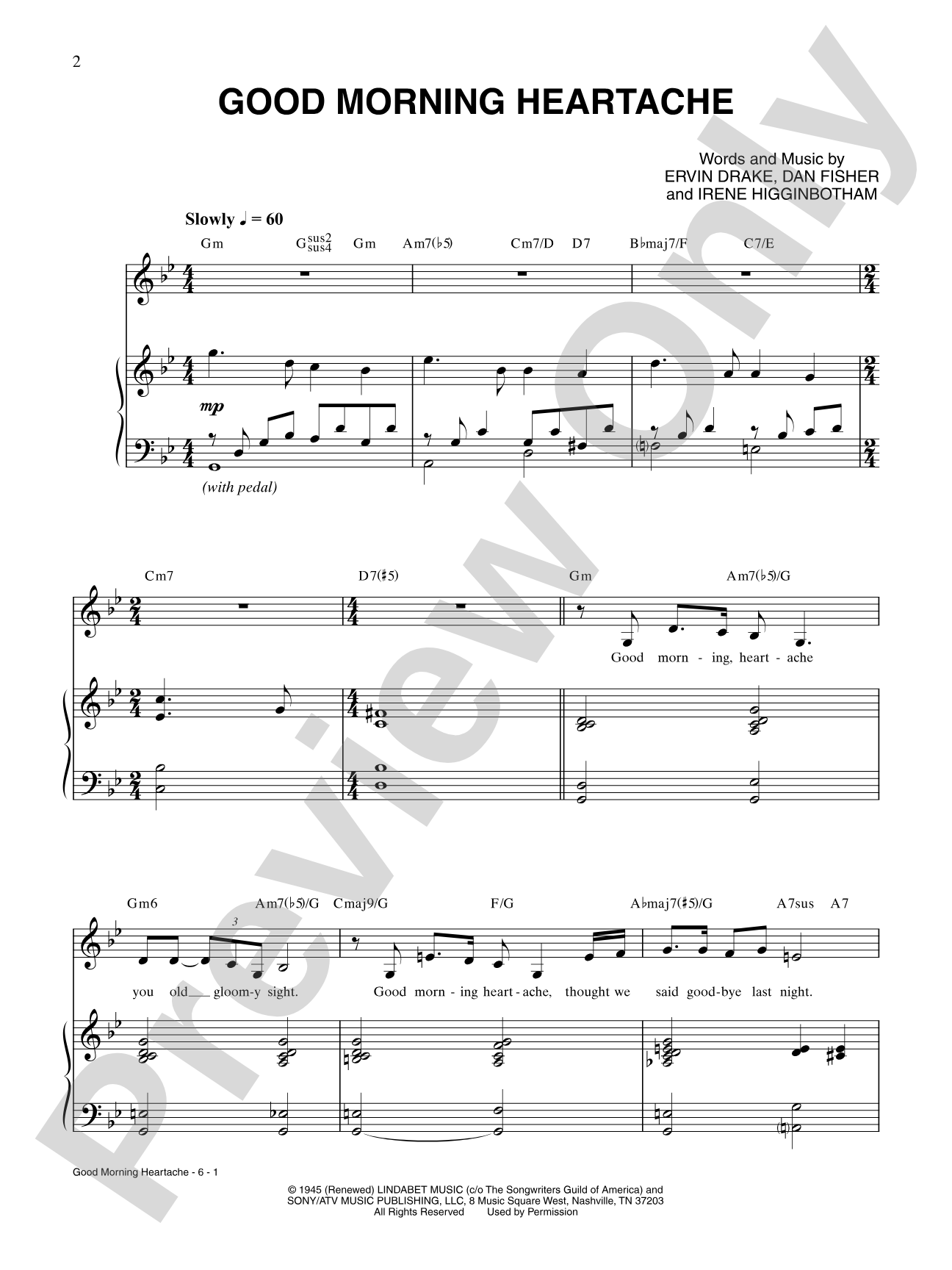
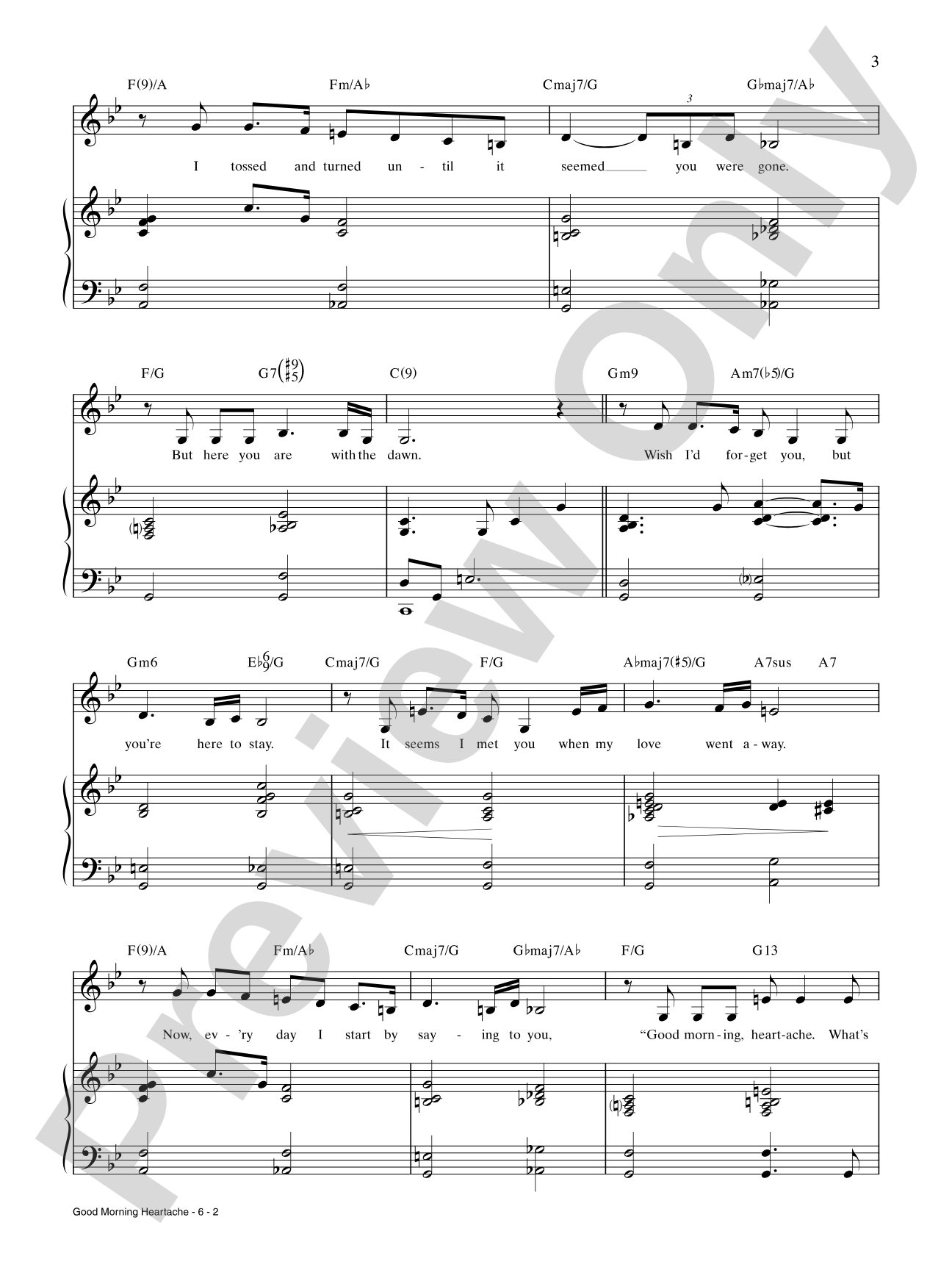

Good Morning Heartache: Piano/Vocal/Chords
The music of various composers as performed by Gloria Estefan
Item: 00-PS-0015768
$5.99
One moment…
Related Items
For All We Know: Piano/Vocal/Chords |
$5.99
|
View | |
I've Grown Accustomed to His Face: Piano/Vocal/Chords |
$5.99
|
View | |
They Can't Take That Away from Me: Piano/Vocal/Chords |
$9.99
|
View | |
Embraceable You: Piano/Vocal/Chords |
$4.99
|
View | |
How Long Has This Been Going On?: Piano/Vocal/Chords |
$5.99
|
View | |
What a Wonderful World: Piano/Vocal/Chords |
$5.99
|
View | |
They Day You Say You Love Me: Piano/Vocal/Chords |
$5.99
|
View | |
Gloria Estefan: The Standards: Piano/Vocal/Guitar Book |
$19.99
|
View |
Description
Few artists have turned out as many powerhouse albums as Gloria Estefan. With her newest release, The Standards, she has managed to capture the essence of some of the most popular and timeless songs and transform them into entirely new experiences. Now pianists can explore the rich harmonies in each original arrangement as performed by the artist. Titles: Call Me Irresponsible * Embraceable You * Eu Sei Que Vou Te Amar * For All We Know * Good Morning Heartache * How Long Has This Been Going On * I've Grown Accustomed to His Face * Sonríe * The Day You Say You Love Me * The Way You Look Tonight * They Can't Take That Away from Me * What a Difference a Day Makes * What a Wonderful World * You Made Me Love You * Young at Heart.


Discover MakeMusic Cloud: thousands of interactive titles your students can play along with today.
Sample Audio
No sample audio found.
Sample Video
No sample videos found.
Additional Details
Publisher:
Alfred Music
Page Count:
108
SKU:
00-PS-0015768
More about this title
About the Composer: Ervin Drake
Ervin Drake (1919-2015) was a legendary American lyricist and composer whose catalog spans decades of popular song standards. His gift for pairing sophisticated harmonic progressions with memorable, singable melodies made him a fixture of the Great American Songbook; "Good Morning Heartache" and "I've Grown Accustomed to His Face" are hallmarks of his craft.
Drake's work appears throughout this collection, collaborating with composers like Dan Fisher and Irene Higginbotham to create songs that bridge jazz sophistication and popular accessibility. His influence on American vocal music remains essential repertoire for singers and pianists seeking to understand the harmonic language of the mid-20th century.
Why we love this
Gloria Estefan's interpretations of these standards reveal fresh harmonic colors and phrasing nuances that pianists rarely encounter in more traditional arrangements. Working directly from her recorded versions, you get permission to explore rubato, reharmonization, and dynamic shaping that honors both the classic melodies and contemporary production sensibilities. This collection gives pianists a rare opportunity to engage with the Great American Songbook through the lens of an artist known for impeccable taste and emotional depth.
What to expect
These arrangements embrace the warmth and emotional maturity of the Great American Songbook while adding subtle contemporary shadings. Each song unfolds with the kind of intimate sophistication you hear in a late-night jazz lounge or a masterclass performance, where technical precision serves emotional storytelling rather than overshadowing it.
Who it's for
Piano teachers and serious students who want to deepen their understanding of jazz-influenced harmony and vocal accompaniment without leaving the standards repertoire. Singer-pianists and jazz ensemble pianists will find these arrangements bridge classical technique with contemporary interpretive freedom. Guitar players comfortable with chord melody and comping will discover sophisticated harmonic language ready for ensemble work.
How to get the most out of it
- Study Estefan's original recordings alongside the arrangement to internalize her approach to phrasing and rubato; her timing often sits differently than strict classical interpretations of these standards
- Balance the vocal melody line with the harmonic richness in the piano part; these arrangements reward close listening to voice-leading that might otherwise disappear under generic comp patterns
- Treat chord symbols as a conversation starter rather than a ceiling; experiment with voicing variations that support the vocal line while maintaining the sophistication of the original harmonies
- Pay attention to the song order and create internal narrative arcs across the full collection rather than treating individual pieces in isolation
How to use it
Program individual selections as recital pieces that appeal to adult audiences and demonstrate your repertoire range beyond contemporary or exclusively classical programming. A pianist comfortable with jazz harmony might extract 3-4 pieces for a cabaret-style concert or collaborative performance with a vocalist. Piano teachers can use selections to introduce students to reharmonization, voice-leading in jazz contexts, and the melodic and harmonic architecture that makes these standards endure.
Skills your students will build
- Jazz harmonization and seventh chord voicing
- Accompanying singers with rhythmic and harmonic sensitivity
- Interpreting chord symbols and comping flexibility
- Phrasing and rubato in the context of vocal melody
- Recognizing and performing jazz-influenced melodic ornamentation
- Voice-leading across standard song forms (AABA, 32-bar structure)