
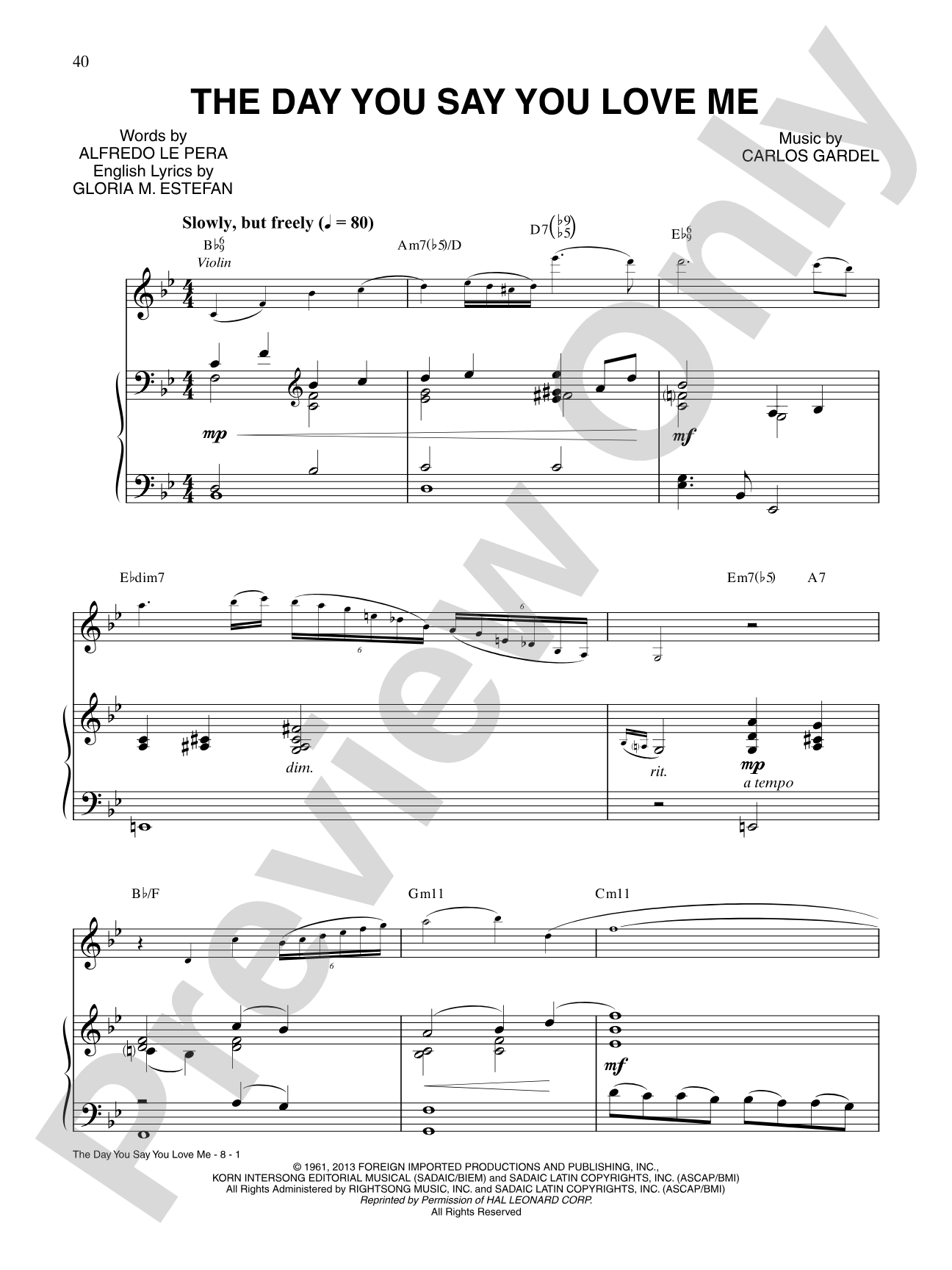
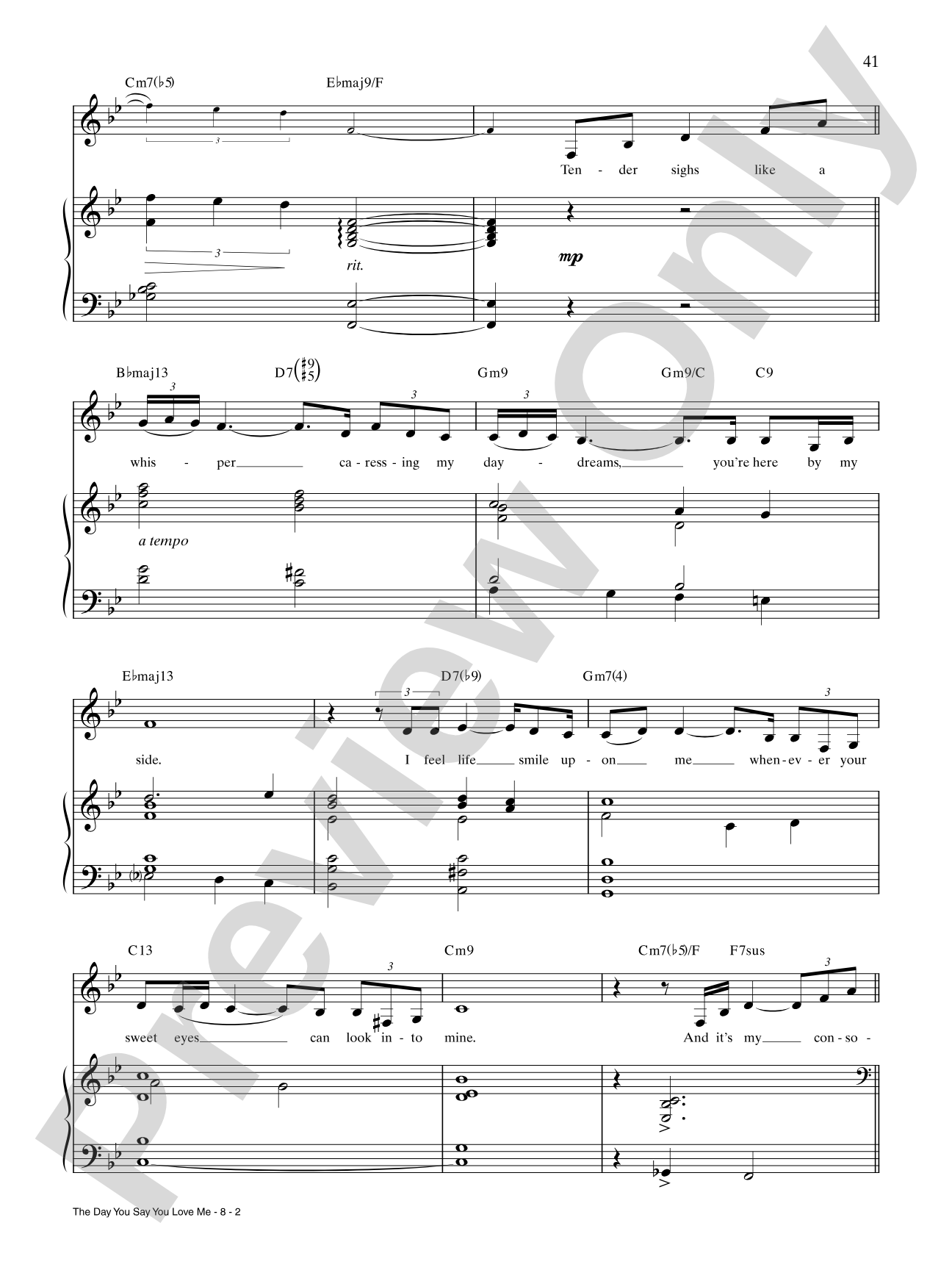

They Day You Say You Love Me: Piano/Vocal/Chords
The music of various composers as performed by Gloria Estefan
Item: 00-PS-0015775
$5.99
One moment…
Related Items
For All We Know: Piano/Vocal/Chords |
$5.99
|
View | |
Good Morning Heartache: Piano/Vocal/Chords |
$5.99
|
View | |
I've Grown Accustomed to His Face: Piano/Vocal/Chords |
$5.99
|
View | |
They Can't Take That Away from Me: Piano/Vocal/Chords |
$9.99
|
View | |
Embraceable You: Piano/Vocal/Chords |
$4.99
|
View | |
How Long Has This Been Going On?: Piano/Vocal/Chords |
$5.99
|
View | |
What a Wonderful World: Piano/Vocal/Chords |
$5.99
|
View | |
Gloria Estefan: The Standards: Piano/Vocal/Guitar Book |
$19.99
|
View |
Description
Few artists have turned out as many powerhouse albums as Gloria Estefan. With her newest release, The Standards, she has managed to capture the essence of some of the most popular and timeless songs and transform them into entirely new experiences. Now pianists can explore the rich harmonies in each original arrangement as performed by the artist. Titles: Call Me Irresponsible * Embraceable You * Eu Sei Que Vou Te Amar * For All We Know * Good Morning Heartache * How Long Has This Been Going On * I've Grown Accustomed to His Face * Sonríe * The Day You Say You Love Me * The Way You Look Tonight * They Can't Take That Away from Me * What a Difference a Day Makes * What a Wonderful World * You Made Me Love You * Young at Heart.


Discover MakeMusic Cloud: thousands of interactive titles your students can play along with today.
Sample Audio
No sample audio found.
Sample Video
No sample videos found.
Additional Details
Publisher:
Alfred Music
Page Count:
108
SKU:
00-PS-0015775
More about this title
About the Composer: Carlos Gardel
Carlos Gardel (1890-1935) was an Uruguayan-born singer, songwriter, and actor who became the defining voice of tango during its golden age. He composed some of the genre's most enduring standards, including "Mi Buenos Aires Querido" and "El Día Que Me Quieras" (The Day You Say You Love Me), and his recordings shaped how generations of musicians understood tango's expressive possibilities. Gardel's influence extended far beyond tango; his songs have been interpreted by jazz singers, classical vocalists, and popular artists across decades, making him a foundational figure in twentieth-century vocal music.
Why we love this
Gloria Estefan's reimagining of these standards reveals fresh harmonic possibilities in repertoire that singers and pianists know well. The arrangements preserve the emotional core of each song while inviting pianists to engage with sophisticated chords and textures that reward careful listening and nuanced voicing.
What to expect
These songs inhabit the space between nostalgia and discovery. Each arrangement carries the emotional weight of a standard while feeling immediate and alive, with harmonies that shimmer and surprise. Performing them places you in conversation with decades of musical tradition while sounding entirely present.
Who it's for
Pianists who want to explore standards through a contemporary lens and vocalists seeking arrangements that honor the originals while offering new interpretive possibilities. This collection works for recital pianists, jazz and cabaret singers, and music students deepening their understanding of vocal accompaniment and harmonic reharmonization.
How to get the most out of it
- Balance the vocal melody with the piano accompaniment by listening to how the artist phrases each song; use her interpretations as a template for rubato and breath placement.
- Pay attention to the chord symbols to understand voice leading choices that might not be obvious in staff notation alone.
- Allow time in rehearsal to hear the original Gloria Estefan recordings so you understand the harmonic landscape and emotional arc of each arrangement.
- Treat the lyrics as integral to phrasing rather than optional; even if you're playing an instrumental verse, the vocal contours should guide your touch and timing.
How to use it
Feature individual selections as recital pieces paired with other vocal standards or contemporary art song. The collection's breadth makes it ideal for thematic programming around a particular era, composer, or lyricist. Pianists can also extract selections as accompaniment for singers preparing auditions or recitals focused on the American songbook or Latin American repertoire.
Skills your students will build
- Reading and interpreting chord symbols in a jazz and standards context
- Voicing and comping techniques appropriate to vocal accompaniment
- Phrasing coordination between piano and voice
- Understanding harmonic reharmonization and contemporary approaches to traditional songs
- Developing sensitivity to lyrical content and its effect on musical interpretation