
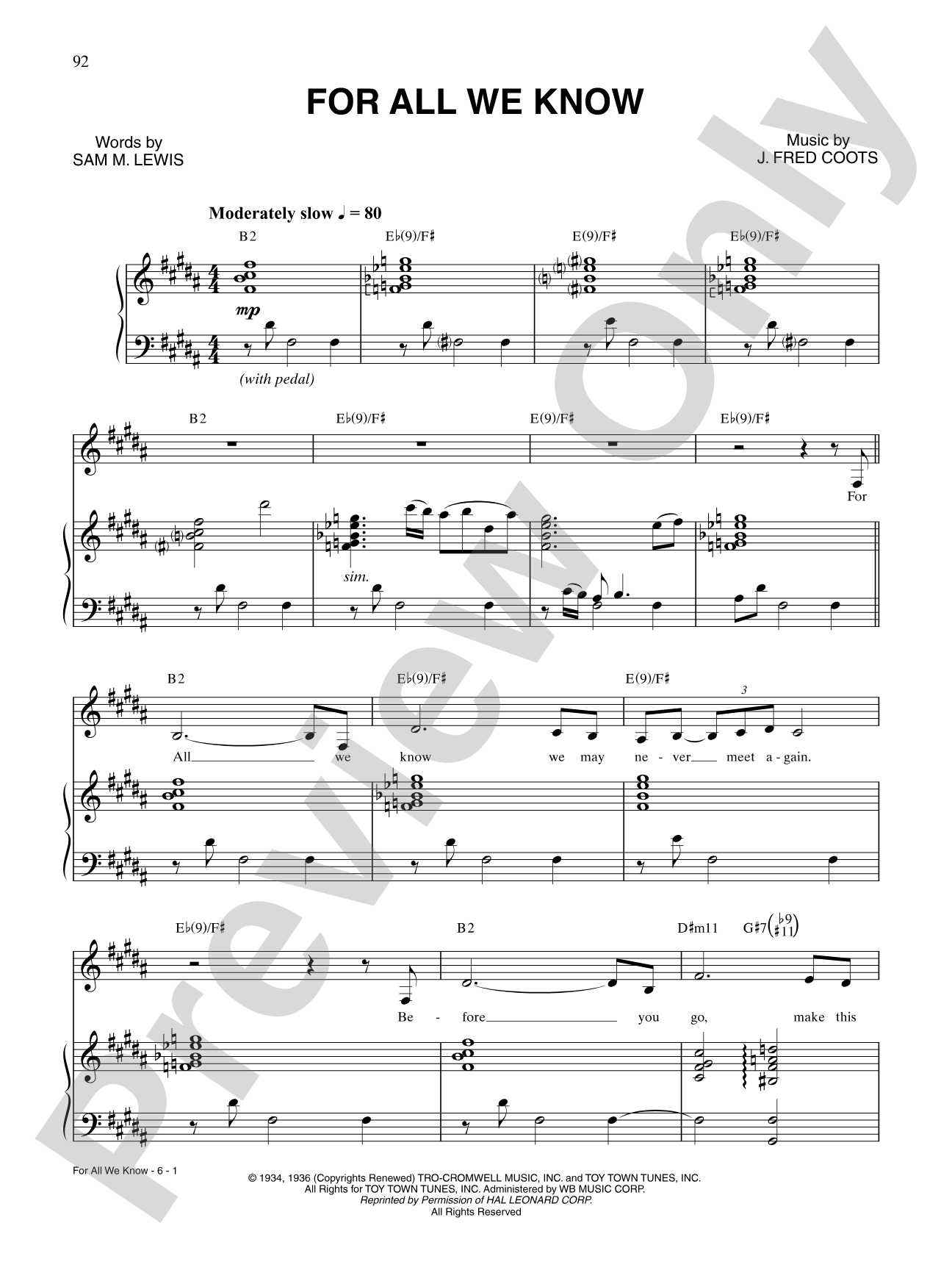
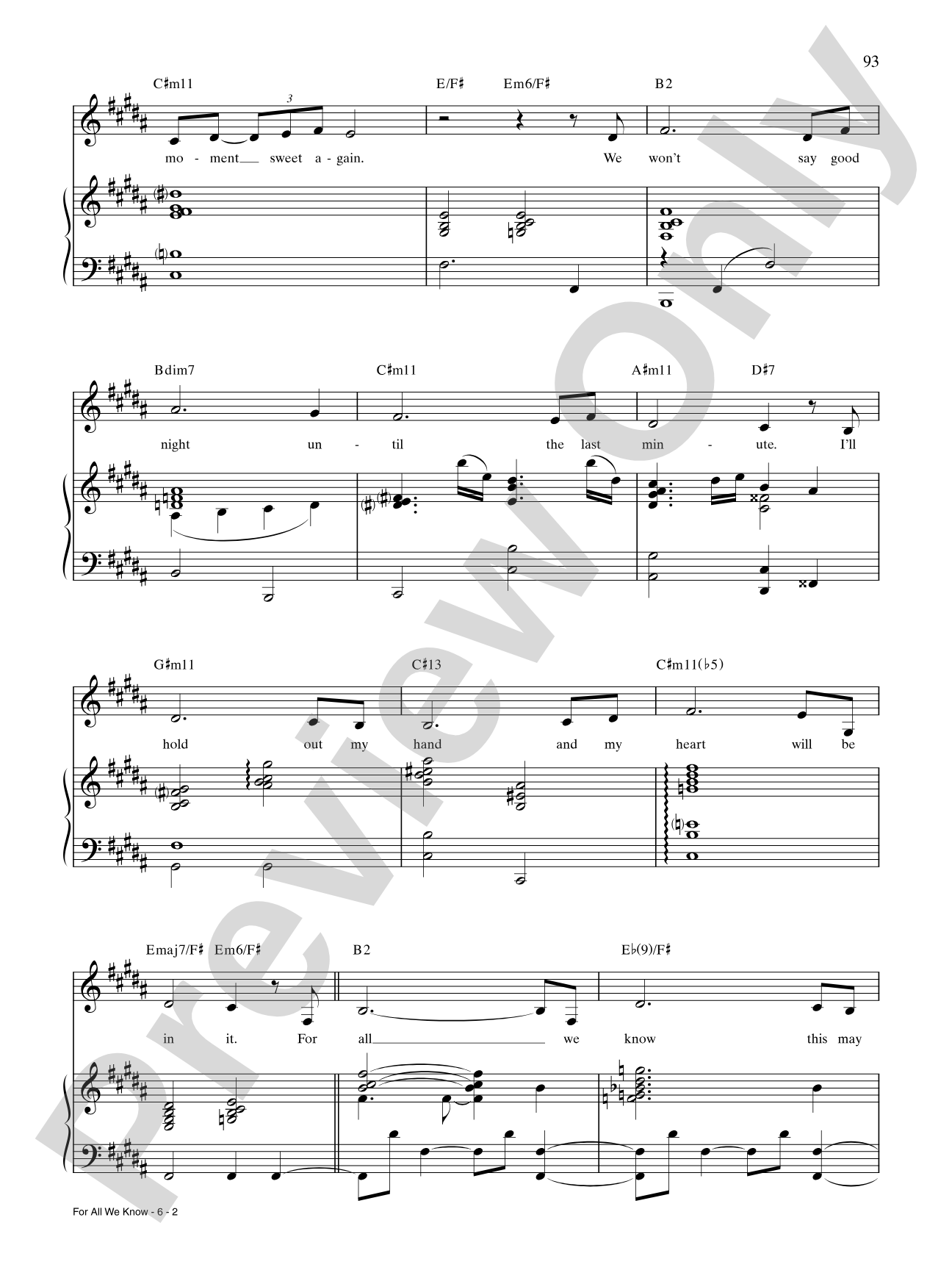

For All We Know: Piano/Vocal/Chords
The music of various composers as performed by Gloria Estefan
Item: 00-PS-0015767
$5.99
One moment…
Related Items
Good Morning Heartache: Piano/Vocal/Chords |
$5.99
|
View | |
I've Grown Accustomed to His Face: Piano/Vocal/Chords |
$5.99
|
View | |
They Can't Take That Away from Me: Piano/Vocal/Chords |
$9.99
|
View | |
Embraceable You: Piano/Vocal/Chords |
$4.99
|
View | |
How Long Has This Been Going On?: Piano/Vocal/Chords |
$5.99
|
View | |
What a Wonderful World: Piano/Vocal/Chords |
$5.99
|
View | |
They Day You Say You Love Me: Piano/Vocal/Chords |
$5.99
|
View | |
Gloria Estefan: The Standards: Piano/Vocal/Guitar Book |
$19.99
|
View |
Description
Few artists have turned out as many powerhouse albums as Gloria Estefan. With her newest release, The Standards, she has managed to capture the essence of some of the most popular and timeless songs and transform them into entirely new experiences. Now pianists can explore the rich harmonies in each original arrangement as performed by the artist. Titles: Call Me Irresponsible * Embraceable You * Eu Sei Que Vou Te Amar * For All We Know * Good Morning Heartache * How Long Has This Been Going On * I've Grown Accustomed to His Face * Sonríe * The Day You Say You Love Me * The Way You Look Tonight * They Can't Take That Away from Me * What a Difference a Day Makes * What a Wonderful World * You Made Me Love You * Young at Heart.


For All We Know: Piano/Vocal/Chords isn't in MakeMusic Cloud just yet...but it could be. Let us know you'd like to see it, and you'll help shape what comes next. In the meantime, start a free trial and dive into thousands of interactive titles your students can play along with today.
Request This Title
Tell us you want it.
Start Your Free Trial
Explore everything that's ready to play right now.
Sample Audio
No sample audio found.
Sample Video
No sample videos found.
Additional Details
Publisher:
Alfred Music
Page Count:
108
SKU:
00-PS-0015767
More about this title
About the Composer: J. Fred Coots
J. Fred Coots (1897-1964) was an American composer whose gift for melody defined the Great American Songbook. His career spanned decades of popular song, from vaudeville through the golden age of standards, and his compositions became staples in the repertoires of countless singers and musicians.
Coots understood how to write songs that endured. His melodies sit naturally in the voice, his harmonies reward close listening, and his structures gave interpreters room to make them their own. For music educators and pianists working with standards, his catalog offers essential repertoire that spans jazz, pop, and theatrical traditions.
Why we love this
This collection gives pianists access to Gloria Estefan's sophisticated interpretations of standards alongside the original compositions, creating a bridge between classical tradition and contemporary artistry. The arrangements preserve the harmonic depth that makes these songs worth revisiting, while the inclusion of chords invites guitarists and singers to explore the same repertoire from their own instrumental perspectives.
What to expect
Sophisticated yet warm. These are songs built on strong melodies and intelligent harmonies, arranged with enough elegance to feel substantial at the piano but approachable enough that they don't require virtuosic technique. There's a sense of stepping into a well-appointed jazz or supper club, where musicianship and taste matter more than flash.
Who it's for
Pianists and keyboardists seeking standards arrangements with contemporary production values, singers building a book of accessible classics, and guitarists who want to play from chord charts alongside vocalists. This collection works equally well for recital preparation, informal performance, or studying how successful artists reimagine familiar material.
How to get the most out of it
- Study the recorded versions by Gloria Estefan first. Her phrasing, rubato, and rhythmic choices shape how these arrangements are meant to breathe; the sheet music captures her interpretations, so hearing them provides essential context.
- Pay attention to the harmonic coloring in the piano part. These arrangements do more than support the melody; the piano commentary often carries emotional weight that shouldn't be buried beneath vocal or guitar lines.
- Treat the chord symbols as a conversation starter between instruments rather than mere reference. In piano/vocal/guitar settings, experiment with how the three voices can interact and balance without one dominating.
How to use it
Program selections from this book in recitals that blend genres, pairing standards with contemporary music to show musical lineage and reinterpretation. In a studio setting, use these arrangements as vehicles for teaching jazz-inflected harmony, phrasing interpretation, and ensemble communication between piano, voice, and guitar.
Skills your students will build
- Interpreting jazz and pop harmony in classical notation
- Coordinating piano accompaniment with vocal phrasing and guitar comping
- Understanding how arrangement choices shape musical character and emotional arc
- Reading and realizing chord symbols in ensemble contexts