
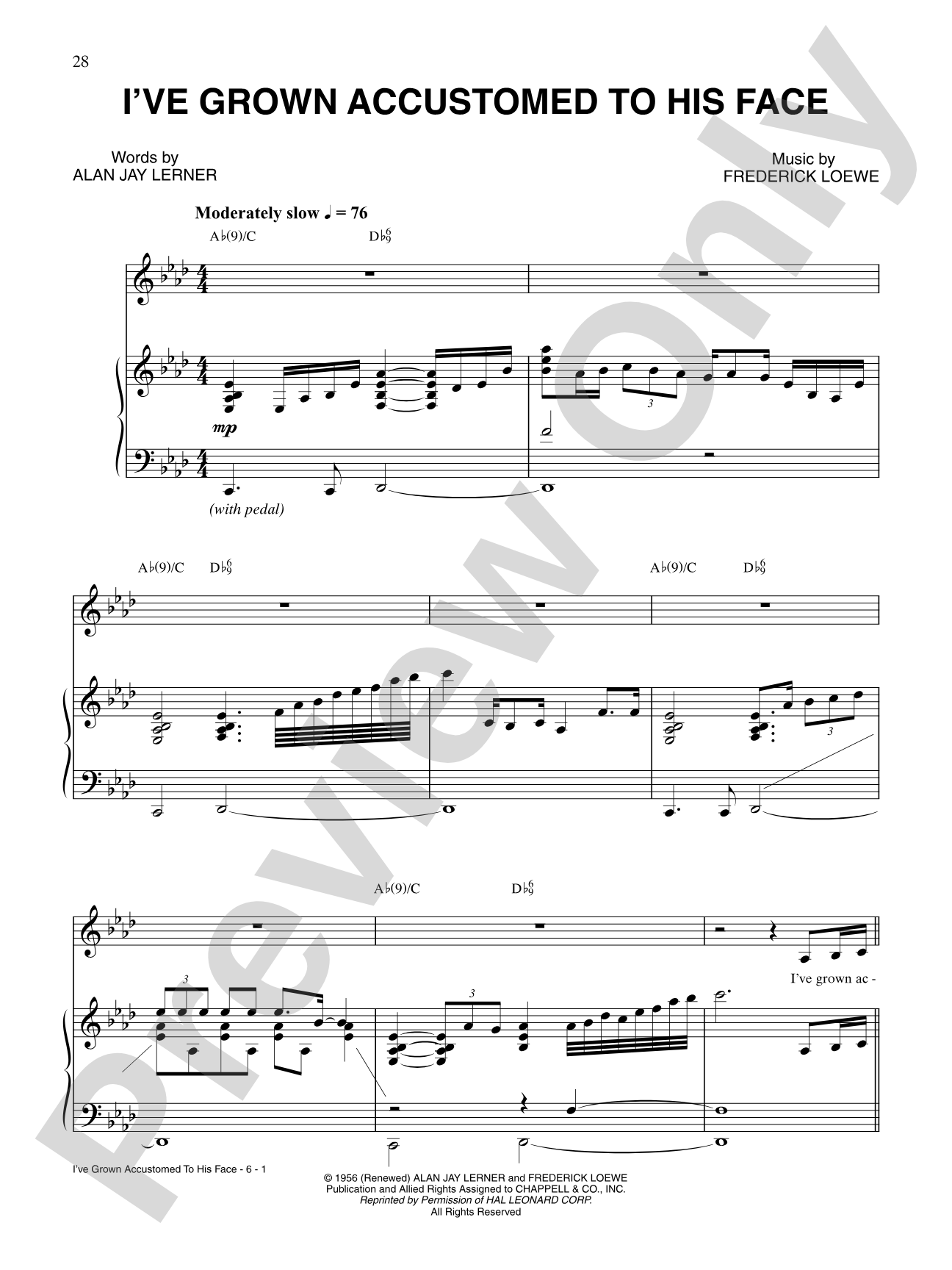
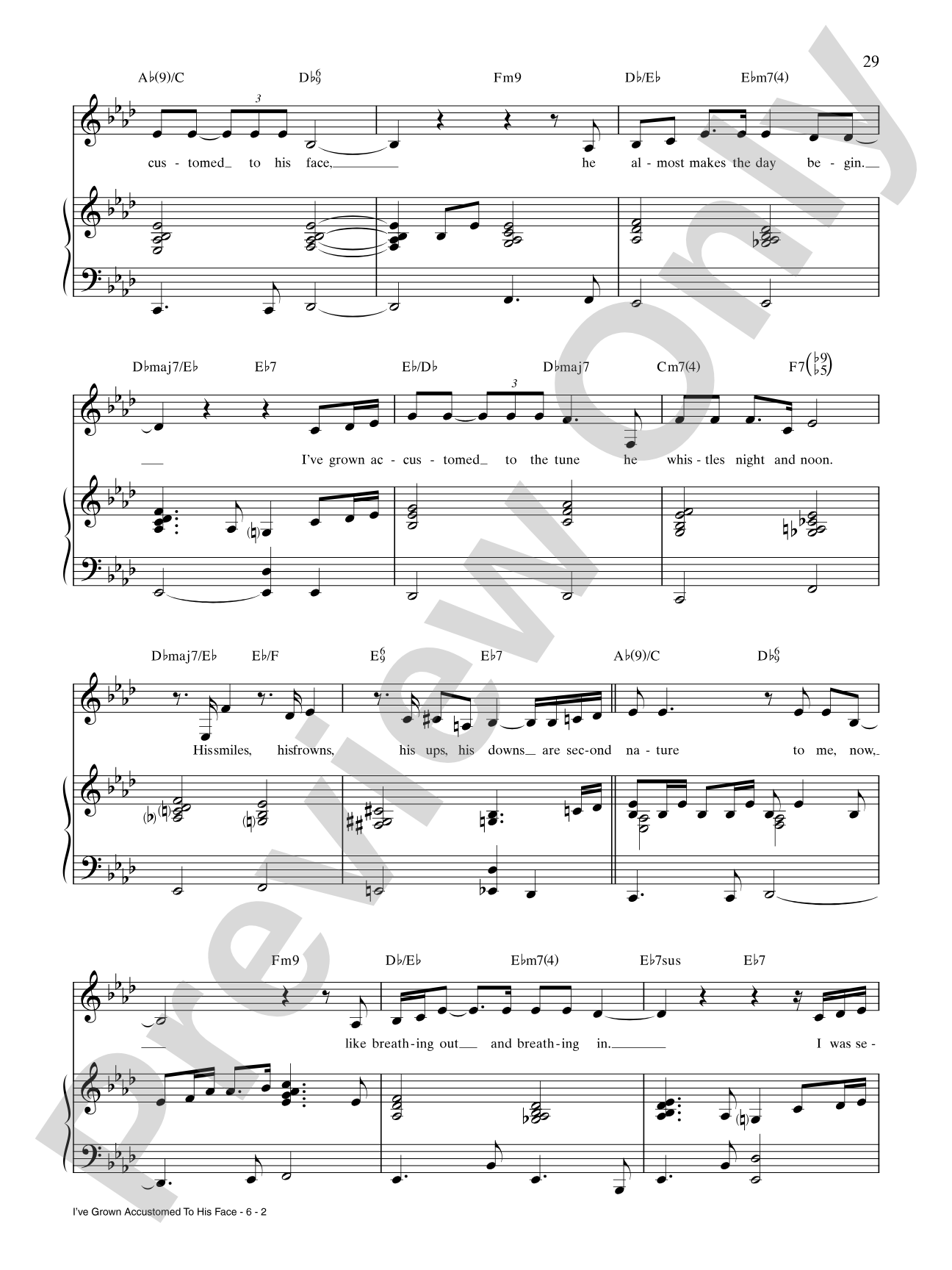

I've Grown Accustomed to His Face: Piano/Vocal/Chords
The music of various composers as performed by Gloria Estefan
Item: 00-PS-0015769
$5.99
One moment…
Related Items
For All We Know: Piano/Vocal/Chords |
$5.99
|
View | |
Good Morning Heartache: Piano/Vocal/Chords |
$5.99
|
View | |
They Can't Take That Away from Me: Piano/Vocal/Chords |
$9.99
|
View | |
Embraceable You: Piano/Vocal/Chords |
$4.99
|
View | |
How Long Has This Been Going On?: Piano/Vocal/Chords |
$5.99
|
View | |
What a Wonderful World: Piano/Vocal/Chords |
$5.99
|
View | |
They Day You Say You Love Me: Piano/Vocal/Chords |
$5.99
|
View | |
Gloria Estefan: The Standards: Piano/Vocal/Guitar Book |
$19.99
|
View |
Description
Few artists have turned out as many powerhouse albums as Gloria Estefan. With her newest release, The Standards, she has managed to capture the essence of some of the most popular and timeless songs and transform them into entirely new experiences. Now pianists can explore the rich harmonies in each original arrangement as performed by the artist. Titles: Call Me Irresponsible * Embraceable You * Eu Sei Que Vou Te Amar * For All We Know * Good Morning Heartache * How Long Has This Been Going On * I've Grown Accustomed to His Face * Sonríe * The Day You Say You Love Me * The Way You Look Tonight * They Can't Take That Away from Me * What a Difference a Day Makes * What a Wonderful World * You Made Me Love You * Young at Heart.


I've Grown Accustomed to His Face: Piano/Vocal/Chords isn't in MakeMusic Cloud just yet...but it could be. Let us know you'd like to see it, and you'll help shape what comes next. In the meantime, start a free trial and dive into thousands of interactive titles your students can play along with today.
Request This Title
Tell us you want it.
Start Your Free Trial
Explore everything that's ready to play right now.
Sample Audio
No sample audio found.
Sample Video
No sample videos found.
Additional Details
Publisher:
Alfred Music
Page Count:
108
SKU:
00-PS-0015769
More about this title
About the Composer: Frederick Loewe
Frederick Loewe (1901-1988) composed some of the most enduring standards of the American musical theater canon. His partnership with lyricist Alan Jay Lerner produced "My Fair Lady," "Gigi," and "Camelot," works that fundamentally shaped how audiences understand the Broadway musical form. Loewe's melodic gift and sophisticated harmonic language continue to reward close study by musicians across all genres.
As a pianist and conductor trained in Berlin, Loewe brought European classical sensibilities to American popular song. His scores demonstrate how jazz-inflected chords and chromatic voice-leading can serve a strong, singable melody. For pianists, his arrangements offer a masterclass in accompaniment writing that balances harmonic interest with lyrical support.
Why we love this
Gloria Estefan's interpretations of these standards reveal the harmonic depth that can hide in plain sight within familiar melodies. Her arrangements preserve Loewe's elegant songwriting while bringing fresh rhythmic and orchestral colors that pianists will discover through the detailed chord voicings and accompaniment patterns on these pages. Whether you're preparing a vocalist or developing your own interpretive voice at the keyboard, these scores offer sophisticated models of how to honor a classic without simply repeating it.
What to expect
These arrangements strike a sophisticated balance between timeless elegance and contemporary warmth. The piano writing breathes with the kind of rhythmic ease that comes from deep familiarity with song form, never overwhelming the vocalist yet always contributing real harmonic color and melodic counterpoint. Estefan's touch throughout is generous and spacious, leaving room for interpretation while providing a complete musical vision.
Who it's for
Pianists performing in jazz, cabaret, or contemporary standards settings will find these arrangements immediately singable and professionally voiced. Vocal students and their collaborative pianists benefit from scores that honor the original song while offering fresh harmonic and textural territory. Anyone exploring how a skilled arranger can reimagine a classic without diminishing its appeal will find rich material here.
How to get the most out of it
- Study the chord symbols and inversions throughout to understand how Estefan's arrangement voices the harmonies differently than traditional lead-sheet versions; this will deepen your ability to anticipate harmonic movement and support a vocalist.
- Practice the accompaniment figures rhythmically independent from the vocal line first, establishing the groove and texture before attempting to balance melody and support.
- Listen to Estefan's recorded versions to absorb the specific rubato, dynamic shaping, and orchestral colors she brings; her interpretive choices will inform how you shape the piano part for maximum impact.
- Pay attention to dynamic markings and articulation within the piano parts, as they often cue subtle shifts in mood that might otherwise be lost when following only a vocal melody.
How to use it
Use these scores in a recital exploring American standards through a Latin-influenced lens, or program individual titles alongside pieces from your vocalists' regular repertoire. The collection works equally well as a resource for collaborative pianists seeking sophisticated but performable accompaniments, or as standalone piano music for directors interested in contemporary interpretations of classic material.
Skills your students will build
- Reading complex chord symbols and inversions in contemporary arrangements
- Balancing accompaniment texture with vocal projection and phrasing
- Interpreting rhythmic notation in jazz and Latin-influenced contexts
- Developing independence between hands when rhythmic patterns differ from the vocal melody
- Hearing and performing chromatic voice-leading and modal harmonic movement