
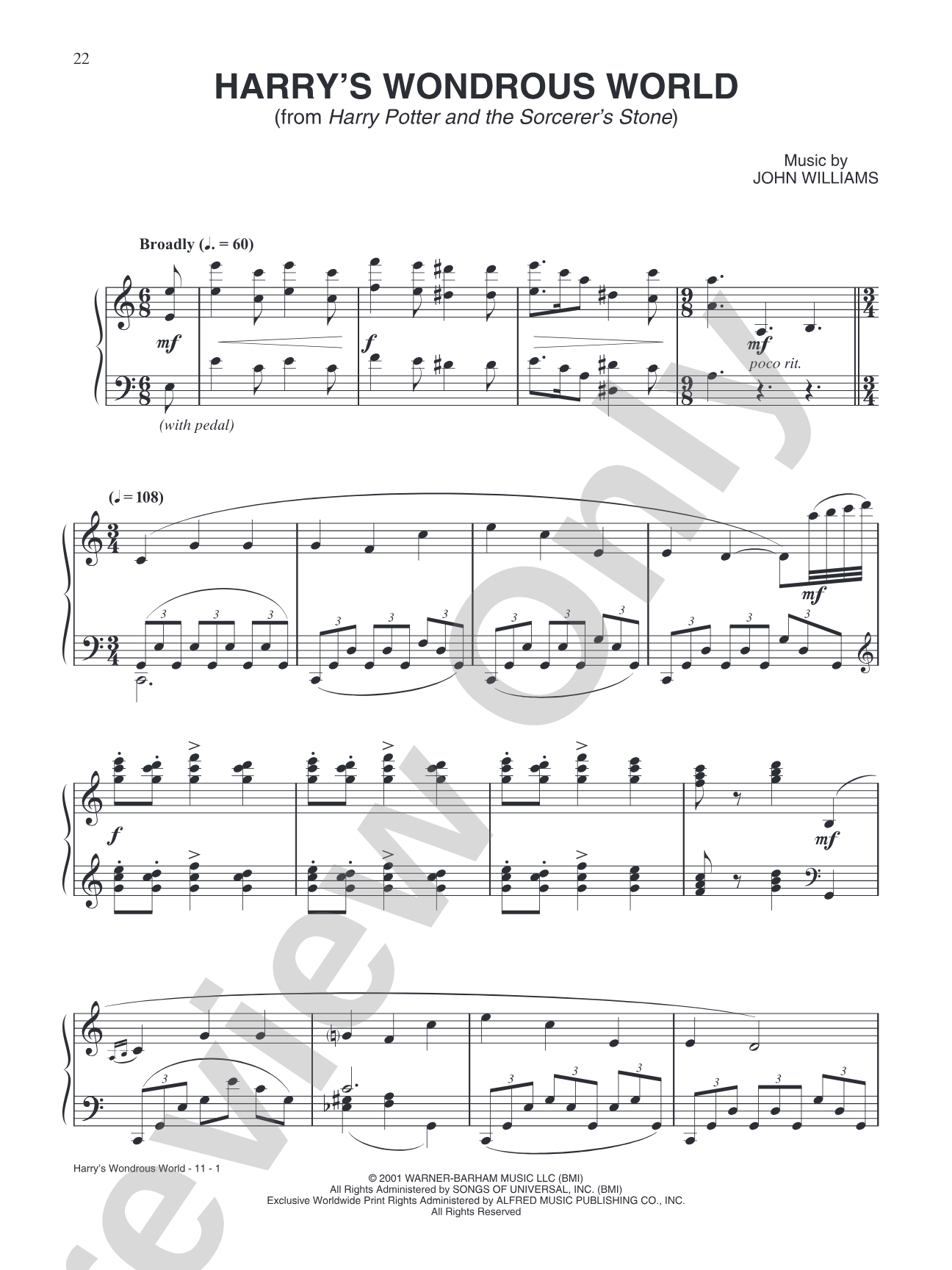
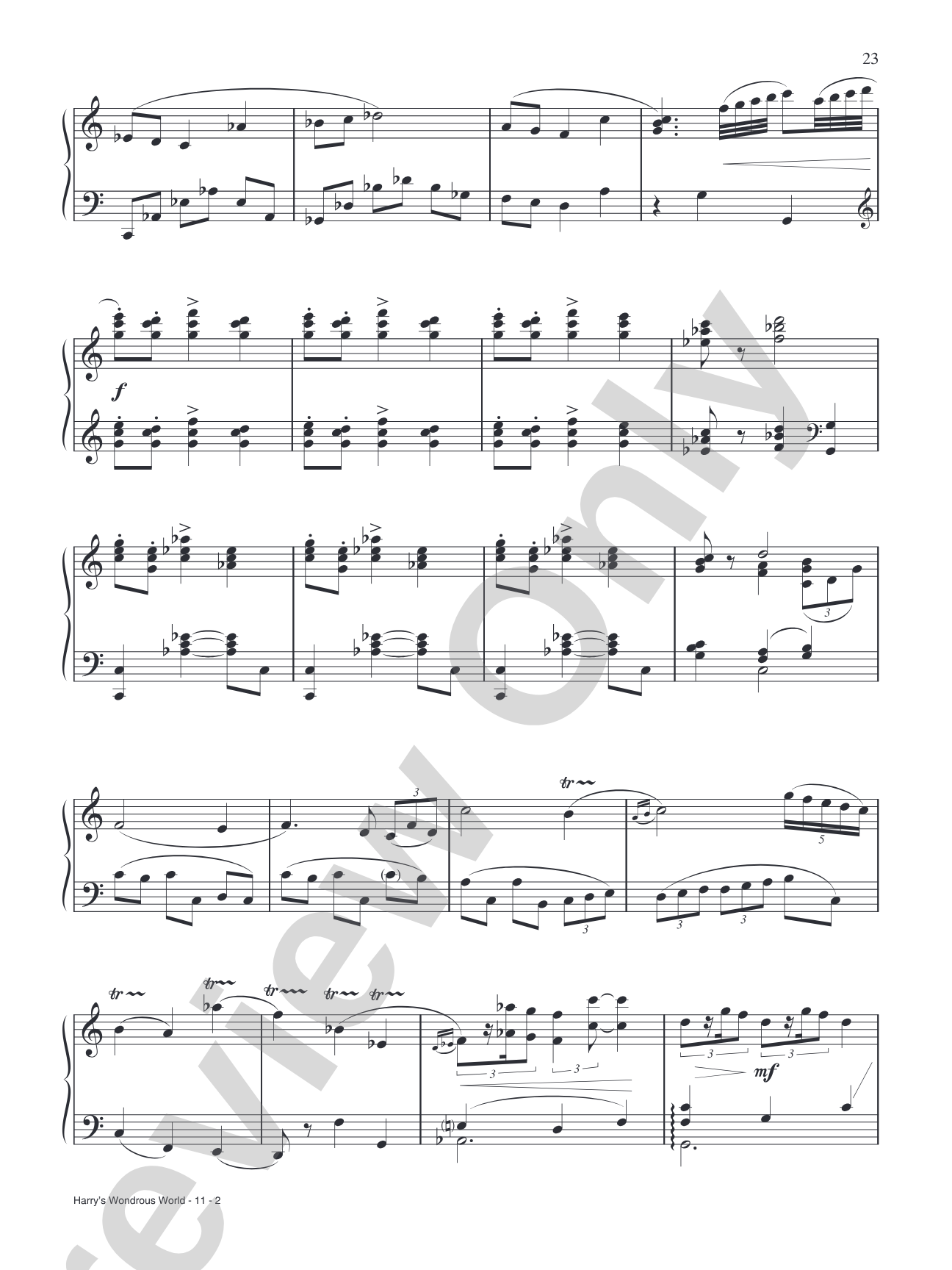
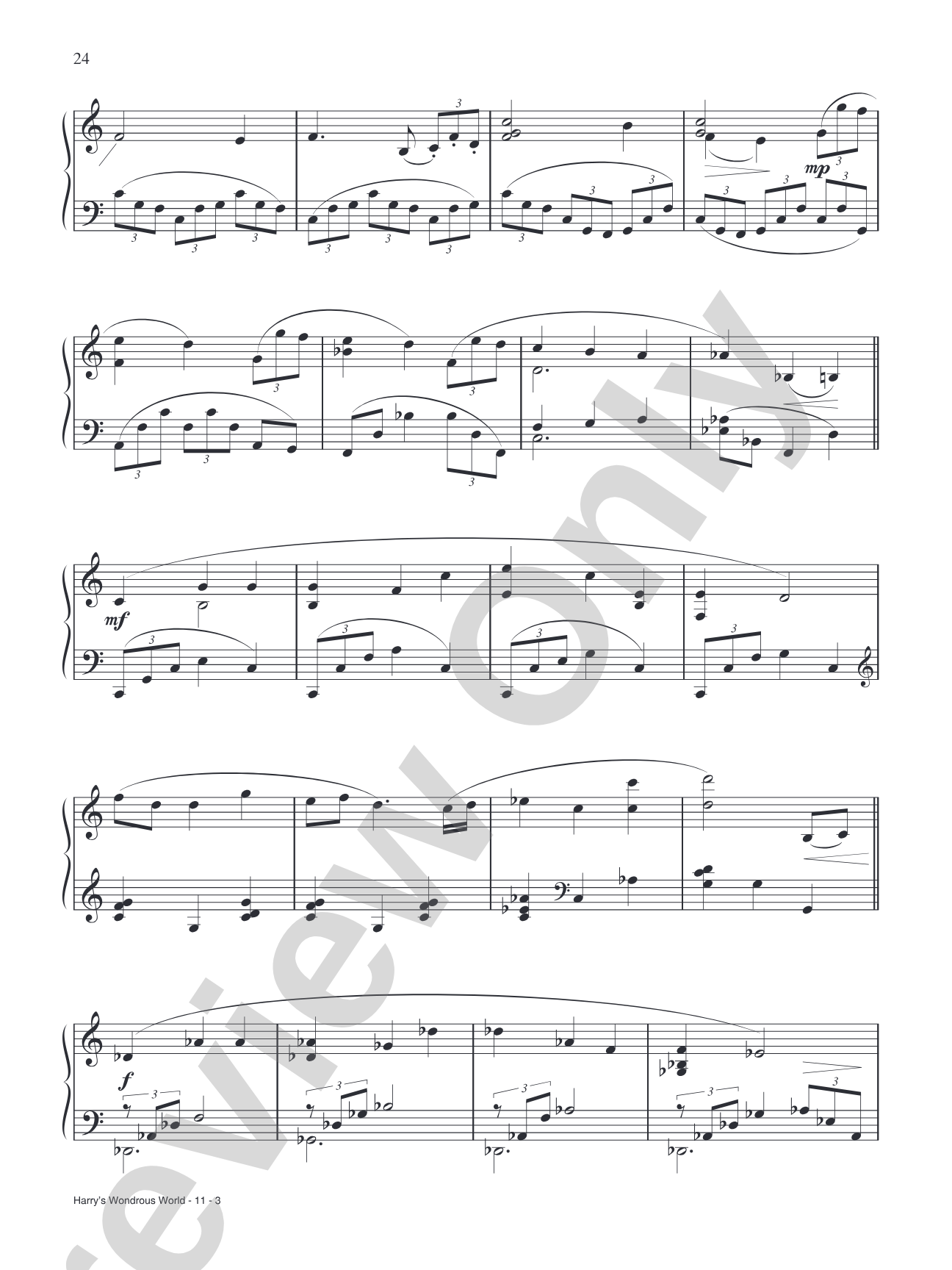

Harry's Wondrous World (from "Harry Potter and the Sorcerer's Stone"): Piano
Music by John Williams, Patrick Doyle, Nicholas Hooper, and Alexandre Desplat
Level: Intermediate / Advanced
Item: 00-XS-0000483
$9.99
Pickup currently not available
Related Items
Diagon Alley (from "Harry Potter and the Sorcerer's Stone"): Piano |
$4.99
|
View | |
Nimbus 2000 (from "Harry Potter and the Sorcerer's Stone"): Piano |
$4.99
|
View | |
Family Protrait (from "Harry Potter and the Sorcerer's Stone"): Piano |
$4.99
|
View | |
Voldemort (from "Harry Potter and the Sorcerer's Stone"): Piano |
$4.99
|
View | |
Chamber of Secrets (from "Harry Potter and the Chamber of Secrets"): Piano |
$4.99
|
View | |
Buckbeaks Flight (from "Harry Potter and the Prisoner of Azkaban"): Piano |
$4.99
|
View | |
Hagrid the Professor (from "Harry Potter and the Prisoner of Azkaban"): Piano |
$4.99
|
View | |
This is the Night (from "Harry Potter and the Goblet of Fire"): Piano |
$5.99
|
View | |
Potter Waltz (from "Harry Potter and the Goblet of Fire"): Piano |
$4.99
|
View | |
Harry In Winter (from "Harry Potter and the Goblet of Fire"): Piano |
$4.99
|
View | |
Leaving Hogwarts (from "Harry Potter and the Sorcerer's Stone"): Piano |
$4.99
|
View | |
Harry Potter: Sheet Music from the Complete Film Series: Piano Book |
$29.99
|
View |
Description
With the Harry Potter film series now complete, Alfred Music and Warner Bros. Entertainment are proud to present musical selections from the eight epic films together in one piano sheet music collectible volume. For the first time ever, 36 sheet music selections by John Williams, Patrick Doyle, Nicholas Hooper, and Alexandre Desplat are collected along with eight pages of color stills from The Sorcerer's Stone to The Deathly Hallows, Part 2. By popular request, "Leaving Hogwarts" from The Sorcerer's Stone appears in print in this collection for the first time. It's a perfect gift for intermediate to advanced pianists of all ages who love the music of Harry Potter. Titles: * Diagon Alley * Family Portrait * Harry's Wondrous World * Hedwig's Theme * Leaving Hogwarts * Nimbus 2000 * Voldemort * The Chamber of Secrets * Fawkes the Phoenix * Buckbeak's Flight * Double Trouble * Hagrid the Professor * Harry in Winter * Hogwarts March * Potter Waltz * This Is the Night * Dumbledore's Army * Fireworks * Loved Ones and Leaving * Professor Umbridge * Dumbledore's Farewell * Harry and Hermione * In Noctem * When Ginny Kissed Harry * Farewell to Dobby * Godric's Hollow Graveyard * Harry and Ginny * Obliviate * Ron Leaves * Snape to Malfoy Manor * Courtyard Apocalypse * Harry's Sacrifice * Lily's Lullaby * Lily's Theme * Severus and Lily * Statues.


Harry's Wondrous World (from "Harry Potter and the Sorcerer's Stone"): Piano isn't in MakeMusic Cloud just yet...but it could be. Let us know you'd like to see it, and you'll help shape what comes next. In the meantime, start a free trial and dive into thousands of interactive titles your students can play along with today.
Request This Title
Tell us you want it.
Start Your Free Trial
Explore everything that's ready to play right now.
Sample Audio
No sample audio found.
Sample Video
No sample videos found.
Additional Details
Publisher:
Alfred Music
Page Count:
144
SKU:
00-XS-0000483
More about this title
About the Composer: John Williams
John Williams stands as one of the most consequential film composers of the past fifty years. His orchestral language draws from the classical tradition while remaining immediately accessible to listeners of all ages; his themes are crafted to function as genuine melodies rather than background texture. Williams has shaped the sound of modern cinema across genres—from science fiction and adventure to drama and comedy—and his film scores have become standard concert repertoire performed by orchestras worldwide.
Why we love this
This collection captures the full arc of the Harry Potter saga through 36 carefully selected pieces that span eight films and four composers. For pianists, it represents an opportunity to inhabit some of cinema's most recognizable themes at their own instrument; the inclusion of "Leaving Hogwarts" in print for the first time makes this a must-own resource. The intermediate to advanced level sits at the sweet spot where pianists can tackle genuinely satisfying arrangements without excessive technical gymnastics.
What to expect
Opening this collection feels like stepping into the visual and emotional world of the films through music alone. The pieces carry the grandeur of Hogwarts, the whimsy of magical mishaps, and the gravity of stakes that rise across the saga; Williams' orchestrations translate onto piano as lyrical passages interwoven with moments of genuine dramatic power.
Who it's for
This collection serves intermediate to advanced pianists who want substantial, recognizable material that rewards serious study. It appeals equally to adult hobbyists reconnecting with music they love and to serious students seeking repertoire that builds technical skill while maintaining musical engagement.
How to get the most out of it
- Study the thematic material across multiple pieces before diving into individual arrangements. Notice how certain motifs return and transform across the collection; this understanding will deepen your interpretive choices.
- Let the harmonic language breathe. Williams' orchestral writing translates into rich, sometimes dense chords on piano. Resist the urge to race through sustained passages; use the pedal judiciously to allow colors to bloom.
- Consider the dramatic weight of each piece within its film context. Knowing whether a cue underscores quiet conversation or climactic action will inform your phrasing and dynamic choices.
- Sequence pieces thoughtfully if programming multiple selections in recital. The collection moves through the story chronologically, which provides natural thematic progression and emotional pacing.
How to use it
Program individual pieces as recital selections across a season rather than attempting to perform the entire collection in one sitting. Pairing contrasting pieces (a whimsical theme followed by something darker) creates compelling concert flow. These arrangements also work beautifully as encores or special programming when studying film music or celebrating popular culture in a recital context.
Skills your students will build
- Pedal control and voice leading in thick harmonic textures
- Tempo flexibility and dramatic interpretation based on filmic context
- Sight-reading moderate to complex orchestral-style passages arranged for piano
- Understanding thematic development and transformation across a multi-movement work
- Balancing melody with accompaniment patterns derived from orchestral scoring