
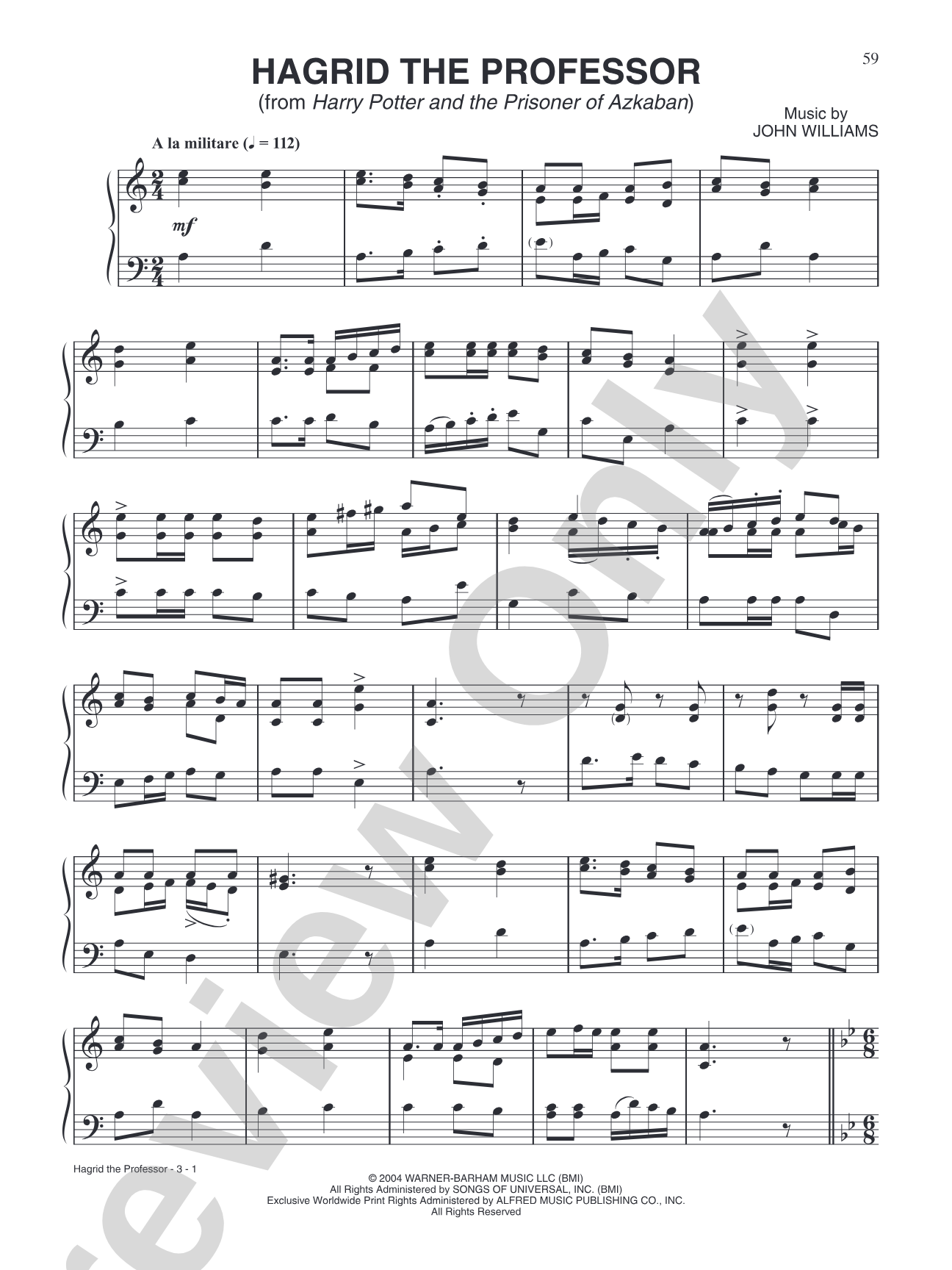

Hagrid the Professor (from "Harry Potter and the Prisoner of Azkaban"): Piano
Music by John Williams, Patrick Doyle, Nicholas Hooper, and Alexandre Desplat
Level: Intermediate / Advanced
Item: 00-XS-0000494
$4.99
Pickup currently not available
Related Items
Harry's Wondrous World (from "Harry Potter and the Sorcerer's Stone"): Piano |
$9.99
|
View | |
Diagon Alley (from "Harry Potter and the Sorcerer's Stone"): Piano |
$4.99
|
View | |
Nimbus 2000 (from "Harry Potter and the Sorcerer's Stone"): Piano |
$4.99
|
View | |
Family Protrait (from "Harry Potter and the Sorcerer's Stone"): Piano |
$4.99
|
View | |
Voldemort (from "Harry Potter and the Sorcerer's Stone"): Piano |
$4.99
|
View | |
Chamber of Secrets (from "Harry Potter and the Chamber of Secrets"): Piano |
$4.99
|
View | |
Buckbeaks Flight (from "Harry Potter and the Prisoner of Azkaban"): Piano |
$4.99
|
View | |
This is the Night (from "Harry Potter and the Goblet of Fire"): Piano |
$5.99
|
View | |
Potter Waltz (from "Harry Potter and the Goblet of Fire"): Piano |
$4.99
|
View | |
Harry In Winter (from "Harry Potter and the Goblet of Fire"): Piano |
$4.99
|
View | |
Leaving Hogwarts (from "Harry Potter and the Sorcerer's Stone"): Piano |
$4.99
|
View | |
Harry Potter: Sheet Music from the Complete Film Series: Piano Book |
$29.99
|
View |
Description
With the Harry Potter film series now complete, Alfred Music and Warner Bros. Entertainment are proud to present musical selections from the eight epic films together in one piano sheet music collectible volume. For the first time ever, 36 sheet music selections by John Williams, Patrick Doyle, Nicholas Hooper, and Alexandre Desplat are collected along with eight pages of color stills from The Sorcerer's Stone to The Deathly Hallows, Part 2. By popular request, "Leaving Hogwarts" from The Sorcerer's Stone appears in print in this collection for the first time. It's a perfect gift for intermediate to advanced pianists of all ages who love the music of Harry Potter. Titles: * Diagon Alley * Family Portrait * Harry's Wondrous World * Hedwig's Theme * Leaving Hogwarts * Nimbus 2000 * Voldemort * The Chamber of Secrets * Fawkes the Phoenix * Buckbeak's Flight * Double Trouble * Hagrid the Professor * Harry in Winter * Hogwarts March * Potter Waltz * This Is the Night * Dumbledore's Army * Fireworks * Loved Ones and Leaving * Professor Umbridge * Dumbledore's Farewell * Harry and Hermione * In Noctem * When Ginny Kissed Harry * Farewell to Dobby * Godric's Hollow Graveyard * Harry and Ginny * Obliviate * Ron Leaves * Snape to Malfoy Manor * Courtyard Apocalypse * Harry's Sacrifice * Lily's Lullaby * Lily's Theme * Severus and Lily * Statues.


Hagrid the Professor (from "Harry Potter and the Prisoner of Azkaban"): Piano isn't in MakeMusic Cloud just yet...but it could be. Let us know you'd like to see it, and you'll help shape what comes next. In the meantime, start a free trial and dive into thousands of interactive titles your students can play along with today.
Request This Title
Tell us you want it.
Start Your Free Trial
Explore everything that's ready to play right now.
Sample Audio
No sample audio found.
Sample Video
No sample videos found.
Additional Details
Publisher:
Alfred Music
Page Count:
144
SKU:
00-XS-0000494
More about this title
About the Composer: John Williams
John Williams stands as one of the most influential film composers of the past fifty years, with a catalog that has defined the sound of modern cinema. His orchestral writing combines classical sophistication with immediate melodic appeal, making his scores both critically respected and deeply beloved by general audiences. Williams has composed the music for some of the most iconic film franchises in history, from Star Wars to Indiana Jones to Harry Potter, earning five Academy Awards and a legacy as a master of thematic composition.
Why we love this
This collection captures Williams at his most inventive, arranging some of his most enchanting themes into idiomatic piano writing that respects the original orchestrations while creating genuinely pianistic textures. Each selection stands alone beautifully, allowing you to program them individually in recitals or perform the entire volume as a thematic journey through eight films. The balance between accessibility and musical substance makes this resource equally valuable for students building classical technique and for adult pianists seeking repertoire with immediate emotional resonance.
What to expect
These arrangements shimmer with the magic and wonder of the films. Soaring melodies coexist with delicate accompaniment patterns; some selections feel intimate and introspective, while others build to moments of genuine drama and power. You'll find yourself moving between whimsy and gravitas, warmth and shadow, reflecting the emotional range of the story itself.
Who it's for
This collection serves intermediate to advanced pianists who have solid technique and the maturity to handle multi-page pieces with varied textures and moderate hand span requirements. It's equally appropriate for young students building their classical foundation and for adult learners and returning pianists who love the Harry Potter films and want to reconnect with music through familiar, emotionally resonant material.
How to get the most out of it
- Treat the thematic material as a priority: these melodies carry the emotional weight of the films, so shape them with vocal legibility even when surrounding them with flowing accompaniment.
- Experiment with tempo flexibility in the more lyrical selections. Williams's film scores often breathe and rubato naturally, so allow yourself interpretive freedom where the notation permits it.
- Pay attention to the color palette in the arrangements. Many pieces use register shifts and hand positioning to create orchestral effects; small touches of pedal and dynamic control can illuminate these textural changes.
- Listen to the original film recordings as reference material. Understanding how the themes function in their cinematic context will inform your interpretation and help you convey the piece's character to your audience.
How to use it
Program individual selections from this collection as standalone recital pieces, creating a thematic program that explores different moods and film moments. Alternatively, use these arrangements as supplementary repertoire for intermediate students who need pieces that maintain their musical and technical interest while offering the motivational boost of familiar material. The collection also serves wonderfully as sight-reading material for pianists working to improve their fluency across varied musical styles.
Skills your students will build
- Reading multi-page arrangements with varied textures and hand positions
- Balancing melody and accompaniment with independent hands
- Sustaining thematic coherence across pieces written in different styles and meters
- Managing rubato and interpretive flexibility within notated scores
- Executing film-inspired orchestral effects through pedal and register choices