
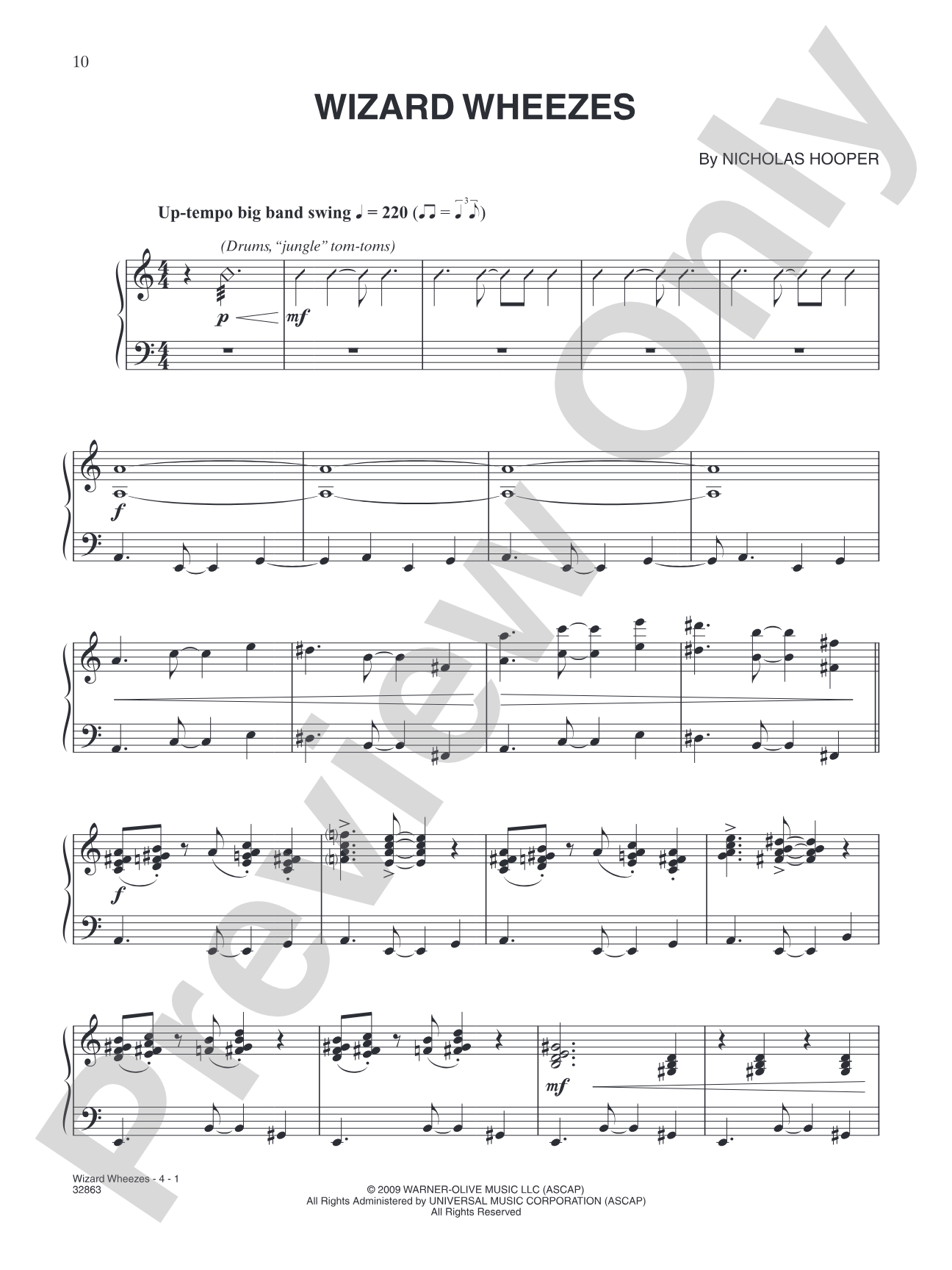

Wizard Wheezes (from "Harry Potter and the Half-Blood Prince"): Piano
Music by Nicholas Hooper
Level: Late Intermediate
Item: 00-PS-0011001
$4.99
Pickup currently not available
Related Items
Dumbledore's Farewell (from "Harry Potter and the Half-Blood Prince"): Piano |
$4.99
|
View | |
Farewell Aragog (from "Harry Potter and the Half-Blood Prince"): Piano |
$4.99
|
View | |
The Friends (from "Harry Potter and the Half-Blood Prince"): Piano |
$4.99
|
View | |
Ginny (from "Harry Potter and the Half-Blood Prince"): Piano |
$4.99
|
View | |
When Ginny Kissed Harry (from "Harry Potter and the Half-Blood Prince"): Piano |
$4.99
|
View | |
Harry and Hermione (from "Harry Potter and the Half-Blood Prince"): Piano |
$4.99
|
View | |
Slughorn's Confession (from "Harry Potter and the Half-Blood Prince"): Piano |
$4.99
|
View | |
The Weasley Stomp (from "Harry Potter and the Half-Blood Prince"): Piano |
$5.99
|
View | |
In Noctem (from "Harry Potter and the Half-Blood Prince"): Piano/Vocal/Chords |
$4.99
|
View | |
Harry Potter and the Half-Blood Prince, Selections from: Piano Book |
$14.95
|
View |
Description
This songbook contains four pages of color photographs and music selections from the much-awaited sixth Harry Potter movie. The music is by Nicholas Hooper, composer of Order of the Phoenix. Titles: Dumbledore's Farewell * Farewell Aragog * The Friends * Ginny * Harry and Hermione * In Noctem * Slughorn's Confession * The Weasley Stomp * When Ginny Kissed Harry * Wizard Wheezes.


Discover MakeMusic Cloud: thousands of interactive titles your students can play along with today.
Sample Audio
No sample audio found.
Sample Video
No sample videos found.
Additional Details
Publisher:
Alfred Music
Page Count:
40
SKU:
00-PS-0011001
More about this title
About the Composer: Nicholas Hooper
Nicholas Hooper composed the film scores for Harry Potter and the Order of the Phoenix and Harry Potter and the Half-Blood Prince, bringing a distinctive orchestral voice to the later chapters of the saga. His work in these films demonstrates sophisticated harmonic language and the ability to write memorable themes that serve both dramatic narrative and emotional depth, skills that translate powerfully when adapted for solo piano.
Why we love this
Students recognize these melodies immediately, which makes engagement effortless, but the late intermediate arrangements respect the original orchestration's harmonic complexity rather than oversimplifying it. The collection spans contrasting moods—from the ethereal sadness of Dumbledore's Farewell to the playful energy of The Weasley Stomp and Wizard Wheezes—giving you real programming variety within a single, cohesive source.
What to expect
The music moves between intimate, reflective moments and bursts of youthful joy, capturing the bittersweet tone of the Half-Blood Prince film itself. Hooper's melodies are singable and warm, often layered over rich harmonic progressions that feel orchestral even on a solo piano.
Who it's for
This collection appeals to late intermediate pianists who want engaging repertoire with strong emotional resonance and immediate recognizability. Players who have grown up with the films will find these arrangements both familiar and genuinely musical, motivating sustained practice.
How to get the most out of it
- Balance the melodic line against supporting harmonies so the tune reads clearly even when Hooper's orchestral textures get dense; resist the urge to play everything at the same dynamic level.
- Pay attention to the film's pacing when learning the faster sections like Wizard Wheezes; these pieces benefit from rhythmic precision that mirrors the movie's editing.
- Explore the minor-key and modal passages in In Noctem and Dumbledore's Farewell with sensitivity to tone color rather than just hitting the right notes; the emotional weight lives in the sound you create.
How to use it
Feature individual selections from this collection in spring or winter student recitals, where film music repertoire typically draws engaged audiences and supportive applause. You might also use Dumbledore's Farewell as an opening number for a program exploring themes of loss and memory, or program The Weasley Stomp and Wizard Wheezes back to back for a mood shift that demonstrates interpretive range.
Skills your students will build
- Reading and sustaining rich harmonic progressions
- Balancing melody against complex accompaniment figuration
- Interpreting emotional subtext through rubato and tone color
- Managing tempo consistency in faster, rhythmically active sections
- Translating orchestral textures to the piano