
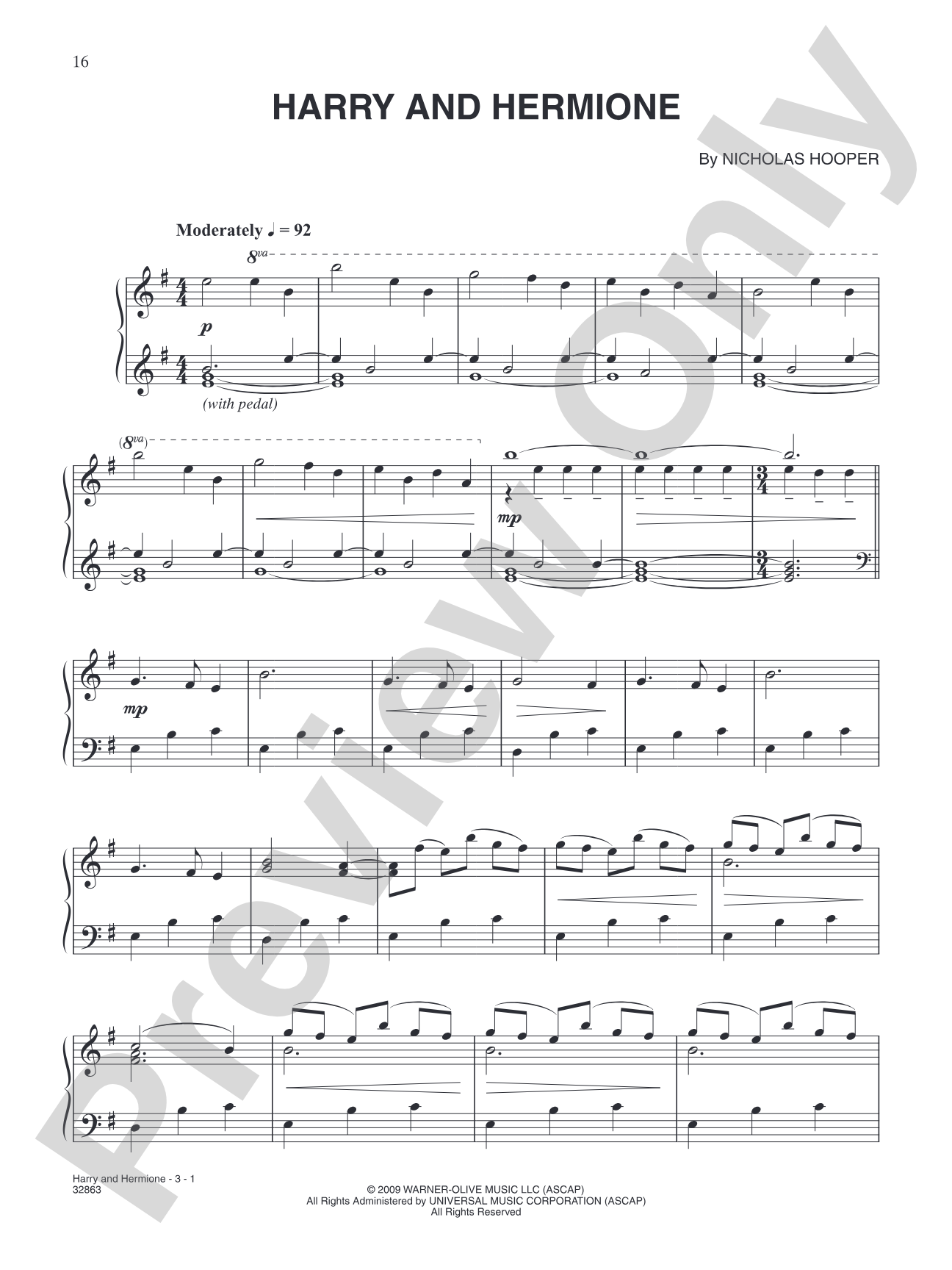

Harry and Hermione (from "Harry Potter and the Half-Blood Prince"): Piano
Music by Nicholas Hooper
Level: Late Intermediate
Item: 00-PS-0010998
$4.99
Pickup currently not available
Related Items
Dumbledore's Farewell (from "Harry Potter and the Half-Blood Prince"): Piano |
$4.99
|
View | |
Farewell Aragog (from "Harry Potter and the Half-Blood Prince"): Piano |
$4.99
|
View | |
The Friends (from "Harry Potter and the Half-Blood Prince"): Piano |
$4.99
|
View | |
Ginny (from "Harry Potter and the Half-Blood Prince"): Piano |
$4.99
|
View | |
When Ginny Kissed Harry (from "Harry Potter and the Half-Blood Prince"): Piano |
$4.99
|
View | |
Slughorn's Confession (from "Harry Potter and the Half-Blood Prince"): Piano |
$4.99
|
View | |
The Weasley Stomp (from "Harry Potter and the Half-Blood Prince"): Piano |
$5.99
|
View | |
Wizard Wheezes (from "Harry Potter and the Half-Blood Prince"): Piano |
$4.99
|
View | |
In Noctem (from "Harry Potter and the Half-Blood Prince"): Piano/Vocal/Chords |
$4.99
|
View | |
Harry Potter and the Half-Blood Prince, Selections from: Piano Book |
$14.95
|
View |
Description
This songbook contains four pages of color photographs and music selections from the much-awaited sixth Harry Potter movie. The music is by Nicholas Hooper, composer of Order of the Phoenix. Titles: Dumbledore's Farewell * Farewell Aragog * The Friends * Ginny * Harry and Hermione * In Noctem * Slughorn's Confession * The Weasley Stomp * When Ginny Kissed Harry * Wizard Wheezes.


Discover MakeMusic Cloud: thousands of interactive titles your students can play along with today.
Sample Audio
No sample audio found.
Sample Video
No sample videos found.
Additional Details
Publisher:
Alfred Music
Page Count:
40
SKU:
00-PS-0010998
More about this title
About the Composer: Nicholas Hooper
Nicholas Hooper composed the scores for Harry Potter and the Order of the Phoenix and Harry Potter and the Half-Blood Prince, bringing a sophisticated orchestral sensibility to the darker turn the series took in its middle chapters. His film music work demonstrates a gift for character themes and atmospheric scoring that translates effectively to solo piano arrangements, making his material particularly valuable for pianists exploring contemporary film composition.
Why we love this
This collection captures the emotional core of Half-Blood Prince's most memorable moments through music that resonates with intermediate pianists. The arrangements preserve Hooper's melodic gift while remaining technically accessible, and the film connection gives students concrete musical and narrative context for their practice.
What to expect
Hooper's music captures the bittersweet complexity of Half-Blood Prince's narrative, moving between moments of whimsy and genuine sorrow. These pieces feel cinematic and dramatic at a human scale, with the kind of clear melodic writing that makes players feel the emotional weight of the story.
Who it's for
This book appeals to late intermediate pianists who connect with popular film music and want to expand their repertoire beyond classical standards. Students preparing for recitals, casual players exploring contemporary composition, and teachers building diverse programming will find these selections immediately engaging and achievable.
How to get the most out of it
- Balance the lyrical melodies against supporting figures; these pieces often ask the left hand to maintain quiet accompaniment while the right hand carries singing lines, so resist the urge to let the melody dominate dynamically.
- Pay attention to the photographs and scene context printed in the book. Understanding which moment each piece underscores will inform your phrasing and emotional interpretation.
- Approach the character themes individually rather than as background music. Each title represents a specific moment or person, so commit to the distinct personality of each piece during practice.
- Take care with tempo consistency in the more lyrical selections; Hooper's film scoring often relies on rubato and flexibility, but you'll want to establish a clear pulse before adding expressive freedom.
How to use it
These selections work beautifully in student recitals, either as individual pieces or as a short suite, and pair naturally with other film or popular music. They also serve well in school concerts focused on contemporary or multimedia themes, and the color photographs provide a visually engaging element that enhances the program notes.
Skills your students will build
- Sustaining legato lines across hand position shifts
- Managing dynamic contrast between melody and accompaniment
- Interpreting character-driven musical themes
- Executing film-influenced rubato and expressive phrasing
- Reading and performing across ten different musical contexts within a single collection