
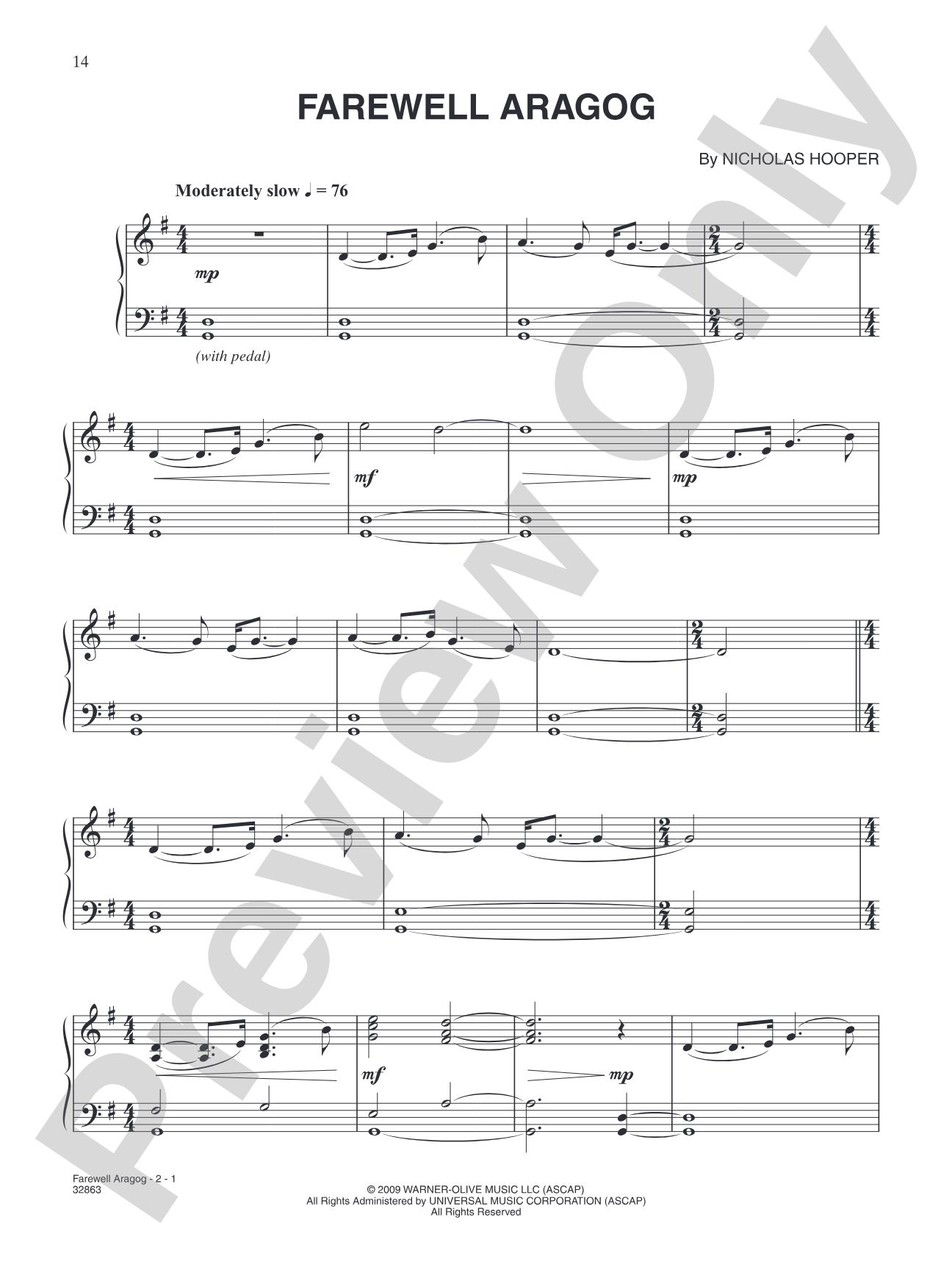

Farewell Aragog (from "Harry Potter and the Half-Blood Prince"): Piano
Music by Nicholas Hooper
Level: Late Intermediate
Item: 00-PS-0010994
$4.99
Pickup currently not available
Related Items
Dumbledore's Farewell (from "Harry Potter and the Half-Blood Prince"): Piano |
$4.99
|
View | |
The Friends (from "Harry Potter and the Half-Blood Prince"): Piano |
$4.99
|
View | |
Ginny (from "Harry Potter and the Half-Blood Prince"): Piano |
$4.99
|
View | |
When Ginny Kissed Harry (from "Harry Potter and the Half-Blood Prince"): Piano |
$4.99
|
View | |
Harry and Hermione (from "Harry Potter and the Half-Blood Prince"): Piano |
$4.99
|
View | |
Slughorn's Confession (from "Harry Potter and the Half-Blood Prince"): Piano |
$4.99
|
View | |
The Weasley Stomp (from "Harry Potter and the Half-Blood Prince"): Piano |
$5.99
|
View | |
Wizard Wheezes (from "Harry Potter and the Half-Blood Prince"): Piano |
$4.99
|
View | |
In Noctem (from "Harry Potter and the Half-Blood Prince"): Piano/Vocal/Chords |
$4.99
|
View | |
Harry Potter and the Half-Blood Prince, Selections from: Piano Book |
$14.95
|
View |
Description
This songbook contains four pages of color photographs and music selections from the much-awaited sixth Harry Potter movie. The music is by Nicholas Hooper, composer of Order of the Phoenix. Titles: Dumbledore's Farewell * Farewell Aragog * The Friends * Ginny * Harry and Hermione * In Noctem * Slughorn's Confession * The Weasley Stomp * When Ginny Kissed Harry * Wizard Wheezes.


Discover MakeMusic Cloud: thousands of interactive titles your students can play along with today.
Sample Audio
No sample audio found.
Sample Video
No sample videos found.
Additional Details
Publisher:
Alfred Music
Page Count:
40
SKU:
00-PS-0010994
More about this title
About the Composer: Nicholas Hooper
Nicholas Hooper composed the scores for the final four films in the Harry Potter series, beginning with Order of the Phoenix. His work on these films earned him recognition for blending orchestral sophistication with themes that capture both the wonder and darkness of the wizarding world, making his music central to how audiences experience the narrative's most pivotal moments.
Why we love this
This collection gives pianists access to instantly recognizable film themes arranged for solo piano at a level where technique meets musicality. The pieces range from reflective character moments to energetic showstoppers, offering something for recital programs that reaches listeners who know these films and themes by heart.
What to expect
The music shifts between intimate character moments and broader emotional landscapes, moving from the elegiac weight of Dumbledore's farewell to the playful brightness of The Weasley Stomp. Each piece carries the film's visual storytelling into the pianist's hands, evoking everything from quiet introspection to youthful joy.
Who it's for
Late intermediate pianists who want to expand beyond classical and contemporary solo repertoire will find these arrangements engaging and performable. This collection also appeals to younger students whose introduction to piano comes through music they already love from film, making practice feel less like obligation and more like exploration.
How to get the most out of it
- Balance melody against accompaniment by letting the vocal line sing through even in busier arrangements. These pieces often prioritize legibility over density, so resist the urge to add extra weight.
- Pay attention to the emotional arc within each piece rather than maintaining a single tempo or dynamic. Dumbledore's Farewell and Farewell Aragog demand shifts in color and restraint that make the difference between playing notes and storytelling.
- Experiment with pedal to create atmosphere in the quieter moments without blurring harmonic clarity. Hooper's film writing often relies on sustained sonorities that transform simple accompaniment patterns.
How to use it
Open a recital with one of the lighter selections like When Ginny Kissed Harry or The Weasley Stomp to signal that the evening welcomes familiarity and joy alongside more serious classical work. These pieces also work as intermission music or encore material, especially in informal settings where the audience's connection to the source material strengthens the performance's impact.
Skills your students will build
- Managing rubato and tempo flexibility within a single piece
- Balancing accompanimental patterns that sit below the melodic line
- Reading film-influenced harmonic language and contemporary chord structures
- Creating character and narrative arc through dynamic and tonal control
- Sustaining lyrical lines while maintaining rhythmic integrity in the accompaniment