
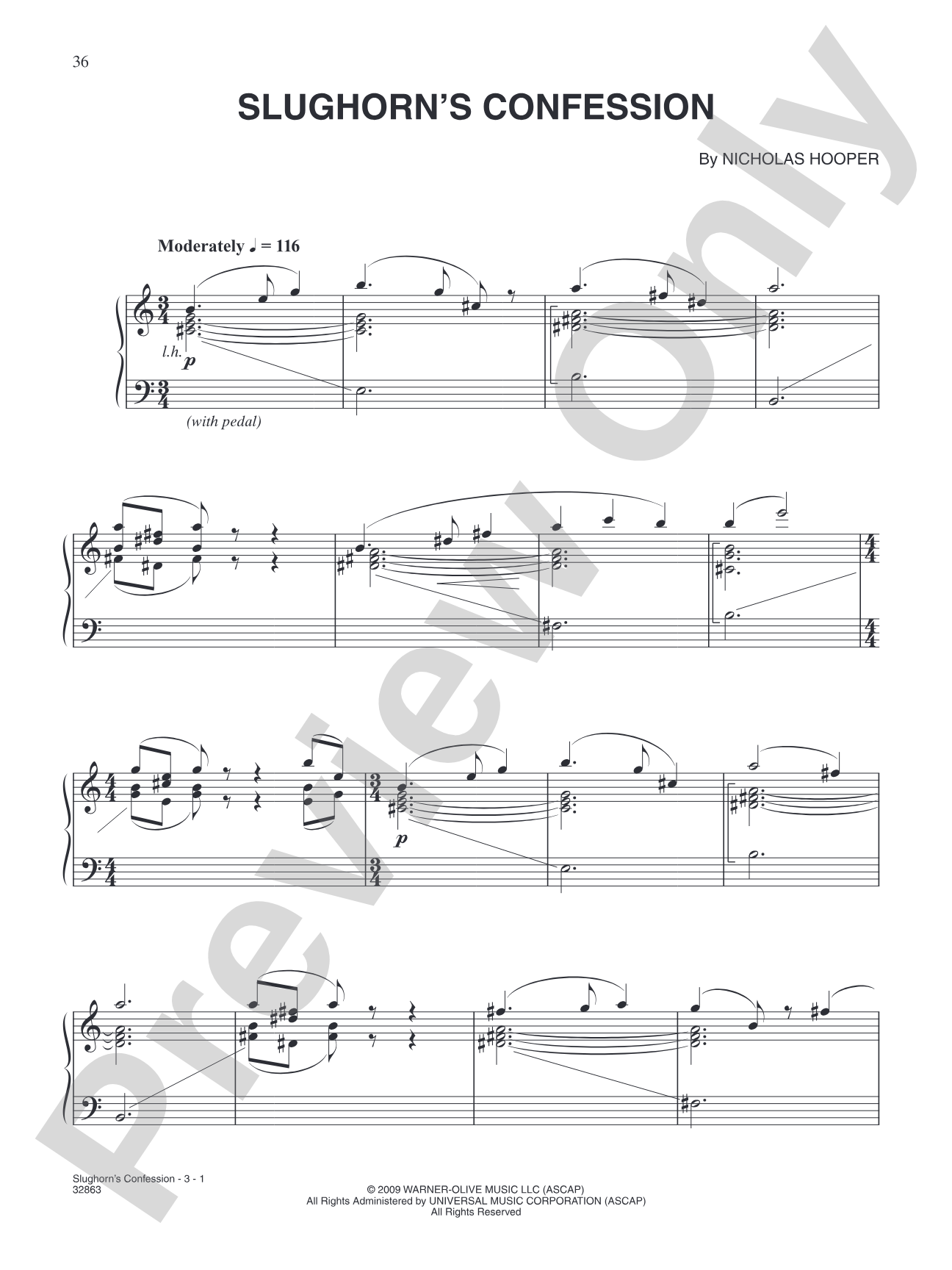

Slughorn's Confession (from "Harry Potter and the Half-Blood Prince"): Piano
Music by Nicholas Hooper
Level: Late Intermediate
Item: 00-PS-0010999
$4.99
Pickup currently not available
Related Items
Dumbledore's Farewell (from "Harry Potter and the Half-Blood Prince"): Piano |
$4.99
|
View | |
Farewell Aragog (from "Harry Potter and the Half-Blood Prince"): Piano |
$4.99
|
View | |
The Friends (from "Harry Potter and the Half-Blood Prince"): Piano |
$4.99
|
View | |
Ginny (from "Harry Potter and the Half-Blood Prince"): Piano |
$4.99
|
View | |
When Ginny Kissed Harry (from "Harry Potter and the Half-Blood Prince"): Piano |
$4.99
|
View | |
Harry and Hermione (from "Harry Potter and the Half-Blood Prince"): Piano |
$4.99
|
View | |
The Weasley Stomp (from "Harry Potter and the Half-Blood Prince"): Piano |
$5.99
|
View | |
Wizard Wheezes (from "Harry Potter and the Half-Blood Prince"): Piano |
$4.99
|
View | |
In Noctem (from "Harry Potter and the Half-Blood Prince"): Piano/Vocal/Chords |
$4.99
|
View | |
Harry Potter and the Half-Blood Prince, Selections from: Piano Book |
$14.95
|
View |
Description
This songbook contains four pages of color photographs and music selections from the much-awaited sixth Harry Potter movie. The music is by Nicholas Hooper, composer of Order of the Phoenix. Titles: Dumbledore's Farewell * Farewell Aragog * The Friends * Ginny * Harry and Hermione * In Noctem * Slughorn's Confession * The Weasley Stomp * When Ginny Kissed Harry * Wizard Wheezes.


Discover MakeMusic Cloud: thousands of interactive titles your students can play along with today.
Sample Audio
No sample audio found.
Sample Video
No sample videos found.
Additional Details
Publisher:
Alfred Music
Page Count:
40
SKU:
00-PS-0010999
More about this title
About the Composer: Nicholas Hooper
Nicholas Hooper composed the orchestral scores for the fifth and sixth Harry Potter films, bringing cinematic sophistication to Hogwarts through his work on Order of the Phoenix and Half-Blood Prince. His film music draws on classical orchestration while remaining accessible to student performers, making his compositions valuable bridge material between popular culture and serious musicianship.
Why we love this
These arrangements maintain the emotional core of Hooper's film scores while landing squarely in the late intermediate range, meaning your students can actually play recognizable, movie-quality material without excessive technical hurdles. The collection spans intimate character moments (Dumbledore's Farewell, When Ginny Kissed Harry) alongside energetic ensemble pieces (The Weasley Stomp), giving you real variety in a single book.
What to expect
The music moves between reflective, story-driven moments steeped in minor-key introspection and lighter, more playful passages that capture the personalities of the characters. Hooper's harmonic language leans contemporary and accessible, with clear melodies that feel singable even on piano, creating an intimate rather than showily virtuosic experience.
Who it's for
Late intermediate pianists who thrive on repertoire they recognize and care about, plus studio teachers and piano ensemble directors seeking engaging material that doesn't patronize teenage students. This collection works especially well for students juggling classical studies with pop culture interests.
How to get the most out of it
- Balance the melody against accompaniment textures in pieces like In Noctem, where atmospheric left-hand patterns risk overwhelming the vocal line if not carefully voiced.
- Approach the character pieces with clear harmonic awareness; these emotional moments rely on chord color and voice leading rather than virtuosity.
- Use the film as a listening reference. Hearing Hooper's original orchestrations will inform tempo choices, articulation, and overall tone.
- In The Weasley Stomp and other rhythmic pieces, lock in the groove early in rehearsal so students can focus on expressive details rather than fighting the meter.
How to use it
Feature individual pieces as solo recital selections throughout the year, or program three to five of them as a thematic movie-music set in a spring concert. The emotional arc of these pieces also works well for studio teaching, especially with students preparing for college auditions who need to demonstrate they can play with maturity and nuance beyond classical canon.
Skills your students will build
- Voicing block chords and extended harmonies for expressive effect
- Managing dynamic contrast between melody and accompaniment in thin textures
- Pedal control in atmospheric passages with sustained harmonies
- Sight-reading contemporary film music notation
- Interpreting character and mood through tempo and articulation choices