
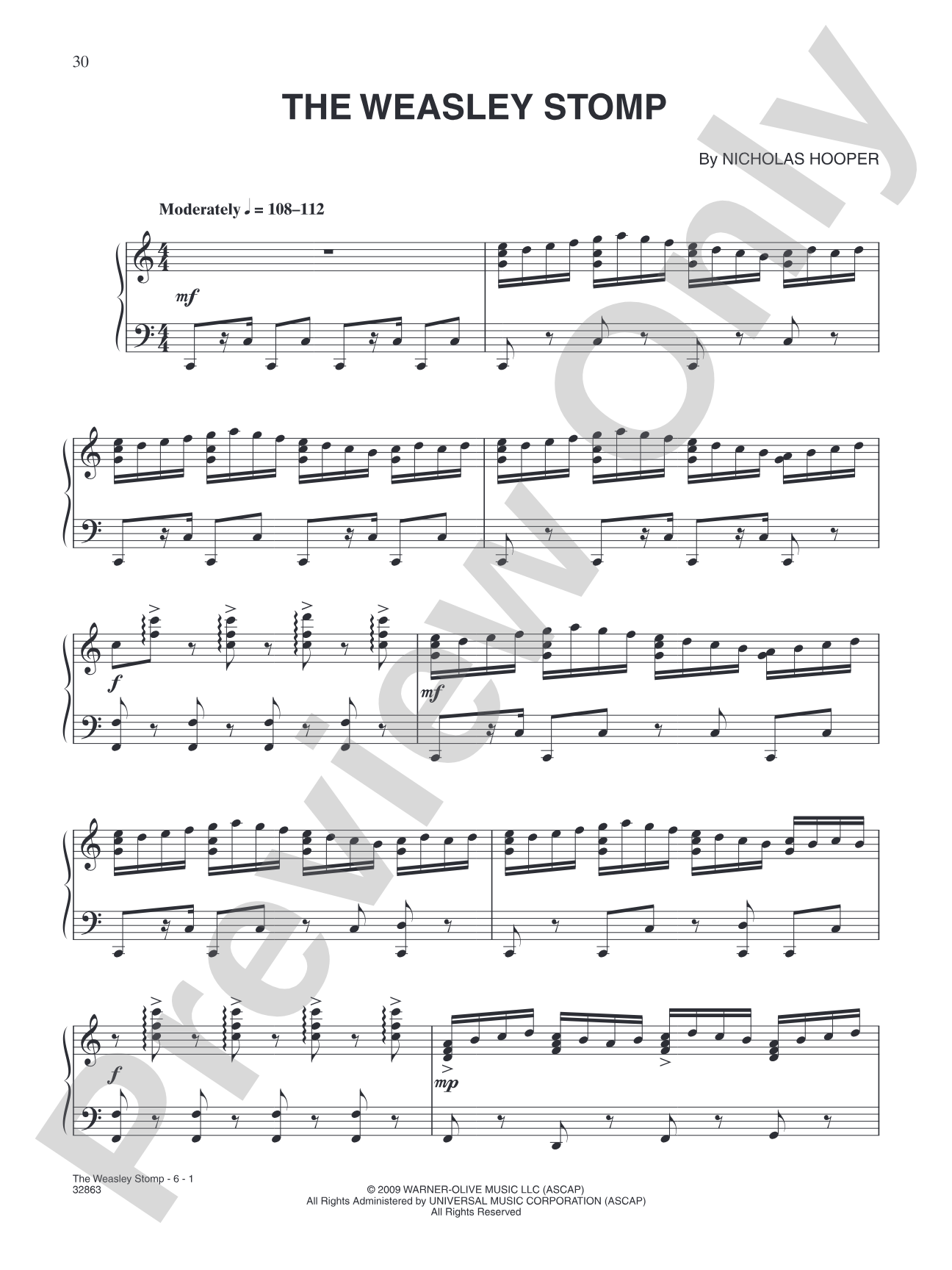
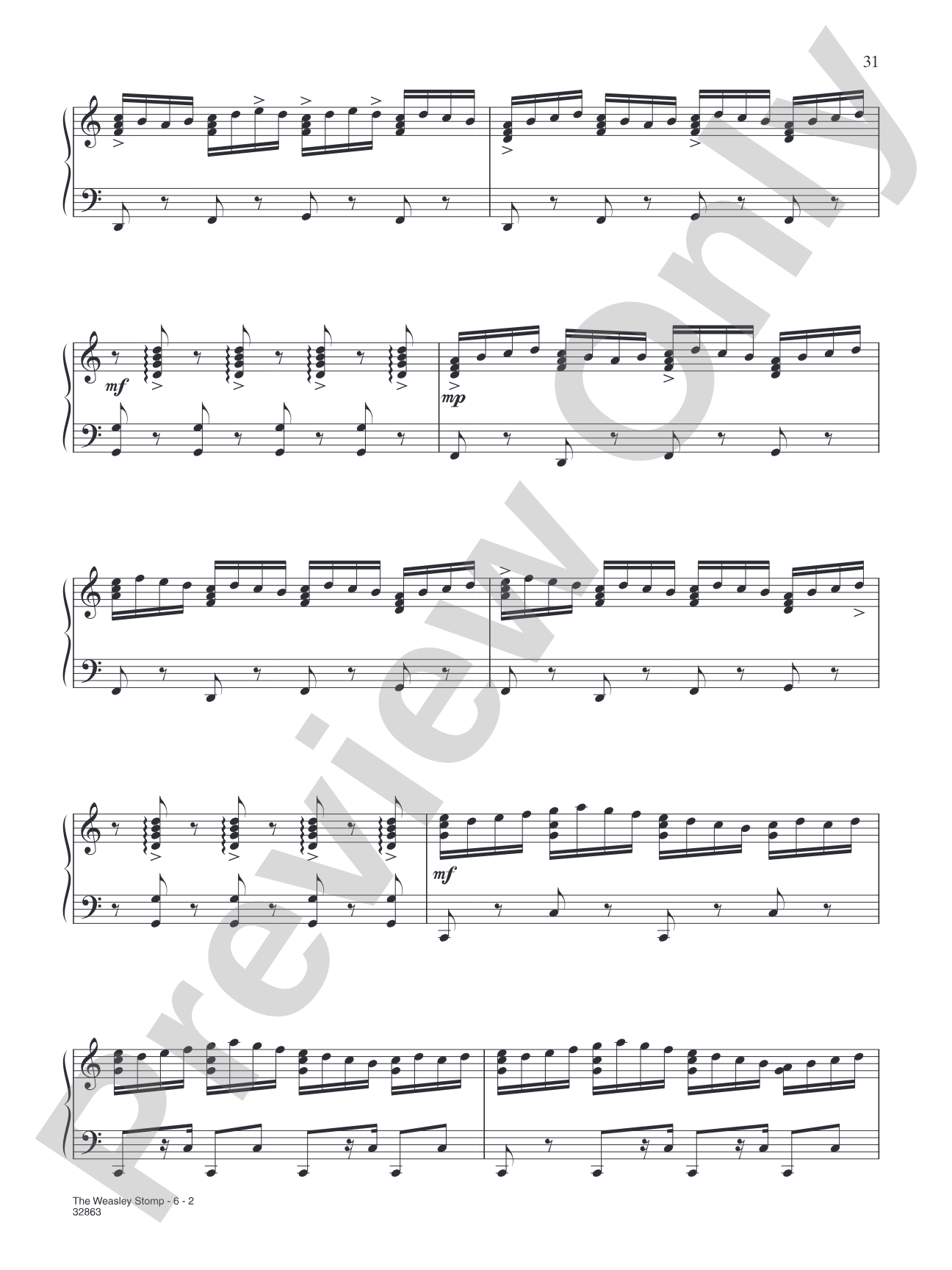

The Weasley Stomp (from "Harry Potter and the Half-Blood Prince"): Piano
Music by Nicholas Hooper
Level: Late Intermediate
Item: 00-PS-0011000
$5.99
Pickup currently not available
Related Items
Dumbledore's Farewell (from "Harry Potter and the Half-Blood Prince"): Piano |
$4.99
|
View | |
Farewell Aragog (from "Harry Potter and the Half-Blood Prince"): Piano |
$4.99
|
View | |
The Friends (from "Harry Potter and the Half-Blood Prince"): Piano |
$4.99
|
View | |
Ginny (from "Harry Potter and the Half-Blood Prince"): Piano |
$4.99
|
View | |
When Ginny Kissed Harry (from "Harry Potter and the Half-Blood Prince"): Piano |
$4.99
|
View | |
Harry and Hermione (from "Harry Potter and the Half-Blood Prince"): Piano |
$4.99
|
View | |
Slughorn's Confession (from "Harry Potter and the Half-Blood Prince"): Piano |
$4.99
|
View | |
Wizard Wheezes (from "Harry Potter and the Half-Blood Prince"): Piano |
$4.99
|
View | |
In Noctem (from "Harry Potter and the Half-Blood Prince"): Piano/Vocal/Chords |
$4.99
|
View | |
Harry Potter and the Half-Blood Prince, Selections from: Piano Book |
$14.95
|
View |
Description
This songbook contains four pages of color photographs and music selections from the much-awaited sixth Harry Potter movie. The music is by Nicholas Hooper, composer of Order of the Phoenix. Titles: Dumbledore's Farewell * Farewell Aragog * The Friends * Ginny * Harry and Hermione * In Noctem * Slughorn's Confession * The Weasley Stomp * When Ginny Kissed Harry * Wizard Wheezes.


Discover MakeMusic Cloud: thousands of interactive titles your students can play along with today.
Sample Audio
No sample audio found.
Sample Video
No sample videos found.
Additional Details
Publisher:
Alfred Music
Page Count:
40
SKU:
00-PS-0011000
More about this title
About the Composer: Nicholas Hooper
Nicholas Hooper composed the scores for the fifth and sixth Harry Potter films, bringing a sophisticated orchestral sensibility to Hogwarts' most dramatic moments. His work on these soundtracks demonstrates both his ability to honor John Williams' foundational themes and his skill in crafting new material that deepens character moments and emotional stakes.
Why we love this
This collection captures some of the most character-driven moments from Half-Blood Prince in piano arrangements that remain musically substantial without sacrificing singability or accessibility. Your students get to play music they actually recognize and care about while building real late-intermediate technique, and the mix of lyrical passages with rhythmic pieces keeps rehearsals engaging.
What to expect
This collection swings between intimate character moments and bold dramatic gestures. You'll find yourself moving from the tender vulnerability of romantic scenes to the driving momentum of action and intrigue, with Hooper's orchestral sensibilities translated into textures that sound both cinematic and pianistic.
Who it's for
Late-intermediate pianists who want to explore film music that matches their technical level and connects them to contemporary storytelling. Teachers seeking repertoire that motivates students through recognition and emotional resonance will find substantial material here without needing to simplify or arrange.
How to get the most out of it
- Pay attention to the dynamic shadings in the quieter pieces like 'Dumbledore's Farewell' and 'In Noctem.' These moments depend on control and restraint rather than volume to create their emotional impact.
- Approach 'The Weasley Stomp' with clear rhythmic definition. The title promises character and fun, so commit to articulation that brings out the playful energy.
- Balance the melody and accompaniment in 'When Ginny Kissed Harry' so the right-hand line sings naturally without drowning out the supporting voices in the left hand.
- Use the color photographs as visual anchors. Connecting the music to specific scenes from the film can deepen your interpretation and sustain focus through longer practice sessions.
How to use it
Pair these selections in a film music recital or thematic concert exploring how composers score character development. Individual pieces like 'Dumbledore's Farewell' work as poignant program closers, while 'The Weasley Stomp' brings lighter energy to mixed-repertoire concerts and engages audiences who know these films.
Skills your students will build
- Sustaining lyrical lines over extended passages
- Managing dynamic contrast and control in softer dynamic ranges
- Coordinating rhythmic clarity with emotional expression
- Interpreting film music idioms and orchestral textures on piano
- Reading and performing across the full range of the keyboard