
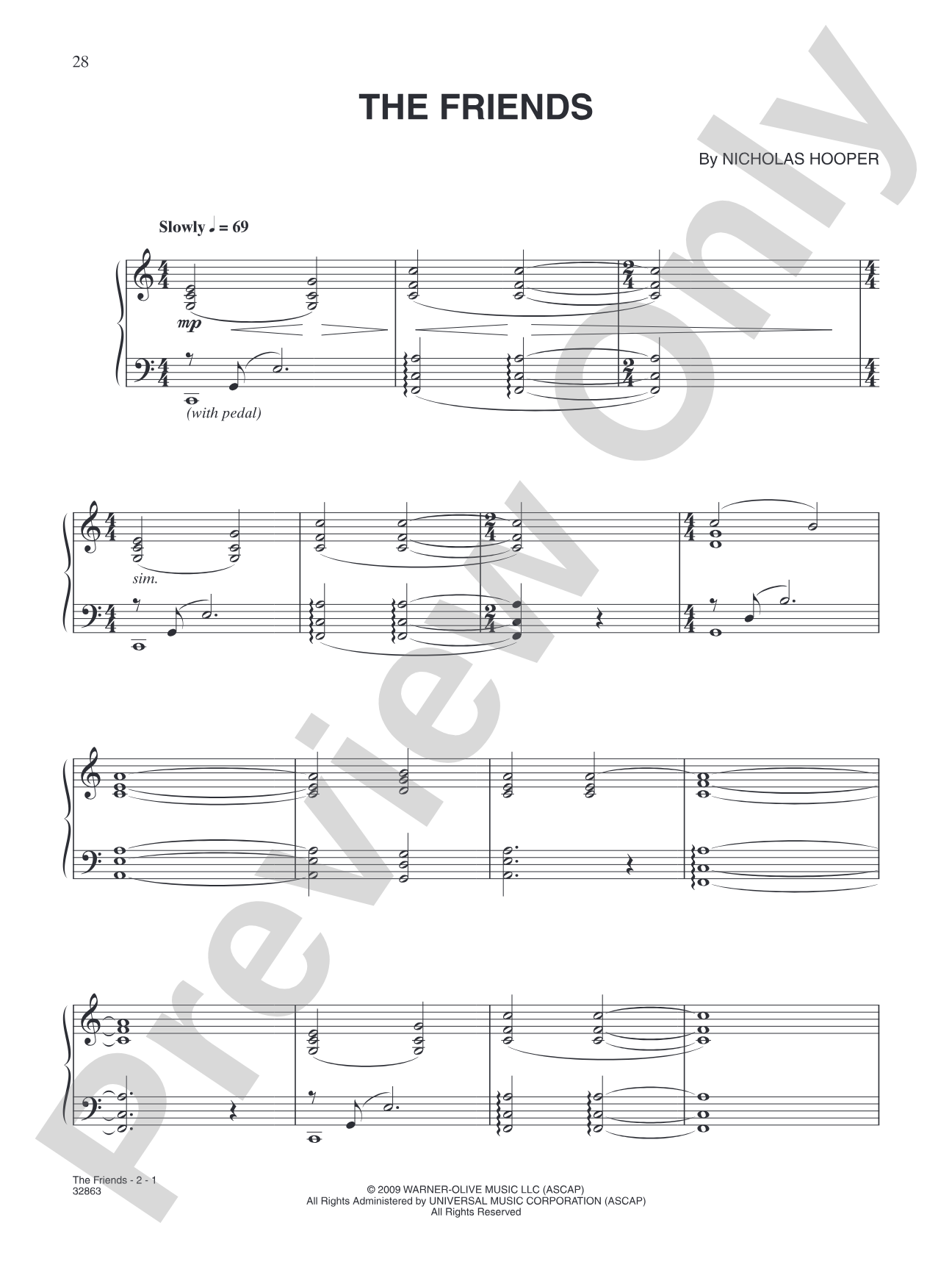

The Friends (from "Harry Potter and the Half-Blood Prince"): Piano
Music by Nicholas Hooper
Level: Late Intermediate
Item: 00-PS-0010995
$4.99
Pickup currently not available
Related Items
Dumbledore's Farewell (from "Harry Potter and the Half-Blood Prince"): Piano |
$4.99
|
View | |
Farewell Aragog (from "Harry Potter and the Half-Blood Prince"): Piano |
$4.99
|
View | |
Ginny (from "Harry Potter and the Half-Blood Prince"): Piano |
$4.99
|
View | |
When Ginny Kissed Harry (from "Harry Potter and the Half-Blood Prince"): Piano |
$4.99
|
View | |
Harry and Hermione (from "Harry Potter and the Half-Blood Prince"): Piano |
$4.99
|
View | |
Slughorn's Confession (from "Harry Potter and the Half-Blood Prince"): Piano |
$4.99
|
View | |
The Weasley Stomp (from "Harry Potter and the Half-Blood Prince"): Piano |
$5.99
|
View | |
Wizard Wheezes (from "Harry Potter and the Half-Blood Prince"): Piano |
$4.99
|
View | |
In Noctem (from "Harry Potter and the Half-Blood Prince"): Piano/Vocal/Chords |
$4.99
|
View | |
Harry Potter and the Half-Blood Prince, Selections from: Piano Book |
$14.95
|
View |
Description
This songbook contains four pages of color photographs and music selections from the much-awaited sixth Harry Potter movie. The music is by Nicholas Hooper, composer of Order of the Phoenix. Titles: Dumbledore's Farewell * Farewell Aragog * The Friends * Ginny * Harry and Hermione * In Noctem * Slughorn's Confession * The Weasley Stomp * When Ginny Kissed Harry * Wizard Wheezes.


Discover MakeMusic Cloud: thousands of interactive titles your students can play along with today.
Sample Audio
No sample audio found.
Sample Video
No sample videos found.
Additional Details
Publisher:
Alfred Music
Page Count:
40
SKU:
00-PS-0010995
More about this title
About the Composer: Nicholas Hooper
Nicholas Hooper composed the scores for the fifth and sixth Harry Potter films, bringing a distinctive orchestral voice to the wizarding world during a pivotal era of the series. His work on the Half-Blood Prince soundtrack demonstrates his ability to craft music that balances intimate character moments with the epic scope of magical cinema, moving beyond the iconic themes established by John Williams in earlier films.
Why we love this
Film score arrangements at this level offer something rare: music that immediately engages students because they already know and love it, paired with sophisticated compositional writing that rewards careful practice. These ten selections span the emotional range of the film, from the tender "When Ginny Kissed Harry" to the propulsive "The Weasley Stomp," giving pianists genuine variety within a single collection.
What to expect
These pieces capture the melancholy and wonder of the Half-Blood Prince, with Hooper's orchestrations translated into piano textures that retain their dramatic sweep. There's an undercurrent of adolescent emotion running through many selections, complemented by moments of whimsy and darker, more ominous passages that reflect the film's tonal shifts.
Who it's for
Late intermediate pianists who want to work with music they care about will find these arrangements accessible yet musically substantial. This collection suits students preparing recital programs that blend classical study with contemporary film music, as well as pianists exploring how orchestral scores translate to the keyboard.
How to get the most out of it
- Treat the orchestral textures as your guide for voice leading; where the film score layers strings and winds, your left hand should create similar harmonic depth and movement rather than simple block chords.
- Balance lyricism with the film's dramatic pacing. Pieces like "Dumbledore's Farewell" need space and restraint; resist the urge to rush through passages that carry emotional weight.
- Use the tempo relationships between pieces as interpretive anchors. Playing through sequences (like "Harry and Hermione" followed by "When Ginny Kissed Harry") helps clarify the dramatic arc Hooper intended.
- Pay close attention to dynamic markings and pedal indications, which are essential to recreating the cinematic atmosphere in a solo piano context.
How to use it
Consider pairing selections from this collection in a recital that explores film music as a legitimate concert genre, or use individual pieces as encores that connect with audiences who might not yet appreciate traditional classical repertoire. These arrangements also work well as supplementary material for students studying how themes develop and recur across extended narrative structures.
Skills your students will build
- Translating orchestral textures to keyboard voicing
- Sustaining legato lines across hand position changes
- Managing dramatic dynamic contrast and mood shifts within single pieces
- Reading and interpreting expressive markings in a cinematic context
- Balancing accompaniment patterns with melodic prominence