
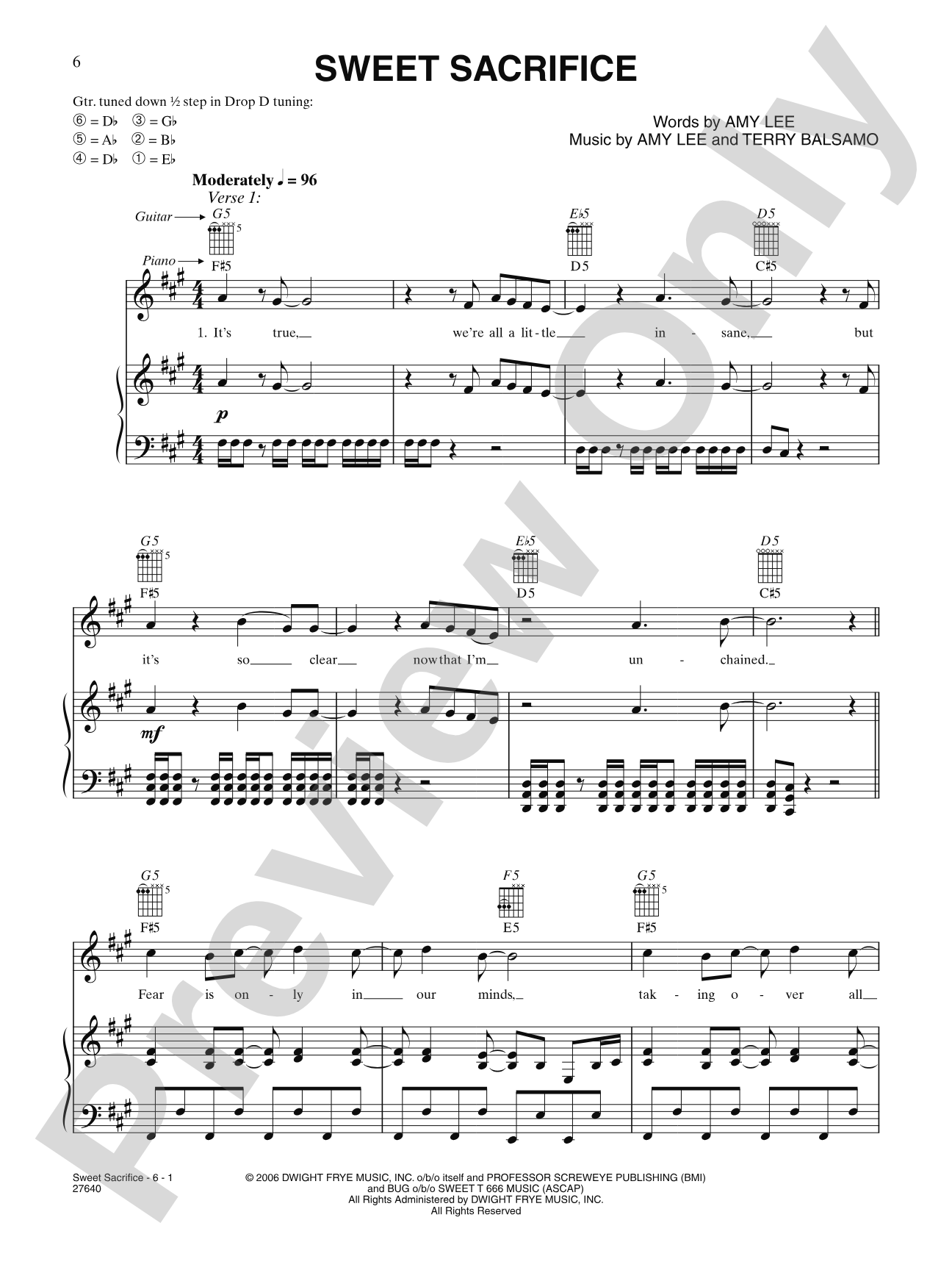
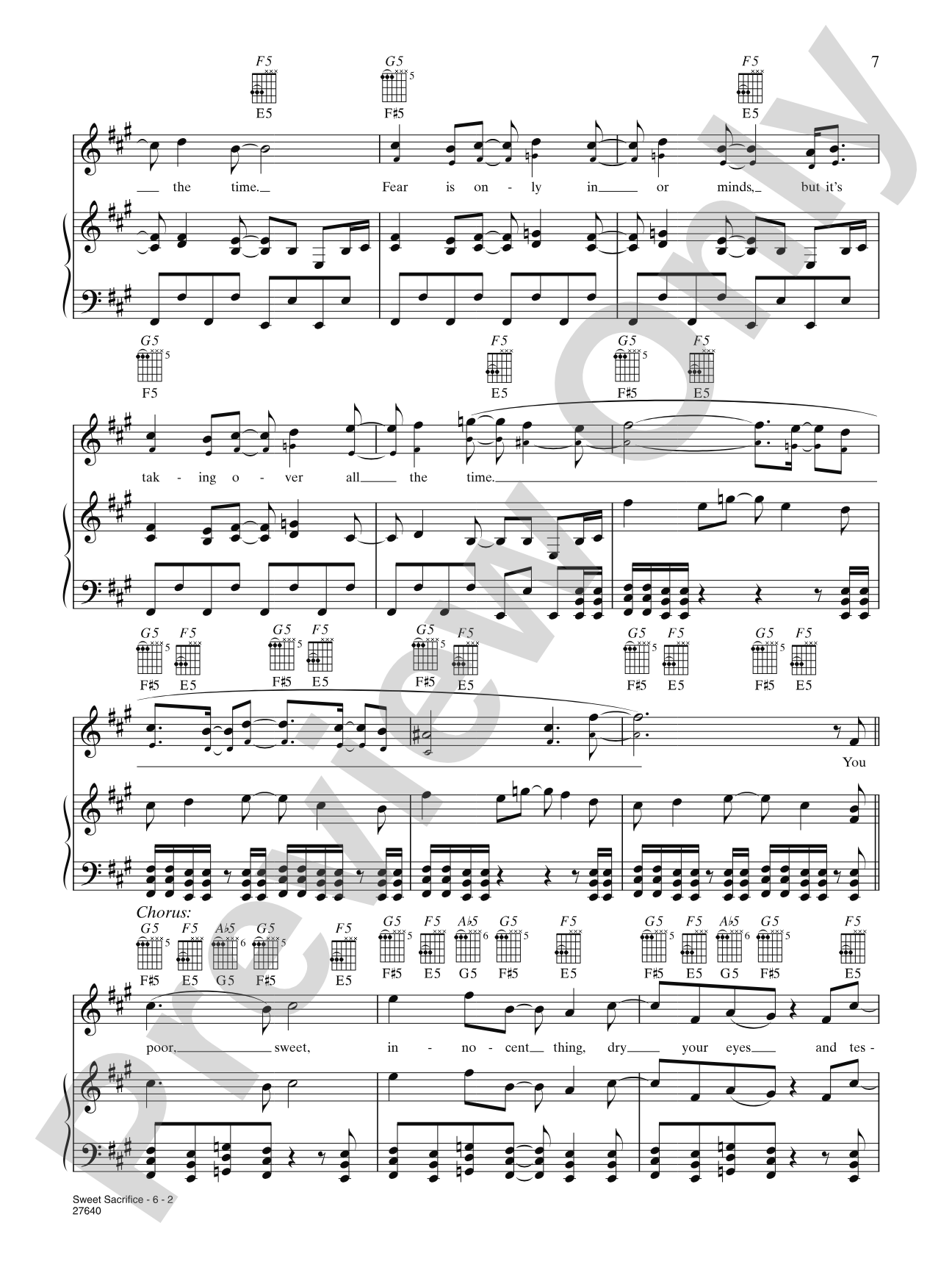

Sweet Sacrifice: Piano/Vocal/Chords
Evanescence
Item: 00-PSP-000191
$5.99
Pickup currently not available
Related Items
All That I'm Living For: Authentic Guitar TAB |
$4.99
|
View | |
Call Me When You're Sober: Authentic Guitar TAB |
$4.99
|
View | |
Cloud Nine: Authentic Guitar TAB |
$5.99
|
View | |
Good Enough: Authentic Guitar TAB |
$4.99
|
View | |
Lacrymosa: Authentic Guitar TAB |
$5.99
|
View | |
Like You: Authentic Guitar TAB |
$5.99
|
View | |
Lithium: Authentic Guitar TAB |
$4.99
|
View | |
Lose Control: Authentic Guitar TAB |
$4.99
|
View | |
Snow White Queen: Authentic Guitar TAB |
$5.99
|
View | |
Sweet Sacrifice: Authentic Guitar TAB |
$4.99
|
View | |
The Only One: Authentic Guitar TAB |
$4.99
|
View | |
Weight Of The World: Authentic Guitar TAB |
$5.99
|
View | |
Your Star: Authentic Guitar TAB |
$5.99
|
View | |
All That I'm Living For: Piano/Vocal/Chords |
$5.99
|
View | |
Call Me When You're Sober: Piano/Vocal/Chords |
$5.99
|
View | |
Cloud Nine: Piano/Vocal/Chords |
$5.99
|
View | |
Good Enough: Piano/Vocal/Chords |
$5.99
|
View | |
Lacrymosa: Piano/Vocal/Chords |
$5.99
|
View | |
Like You: Piano/Vocal/Chords |
$5.99
|
View | |
Lithium: Piano/Vocal/Chords |
$5.99
|
View | |
Lose Control: Piano/Vocal/Chords |
$4.99
|
View | |
Snow White Queen: Piano/Vocal/Chords |
$5.99
|
View | |
The Only One: Piano/Vocal/Chords |
$5.99
|
View | |
Weight Of The World: Piano/Vocal/Chords |
$5.99
|
View | |
Your Star: Piano/Vocal/Chords |
$5.99
|
View | |
Call Me When You're Sober: Piano/Vocal/Chords |
$5.99
|
View |
Description
Alfred is pleased to release the album-matching folio for Evanescence's third record, The Open Door. Released in 2006, The Open Door reached the No. 1 spot on Billboard's Top 200 Chart (2006). This book provides the lyrics along with piano and chord arrangements for all the songs on the record.
Titles: Sweet Sacrifice * Call Me When You're Sober * Weight Of The World * Lithium * Cloud Nine * Snow White Queen * Lacrymosa * Like You * Lose Control * The Only One * Your Star * All That I'm Living For * Good Enough.


Titles: Sweet Sacrifice * Call Me When You're Sober * Weight Of The World * Lithium * Cloud Nine * Snow White Queen * Lacrymosa * Like You * Lose Control * The Only One * Your Star * All That I'm Living For * Good Enough.
Sweet Sacrifice: Piano/Vocal/Chords isn't in MakeMusic Cloud just yet...but it could be. Let us know you'd like to see it, and you'll help shape what comes next. In the meantime, start a free trial and dive into thousands of interactive titles your students can play along with today.
Request This Title
Tell us you want it.
Start Your Free Trial
Explore everything that's ready to play right now.
Sample Audio
No sample audio found.
Sample Video
No sample videos found.
Additional Details
Publisher:
Alfred Music
Page Count:
104
SKU:
00-PSP-000191
More about this title
About the Artist: Evanescence
Evanescence emerged from the nu-metal and alternative rock landscape of the early 2000s with a distinctive sound that blended heavy guitars, orchestral arrangements, and Amy Lee's classically trained soprano. The band's 2003 debut album Fallen became a cultural phenomenon, and by the time The Open Door arrived in 2006, they had cemented themselves as one of the most distinctive rock acts of their generation, drawing influence from gothic and classical traditions while maintaining raw emotional intensity.
Why we love this
This folio captures one of the most musically ambitious rock albums of the 2000s, offering pianists and singers access to songs that demand both technical skill and emotional maturity. The arrangements honor the orchestral and classical elements that define Evanescence's sound while remaining playable at the piano, making complex studio production accessible to students and performers working in smaller ensembles or solo contexts.
What to expect
These songs occupy a space between darkness and grace, pairing Amy Lee's soaring, classically influenced melodies with minor-key progressions and orchestral textures. There's an emotional intensity throughout; even moments of quieter introspection carry a sense of restraint rather than resolution, creating music that feels both introspective and dramatically charged.
Who it's for
Pianists and singers with intermediate to advanced skills who want to perform contemporary rock repertoire with sophistication. This collection appeals to musicians interested in exploring how classical and orchestral concepts function within modern rock songwriting, as well as to those seeking meaningful contemporary material for recitals or performance classes.
How to get the most out of it
- Balance the vocal melody with harmonic density in the left hand; these songs often feature lush chord voicings that can easily overshadow the singer if not controlled dynamically.
- Use the chord symbols not just as harmonic guides but as anchors for understanding the song's harmonic movement, which frequently shifts between minor keys and unexpected tonal areas.
- Pay attention to the emotional arc of each song rather than rushing tempos; Evanescence's compositions reward careful phrasing and breathing space between sections.
- Layer dynamics across multiple verses to build intensity gradually, since the original recordings use production and arrangement to create drama rather than sudden volume changes.
How to use it
Feature a selection of these songs in a contemporary music or popular music showcase alongside classical and musical theater repertoire to demonstrate the range of compositional craftsmanship across genres. These pieces work especially well for advanced students preparing recital programs that reflect their own musical tastes, or as material for interdisciplinary performances pairing music with visual art or spoken word.
Skills your students will build
- Reading complex chord progressions with unexpected harmonic movements
- Balancing vocal melody against layered piano accompaniment
- Interpreting emotional subtext and dramatic phrasing in contemporary rock songwriting
- Managing minor-key tonality and modal inflections
- Coordinating accompaniment with a singer's phrasing and breath marks