
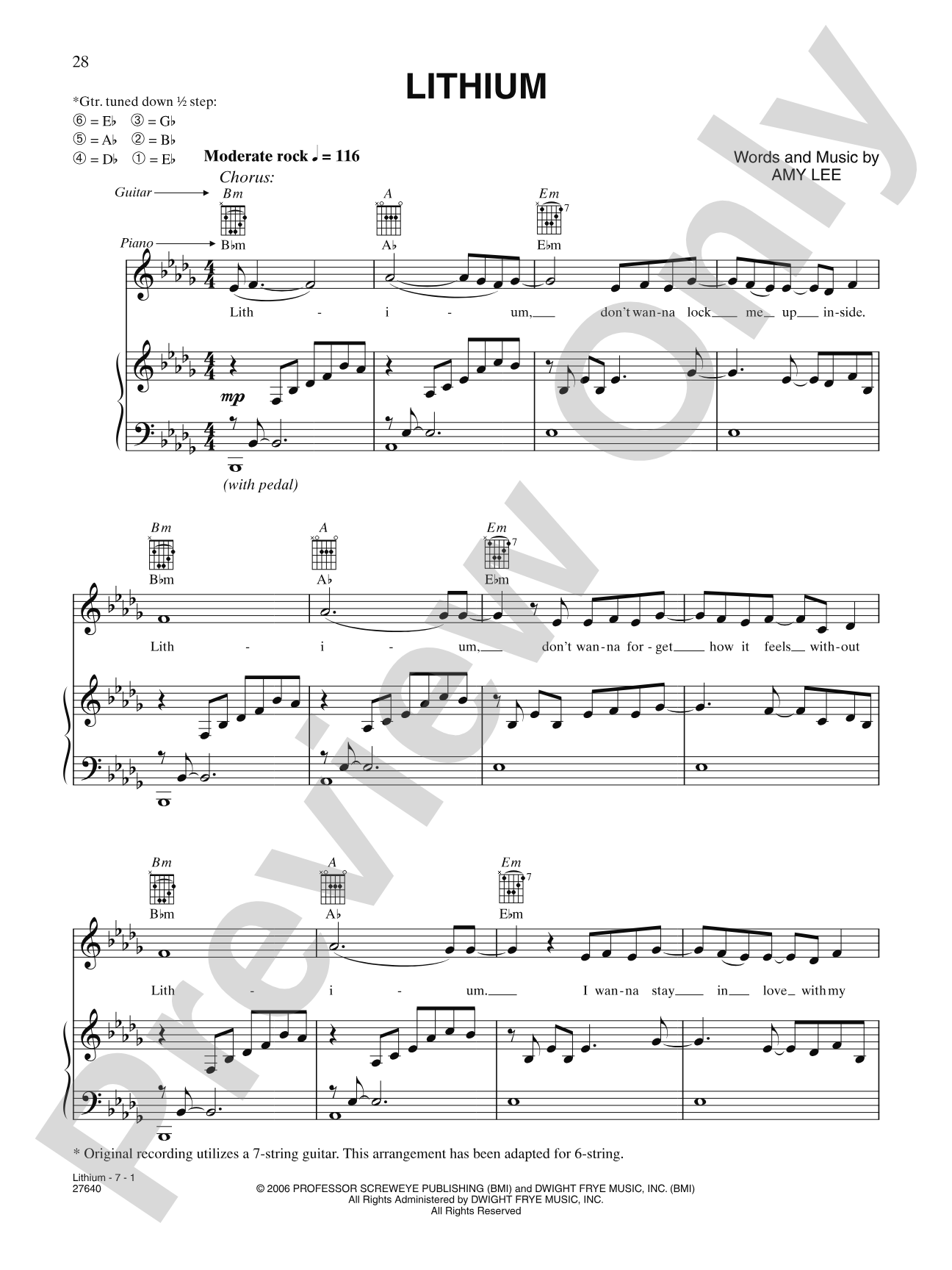
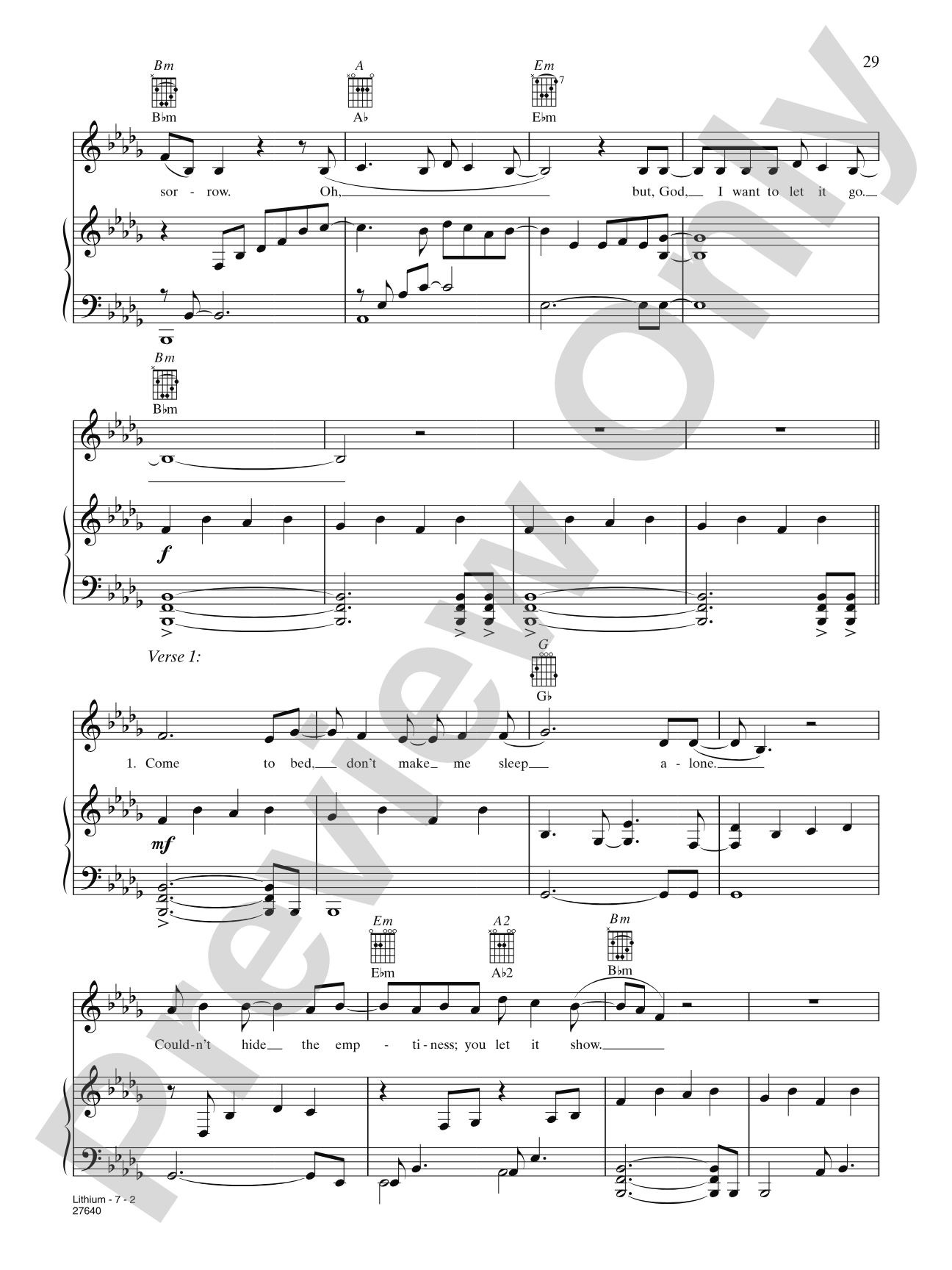

Lithium: Piano/Vocal/Chords
Evanescence
Item: 00-PSP-000188
$5.99
Pickup currently not available
Related Items
All That I'm Living For: Authentic Guitar TAB |
$4.99
|
View | |
Call Me When You're Sober: Authentic Guitar TAB |
$4.99
|
View | |
Cloud Nine: Authentic Guitar TAB |
$5.99
|
View | |
Good Enough: Authentic Guitar TAB |
$4.99
|
View | |
Lacrymosa: Authentic Guitar TAB |
$5.99
|
View | |
Like You: Authentic Guitar TAB |
$5.99
|
View | |
Lithium: Authentic Guitar TAB |
$4.99
|
View | |
Lose Control: Authentic Guitar TAB |
$4.99
|
View | |
Snow White Queen: Authentic Guitar TAB |
$5.99
|
View | |
Sweet Sacrifice: Authentic Guitar TAB |
$4.99
|
View | |
The Only One: Authentic Guitar TAB |
$4.99
|
View | |
Weight Of The World: Authentic Guitar TAB |
$5.99
|
View | |
Your Star: Authentic Guitar TAB |
$5.99
|
View | |
All That I'm Living For: Piano/Vocal/Chords |
$5.99
|
View | |
Call Me When You're Sober: Piano/Vocal/Chords |
$5.99
|
View | |
Cloud Nine: Piano/Vocal/Chords |
$5.99
|
View | |
Good Enough: Piano/Vocal/Chords |
$5.99
|
View | |
Lacrymosa: Piano/Vocal/Chords |
$5.99
|
View | |
Like You: Piano/Vocal/Chords |
$5.99
|
View | |
Lose Control: Piano/Vocal/Chords |
$4.99
|
View | |
Snow White Queen: Piano/Vocal/Chords |
$5.99
|
View | |
Sweet Sacrifice: Piano/Vocal/Chords |
$5.99
|
View | |
The Only One: Piano/Vocal/Chords |
$5.99
|
View | |
Weight Of The World: Piano/Vocal/Chords |
$5.99
|
View | |
Your Star: Piano/Vocal/Chords |
$5.99
|
View | |
Call Me When You're Sober: Piano/Vocal/Chords |
$5.99
|
View |
Description
Alfred is pleased to release the album-matching folio for Evanescence's third record, The Open Door. Released in 2006, The Open Door reached the No. 1 spot on Billboard's Top 200 Chart (2006). This book provides the lyrics along with piano and chord arrangements for all the songs on the record.
Titles: Sweet Sacrifice * Call Me When You're Sober * Weight Of The World * Lithium * Cloud Nine * Snow White Queen * Lacrymosa * Like You * Lose Control * The Only One * Your Star * All That I'm Living For * Good Enough.


Titles: Sweet Sacrifice * Call Me When You're Sober * Weight Of The World * Lithium * Cloud Nine * Snow White Queen * Lacrymosa * Like You * Lose Control * The Only One * Your Star * All That I'm Living For * Good Enough.
Lithium: Piano/Vocal/Chords isn't in MakeMusic Cloud just yet...but it could be. Let us know you'd like to see it, and you'll help shape what comes next. In the meantime, start a free trial and dive into thousands of interactive titles your students can play along with today.
Request This Title
Tell us you want it.
Start Your Free Trial
Explore everything that's ready to play right now.
Sample Audio
No sample audio found.
Sample Video
No sample videos found.
Additional Details
Publisher:
Alfred Music
Page Count:
104
SKU:
00-PSP-000188
More about this title
About the Artist: Evanescence
Evanescence emerged from the mid-1990s rock scene with a sound that fused gothic elements, classical influences, and heavy guitar work into a distinctive aesthetic. Led by Amy Lee's ethereal yet powerful vocals, the band became one of the defining acts of the 2000s alternative rock movement, known for their ambitious arrangements that layer piano, strings, and orchestral textures beneath distorted guitars and introspective lyrics.
Why we love this
This folio captures one of the most commercially successful rock albums of the 2000s at a moment when students are actively seeking contemporary material that connects emotional depth to serious musicianship. The arrangements respect both the piano's role as a primary compositional voice and the vocal line's dramatic arc, making it genuinely rewarding to play and sing. These songs reward pianists who understand dynamics, sustain, and the interplay between sparse, haunting passages and fuller orchestral textures.
What to expect
Introspective and cinematic, these arrangements move between moments of stark piano and voice to passages layered with harmonic complexity and emotional intensity. The album carries an orchestral sensibility even in its rock context, with minor-key progressions, dynamic shifts, and lyrical themes that explore vulnerability, loss, and inner conflict.
Who it's for
Pianists and singers tackling contemporary rock repertoire at the intermediate level and beyond, along with music students exploring how classical compositional techniques function within modern popular music. This collection works equally well for private vocal studio teachers seeking material that engages teenage and adult students with meaningful artistic content.
How to get the most out of it
- Let silence and space work as hard as the notes themselves; the original arrangements often build impact through restraint rather than constant activity, so resist over-playing the quiet sections.
- Pay close attention to the chord voicings provided; Evanescence's sound relies on specific sonorities (minor-major sevenths, suspended chords, open voicings) that create emotional tension when played accurately.
- Balance the vocal melody with supportive piano accompaniment by keeping right-hand lines transparent enough for the singer to sit comfortably without fighting for attention.
- Use pedal intentionally to sustain and blend chord colors, but lift between harmonic shifts to keep the texture clear and prevent muddiness.
How to use it
Feature individual songs from this folio in student recitals, where the sophisticated arrangement and contemporary subject matter appeal to audiences while challenging performers. Vocal students can build their interpretive skills by comparing how the album's original production translates to a piano-vocal setting, learning to convey cinematic drama through acoustic means.
Skills your students will build
- Reading chord charts and translating them into stylistically appropriate voicings
- Balancing vocal melody with instrumental accompaniment
- Sustaining emotional narrative across extended songs with dynamic range
- Playing minor-key progressions with harmonic sophistication (suspended chords, modal interchange)
- Coordinating vocal and piano lines with attention to phrasing and breath support