
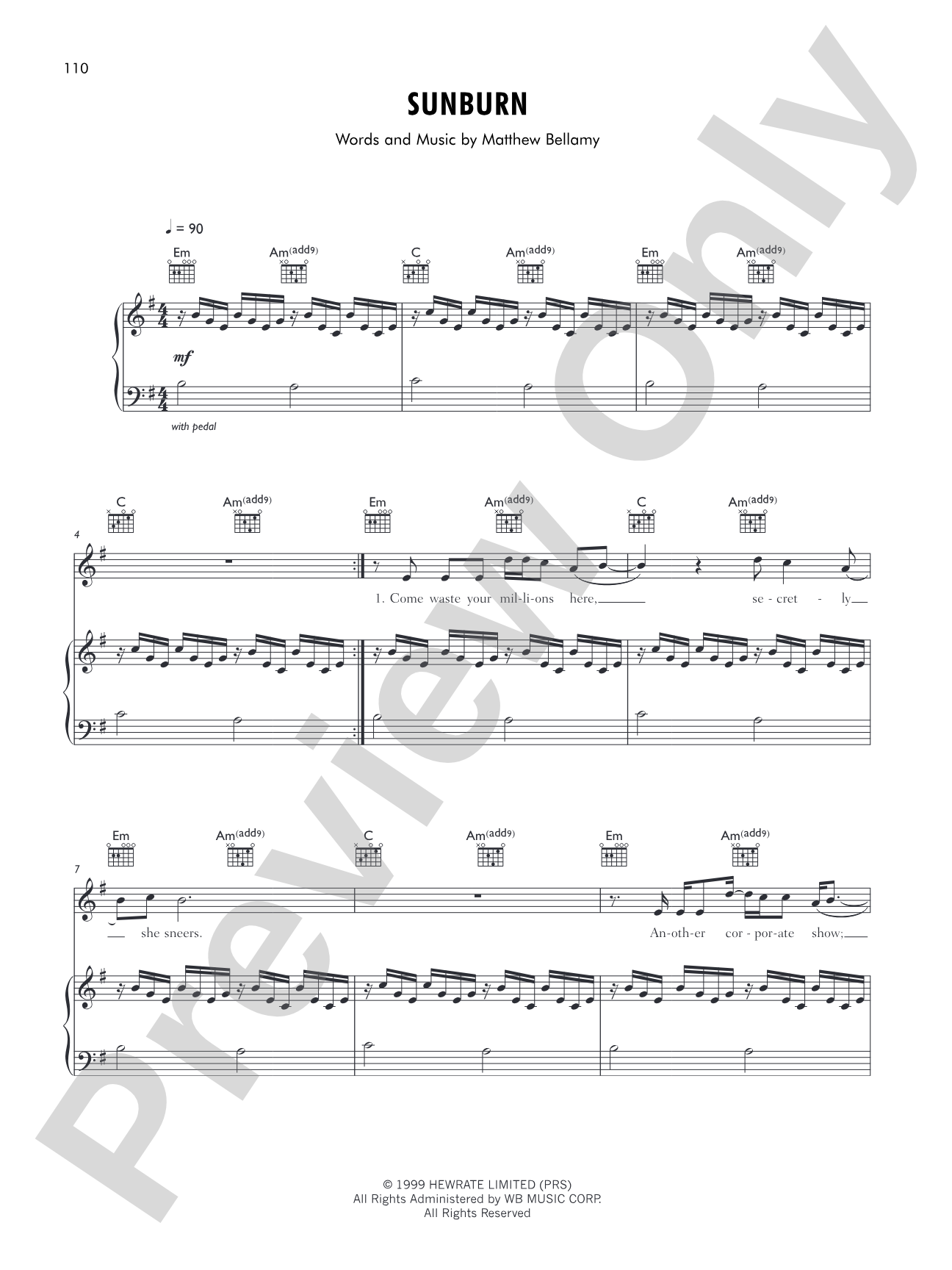
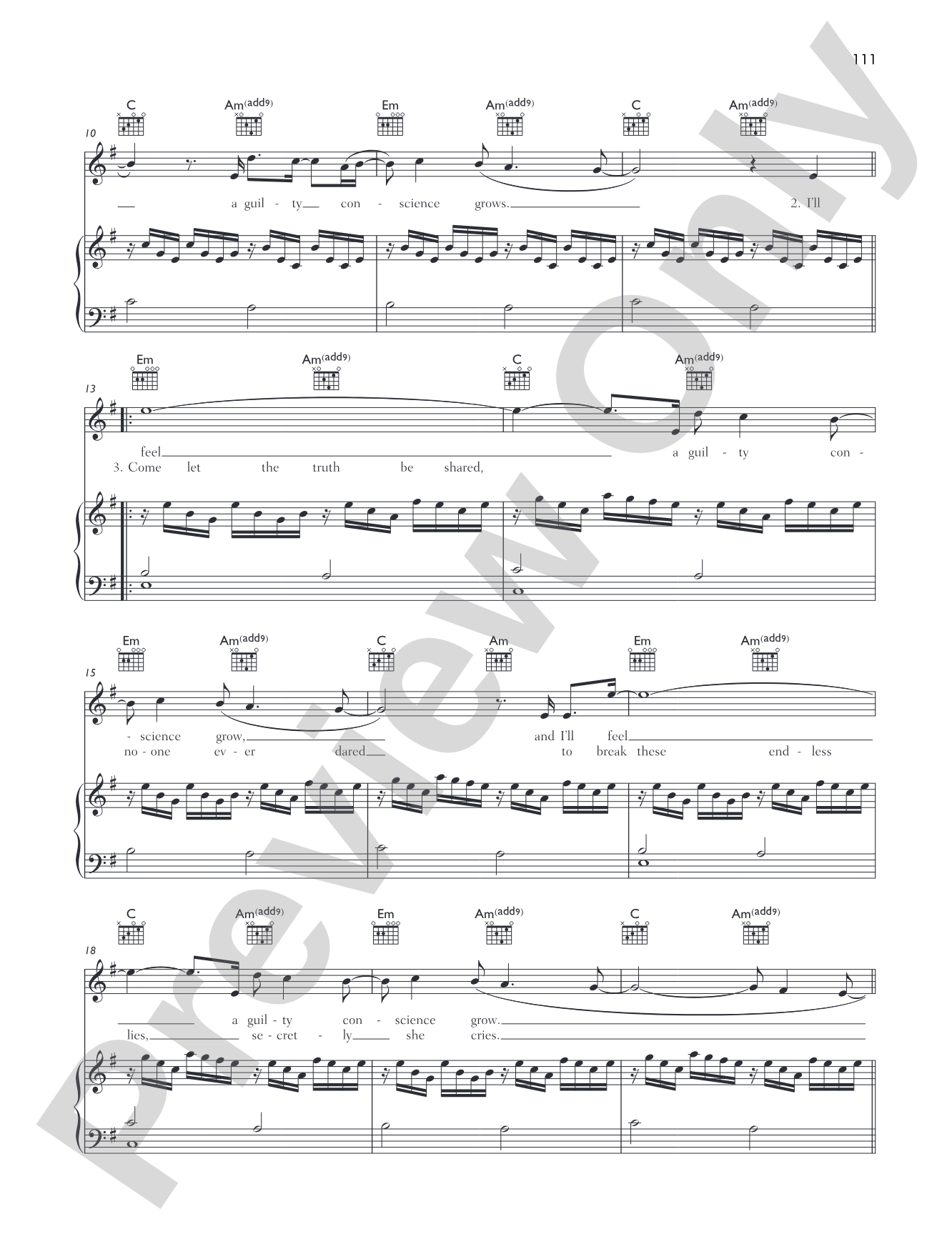

Sunburn: Piano/Vocal/Chords
Muse
Item: 00-PS-0013312
$5.99
One moment…
Related Items
Space Demetia: Piano/Vocal/Chords |
$5.99
|
View | |
Apocalypse Please: Piano/Vocal/Chords |
$4.99
|
View | |
Sing for Absolution: Piano/Vocal/Chords |
$4.99
|
View | |
Blackout: Piano/Vocal/Chords |
$4.99
|
View | |
Butterflies & Hurricanes: Piano/Vocal/Chords |
$5.99
|
View | |
Endlessly: Piano/Vocal/Chords |
$4.99
|
View | |
Ruled By Secrecy: Piano/Vocal/Chords |
$5.99
|
View | |
Neutron Star Collision (Love is Forever): Piano/Vocal/Chords |
$5.99
|
View |
Description
This songbook features piano sheet music for 22 songs selected from five albums by award-winning progressive hard rock band Muse. Note-for-note keyboard transcriptions are woven into arrangements that make each song playable on piano from start to finish. Complete vocal melodies and lyrics are included, along with basic chord grids for guitar. Titles: Apocalypse Please * Blackout * Butterflies & Hurricanes * Endlessly * Exogenesis: Symphony, Part 1 (Overture) * Exogenesis: Symphony, Part 2 (Cross-Pollination) * Exogenesis: Symphony, Part 3 (Redemption) * Feeling Good * Hoodoo * I Belong to You * Invincible * Neutron Star Collision * Resistance * Ruled by Secrecy * Sing for Absolution * Soldier's Poem * Space Dementia * Starlight * Sunburn * Take a Bow * Undisclosed Desires * United States of Eurasia / Collateral Damage.


Sunburn: Piano/Vocal/Chords isn't in MakeMusic Cloud just yet...but it could be. Let us know you'd like to see it, and you'll help shape what comes next. In the meantime, start a free trial and dive into thousands of interactive titles your students can play along with today.
Request This Title
Tell us you want it.
Start Your Free Trial
Explore everything that's ready to play right now.
Sample Audio
No sample audio found.
Sample Video
No sample videos found.
Additional Details
Publisher:
Alfred Music
Page Count:
144
SKU:
00-PS-0013312
More about this title
About the Composer: Matthew Bellamy
Matthew Bellamy is the lead vocalist, guitarist, and keyboardist of Muse, a band that has consistently pushed the boundaries of rock music since the 1990s. His compositional work spans progressive rock, electronic music, and classical influences, earning multiple Grammy Awards and establishing him as one of contemporary rock's most innovative musicians.
Why we love this
This collection gives pianists and vocalists direct access to Muse's catalog in arrangements that preserve the band's intricate keyboard work without requiring a full band. The mix of power ballads, progressive epics, and radio-friendly anthems means every student finds something that engages them musically and personally.
What to expect
These arrangements deliver the theatrical ambition and emotional intensity Muse is known for, moving between crushing power chords, soaring vocal lines, and intricate keyboard passages that demand precision and feeling. You'll experience the full arc of each song at the piano, from whispered vulnerability to walls of sound.
Who it's for
Pianists and keyboardists aged 14 and up who connect with contemporary rock and want to develop sight-reading skills on material that matters to them. Vocalists preparing solo recital material or students exploring rock repertoire in private lessons will also find strong material here.
How to get the most out of it
- Study the original recordings to understand the rhythmic precision and dynamic shifts that define these arrangements; the piano parts often carry what would be synth layers in the studio version.
- Balance lyrical singing with the harmonic complexity underneath; many of these songs sit in emotionally intense keys that demand vocal control and breath management.
- Use the chord grids as a learning tool even if you're primarily a pianist; understanding the harmonic framework helps you phrase the melody with greater awareness of harmonic movement.
- Pace the development across multiple songs if learning this book over a season; the variety in texture and difficulty means you can alternate between technically demanding pieces and ones that build stamina.
How to use it
Slot individual pieces into student recitals or showcase concerts to appeal to a broader audience beyond classical or traditional theater repertoire. The Exogenesis trilogy works especially well as a multi-movement sequence for an advanced student's solo performance.
Skills your students will build
- Reading complex keyboard transcriptions with independent left and right hand lines
- Coordinating vocal melody with accompanying harmonies written across multiple staves
- Navigating frequent key changes and time signature shifts within and across songs
- Interpreting dynamic and expressive markings that shape emotional intensity
- Applying chord knowledge to reinforce harmonic understanding while singing