
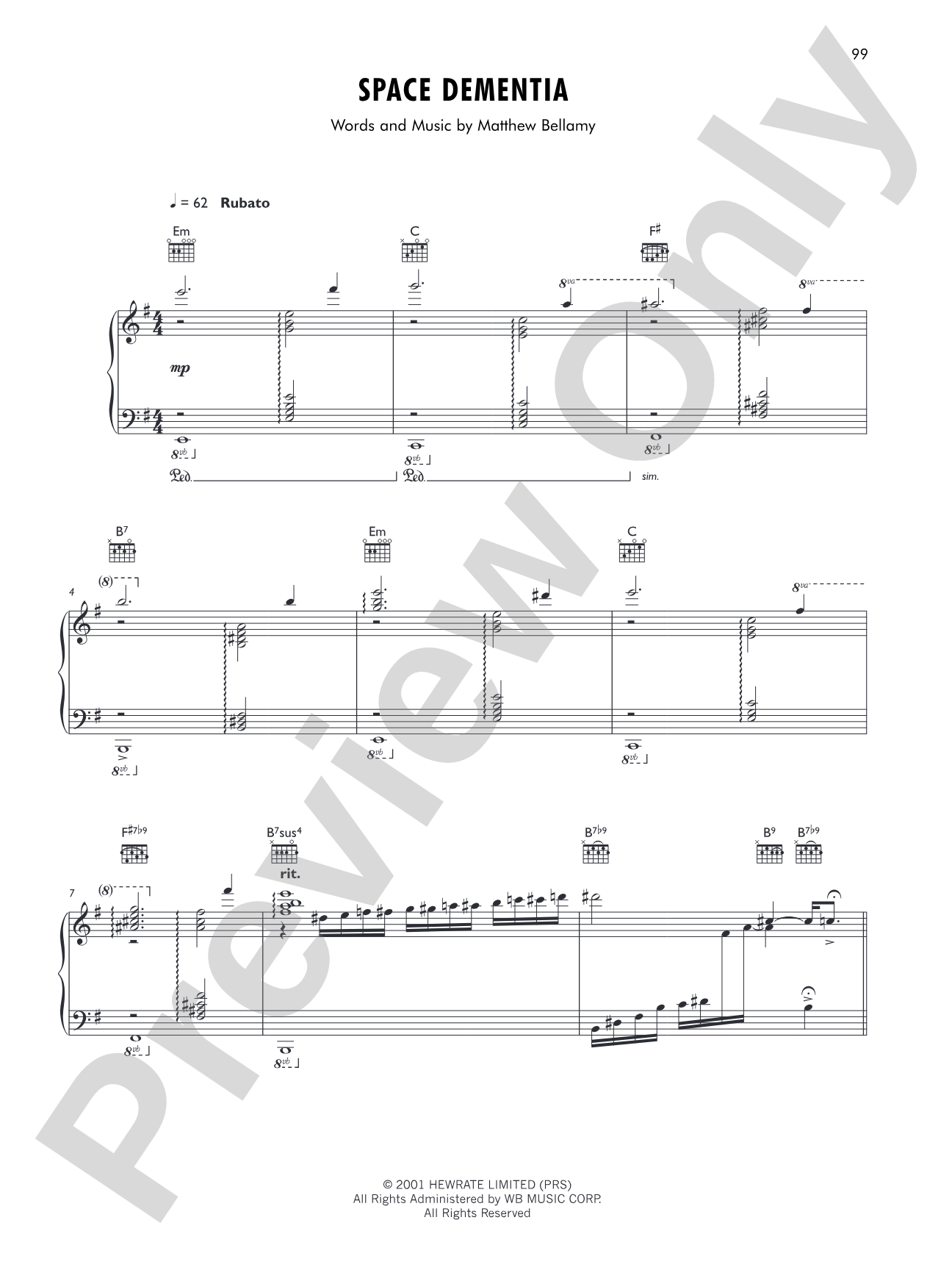
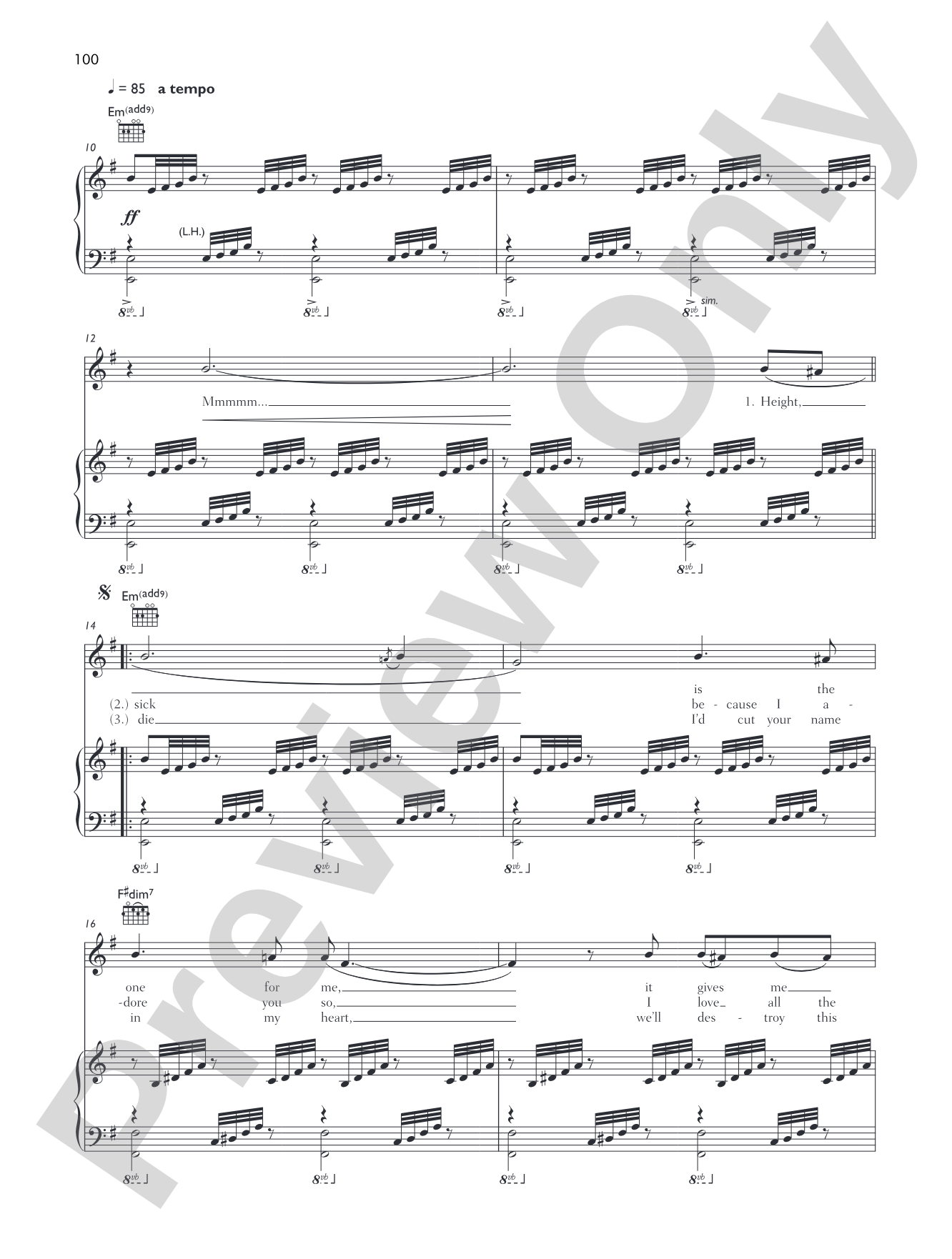

Space Demetia: Piano/Vocal/Chords
Muse
Item: 00-PS-0013311
$5.99
One moment…
Related Items
Sunburn: Piano/Vocal/Chords |
$5.99
|
View | |
Apocalypse Please: Piano/Vocal/Chords |
$4.99
|
View | |
Sing for Absolution: Piano/Vocal/Chords |
$4.99
|
View | |
Blackout: Piano/Vocal/Chords |
$4.99
|
View | |
Butterflies & Hurricanes: Piano/Vocal/Chords |
$5.99
|
View | |
Endlessly: Piano/Vocal/Chords |
$4.99
|
View | |
Ruled By Secrecy: Piano/Vocal/Chords |
$5.99
|
View | |
Neutron Star Collision (Love is Forever): Piano/Vocal/Chords |
$5.99
|
View |
Description
This songbook features piano sheet music for 22 songs selected from five albums by award-winning progressive hard rock band Muse. Note-for-note keyboard transcriptions are woven into arrangements that make each song playable on piano from start to finish. Complete vocal melodies and lyrics are included, along with basic chord grids for guitar. Titles: Apocalypse Please * Blackout * Butterflies & Hurricanes * Endlessly * Exogenesis: Symphony, Part 1 (Overture) * Exogenesis: Symphony, Part 2 (Cross-Pollination) * Exogenesis: Symphony, Part 3 (Redemption) * Feeling Good * Hoodoo * I Belong to You * Invincible * Neutron Star Collision * Resistance * Ruled by Secrecy * Sing for Absolution * Soldier's Poem * Space Dementia * Starlight * Sunburn * Take a Bow * Undisclosed Desires * United States of Eurasia / Collateral Damage.


Space Demetia: Piano/Vocal/Chords isn't in MakeMusic Cloud just yet...but it could be. Let us know you'd like to see it, and you'll help shape what comes next. In the meantime, start a free trial and dive into thousands of interactive titles your students can play along with today.
Request This Title
Tell us you want it.
Start Your Free Trial
Explore everything that's ready to play right now.
Sample Audio
No sample audio found.
Sample Video
No sample videos found.
Additional Details
Publisher:
Alfred Music
Page Count:
144
SKU:
00-PS-0013311
More about this title
About the Composer: Matthew Bellamy
Matthew Bellamy is the lead vocalist, guitarist, and primary songwriter for Muse, the British rock band that has pushed the boundaries of progressive hard rock since the 1990s. His compositions blend classical training, electronic experimentation, and theatrical ambition, drawing inspiration from sources ranging from orchestral music to science fiction. Bellamy's work as a composer has earned Grammy Awards and critical acclaim, establishing him as one of the most inventive songwriters in contemporary rock.
Why we love this
This collection captures some of Muse's most musically sophisticated songs, and Bellamy's keyboard transcriptions preserve the architectural complexity of the originals while making them genuinely playable on piano. The range from intimate character pieces like "Soldier's Poem" to anthemic productions like "Resistance" gives pianists real repertoire depth, not just pop hits. For singers and pianists drawn to contemporary music that demands serious musicianship, this book opens doors to material that rewards both technical skill and emotional investment.
What to expect
These songs move between cinematic grandeur and intimate confession, oscillating between synth-driven sonic landscapes and moments of stark emotional vulnerability. The piano arrangements carry the weight of Bellamy's orchestral sensibilities while retaining the raw energy that makes Muse's music compelling, creating a sound that feels both contemporary and timelessly dramatic.
Who it's for
Pianists and singer-pianists who want contemporary rock repertoire that respects their instrument and their musicianship. This book also serves guitarists seeking the chord frameworks and singers looking for arrangements that let them perform Muse's catalog in recital or ensemble settings without depending on backing tracks.
How to get the most out of it
- Study the orchestral voicings in tracks like the Exogenesis trilogy; Bellamy's keyboard arrangements often carry melodic and harmonic information that belongs in the foreground, not buried as accompaniment.
- Lock the rhythmic feel early, especially in songs with syncopated or electronic-influenced grooves like "Blackout" and "Neutron Star Collision," since the vocal line depends on precision.
- Use the chord grids provided for guitar players if you're performing with ensemble accompaniment, but don't let them limit your interpretation; the piano transcriptions often voice harmonies in ways that differ from standard guitar voicings.
- Approach the vocal lines with dynamic contrast; these songs thrive on the interplay between intimate, almost whispered passages and full-throated anthemic moments.
How to use it
Muse's music works beautifully in recitals that blend classical and contemporary idioms, especially when paired with 20th-century art song or modern composition. Consider programming selections from this book as standalone concert pieces or as a thematic set; the diversity across these 22 songs means you can build a program that speaks to your artistic vision without relying on the full album context.
Skills your students will build
- Reading and performing complex keyboard voicings adapted from electronic and orchestral sources
- Coordinating piano accompaniment with vocal melody in contemporary rock arrangements
- Interpreting dynamic and textural contrasts in songs designed for multi-layered production
- Sight-reading chord changes across piano, guitar, and vocal parts simultaneously
- Balancing technical demands (fast passages, syncopation, wide ranges) with emotional storytelling