
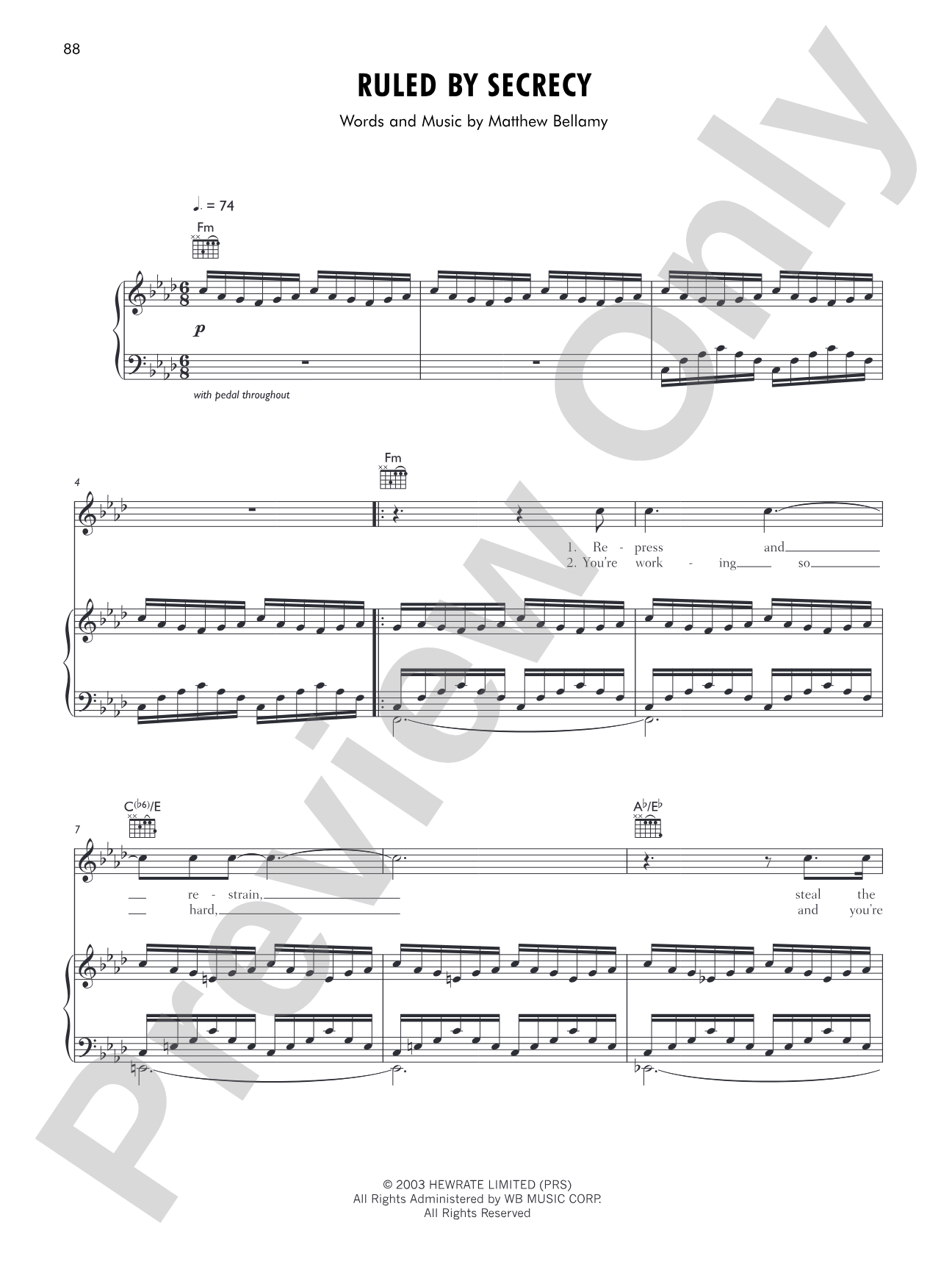
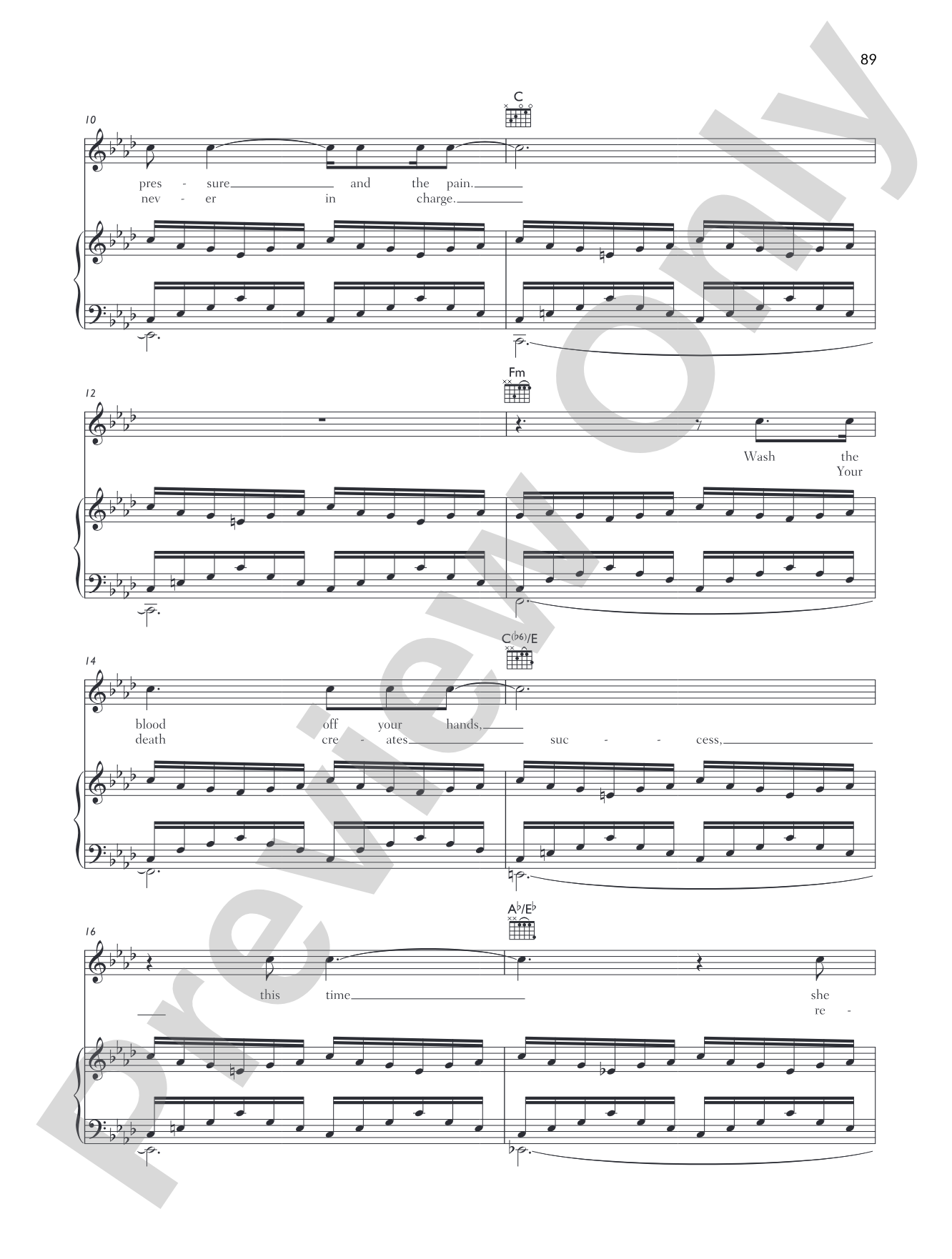

Ruled By Secrecy: Piano/Vocal/Chords
Muse
Item: 00-PS-0013334
$5.99
One moment…
Related Items
Space Demetia: Piano/Vocal/Chords |
$5.99
|
View | |
Sunburn: Piano/Vocal/Chords |
$5.99
|
View | |
Apocalypse Please: Piano/Vocal/Chords |
$4.99
|
View | |
Sing for Absolution: Piano/Vocal/Chords |
$4.99
|
View | |
Blackout: Piano/Vocal/Chords |
$4.99
|
View | |
Butterflies & Hurricanes: Piano/Vocal/Chords |
$5.99
|
View | |
Endlessly: Piano/Vocal/Chords |
$4.99
|
View | |
Neutron Star Collision (Love is Forever): Piano/Vocal/Chords |
$5.99
|
View |
Description
This songbook features piano sheet music for 22 songs selected from five albums by award-winning progressive hard rock band Muse. Note-for-note keyboard transcriptions are woven into arrangements that make each song playable on piano from start to finish. Complete vocal melodies and lyrics are included, along with basic chord grids for guitar. Titles: Apocalypse Please * Blackout * Butterflies & Hurricanes * Endlessly * Exogenesis: Symphony, Part 1 (Overture) * Exogenesis: Symphony, Part 2 (Cross-Pollination) * Exogenesis: Symphony, Part 3 (Redemption) * Feeling Good * Hoodoo * I Belong to You * Invincible * Neutron Star Collision * Resistance * Ruled by Secrecy * Sing for Absolution * Soldier's Poem * Space Dementia * Starlight * Sunburn * Take a Bow * Undisclosed Desires * United States of Eurasia / Collateral Damage.


Ruled By Secrecy: Piano/Vocal/Chords isn't in MakeMusic Cloud just yet...but it could be. Let us know you'd like to see it, and you'll help shape what comes next. In the meantime, start a free trial and dive into thousands of interactive titles your students can play along with today.
Request This Title
Tell us you want it.
Start Your Free Trial
Explore everything that's ready to play right now.
Sample Audio
No sample audio found.
Sample Video
No sample videos found.
Additional Details
Publisher:
Alfred Music
Page Count:
144
SKU:
00-PS-0013334
More about this title
About the Composer: Matthew Bellamy
Matthew Bellamy is the lead vocalist, keyboardist, and primary songwriter of Muse, a band that has redefined progressive hard rock since the 1990s. His compositions consistently blend complex harmonic structures, theatrical arrangements, and orchestral elements with the raw energy of rock music, earning multiple Grammy Awards and international critical acclaim.
Bellamy's approach to songwriting emphasizes harmonic ambition and instrumental virtuosity. His keyboard writing ranges from intimate solo passages to densely layered synth textures, making his catalog particularly valuable for pianists exploring rock composition beyond standard song structures.
Why we love this
This collection captures 22 of Bellamy's most inventive keyboard arrangements, each transcribed specifically for piano while preserving the harmonic sophistication that defines Muse's sound. Pianists gain access to contemporary rock writing that demands technical skill, interpretive maturity, and comfort navigating between introspective ballads and driving, synth-heavy rockers. The range of styles within a single album's worth of material means students encounter everything from sparse, minimalist passages to symphonic complexity, all organized for direct piano playability.
What to expect
These arrangements shift between intimate introspection and soaring grandeur. You'll navigate from the atmospheric, spacious textures of 'Space Dementia' to the driving, almost aggressive synth energy of 'Blackout,' encountering moments of stark vulnerability alongside wall-of-sound arrangements. The collection feels less like a set of pop songs and more like a curated journey through a rock band's creative evolution, complete with orchestral ambition.
Who it's for
This book serves pianists and keyboardists in grades 10 and above who are ready for contemporary rock repertoire with genuine harmonic and technical depth. It appeals equally to students seeking pop-rock material for recital programs and to adult learners interested in expanding beyond classical or jazz traditions into progressive rock composition.
How to get the most out of it
- Study the vocal melody and lyrics first; these arrangements sit the keyboard part behind the voice, and understanding the lyrical contour helps you voice accompaniment layers dynamically rather than playing at static volume.
- Treat dynamic markings and pedal changes as essential to the sound. Bellamy's keyboard textures often rely on specific sustain and decay characteristics that change the character of chords significantly.
- Layer your practice by learning the basic piano part in your dominant hand, then gradually integrate left-hand accompaniment patterns; many of these songs use rhythmic stability in the left hand to anchor more elaborate right-hand figures.
- Refer to the original recordings when you encounter synth effects or textures indicated in the score. These transcriptions are note-for-note, but understanding the intended timbre and space around phrases deepens your interpretation.
How to use it
Program selections from this book in student or faculty recitals to demonstrate that contemporary rock offers serious musical material for classically trained pianists. Pair a single track with classical or jazz repertoire to show stylistic range, or create a Muse-focused recital for students interested in exploring modern composition outside traditional boundaries. This collection also works well for private studio teachers introducing advanced students to music written after 1980.
Skills your students will build
- Voicing chords in a progressive rock idiom while maintaining independence between hands
- Reading and executing dynamic and textural shifts within a single song
- Interpreting keyboard part transcriptions that originated as synthesizer arrangements
- Balancing accompaniment density to support vocal melody rather than compete with it
- Translating harmonic complexity and non-traditional chord progressions to the keyboard