
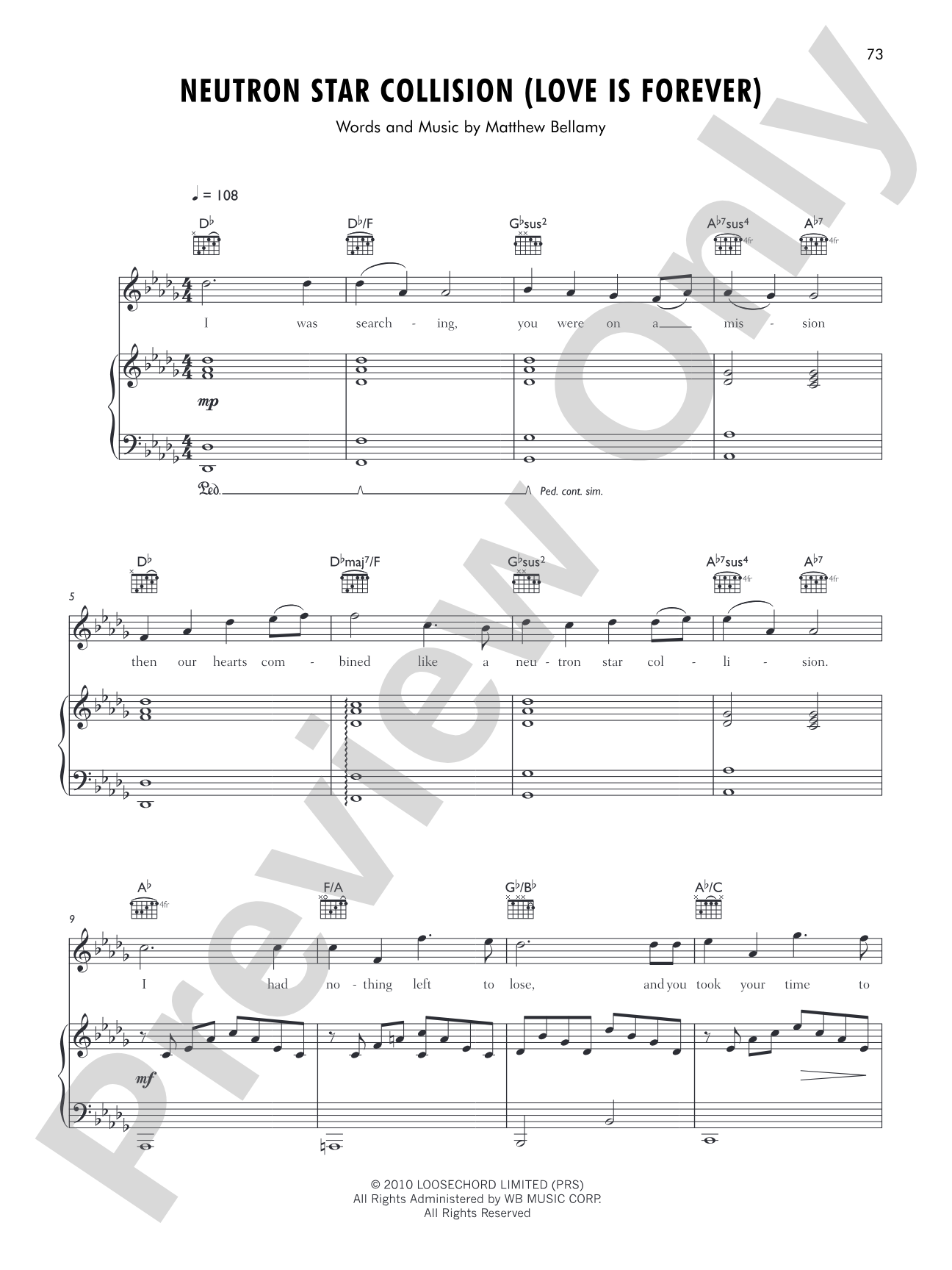
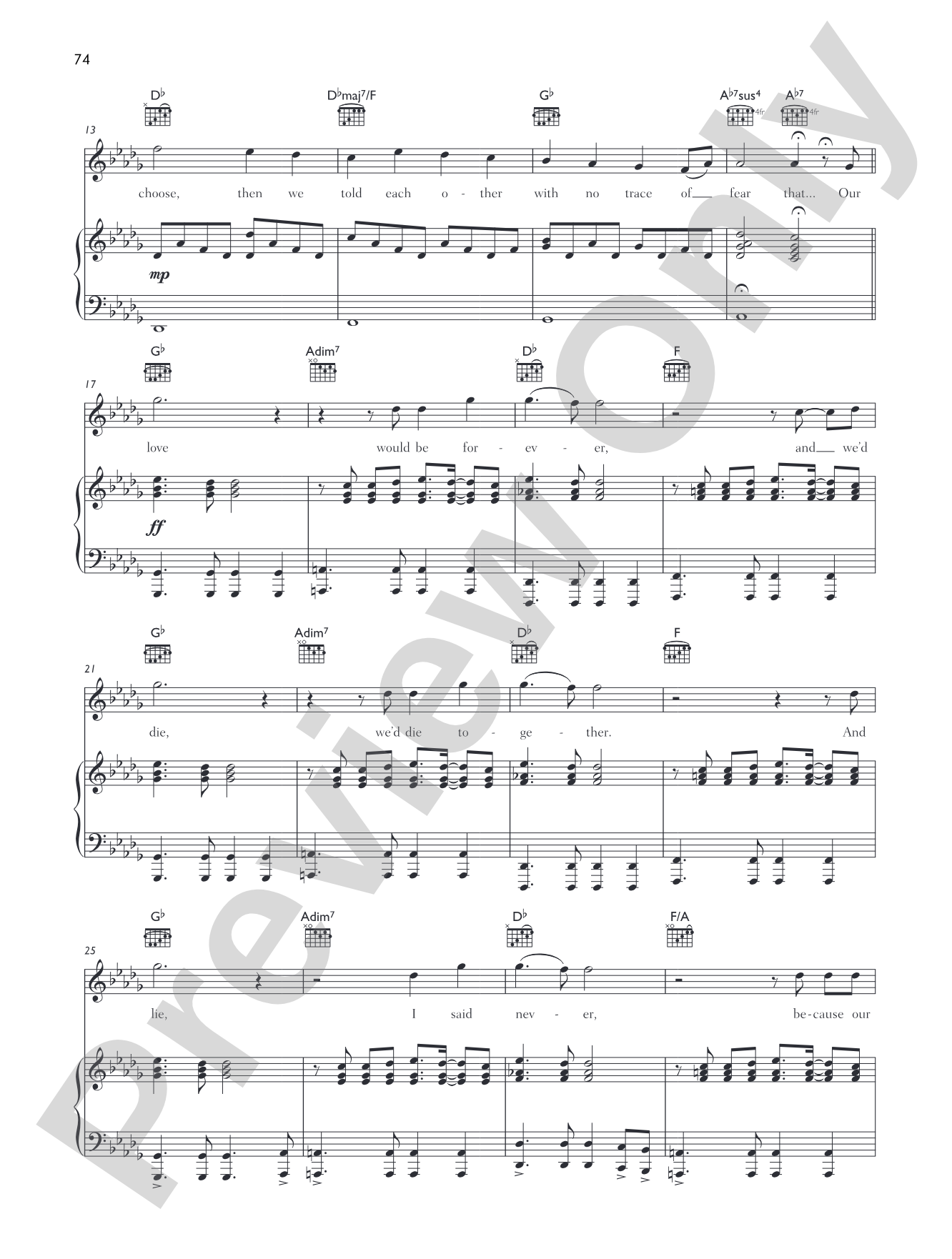

Neutron Star Collision (Love is Forever): Piano/Vocal/Chords
Muse
Item: 00-PS-0013339
$5.99
One moment…
Related Items
Space Demetia: Piano/Vocal/Chords |
$5.99
|
View | |
Sunburn: Piano/Vocal/Chords |
$5.99
|
View | |
Apocalypse Please: Piano/Vocal/Chords |
$4.99
|
View | |
Sing for Absolution: Piano/Vocal/Chords |
$4.99
|
View | |
Blackout: Piano/Vocal/Chords |
$4.99
|
View | |
Butterflies & Hurricanes: Piano/Vocal/Chords |
$5.99
|
View | |
Endlessly: Piano/Vocal/Chords |
$4.99
|
View | |
Ruled By Secrecy: Piano/Vocal/Chords |
$5.99
|
View |
Description
This songbook features piano sheet music for 22 songs selected from five albums by award-winning progressive hard rock band Muse. Note-for-note keyboard transcriptions are woven into arrangements that make each song playable on piano from start to finish. Complete vocal melodies and lyrics are included, along with basic chord grids for guitar. Titles: Apocalypse Please * Blackout * Butterflies & Hurricanes * Endlessly * Exogenesis: Symphony, Part 1 (Overture) * Exogenesis: Symphony, Part 2 (Cross-Pollination) * Exogenesis: Symphony, Part 3 (Redemption) * Feeling Good * Hoodoo * I Belong to You * Invincible * Neutron Star Collision * Resistance * Ruled by Secrecy * Sing for Absolution * Soldier's Poem * Space Dementia * Starlight * Sunburn * Take a Bow * Undisclosed Desires * United States of Eurasia / Collateral Damage.


Neutron Star Collision (Love is Forever): Piano/Vocal/Chords isn't in MakeMusic Cloud just yet...but it could be. Let us know you'd like to see it, and you'll help shape what comes next. In the meantime, start a free trial and dive into thousands of interactive titles your students can play along with today.
Request This Title
Tell us you want it.
Start Your Free Trial
Explore everything that's ready to play right now.
Sample Audio
No sample audio found.
Sample Video
No sample videos found.
Additional Details
Publisher:
Alfred Music
Page Count:
144
SKU:
00-PS-0013339
More about this title
About the Composer: Matthew Bellamy
Matthew Bellamy is the lead vocalist, guitarist, and primary songwriter of Muse, a British rock band that has consistently pushed the boundaries of progressive hard rock since the 1990s. His compositions span intricate keyboard arrangements, layered vocal harmonies, and ambitious orchestral elements, making his work appealing across multiple instrumental voices and skill levels.
Why we love this
This collection captures Muse's architectural approach to songwriting in a format that lets pianists experience the full scope of the arrangements. The note-for-note transcriptions preserve the keyboard textures that define these songs, while the vocal melodies and chord grids make it genuinely playable as a complete piano/vocal performance rather than a simplified reduction.
What to expect
These songs sweep between intimate, atmospheric moments and grand, propulsive crescendos. The keyboard writing reflects Bellamy's fusion of classical training with rock sensibility, creating passages that feel both orchestral and raw, technical and emotionally direct.
Who it's for
This book serves pianists and keyboardists who want to explore contemporary rock repertoire with genuine substance, as well as singers who need a capable piano accompaniment that doesn't require simplification. It's also valuable for pianists preparing collaborative arrangements with guitarists or vocalists in informal or recital settings.
How to get the most out of it
- Balance the vocal line with the left-hand accompaniment; these transcriptions are dense enough that clarity matters. The keyboard parts often carry harmonic weight that can overshadow the singer if the texture isn't shaped carefully.
- Pay attention to the dynamic range within individual songs. Muse's compositions build and release tension deliberately, and honoring those arcs keeps the performance from sounding static.
- Use the chord grids as a touchstone for harmonic awareness, even if you're focusing primarily on piano. Understanding the guitar voicings can inform how you voice certain keyboard passages.
- Approach tempo with intentionality. Many of these songs feature tempo shifts or layered rhythmic complexity; committing to a steady pulse in sections with syncopation prevents the arrangement from feeling muddled.
How to use it
Curate a progressive rock recital evening that showcases the range within a single artist's catalog, or select individual titles as contemporary solo piano recital pieces that appeal to audiences beyond traditional classical programming. These arrangements also work well as collaborative chamber music when paired with guitar and voice.
Skills your students will build
- Reading dense, multi-textured keyboard arrangements with independent left and right hand voices
- Managing tempo and rhythmic precision in progressive rock structures with shifting meters
- Balancing accompaniment texture with vocal melody in ensemble contexts
- Interpreting dynamic architecture and building emotional arcs within longer song forms
- Coordinating with vocalists and guitarists in collaborative performance