
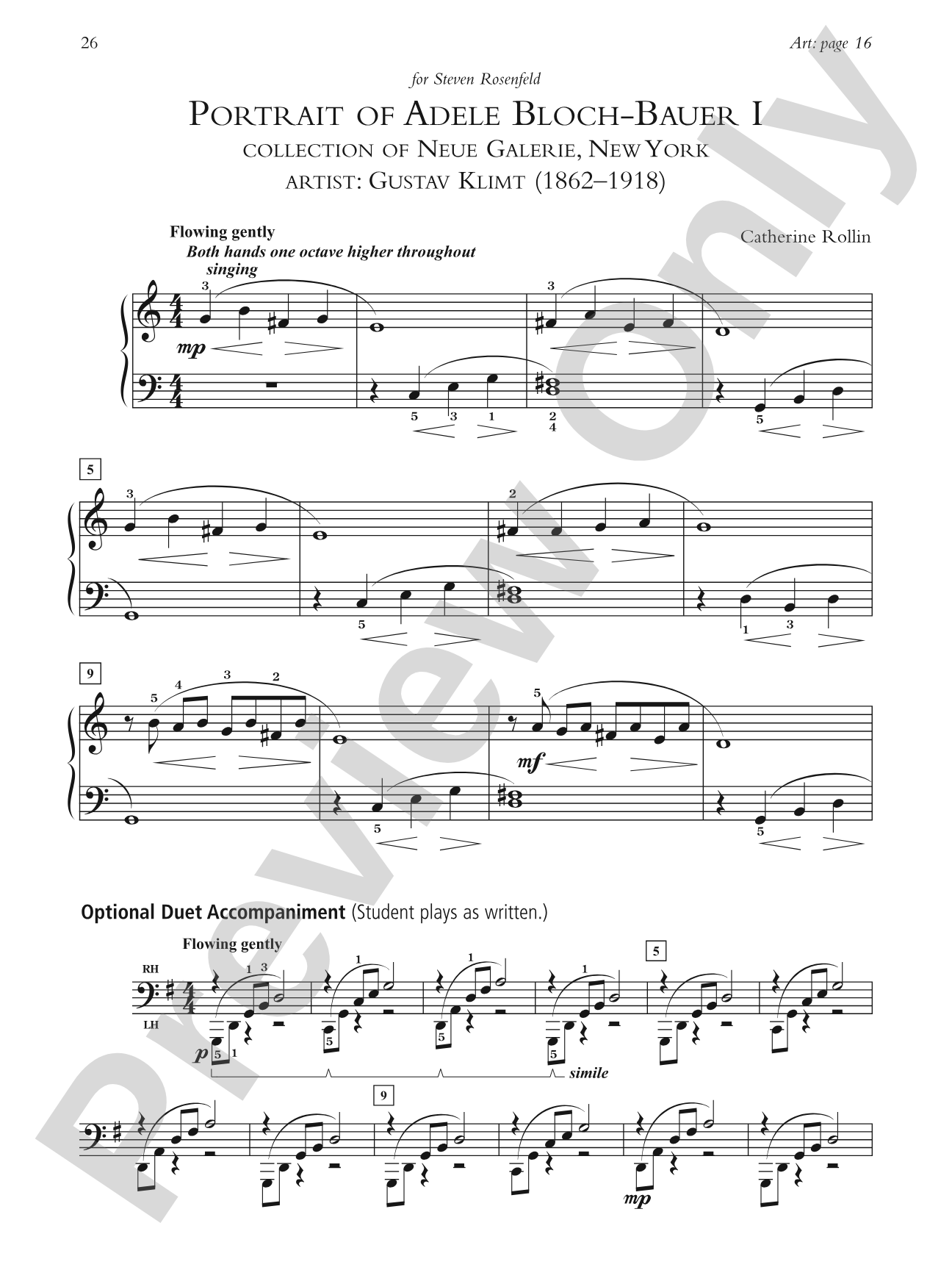

Portrait of Adele Bloch-Bauer I - Piano Solo (with Optional Duet Accompaniments): Piano Solo
10 Piano Solos Inspired by Great Works of Art
By Catherine Rollin
Level: Elementary/Late Elementary
Item: 00-PS-0017518
$4.99
Pickup currently not available
Related Items
A Maratha Hunting Party - Piano Solo (with Optional Duet Accompaniments): Piano Solo |
$4.99
|
View | |
At Sea - Piano Solo (with Optional Duet Accompaniments): Piano Solo |
$4.99
|
View | |
Butterflies - Piano Solo (with Optional Duet Accompaniments): Piano Solo |
$4.99
|
View | |
Feeding the Ducks - Piano Solo (with Optional Duet Accompaniments): Piano Solo |
$4.99
|
View | |
Napoleon Crossing the Alps - Piano Solo (with Optional Duet Accompaniments): Piano Solo |
$4.99
|
View | |
Rain - Piano Solo (with Optional Duet Accompaniments): Piano Solo |
$4.99
|
View | |
The Oregon Trail - Piano Solo (with Optional Duet Accompaniments): Piano Solo |
$4.99
|
View | |
The Swing - Piano Solo (with Optional Duet Accompaniments): Piano Solo |
$4.99
|
View | |
Tiger in a Tropical Storm - Piano Solo (with Optional Duet Accompaniments): Piano Solo |
$4.99
|
View | |
Museum Masterpieces, Book A: Piano Book |
$10.99
|
View |
Description
In Museum Masterpieces, Book A, composer Catherine Rollin has created musical expressions of some of the great works of art found in museums throughout the world. The paintings that inspired these pieces are beautifully displayed on a four-page color insert at the center of the book, along with historical notes about each painting. Titles: At Sea (Albert Edelfelt) * Butterflies (Odilon Redon) * Feeding the Ducks (Mary Cassatt) * A Maratha Hunting Party (Edwin Lord Weeks) * Napoleon Crossing the Alps (Jacques-Louis David) * The Oregon Trail (Albert Bierstadt) * Portrait of Adele Bloch-Bauer I (Gustav Klimt) * Rain (Vincent van Gogh) * The Swing (Pierre-Auguste Renoir) * Tiger in a Tropical Storm (Henri Rousseau). A Federation Festivals 2024-2028 selection.


Portrait of Adele Bloch-Bauer I - Piano Solo (with Optional Duet Accompaniments): Piano Solo isn't in MakeMusic Cloud just yet...but it could be. Let us know you'd like to see it, and you'll help shape what comes next. In the meantime, start a free trial and dive into thousands of interactive titles your students can play along with today.
Request This Title
Tell us you want it.
Start Your Free Trial
Explore everything that's ready to play right now.
Sample Audio
No sample audio found.
Sample Video
1 / 2
Additional Details
Series:
Museum Masterpieces
Publisher:
Alfred Music
Page Count:
28
SKU:
00-PS-0017518
More about this title
About the Composer: Catherine Rollin
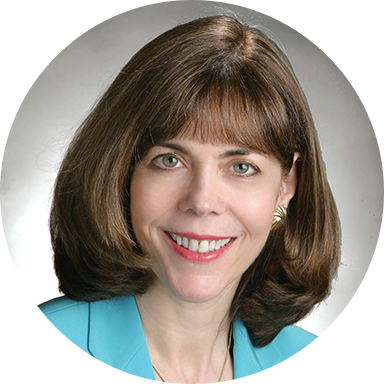
Catherine Rollin balances an active performance schedule with a teaching studio that has produced numerous festival award winners. She holds degrees from the University of Michigan (Bachelor of Musical Arts with distinction) and Oakland University School of Performing Arts (Master of Music), and her commissions span prestigious organizations including MTNA, the Michigan Music Teachers Association, and Clavier Companion magazine.
Rollin's compositional voice has earned recognition at the national level, including selection for the National Federation of Music Clubs Festivals Bulletin and appearances on the Lynn Freeman Olson Composition Contest judging panel. Her Museum Masterpieces series, an ASCAP award winner, has been featured in concert by the Steinway Society and represents her distinctive approach to connecting visual art with musical expression. She continues to present workshops and masterclasses across North America and Asia.
Why we love this
Rollin's approach to painting-inspired repertoire never feels forced or overly programmatic. The piece captures something genuine about Klimt's portrait, its shimmer, its decorative richness, its emotional complexity, through music that feels natural under the hands rather than merely illustrative. Students engage more deeply with repertoire when they understand its source, and the full-color art reproductions in this collection make that connection immediate.
What to expect
The piece radiates a jeweled, shimmering quality that mirrors Klimt's use of gold and ornament. There's sophistication in its decorative elements, but the emotional core remains accessible and direct, neither precious nor overwrought.
Who it's for
Elementary and late elementary pianists preparing for festivals or recitals who respond well to concrete imagery and programmatic framing. This works equally well for students building independence in interpretation and for teaching studios seeking cohesive recital programs with visual themes.
How to get the most out of it
- Study the included art reproduction before learning the piece. Knowing what Klimt's gold leaf and geometric patterns look like will shape how you imagine the musical texture and pacing.
- Balance the decorative figuration with a singing melody line. The accompaniment patterns can easily overshadow the main voice if you're not listening actively.
- Explore the optional duet accompaniment in rehearsal settings. It transforms the piece from solo recital material into flexible ensemble repertoire.
How to use it
Build a complete concert around the Museum Masterpieces collection itself, pairing visual displays with the music for a multi-sensory recital experience. Alternatively, weave individual pieces throughout a season's festivals and competitions, using the consistent artistic connection to deepen students' understanding of how music interprets visual information.
Skills your students will build
- Reading and executing repeated accompaniment patterns with rhythmic precision and consistent tone quality
- Balancing decorative figuration with melodic prominence using dynamic shaping and voice leading
- Coordinating melodic phrasing with harmonic progressions that reflect the painting's structural elements
- Sight-reading and ensemble coordination when adding the optional duet accompaniment