
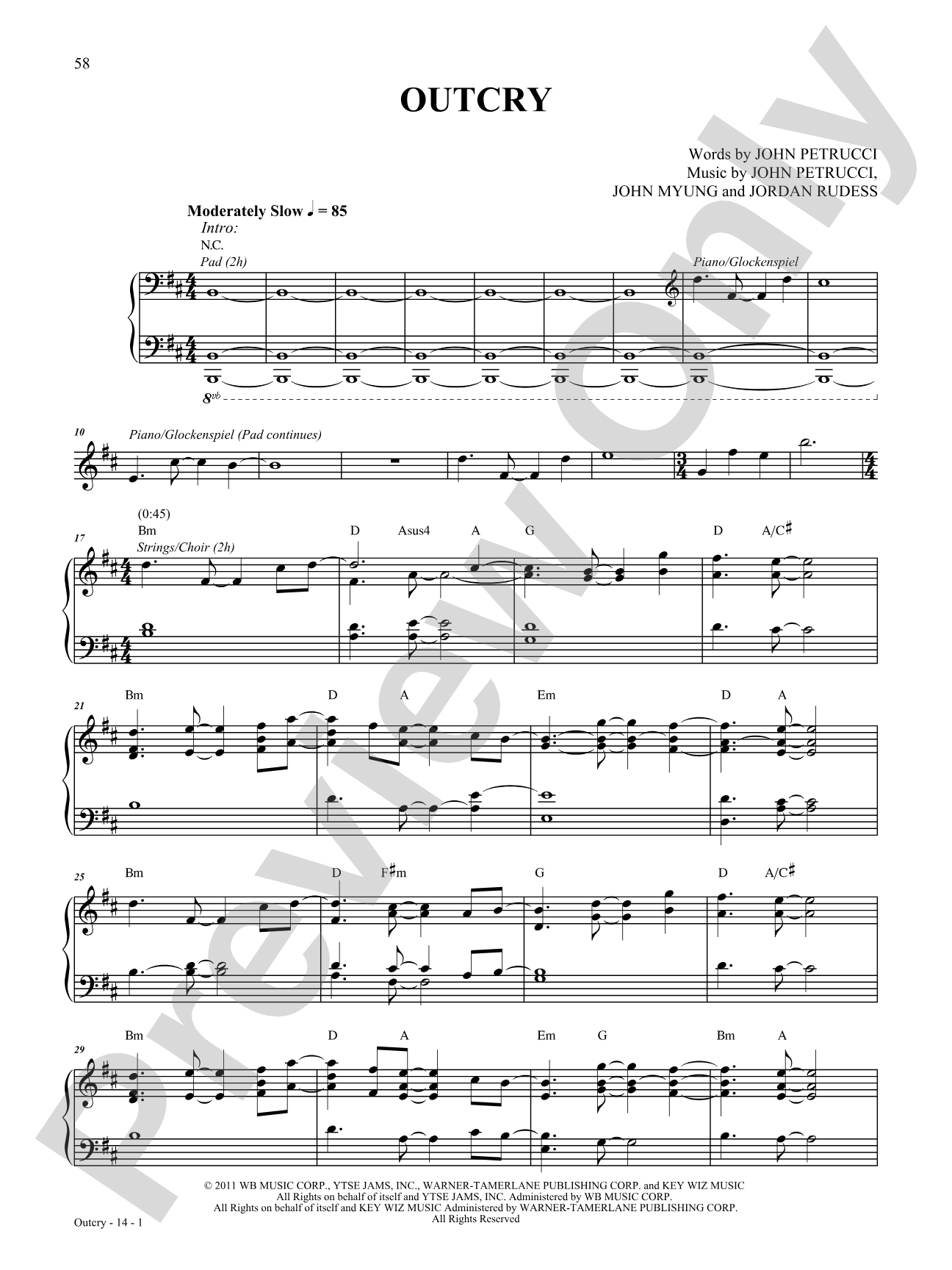
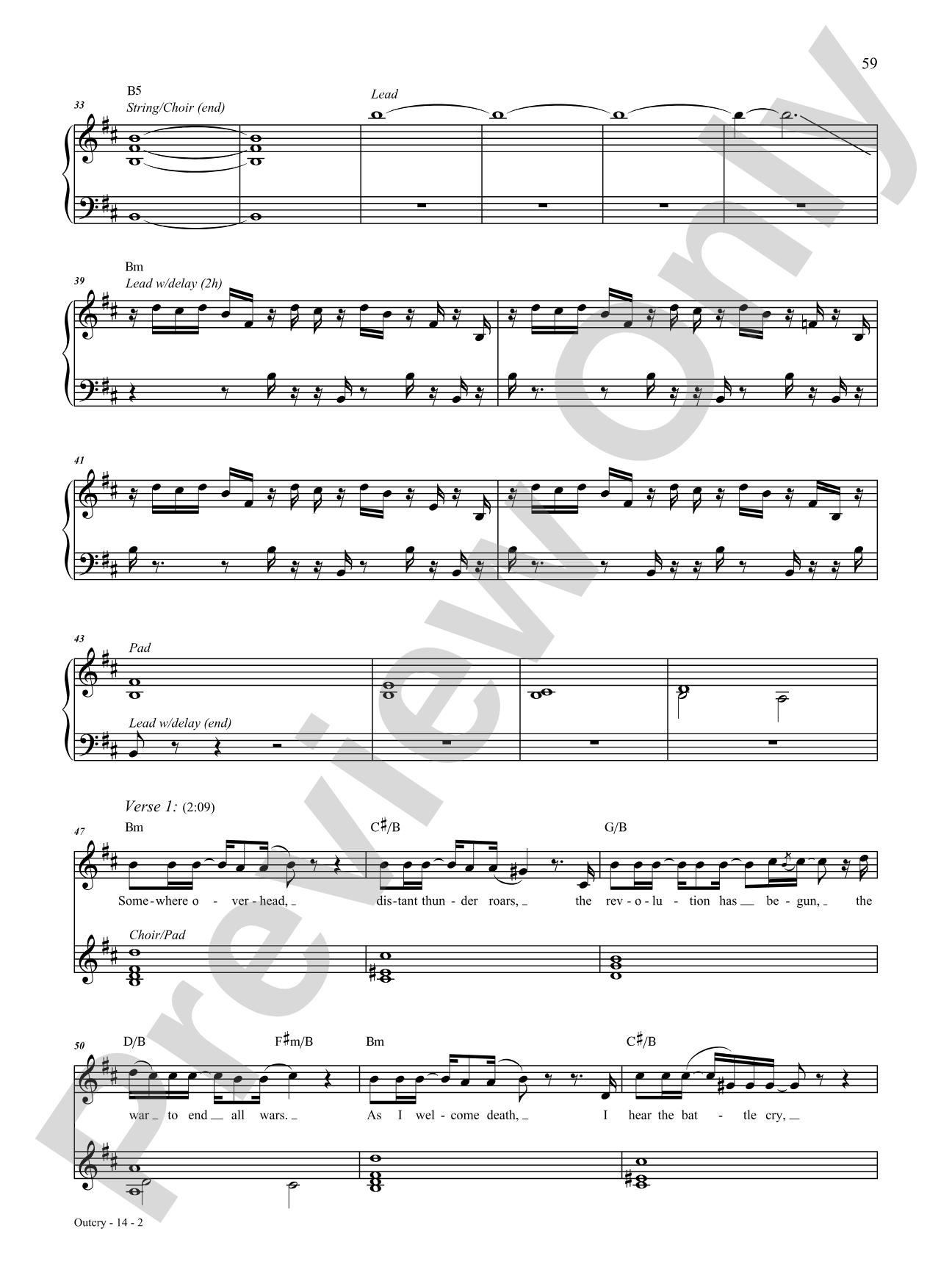
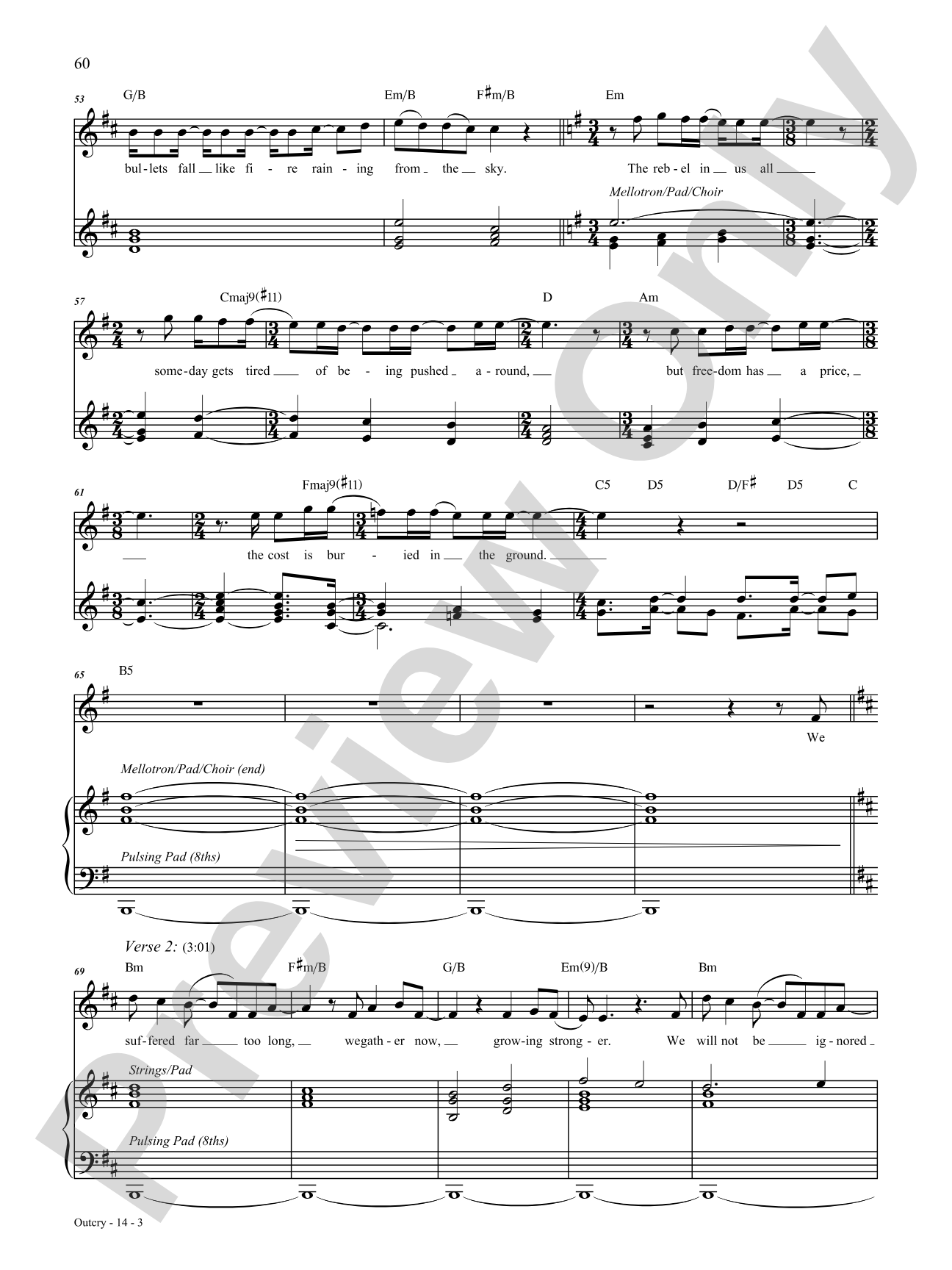

Outcry: Piano/Vocal/Chords
Dream Theater featuring Jordan Rudess
Item: 00-PS-0013513
$9.99
One moment…
Related Items
On the Backs of Angels: Authentic Guitar TAB |
$9.99
|
View | |
On the Backs of Angels: Piano/Vocal/Chords |
$9.99
|
View | |
Bridges in the Sky: Authentic Guitar TAB |
$9.99
|
View | |
Bridges in the Sky: Piano/Vocal/Chords |
$5.99
|
View | |
Outcry: Authentic Guitar TAB |
$9.99
|
View | |
Far From Heaven: Authentic Guitar TAB |
$4.99
|
View | |
Far From Heaven: Piano/Vocal/Chords |
$4.99
|
View | |
Build Me up, Break Me Down: Piano/Vocal/Chords |
$5.99
|
View | |
Build Me up, Break Me Down: Authentic Guitar TAB |
$5.99
|
View | |
Lost Not Forgotten: Authentic Guitar TAB |
$9.99
|
View | |
Lost Not Forgotten: Piano/Vocal/Chords |
$9.99
|
View | |
This is the Life: Authentic Guitar TAB |
$9.99
|
View | |
This is the Life: Piano/Vocal/Chords |
$5.99
|
View | |
Breaking All Illusions: Piano/Vocal/Chords |
$9.99
|
View | |
Breaking All Illusions: Authentic Guitar TAB |
$9.99
|
View | |
Beneath the Silence: Authentic Guitar TAB |
$5.99
|
View | |
Beneath the Surface: Piano/Vocal/Chords |
$9.99
|
View |
Description
Keyboardists who are fans of Dream Theater's Jordan Rudess know that it's nearly impossible to nail down by ear exactly what he plays. Alfred Music is honored to assist with this album-matching sheet music collection, meticulously transcribed by prog keyboard aficionado Chris Romero in direct consultation with Rudess himself. The nearly 100 pages of note-for-note keyboard madness in this collection will challenge any keyboardist to aim high and tackle pioneering techniques that only Jordan Rudess could conceive. Titles: * On the Backs of Angels * Build Me Up Break Me Down * Lost Not Forgotten * This Is the Life * Bridges in the Sky * Outcry * Far from Heaven * Breaking All Illusions * Beneath the Surface.


Outcry: Piano/Vocal/Chords isn't in MakeMusic Cloud just yet...but it could be. Let us know you'd like to see it, and you'll help shape what comes next. In the meantime, start a free trial and dive into thousands of interactive titles your students can play along with today.
Request This Title
Tell us you want it.
Start Your Free Trial
Explore everything that's ready to play right now.
Sample Audio
No sample audio found.
Sample Video
No sample videos found.
Additional Details
Publisher:
Alfred Music
Page Count:
100
SKU:
00-PS-0013513
More about this title
About the Composer: John Petrucci
John Petrucci is the guitarist and primary composer for Dream Theater, the progressive metal band that has defined complex instrumental writing and virtuosic ensemble playing since the 1980s. His compositional voice balances technical ambition with emotional depth, creating pieces that demand precision from every band member while rewarding careful listening with intricate harmonic and rhythmic ideas.
Why we love this
This collection captures Dream Theater's progressive metal language through Jordan Rudess's keyboard writing, transcribed with his direct input to ensure accuracy that ear training alone cannot achieve. Keyboardists gain access to the exact voicings, technique combinations, and harmonic approaches that define Rudess's style across nine album tracks, making this an invaluable resource for studying modern prog keyboard vocabulary at the highest level.
What to expect
Nearly 100 pages of intricate keyboard writing that shifts between crystalline arpeggios, dense cluster voicings, and syncopated rhythmic figures. Playing through these pieces demands focus and stamina while delivering the visceral satisfaction of executing prog metal's most demanding keyboard lines.
Who it's for
Advanced keyboardists and prog enthusiasts who want to master Jordan Rudess's technique and understand Dream Theater's compositional approach from the keyboard perspective. This collection is also valuable for music theory students studying complex harmonic movement, layered voicing, and how keyboard parts interact with guitar-driven metal arrangements.
How to get the most out of it
- Study the harmonic movement across the full staff before committing to hand position; Rudess often stacks voicings that require planned shifts rather than intuitive stretches.
- Isolate passages with rapid syncopation and practice them without the original recording first, then layer in the track to lock the rhythmic intent.
- Mark dynamic swells and decay patterns in each section; much of the keyboard's narrative comes from how Rudess shapes volume and sustain, not just note accuracy.
- Pay attention to synthesizer registration cues in the chord symbols; understanding which sounds Rudess selects for different musical moments will inform your interpretation of tempo and articulation.
How to use it
Feature selections from this collection in recitals focused on contemporary instrumental music or prog rock repertoire. A keyboardist tackling this material demonstrates serious technical commitment and opens conversation about how classical technique applies to modern genres.
Skills your students will build
- Navigating complex harmonic progressions with multiple accidentals across extended passages
- Coordinating hand independence between sparse single-note lines and dense chord clusters
- Reading and executing rapid syncopated rhythms in context of larger ensemble time signatures
- Translating synthesizer registration into performance choices that shape phrasing and dynamics
- Managing stamina and accuracy through extended keyboard passages without repetitive muscle patterns