
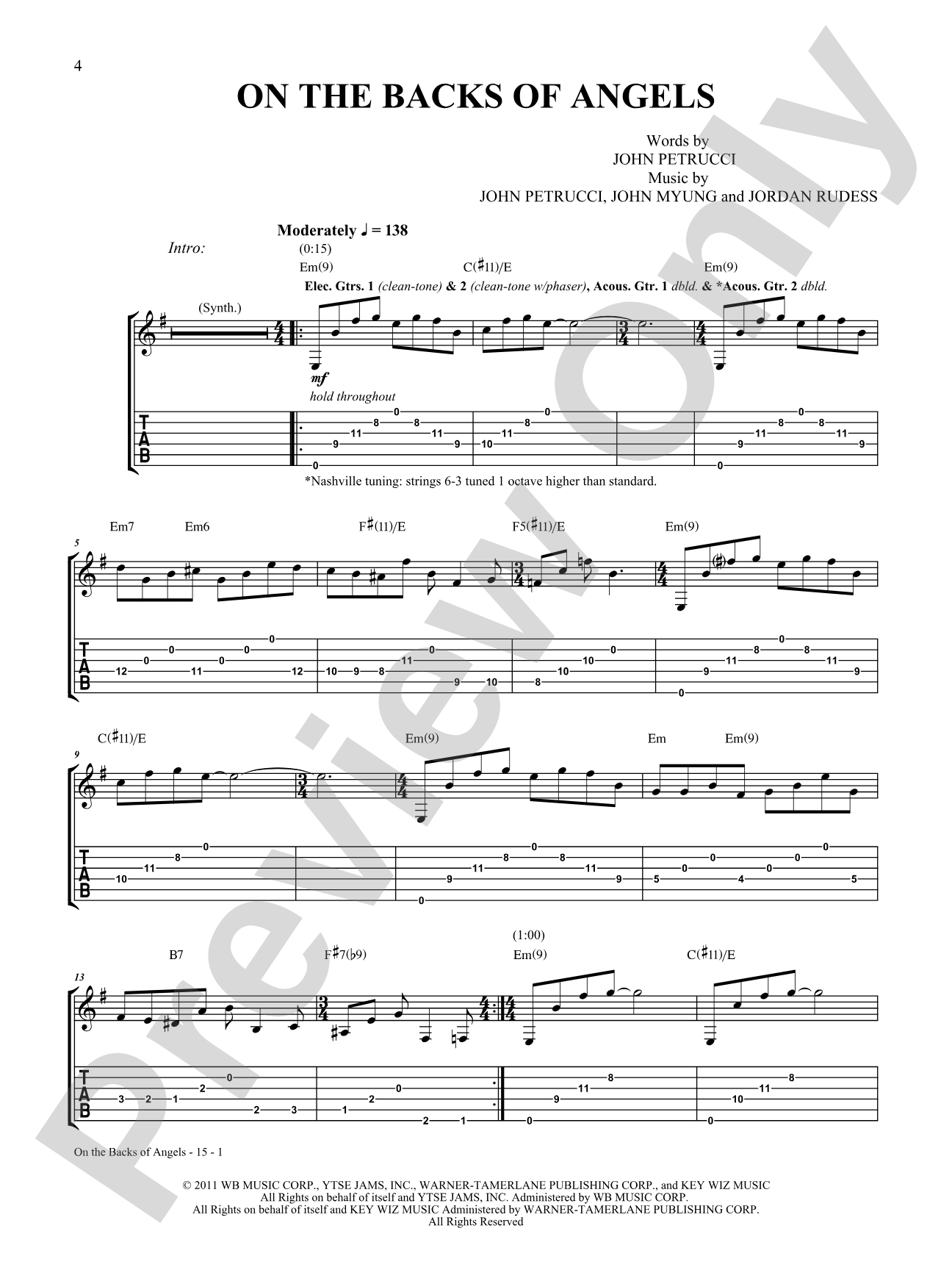
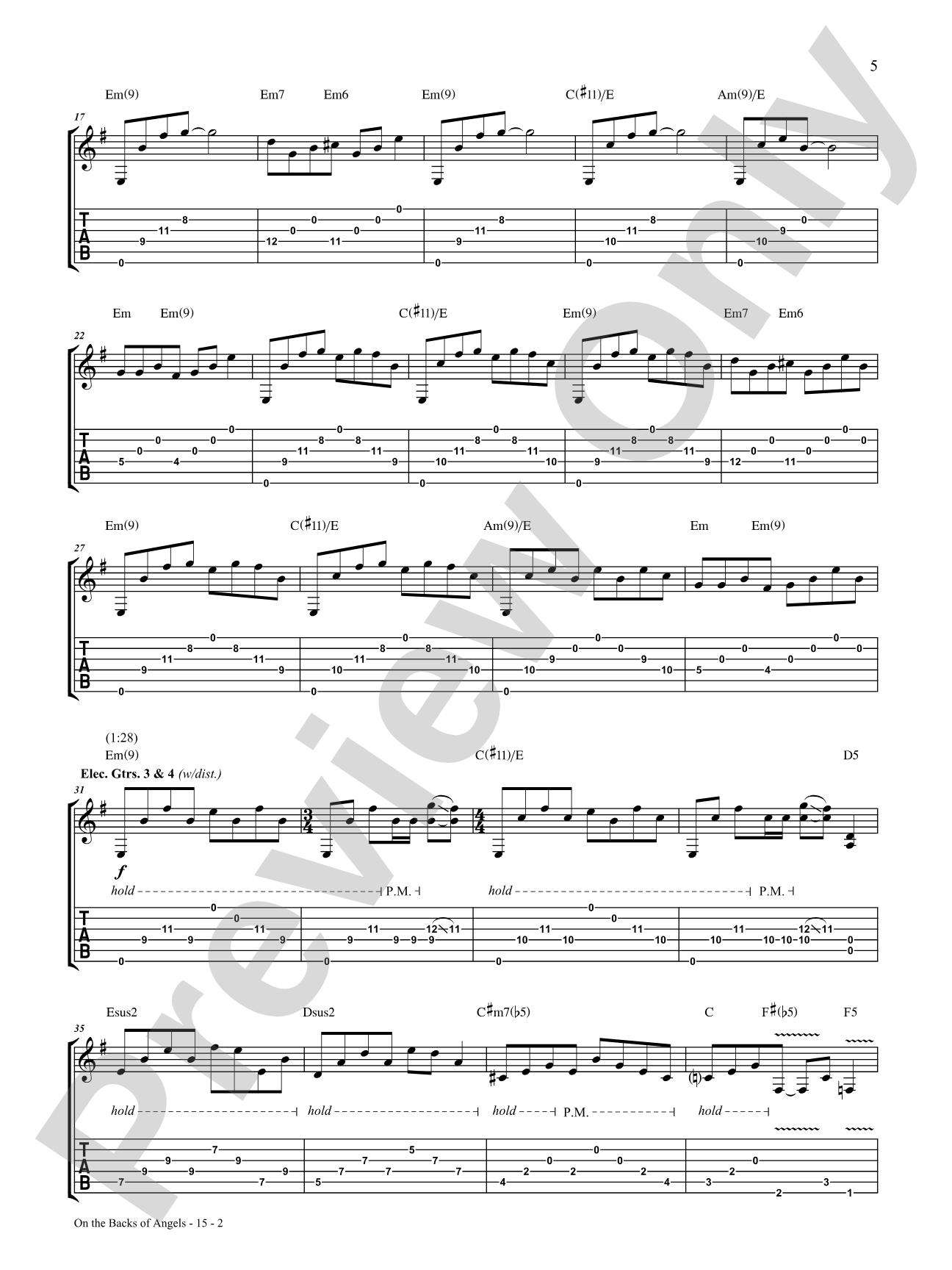
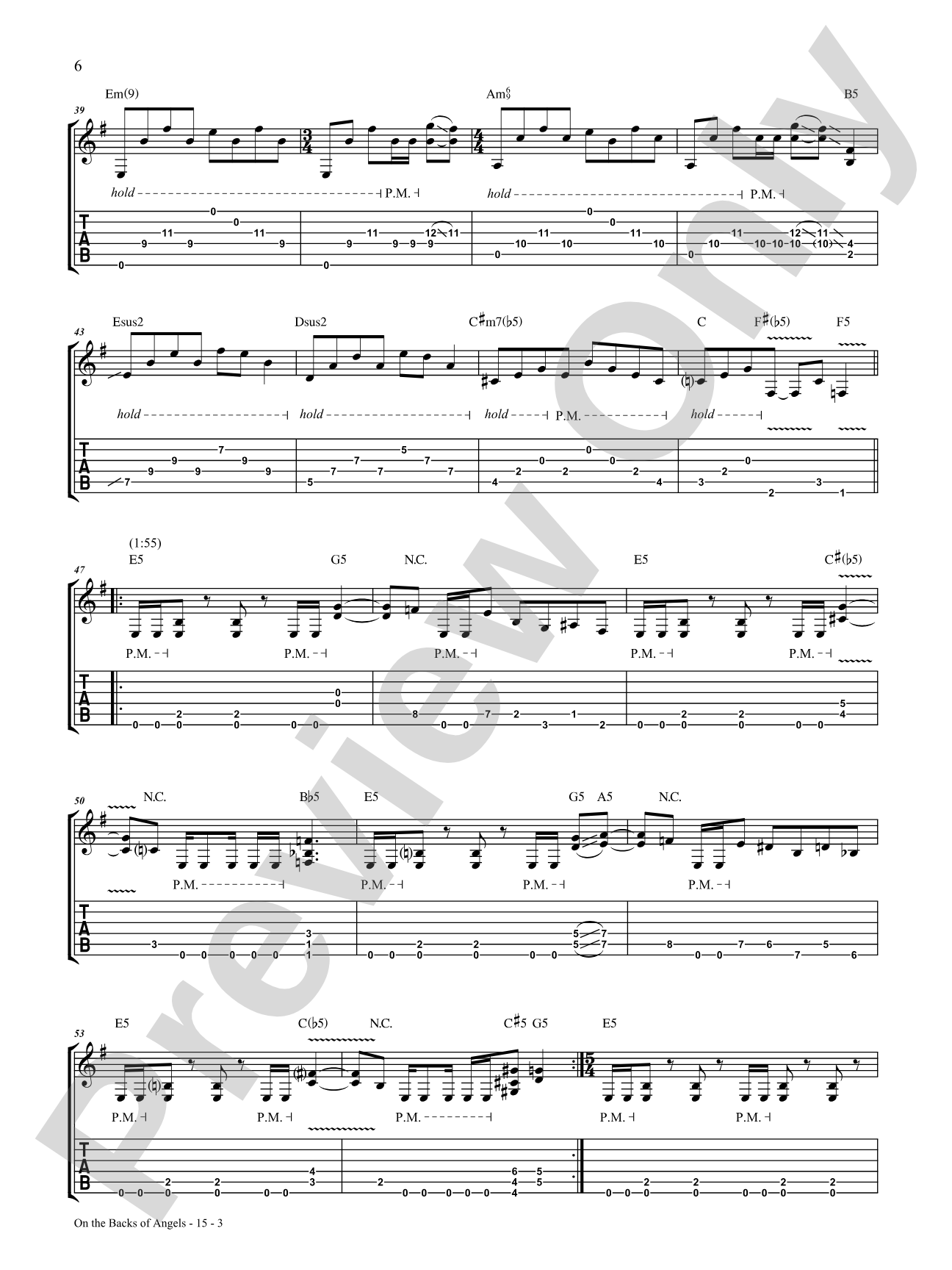

On the Backs of Angels: Authentic Guitar TAB
Dream Theater
Item: 00-PS-0013509
$9.99
One moment…
Related Items
On the Backs of Angels: Piano/Vocal/Chords |
$9.99
|
View | |
Bridges in the Sky: Authentic Guitar TAB |
$9.99
|
View | |
Bridges in the Sky: Piano/Vocal/Chords |
$5.99
|
View | |
Outcry: Piano/Vocal/Chords |
$9.99
|
View | |
Outcry: Authentic Guitar TAB |
$9.99
|
View | |
Far From Heaven: Authentic Guitar TAB |
$4.99
|
View | |
Far From Heaven: Piano/Vocal/Chords |
$4.99
|
View | |
Build Me up, Break Me Down: Piano/Vocal/Chords |
$5.99
|
View | |
Build Me up, Break Me Down: Authentic Guitar TAB |
$5.99
|
View | |
Lost Not Forgotten: Authentic Guitar TAB |
$9.99
|
View | |
Lost Not Forgotten: Piano/Vocal/Chords |
$9.99
|
View | |
This is the Life: Authentic Guitar TAB |
$9.99
|
View | |
This is the Life: Piano/Vocal/Chords |
$5.99
|
View | |
Breaking All Illusions: Piano/Vocal/Chords |
$9.99
|
View | |
Breaking All Illusions: Authentic Guitar TAB |
$9.99
|
View | |
Beneath the Silence: Authentic Guitar TAB |
$5.99
|
View | |
Beneath the Surface: Piano/Vocal/Chords |
$9.99
|
View |
Description
Dream Theater fans rejoice, this collection features note-for-note guitar TAB transcriptions for every song on the album A Dramatic Turn of Events. Titles: On the Backs of Angels * Build Me Up Break Me Down * Lost Not Forgotten * This Is the Life * Bridges in the Sky * Outcry * Far from Heaven * Breaking All Illusions * Beneath the Surface.


On the Backs of Angels: Authentic Guitar TAB isn't in MakeMusic Cloud just yet...but it could be. Let us know you'd like to see it, and you'll help shape what comes next. In the meantime, start a free trial and dive into thousands of interactive titles your students can play along with today.
Request This Title
Tell us you want it.
Start Your Free Trial
Explore everything that's ready to play right now.
Sample Audio
No sample audio found.
Sample Video
No sample videos found.
Additional Details
Publisher:
Alfred Music
Page Count:
128
SKU:
00-PS-0013509
More about this title
About the Composer: John Petrucci
John Petrucci is the guitarist and primary composer for Dream Theater, the progressive metal band that has defined technical virtuosity and complex song architecture since the early 1990s. His compositions balance intricate time signatures, extended harmonic language, and demanding fretwork with genuine melodic sensibility, making his music a benchmark for musicians studying advanced guitar technique and compositional craft.
Why we love this
This TAB collection captures one of modern metal's most compositionally ambitious albums in note-for-note accuracy, giving serious players a direct roadmap to Petrucci's exact fingerings and interpretations. For advanced guitarists, studying these transcriptions reveals how a master builder constructs layered arrangements, navigates extreme technical passages, and maintains clarity across dense polyphonic textures.
What to expect
Intricate, demanding, and intellectually engaging. The music sprawls across registers with sudden dynamic shifts, intricate countermelody work between guitar and keyboards, and passages that require both precision picking and fluid legato phrasing. Playing these songs demands focus but rewards it with passages of genuine melodic beauty underneath the technical surface.
Who it's for
Advanced and intermediate guitarists pursuing technical mastery and who want to study authentic Petrucci voicings and interpretations rather than approximations. Private instructors working with students on complex meter, advanced picking techniques, and progressive metal vocabulary will find these transcriptions essential references.
How to get the most out of it
- Isolate the rhythm guitar parts first. These establish harmonic foundation and timing; locking them down prevents getting lost when the lead lines enter over shifting meters.
- Mark your meter changes in advance. Songs like "Build Me Up Break Me Down" shift between time signatures; annotating the TAB saves mental processing during performance.
- Use a metronome set to quarter-note clicks rather than beats. This keeps you anchored when measures contain 5, 7, or 9 subdivisions.
- Record yourself playing individual sections and listen back without your instrument. Hearing your own execution reveals timing inconsistencies and note clarity issues that are harder to catch while playing.
How to use it
Feature these pieces in advanced student recitals or showcase performances where technical display and contemporary metal composition add variety to a program. Guitarists preparing for college auditions or performance ensemble placement can also use these transcriptions as etudes for developing control across extended technical passages.
Skills your students will build
- Reading complex time signatures and meter modulations (5/4, 7/8, mixed meters within single phrases)
- Hybrid picking and sweep picking accuracy at tempo
- Interval recognition and fretboard visualization across extended ranges
- Finger dexterity and stamina for sustained passages with minimal rest
- Listening for harmonic function within chromatic and modal contexts
- Coordinating complex rhythmic figures between left and right hands