
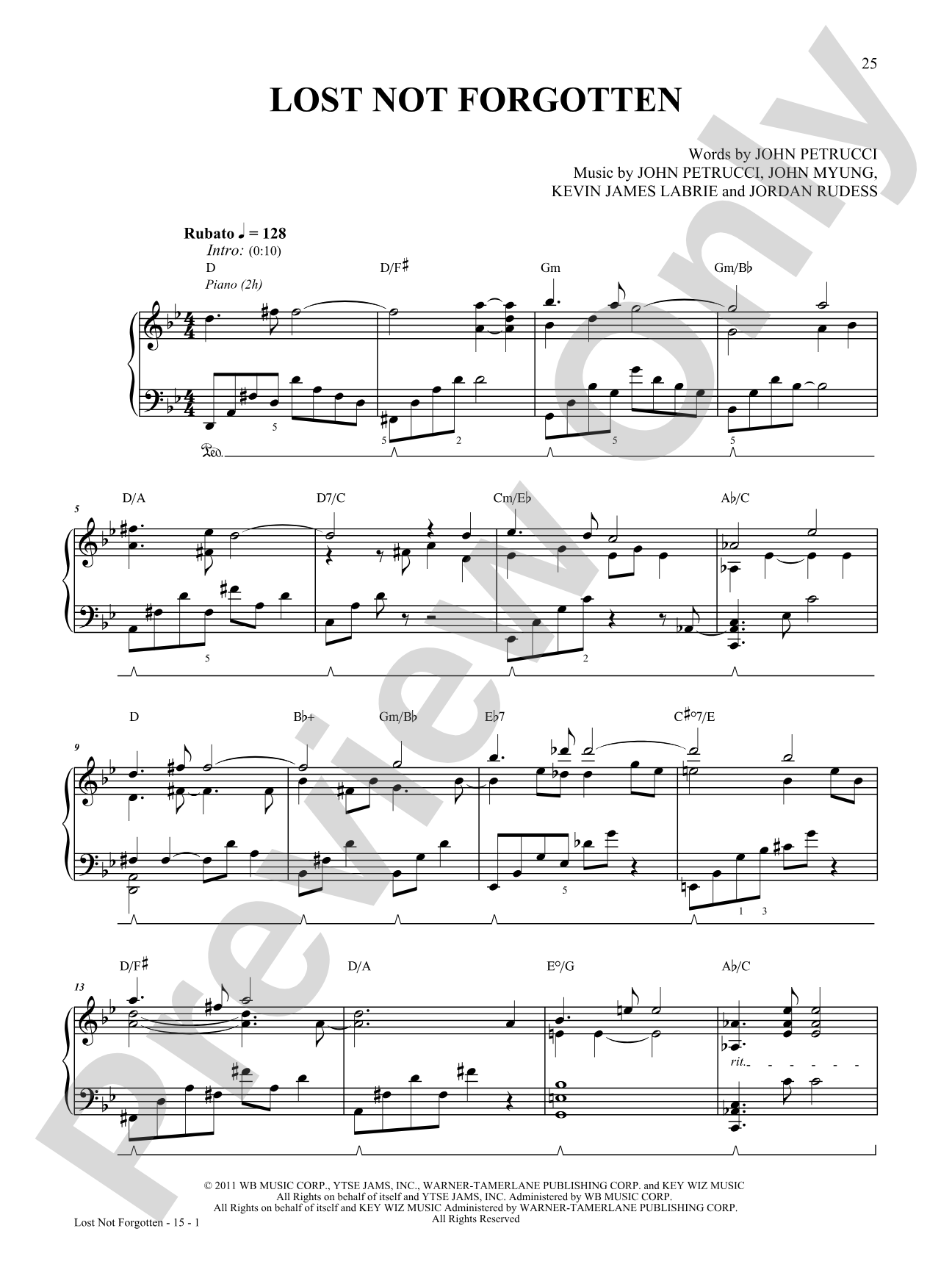
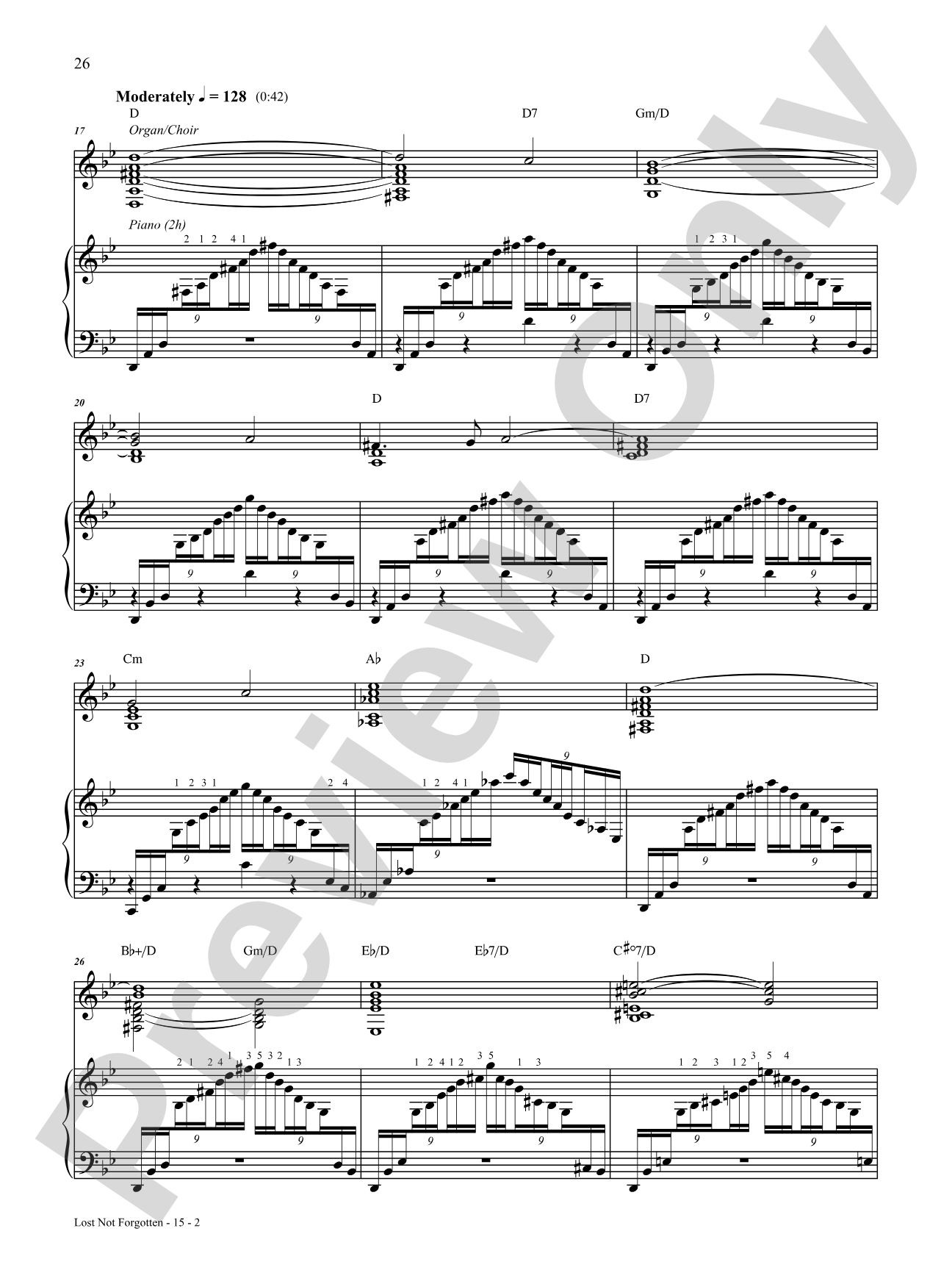
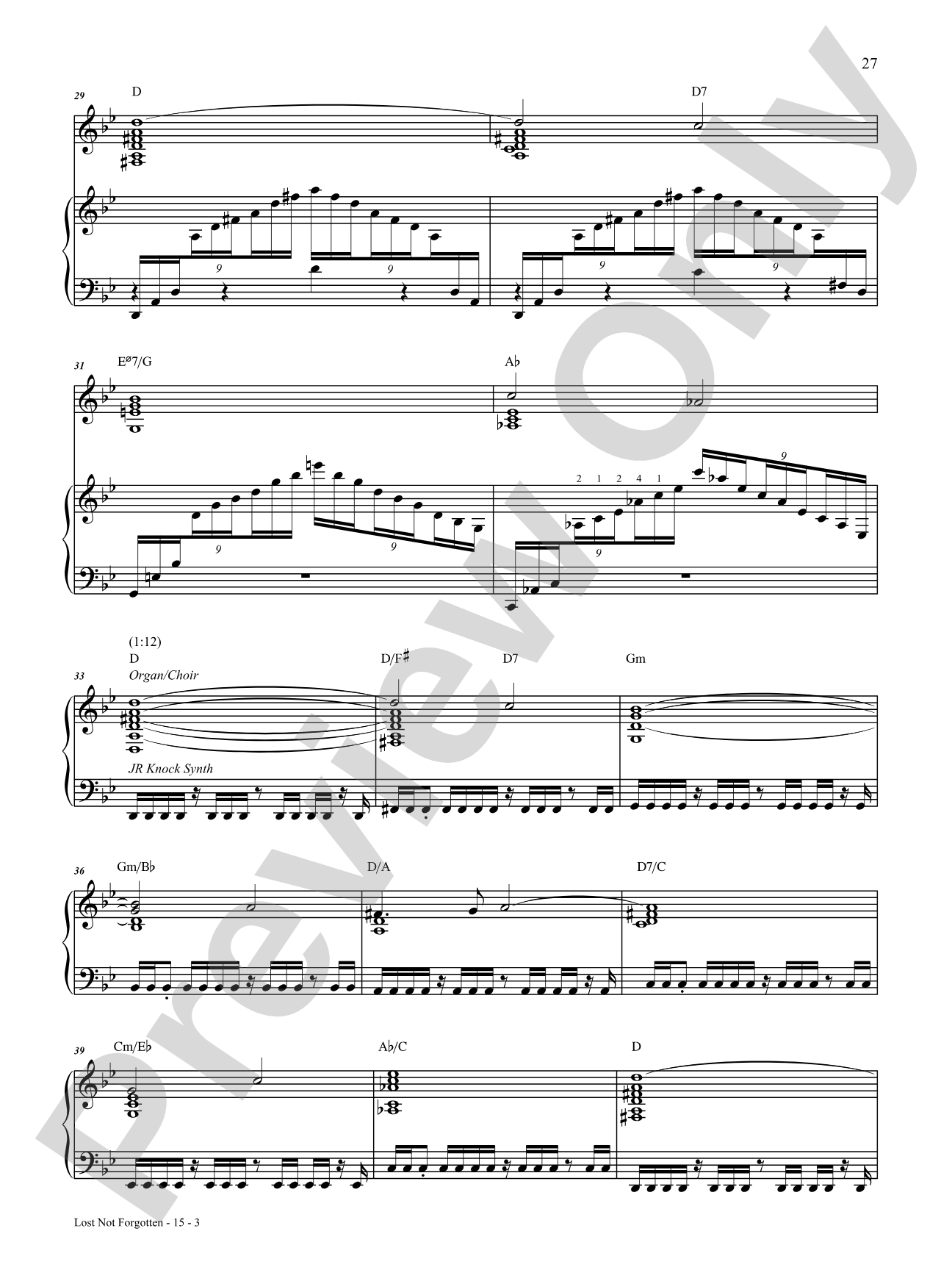

Lost Not Forgotten: Piano/Vocal/Chords
Dream Theater featuring Jordan Rudess
Item: 00-PS-0013520
$9.99
One moment…
Related Items
On the Backs of Angels: Authentic Guitar TAB |
$9.99
|
View | |
On the Backs of Angels: Piano/Vocal/Chords |
$9.99
|
View | |
Bridges in the Sky: Authentic Guitar TAB |
$9.99
|
View | |
Bridges in the Sky: Piano/Vocal/Chords |
$5.99
|
View | |
Outcry: Piano/Vocal/Chords |
$9.99
|
View | |
Outcry: Authentic Guitar TAB |
$9.99
|
View | |
Far From Heaven: Authentic Guitar TAB |
$4.99
|
View | |
Far From Heaven: Piano/Vocal/Chords |
$4.99
|
View | |
Build Me up, Break Me Down: Piano/Vocal/Chords |
$5.99
|
View | |
Build Me up, Break Me Down: Authentic Guitar TAB |
$5.99
|
View | |
Lost Not Forgotten: Authentic Guitar TAB |
$9.99
|
View | |
This is the Life: Authentic Guitar TAB |
$9.99
|
View | |
This is the Life: Piano/Vocal/Chords |
$5.99
|
View | |
Breaking All Illusions: Piano/Vocal/Chords |
$9.99
|
View | |
Breaking All Illusions: Authentic Guitar TAB |
$9.99
|
View | |
Beneath the Silence: Authentic Guitar TAB |
$5.99
|
View | |
Beneath the Surface: Piano/Vocal/Chords |
$9.99
|
View |
Description
Keyboardists who are fans of Dream Theater's Jordan Rudess know that it's nearly impossible to nail down by ear exactly what he plays. Alfred Music is honored to assist with this album-matching sheet music collection, meticulously transcribed by prog keyboard aficionado Chris Romero in direct consultation with Rudess himself. The nearly 100 pages of note-for-note keyboard madness in this collection will challenge any keyboardist to aim high and tackle pioneering techniques that only Jordan Rudess could conceive. Titles: * On the Backs of Angels * Build Me Up Break Me Down * Lost Not Forgotten * This Is the Life * Bridges in the Sky * Outcry * Far from Heaven * Breaking All Illusions * Beneath the Surface.


Lost Not Forgotten: Piano/Vocal/Chords isn't in MakeMusic Cloud just yet...but it could be. Let us know you'd like to see it, and you'll help shape what comes next. In the meantime, start a free trial and dive into thousands of interactive titles your students can play along with today.
Request This Title
Tell us you want it.
Start Your Free Trial
Explore everything that's ready to play right now.
Sample Audio
No sample audio found.
Sample Video
No sample videos found.
Additional Details
Publisher:
Alfred Music
Page Count:
100
SKU:
00-PS-0013520
More about this title
About the Composer: John Petrucci
John Petrucci is the guitarist and primary composer for Dream Theater, the progressive metal band that redefined the boundaries of technical complexity and compositional ambition in rock music. Since Dream Theater's formation in the late 1980s, Petrucci has established himself as a musician whose writing demands extraordinary precision from every band member—including keyboardist Jordan Rudess, whose contributions to these nine tracks showcase some of the most intricate harmonic and textural work in the band's catalog.
Petrucci's compositions consistently blend metal's intensity with classical counterpoint, odd meters, and extended harmonic progressions. His collaborative approach with Rudess, Myung, and Labrie on the Lost Not Forgotten album reflects decades of refining how keyboard, guitar, bass, and drums can interlock across passages of stunning technical difficulty.
Why we love this
This transcription captures Rudess's keyboard work at its most audacious: intricate left-hand passages, rapid scalar runs across multiple octaves, and harmonic choices that demand both technical command and musical sensitivity. Having direct input from Rudess himself elevates these transcriptions beyond guesswork, giving serious keyboardists an authoritative resource for understanding how progressive metal's most celebrated keyboard voice approaches voicing, texture, and improvisation within composed structures.
What to expect
These pieces pulse with controlled intensity and intellectual rigor. They move between passages of crystalline clarity—where single notes cut through dense textures—and moments of swirling polyrhythmic energy. There's a crafted precision to Rudess's approach: every ornament and run serves the larger harmonic architecture, never settling into mere display. The collection oscillates between propulsive momentum and meditative spaciousness, demanding that you inhabit both the calculation and the emotion underneath it.
Who it's for
Keyboardists with intermediate to advanced technique who are drawn to progressive rock and metal and want to understand how Rudess constructs his solos and comping parts. This collection rewards players who thrive on technical challenge and are willing to invest significant practice time decoding sophisticated harmonic and rhythmic ideas. It's equally valuable for educators seeking repertoire that stretches accomplished students and demonstrates how keyboard writing can function as a leading voice within a full band arrangement.
How to get the most out of it
- Map out the hand position shifts and octave changes before attempting to play at tempo; Rudess's voicings often require efficient lateral movement across the keyboard.
- Isolate the left hand independently from the right until each hand's rhythmic and harmonic logic is secure, then layer them slowly to avoid collapsing under the technical weight.
- Study the original album recordings in tandem with the transcription to internalize the tone colors and dynamic shaping that make these passages compelling rather than merely mechanical.
- Break extended passages into shorter modules (4-8 bars) and master each module's fingering before attempting to string them together at performance tempo.
How to use it
Feature these transcriptions as solo keyboard recital material for advanced students preparing for college auditions or competitions, or program them in concert settings that celebrate contemporary instrumental music and technical innovation. They also serve as powerful teaching examples for demonstrating how keyboard voices contribute to ensemble orchestration in non-classical contexts.
Skills your students will build
- Reading complex polyrhythmic passages and managing multiple metric feels simultaneously
- Executing rapid scalar passages and wide intervallic leaps with clean articulation and consistent tone
- Voicing extended chords across both hands and navigating unconventional harmonic progressions
- Coordinating intricate left-hand accompaniment patterns with single-note or chordal right-hand figures
- Developing independence between hands when they operate in different rhythmic subdivisions