
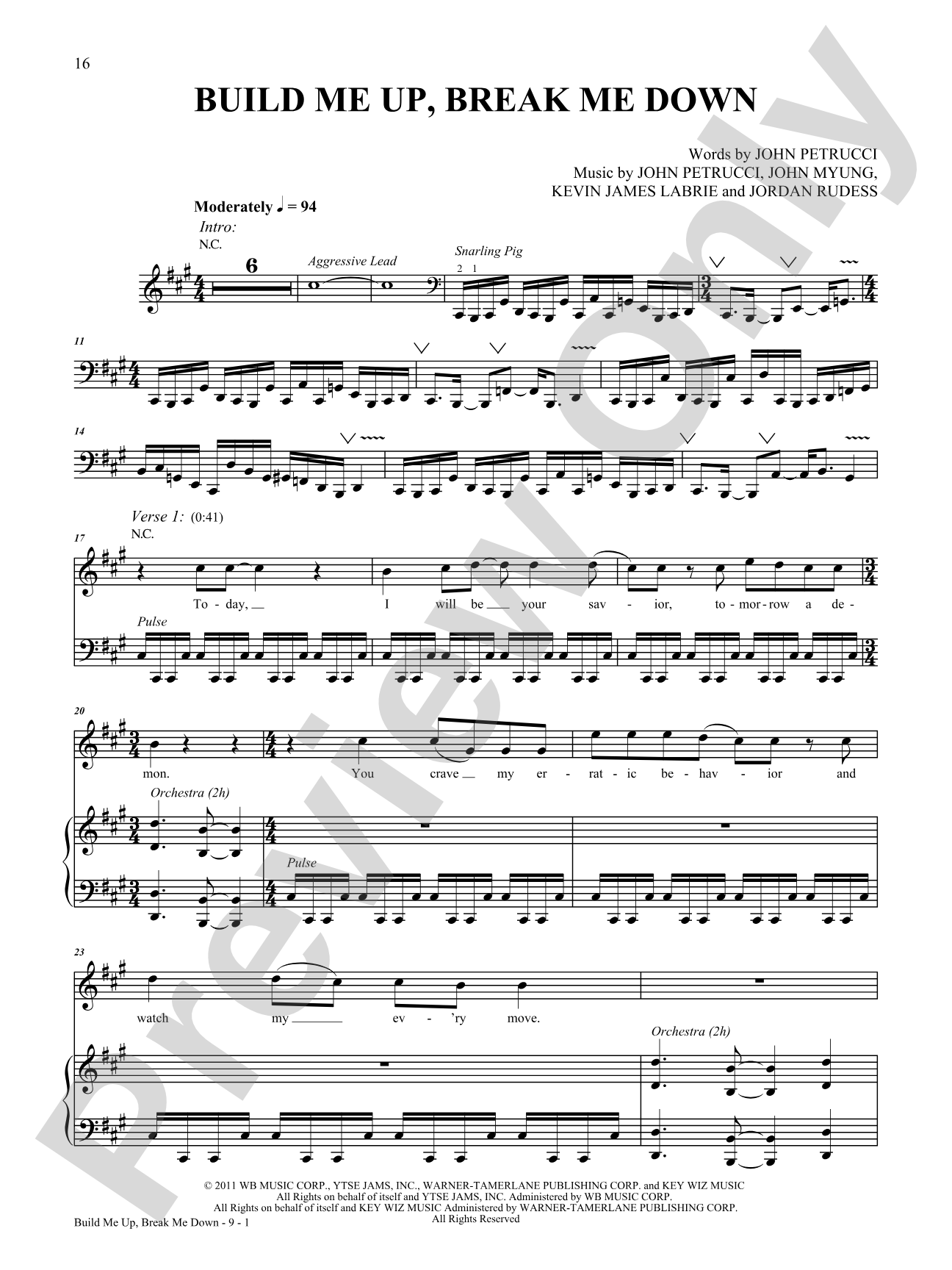
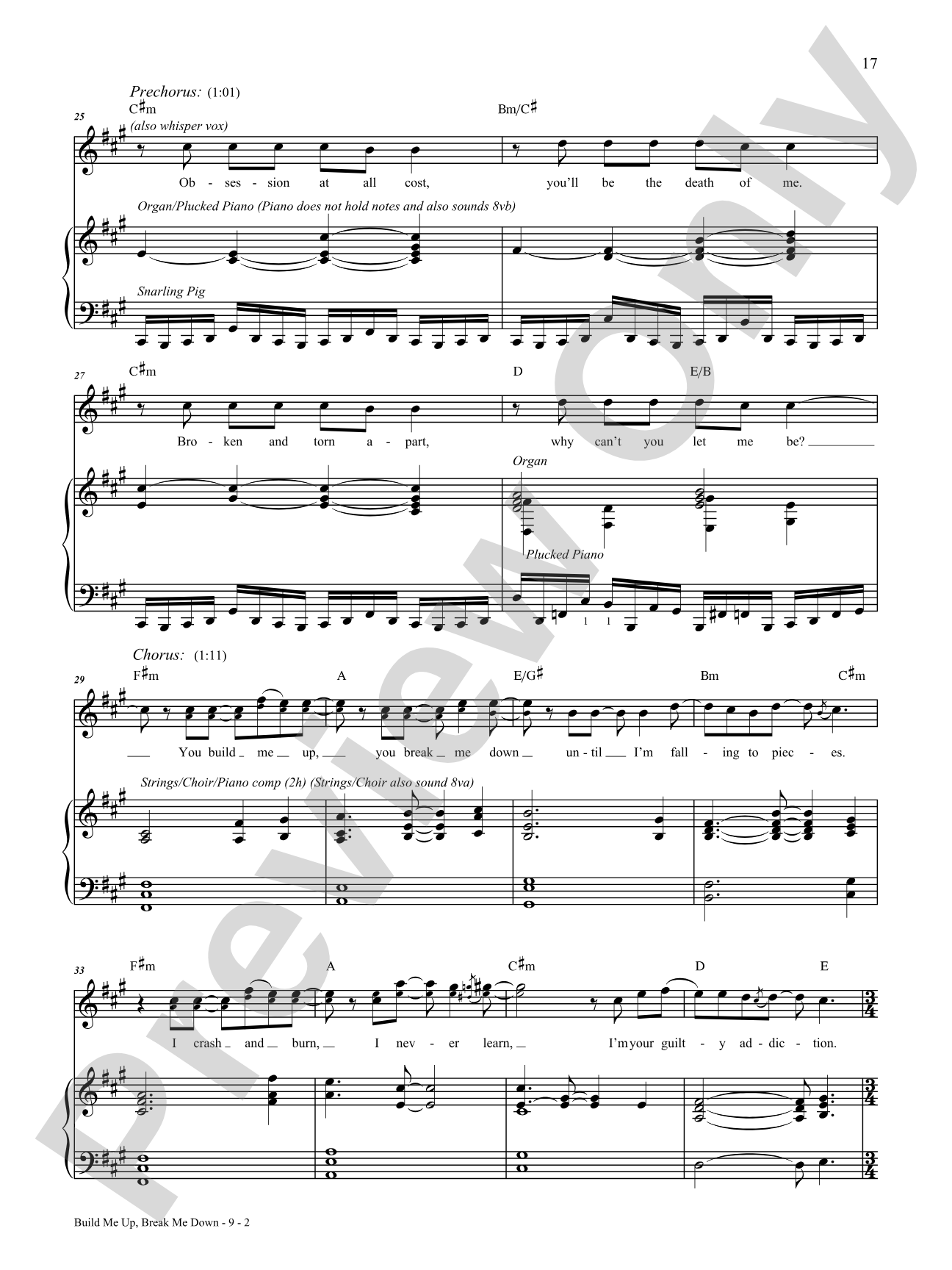

Build Me up, Break Me Down: Piano/Vocal/Chords
Dream Theater featuring Jordan Rudess
Item: 00-PS-0013517
$5.99
One moment…
Related Items
On the Backs of Angels: Authentic Guitar TAB |
$9.99
|
View | |
On the Backs of Angels: Piano/Vocal/Chords |
$9.99
|
View | |
Bridges in the Sky: Authentic Guitar TAB |
$9.99
|
View | |
Bridges in the Sky: Piano/Vocal/Chords |
$5.99
|
View | |
Outcry: Piano/Vocal/Chords |
$9.99
|
View | |
Outcry: Authentic Guitar TAB |
$9.99
|
View | |
Far From Heaven: Authentic Guitar TAB |
$4.99
|
View | |
Far From Heaven: Piano/Vocal/Chords |
$4.99
|
View | |
Build Me up, Break Me Down: Authentic Guitar TAB |
$5.99
|
View | |
Lost Not Forgotten: Authentic Guitar TAB |
$9.99
|
View | |
Lost Not Forgotten: Piano/Vocal/Chords |
$9.99
|
View | |
This is the Life: Authentic Guitar TAB |
$9.99
|
View | |
This is the Life: Piano/Vocal/Chords |
$5.99
|
View | |
Breaking All Illusions: Piano/Vocal/Chords |
$9.99
|
View | |
Breaking All Illusions: Authentic Guitar TAB |
$9.99
|
View | |
Beneath the Silence: Authentic Guitar TAB |
$5.99
|
View | |
Beneath the Surface: Piano/Vocal/Chords |
$9.99
|
View |
Description
Keyboardists who are fans of Dream Theater's Jordan Rudess know that it's nearly impossible to nail down by ear exactly what he plays. Alfred Music is honored to assist with this album-matching sheet music collection, meticulously transcribed by prog keyboard aficionado Chris Romero in direct consultation with Rudess himself. The nearly 100 pages of note-for-note keyboard madness in this collection will challenge any keyboardist to aim high and tackle pioneering techniques that only Jordan Rudess could conceive. Titles: * On the Backs of Angels * Build Me Up Break Me Down * Lost Not Forgotten * This Is the Life * Bridges in the Sky * Outcry * Far from Heaven * Breaking All Illusions * Beneath the Surface.


Build Me up, Break Me Down: Piano/Vocal/Chords isn't in MakeMusic Cloud just yet...but it could be. Let us know you'd like to see it, and you'll help shape what comes next. In the meantime, start a free trial and dive into thousands of interactive titles your students can play along with today.
Request This Title
Tell us you want it.
Start Your Free Trial
Explore everything that's ready to play right now.
Sample Audio
No sample audio found.
Sample Video
No sample videos found.
Additional Details
Publisher:
Alfred Music
Page Count:
100
SKU:
00-PS-0013517
More about this title
About the Composer: John Petrucci
John Petrucci is the guitarist and primary composer for Dream Theater, the progressive metal band that redefined heavy music's technical and compositional possibilities. Since the band's formation in 1985, Petrucci has established himself as a master architect of complex song structures, unconventional time signatures, and layered arrangements that demand precision and imagination from every musician in the ensemble.
Beyond Dream Theater, Petrucci has released solo albums and collaborated with other progressive musicians, reinforcing his role as a compositional innovator. His work with keyboardist Jordan Rudess demonstrates how he writes for ensemble voices with surgical clarity, pushing each instrument into territory that rewards dedicated study.
Why we love this
This transcription captures the keyboard writing on a Dream Theater album note-for-note, authenticated through direct consultation with Jordan Rudess himself. Keyboardists get access to the exact voicings, passes, and textural decisions that define these arrangements, eliminating the guesswork that makes learning prog metal by ear so frustrating. For advanced students and working musicians, this collection represents transparent access to professional-level keyboard composition and orchestration.
What to expect
These transcriptions pulse with the architectural ambition of modern progressive metal. You'll navigate through crystalline runs, dense harmonic clouds, and moments of raw power where the keyboard drives the entire arrangement. The writing feels less like traditional piano literature and more like a technical challenge that rewards both precision and interpretive commitment.
Who it's for
This collection is for advanced keyboardists and prog metal enthusiasts who have the technical foundation to tackle sophisticated harmonic language and rapid-fire passagework. It suits pianists preparing for auditions in progressive metal projects, serious students analyzing professional keyboard composition, and musicians who want to understand how Rudess translates complex arranging into playable keyboard parts.
How to get the most out of it
- Spend time with the harmonic movement in isolation before tackling the full fingering patterns. Dream Theater's voicings often layer extended chords with unexpected tensions; understanding the harmony first makes the physical execution clearer.
- Use a sustain pedal with precision. The transcriptions show where Rudess holds harmonic layers; sloppy pedaling will muddy the articulation that keeps fast passages clean.
- Lock the rhythmic feel to a metronome at a slow tempo and gradually increase speed. Many passages sit across odd subdivisions; accuracy matters more than speed here.
- Study the dynamics and articulation markings as actively as you study the notes themselves. These pieces demand contrast between crystalline passages and dense textural moments.
How to use it
This works best as a study resource outside of ensemble settings, ideal for keyboardists working toward solo recitals or preparing repertoire for jazz/fusion studies. Advanced students can reference individual songs when programming recitals that showcase prog rock influences, or use the collection to supplement private study in contemporary keyboard idioms.
Skills your students will build
- Reading complex harmonic voicings and extended chord structures
- Navigating rapid scale passages and arpeggios across multiple octaves
- Interpreting polyrhythmic accompaniment patterns
- Managing sustain pedal control in dense, layered textures
- Sight-reading challenging time signature changes and syncopated rhythms
- Understanding professional keyboard orchestration in metal and rock contexts