
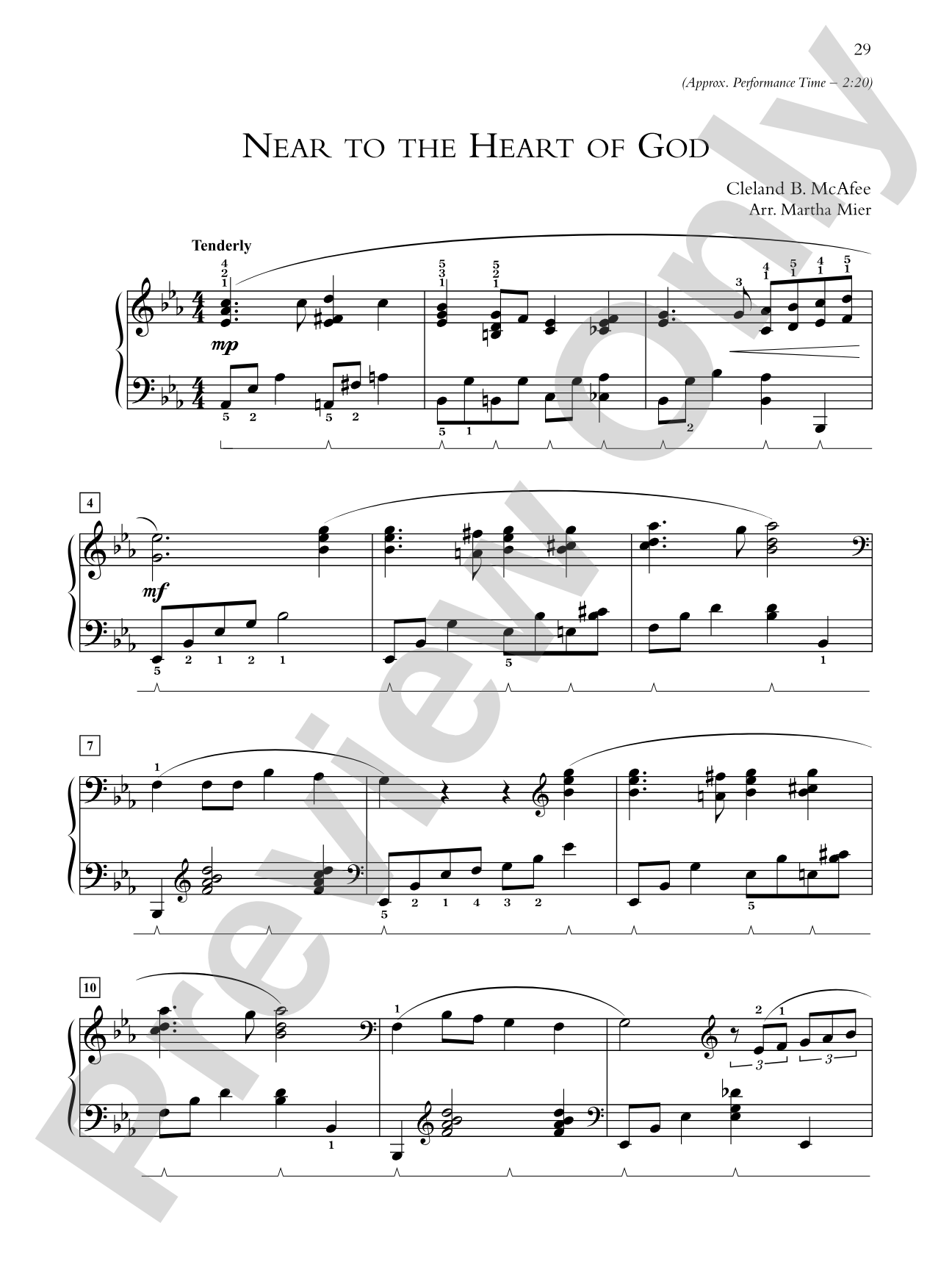

Near to the Heart of God - Piano Solo: Piano Solo
12 Hymns of Grace and Reflection
Arranged by Martha Mier
Level: Late Intermediate / Early Advanced
Item: 00-PS-0017531
$4.99
Pickup currently not available
Related Items
Amazing Grace - Piano Solo: Piano Solo |
$4.99
|
View | |
His Eye Is on the Sparrow - Piano Solo: Piano Solo |
$4.99
|
View | |
In the Garden - Piano Solo: Piano Solo |
$4.99
|
View | |
It Is Well with My Soul - Piano Solo: Piano Solo |
$4.99
|
View | |
Jesus Loves Me - Piano Solo: Piano Solo |
$4.99
|
View | |
Joyful, Joyful, We Adore Thee - Piano Solo: Piano Solo |
$4.99
|
View | |
Morning Has Broken - Piano Solo: Piano Solo |
$4.99
|
View | |
My Jesus, I Love Thee - Piano Solo: Piano Solo |
$4.99
|
View | |
This Is My Father's World - Piano Solo: Piano Solo |
$4.99
|
View | |
Turn Your Eyes upon Jesus - Piano Solo: Piano Solo |
$4.99
|
View | |
What a Friend We Have in Jesus - Piano Solo: Piano Solo |
$4.99
|
View | |
In the Light of His Glory: Piano Book |
$12.99
|
View |
Description
These heartfelt arrangements are some of Martha Mier's favorite hymns. Their warm melodies and rich harmonies will bring hope, solace, and the nearness of God to listeners and performers alike. To assist in planning, approximate performance times are included with each arrangement. Titles: Amazing Grace * His Eye Is on the Sparrow * In the Garden * It Is Well with My Soul * Jesus Loves Me * Joyful, Joyful, We Adore Thee * Morning Has Broken * My Jesus, I Love Thee * Near to the Heart of God * This Is My Father's World * Turn Your Eyes upon Jesus * What a Friend We Have in Jesus. A Federation Festivals 2024-2028 selection.


Discover MakeMusic Cloud: thousands of interactive titles your students can play along with today.
Sample Audio
No sample audio found.
Sample Video
No sample videos found.
Additional Details
Series:
Sacred Performer Collections
Publisher:
Alfred Music
Page Count:
40
SKU:
00-PS-0017531
More about this title
About the Composer: Cleland B. McAfee
Cleland B. McAfee (1866-1944) was a Presbyterian minister and composer whose gift for hymnody shaped American sacred music in the early twentieth century. His melodies are characterized by warmth and accessibility, designed to resonate with congregations while maintaining musical integrity. "Near to the Heart of God" stands as one of his most enduring compositions, capturing the contemplative spirituality that defined his approach to hymn writing.
Why we love this
Martha Mier's selections showcase the full range of McAfee's compositional voice alongside other beloved hymns, each arrangement balancing approachability with genuine musical substance. The included performance times make program planning straightforward, while the harmonic language rewards careful pedal work and attention to voicing. This collection sits at exactly the level where students have the technical capacity to shape these pieces expressively without wrestling with excessive technical demands.
What to expect
Each arrangement breathes with quiet intention. Mier's harmonies deepen the spiritual substance of these melodies without overwhelming them, creating space for the listener to meet the music emotionally. You're performing music that speaks directly, without artifice.
Who it's for
This collection works perfectly for students preparing festival repertoire or building a solid hymn-arrangement foundation. Teachers seeking music that develops musicianship alongside interpretive maturity will find thoughtful writing that respects both the tradition and the player's growing artistry.
How to get the most out of it
- Shape the melody with intentional rubato in the slower hymns; these arrangements expect expressive flexibility rather than metronomic precision
- Explore the pedal as an instrument itself, changing it precisely with harmonic shifts rather than sustaining indiscriminately through full measures
- Balance the hymn tune against inner voices so listeners hear the emotional foundation without losing the supporting harmonies Mier has crafted
- Allow silence and breath between movements; the 40-page collection benefits from pacing that lets each arrangement settle with its own character
How to use it
Draw from this collection throughout the year for recital closers that leave audiences in a contemplative space, or select individual arrangements as interludes in larger concerts. Several pieces work beautifully as standalone offerings at community events or worship settings where your students can experience the real-world context for which these hymns were written.
Skills your students will build
- Voicing independence between hands while maintaining melodic clarity
- Expressive pedal technique synchronized with harmonic rhythm
- Phrasing and shaping of familiar melodies with new harmonic contexts
- Interpretive choices within a reverent musical framework
- Sight-reading fluency across varied harmonic language