
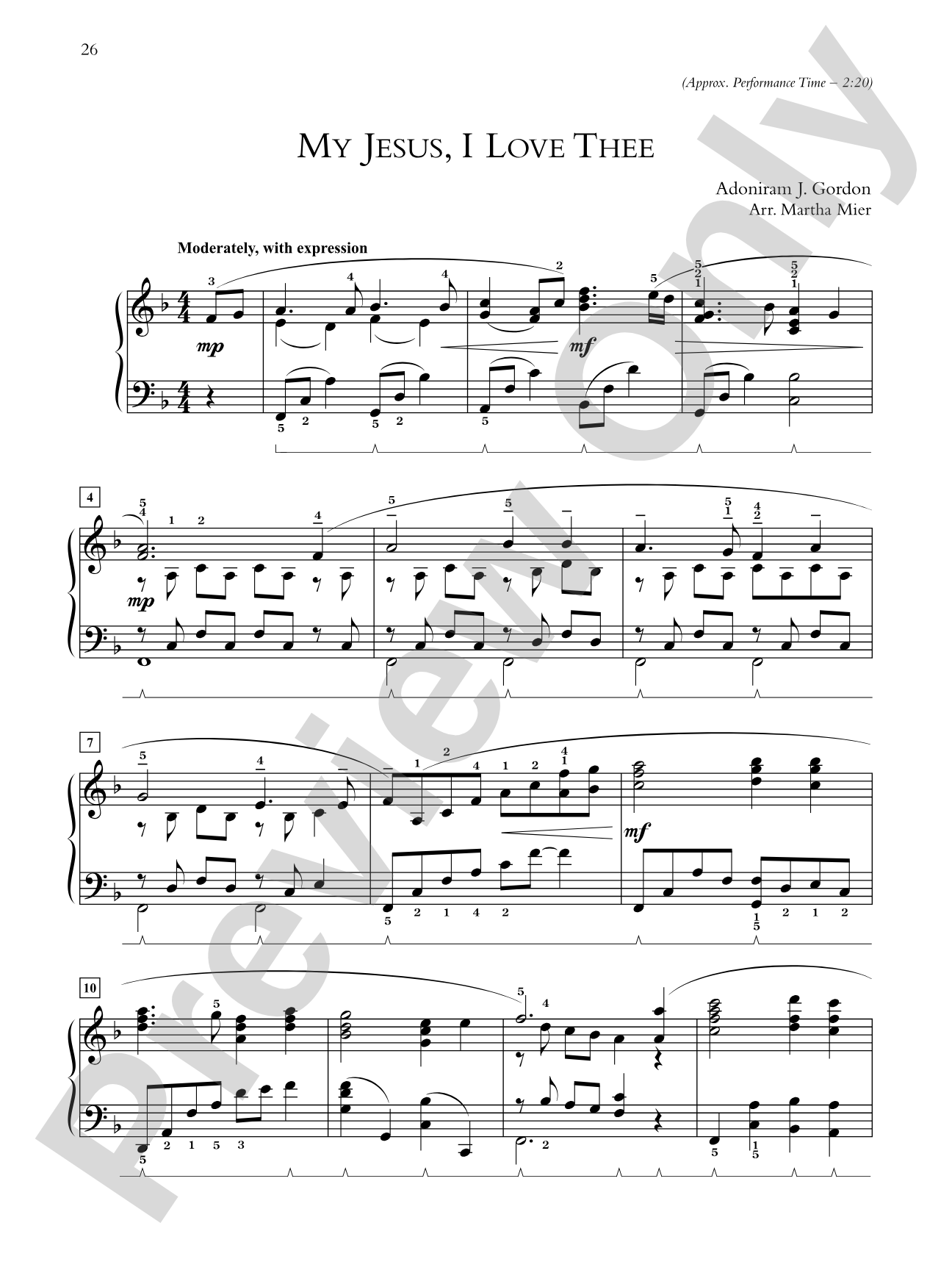

My Jesus, I Love Thee - Piano Solo: Piano Solo
12 Hymns of Grace and Reflection
Arranged by Martha Mier
Level: Late Intermediate / Early Advanced
Item: 00-PS-0017530
$4.99
Pickup currently not available
Related Items
Amazing Grace - Piano Solo: Piano Solo |
$4.99
|
View | |
His Eye Is on the Sparrow - Piano Solo: Piano Solo |
$4.99
|
View | |
In the Garden - Piano Solo: Piano Solo |
$4.99
|
View | |
It Is Well with My Soul - Piano Solo: Piano Solo |
$4.99
|
View | |
Jesus Loves Me - Piano Solo: Piano Solo |
$4.99
|
View | |
Joyful, Joyful, We Adore Thee - Piano Solo: Piano Solo |
$4.99
|
View | |
Morning Has Broken - Piano Solo: Piano Solo |
$4.99
|
View | |
Near to the Heart of God - Piano Solo: Piano Solo |
$4.99
|
View | |
This Is My Father's World - Piano Solo: Piano Solo |
$4.99
|
View | |
Turn Your Eyes upon Jesus - Piano Solo: Piano Solo |
$4.99
|
View | |
What a Friend We Have in Jesus - Piano Solo: Piano Solo |
$4.99
|
View | |
In the Light of His Glory: Piano Book |
$12.99
|
View |
Description
These heartfelt arrangements are some of Martha Mier's favorite hymns. Their warm melodies and rich harmonies will bring hope, solace, and the nearness of God to listeners and performers alike. To assist in planning, approximate performance times are included with each arrangement. Titles: Amazing Grace * His Eye Is on the Sparrow * In the Garden * It Is Well with My Soul * Jesus Loves Me * Joyful, Joyful, We Adore Thee * Morning Has Broken * My Jesus, I Love Thee * Near to the Heart of God * This Is My Father's World * Turn Your Eyes upon Jesus * What a Friend We Have in Jesus. A Federation Festivals 2024-2028 selection.


Discover MakeMusic Cloud: thousands of interactive titles your students can play along with today.
Sample Audio
No sample audio found.
Sample Video
No sample videos found.
Additional Details
Series:
Sacred Performer Collections
Publisher:
Alfred Music
Page Count:
40
SKU:
00-PS-0017530
More about this title
About the Composer: Adoniram J. Gordon
Adoniram J. Gordon (1836, 1895) was an American hymn writer and clergyman whose texts shaped congregational singing across Protestant churches. His lyrics combined doctrinal clarity with accessible melody, creating hymns designed for ordinary worshippers rather than trained singers. "My Jesus, I Love Thee" stands as his most enduring contribution to American sacred music, recorded countless times and sung in churches worldwide.
Why we love this
Martha Mier's arrangements honor the directness of these hymns while introducing pianistic texture that rewards disciplined practice. The collection moves beyond Sunday school simplicity; each piece unfolds with harmonic color and voice-leading that feels inevitable rather than showy. Pianists encounter genuine musical substance without losing the songs' spiritual clarity.
What to expect
Intimate and reflective. These arrangements create a chapel-like atmosphere that invites introspection, with warm harmonic textures that feel both familiar and newly discovered. The writing respects the hymns' origins while offering pianists the chance to inhabit them as serious musical material.
Who it's for
Late intermediate and early advanced pianists seeking substantial sacred repertoire that connects hymn tradition to concert settings. This collection also serves teachers looking to build students' interpretive skills through music with emotional and spiritual weight.
How to get the most out of it
- Let the melody sing through without rushes or dragging. These pieces live in their cadences and harmonic resolutions; respect the architecture by giving each phrase room to breathe.
- Explore dynamic shading across verses or sections. Rather than playing a hymn at one volume, use subtle crescendos and releases to draw listeners deeper into the text's emotional arc.
- Balance accompaniment texture with melody prominence. Mier's harmonies are rich enough to carry weight, but the tune must remain the focal point; adjust pedal and hand positioning to achieve this.
How to use it
Program one or two pieces in a recital focused on American sacred traditions or spiritual themes. The collection also works as a bridge between early intermediate repertoire and more complex concert music, allowing students to develop interpretive maturity within accessible material. Consider featuring selections at piano recitals, church services, or community events where hymn-based music serves programming goals.
Skills your students will build
- Voicing harmonies with clarity and balance across the keyboard
- Shaping long-line melody within hymn-based structures
- Using pedal strategically to enhance harmonic resonance without muddying texture
- Interpreting sacred music with appropriate restraint and expression
- Performing repertoire that connects personal musicianship to congregational traditions