
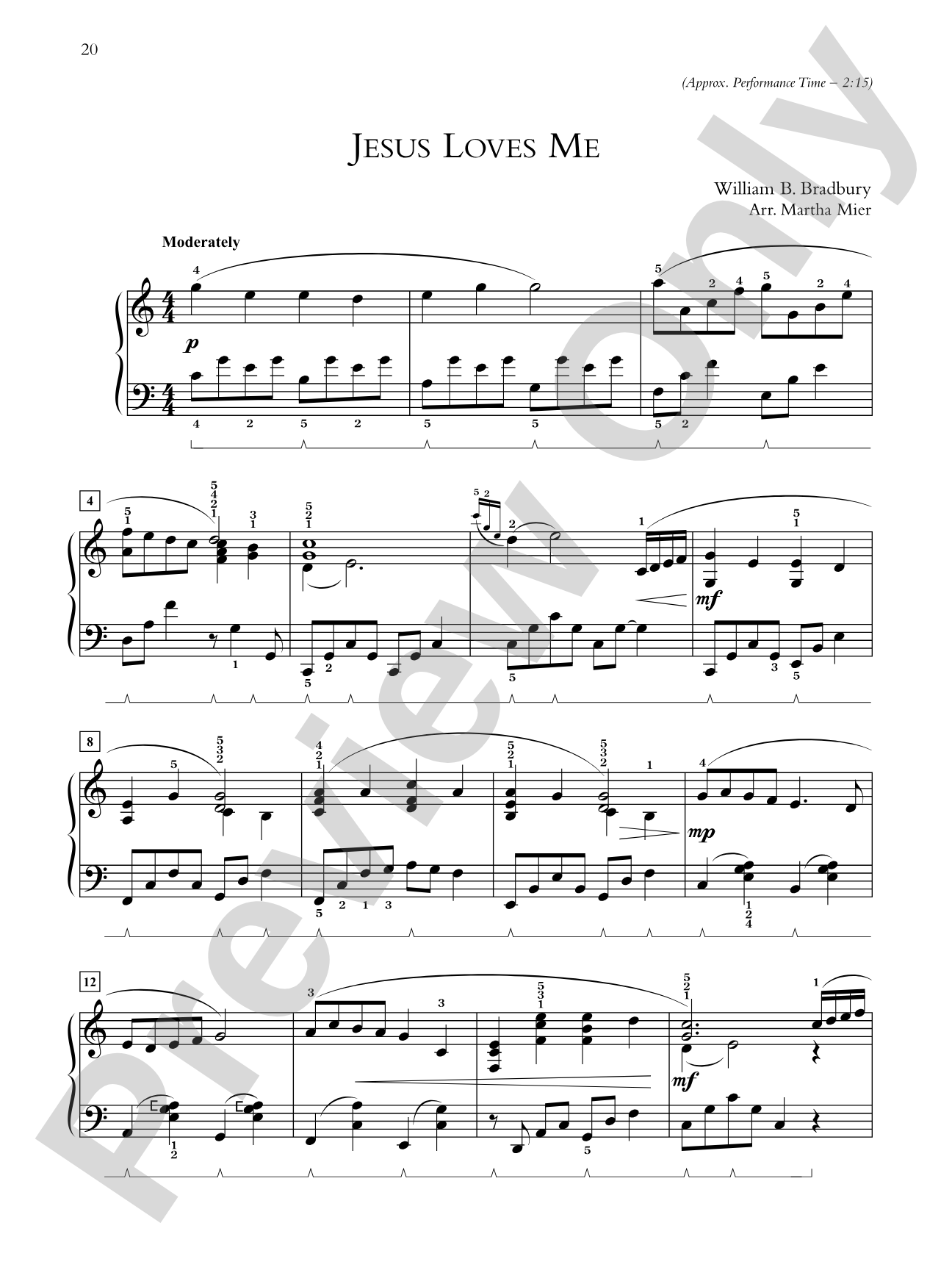

Jesus Loves Me - Piano Solo: Piano Solo
12 Hymns of Grace and Reflection
Arranged by Martha Mier
Level: Late Intermediate / Early Advanced
Item: 00-PS-0017527
$4.99
Pickup currently not available
Related Items
Amazing Grace - Piano Solo: Piano Solo |
$4.99
|
View | |
His Eye Is on the Sparrow - Piano Solo: Piano Solo |
$4.99
|
View | |
In the Garden - Piano Solo: Piano Solo |
$4.99
|
View | |
It Is Well with My Soul - Piano Solo: Piano Solo |
$4.99
|
View | |
Joyful, Joyful, We Adore Thee - Piano Solo: Piano Solo |
$4.99
|
View | |
Morning Has Broken - Piano Solo: Piano Solo |
$4.99
|
View | |
My Jesus, I Love Thee - Piano Solo: Piano Solo |
$4.99
|
View | |
Near to the Heart of God - Piano Solo: Piano Solo |
$4.99
|
View | |
This Is My Father's World - Piano Solo: Piano Solo |
$4.99
|
View | |
Turn Your Eyes upon Jesus - Piano Solo: Piano Solo |
$4.99
|
View | |
What a Friend We Have in Jesus - Piano Solo: Piano Solo |
$4.99
|
View | |
In the Light of His Glory: Piano Book |
$12.99
|
View |
Description
These heartfelt arrangements are some of Martha Mier's favorite hymns. Their warm melodies and rich harmonies will bring hope, solace, and the nearness of God to listeners and performers alike. To assist in planning, approximate performance times are included with each arrangement. Titles: Amazing Grace * His Eye Is on the Sparrow * In the Garden * It Is Well with My Soul * Jesus Loves Me * Joyful, Joyful, We Adore Thee * Morning Has Broken * My Jesus, I Love Thee * Near to the Heart of God * This Is My Father's World * Turn Your Eyes upon Jesus * What a Friend We Have in Jesus. A Federation Festivals 2024-2028 selection.


Discover MakeMusic Cloud: thousands of interactive titles your students can play along with today.
Sample Audio
No sample audio found.
Sample Video
No sample videos found.
Additional Details
Series:
Sacred Performer Collections
Publisher:
Alfred Music
Page Count:
40
SKU:
00-PS-0017527
More about this title
About the Composer: William B. Bradbury
William B. Bradbury (1816, 1868) was a prolific American composer, publisher, and music educator whose hymn melodies became foundational to American Protestant worship. He composed or arranged over 1,000 sacred works during his lifetime, many of which remain standards in churches and concert halls today. His gift for crafting memorable, singable melodies made him one of the most influential hymn writers of the nineteenth century.
Bradbury's approach to hymn composition prioritized accessibility without sacrificing musical integrity. He understood that a strong melody could carry a text effectively, and his settings demonstrate clear harmonic progressions that support both congregational singing and more sophisticated arrangements. His legacy extends far beyond the Sunday service; his melodies continue to anchor music education curricula and inspire arrangements across genres.
Why we love this
Martha Mier's arrangements prove that familiar hymns remain fertile ground for pianistic expression at the late intermediate level. She deepens these beloved melodies through harmonic richness and idiomatic voice leading that respects the original while revealing new layers. Students encounter repertoire with emotional weight and cultural significance, which transforms practice into something spiritually resonant rather than merely technical.
What to expect
Warm and contemplative, with moments of gentle exuberance. These arrangements wrap familiar melodies in harmonies that feel both supportive and enriching, creating an intimate conversation between player and listener. The music breathes deeply, inviting performers to inhabit each melody rather than simply execute it.
Who it's for
Late intermediate to early advanced pianists seeking repertoire that builds technique while offering immediate musical satisfaction. Music teachers and private lesson studios will find this collection particularly valuable for students ready to move beyond simplified arrangements but still developing independence in both hands.
How to get the most out of it
- Honor the hymn's original character by letting the melody sing through the texture. Even as harmonies become richer, the tune should feel like it's leading rather than competing with accompaniment figures.
- Shape phrases with gentle rubato and dynamic contour rather than rigid tempo. These arrangements invite musical breathing; use it.
- Explore the recorded accompaniment as a reference for pacing and character, but make your own interpretive choices about where to press forward or settle back.
- Pay attention to how Mier uses register and voicing changes to create variety across stanzas. Small shifts in hand position or harmonic color prevent the performance from flattening across 40 pages.
How to use it
This collection works beautifully as a year-long curriculum offering: introduce one or two arrangements each month during weekly lessons, allowing students to develop interpretive maturity over time. Alternatively, program selections during a winter concert that honors sacred music, or use individual pieces as recital options for students developing their solo performance experience. The variety within the collection also makes it ideal for community settings where pianists want meaningful material that connects with diverse audiences.
Skills your students will build
- Harmonic analysis and voice leading in hymn-style progressions
- Legato pedal technique and sustain control across longer phrases
- Dynamic shaping and rubato appropriate to lyrical, non-metric music
- Sight-reading fluency across 40 pages of similar-yet-distinct textures
- Interpretive decision-making with well-known melodies