

Lydia, the Tattooed Lady: SSA Choral Octavo
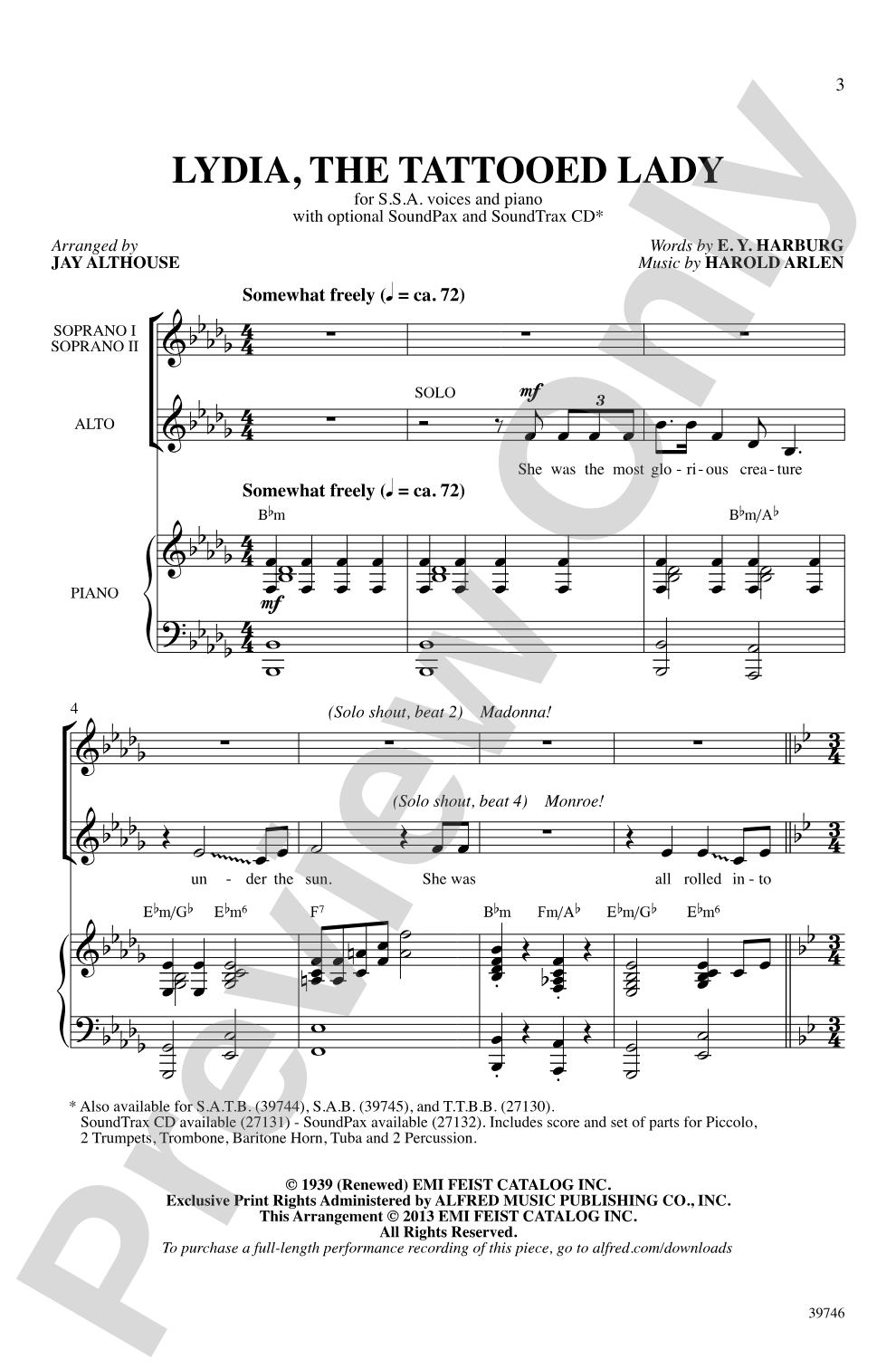
Music by Harold Arlen, lyric by E. Y. Harburg / arr. Jay Althouse
Item: 00-PO-0001583

$1.90
Minimum order quantity: 20 copies
One moment…
Related Items
Lydia, the Tattooed Lady: SoundTrax Digital Audio Download |
$27.99
|
View | |
Lydia, the Tattooed Lady: SATB Choral Octavo |
$1.90
|
View | |
Lydia, the Tattooed Lady: SAB Choral Octavo |
$1.90
|
View | |
Lydia, the Tattooed Lady: TTBB Choral Octavo |
$2.10
|
View | |
Lydia, the Tattooed Lady: Choral SoundPax |
$30.00
|
View | |
Lydia, the Tattooed Lady: SATB Choral Octavo |
$1.90
|
View | |
Lydia, the Tattooed Lady: SAB Choral Octavo |
$1.90
|
View | |
Lydia, the Tattooed Lady: SSA Choral Octavo |
$1.90
|
View | |
Lydia, the Tattooed Lady: TTBB Choral Octavo |
$2.10
|
View | |
Lydia, the Tattooed Lady: Choral Octavo SoundTrax CD |
$27.99
|
View | |
Lydia, the Tattooed Lady: Choral SoundPax |
$30.00
|
View |
Description
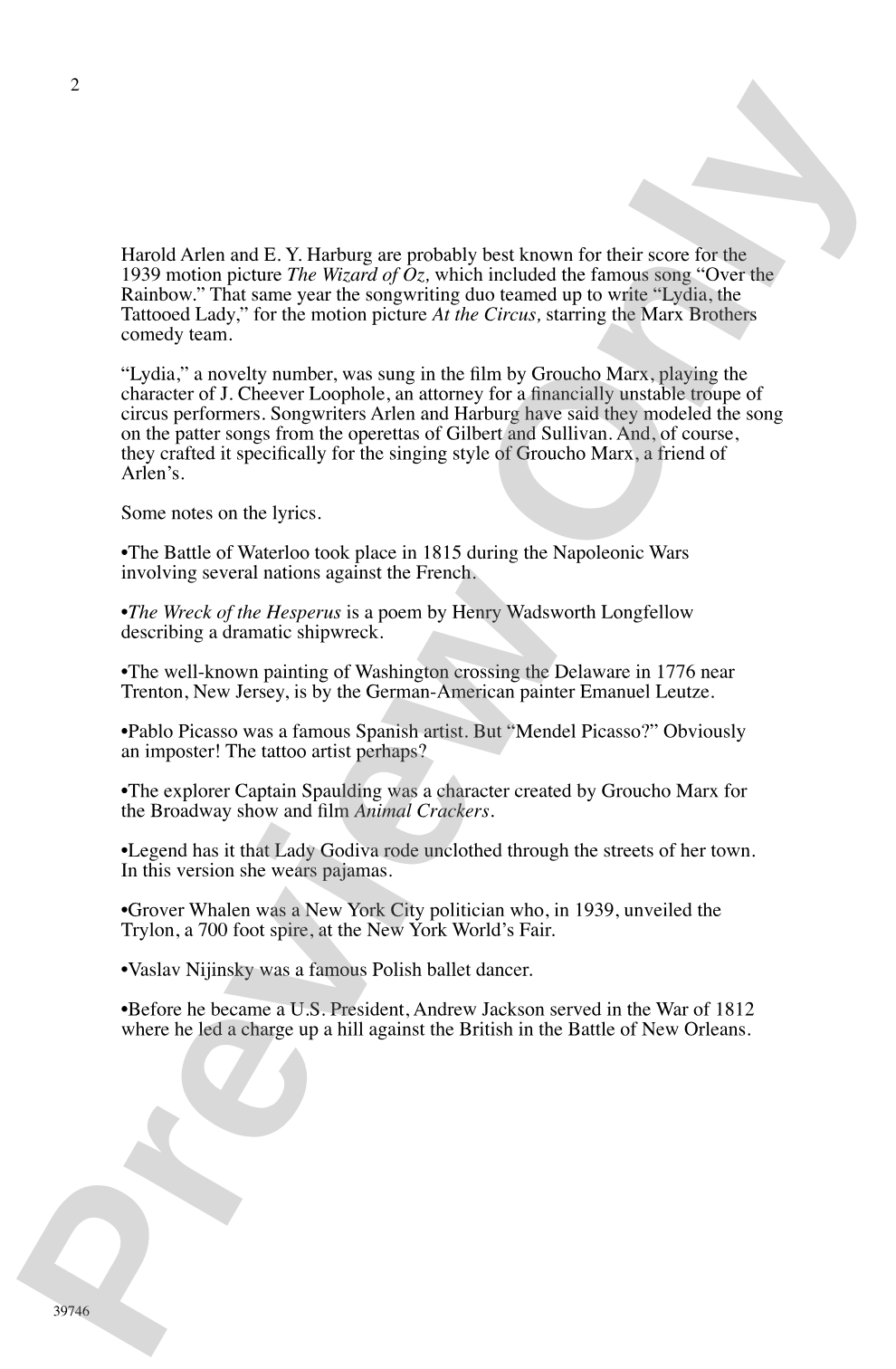
Would you believe this song was written by the same songwriting team that wrote The Wizard of Oz, Harold Arlen and E. Y. Harburg? It's true. They created this number for comedian Groucho Marx to sing in the 1939 movie At the Circus. It's a tour de force of comedic writing, in the style of Gilbert and Sullivan.


Don't just read it, hear it, play along with it, and watch your students grow with it. In MakeMusic Cloud, Lydia, the Tattooed Lady: SSA Choral Octavo comes alive with professional accompaniment, adjustable tempo, and built-in practice tools that turn solo practice into real progress.
Open in the Player
Jump straight in and assign it today.
Start Your Free Trial
Open this title and explore the full library in minutes.
Sample Audio
1
Audio File
--:--
0:00
0:00
Sample Video
No sample videos found.
Additional Details
Series:
Alfred Pop Choral Series
Publisher:
Alfred Music
Page Count:
12
SKU:
00-PO-0001583
More about this title
About the Composer: Harold Arlen
Harold Arlen (1905-1986) was an American composer whose gift for melody and theatrical instinct made him one of the most performed songwriters of the twentieth century. His partnership with lyricist E. Y. Harburg produced some of the most enduring songs in American musical theater, including the entire score for The Wizard of Oz. Arlen's harmonic sophistication and rhythmic inventiveness elevated popular song to an art form that bridges classical training and infectious accessibility, making his work invaluable in music education.
Arlen composed for Broadway, Hollywood, and the concert stage with equal facility. His melodies are singable yet harmonically sophisticated, his rhythms playful yet precise. For choral directors, Arlen's output offers material that engages singers of varying abilities while teaching genuine musicianship through music that students actually want to perform.
Why we love this
This octavo captures the wit and theatrical flair of the original without sacrificing vocal musicality. Jay Althouse's arrangement honors Arlen's gift for comedic timing while creating multiple entry points for singers to develop precision, blend, and the often-overlooked skill of sustaining humor across a full ensemble performance.
What to expect
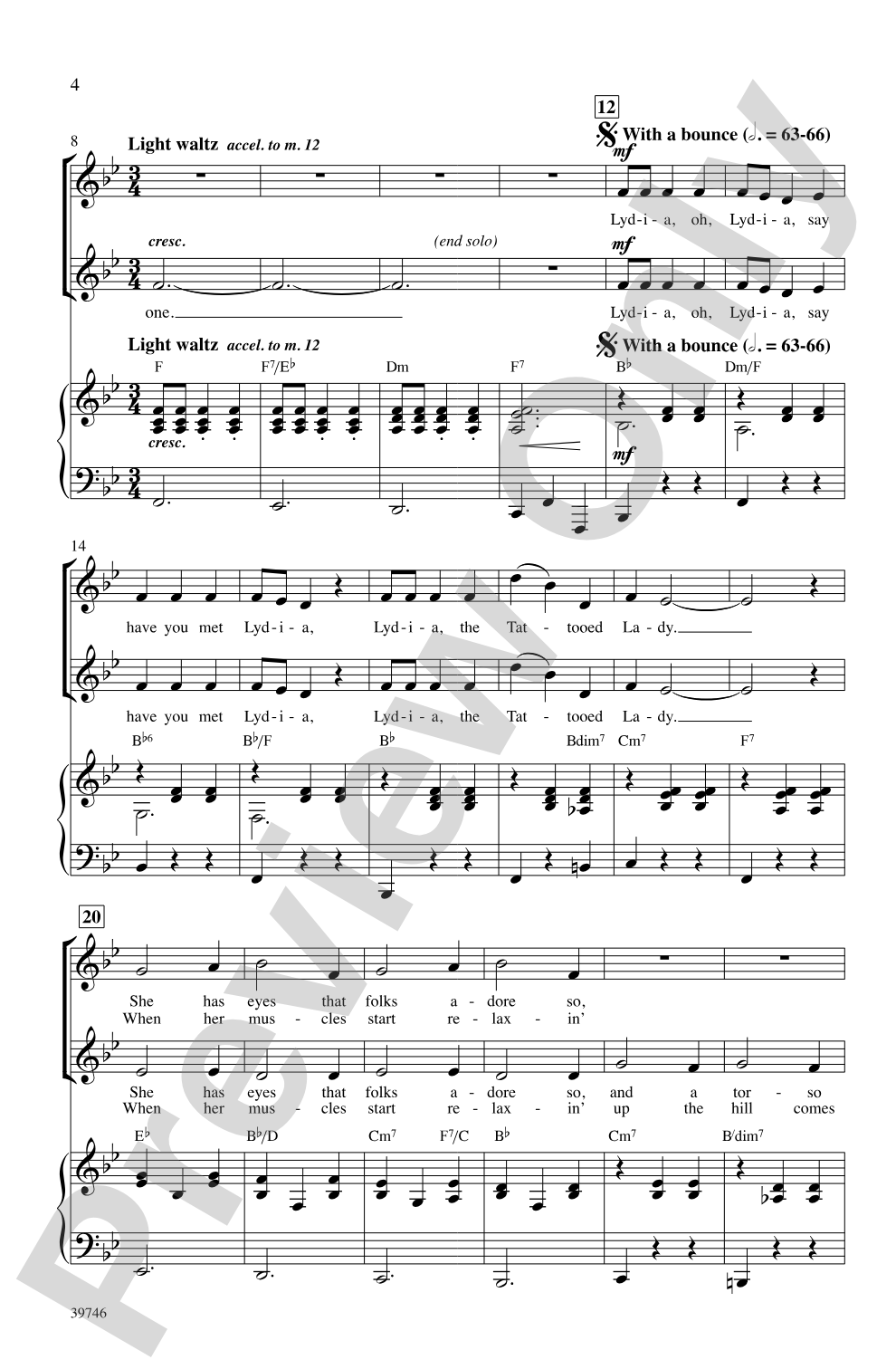
Vaudeville meets the choral stage. The music bristles with syncopation and rhythmic playfulness, supported by Arlen's rich harmonic language. There's a built-in wink in every phrase, an invitation to enjoy both the absurdity of the text and the real musicianship required to pull it off.
Who it's for
SSA choirs at the high school and college level will find the vocal writing accessible yet substantial. This works well for groups seeking repertoire that entertains audiences without compromising musical integrity, and for singers who thrive when combining solid technique with theatrical expression.
How to get the most out of it
- Treat the text articulation as part of the melodic line, not a distraction from it. The lyrical humor lands when syllables are placed with the same care you'd give to legit singing.
- Work the dynamics and tempo shifts in sections, not as a full ensemble at first. Let each voice part grasp its own contour before locking into the collective energy.
- Anchor the rhythm in the accompaniment or a solid bass line. The song's comedic timing depends on rhythmic confidence, not loose flexibility.
- Balance solo moments carefully. If this features a soloist or small group, ensure they're supported by the full SSA choir underneath, creating a platform rather than pushing them out front.
How to use it
This earns its place on a concert that celebrates the Great American Songbook or Broadway's golden age. It pairs naturally with other Arlen or Harburg material, or stand alone as an intermission piece that reminds audiences why they came. The 1939 movie connection offers a natural bridge between music and film history, especially in concerts exploring mid-century American musical theater.
Skills your students will build
- Rhythmic precision in syncopated, jazz-inflected passages
- Three-part SSA voicing and blend in homophonic and imitative sections
- Text clarity and diction while maintaining legit vocal tone
- Stylistic flexibility between lyrical singing and rhythmic precision
- Ensemble timing and musicality in comedic performance