
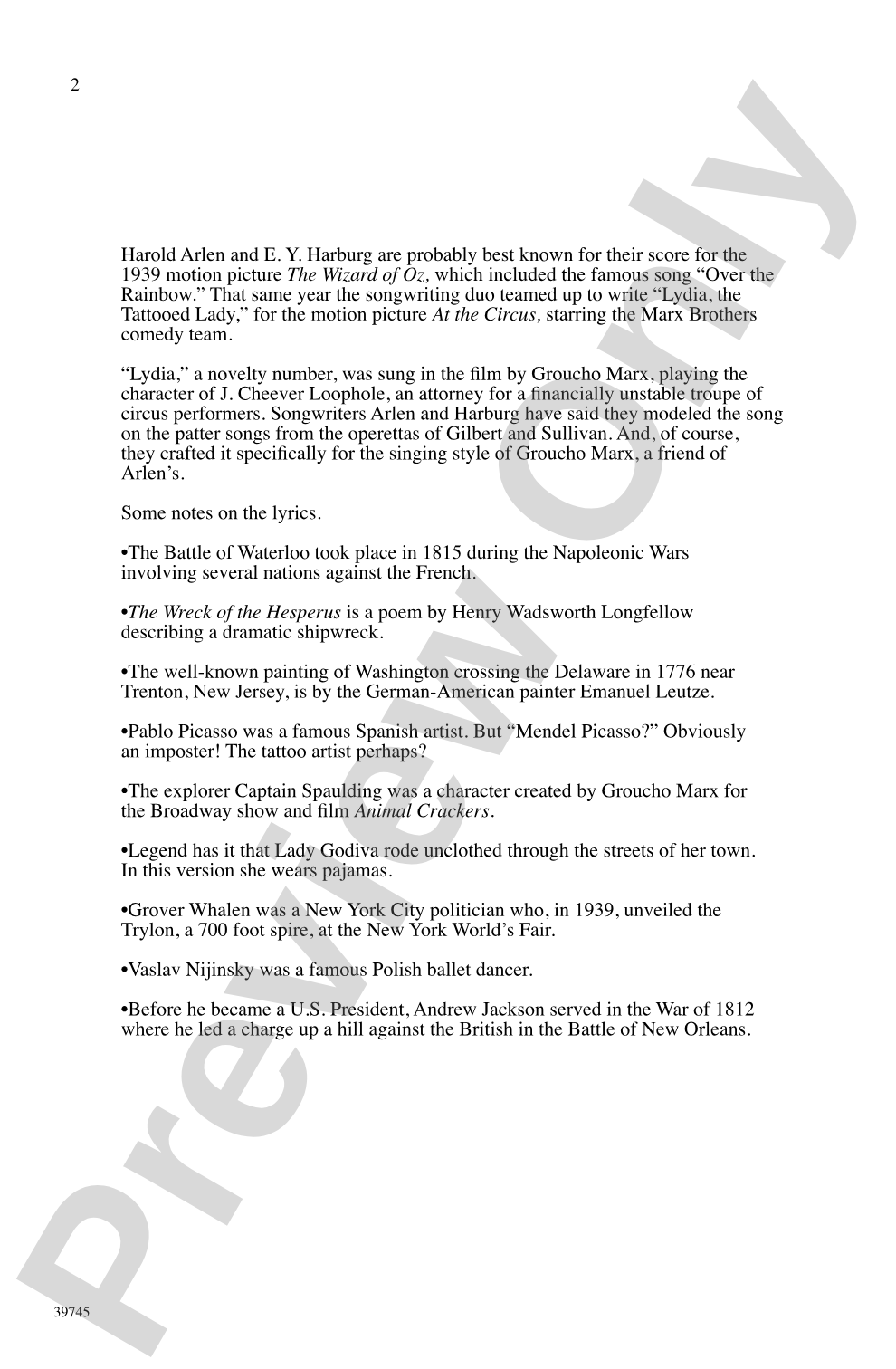
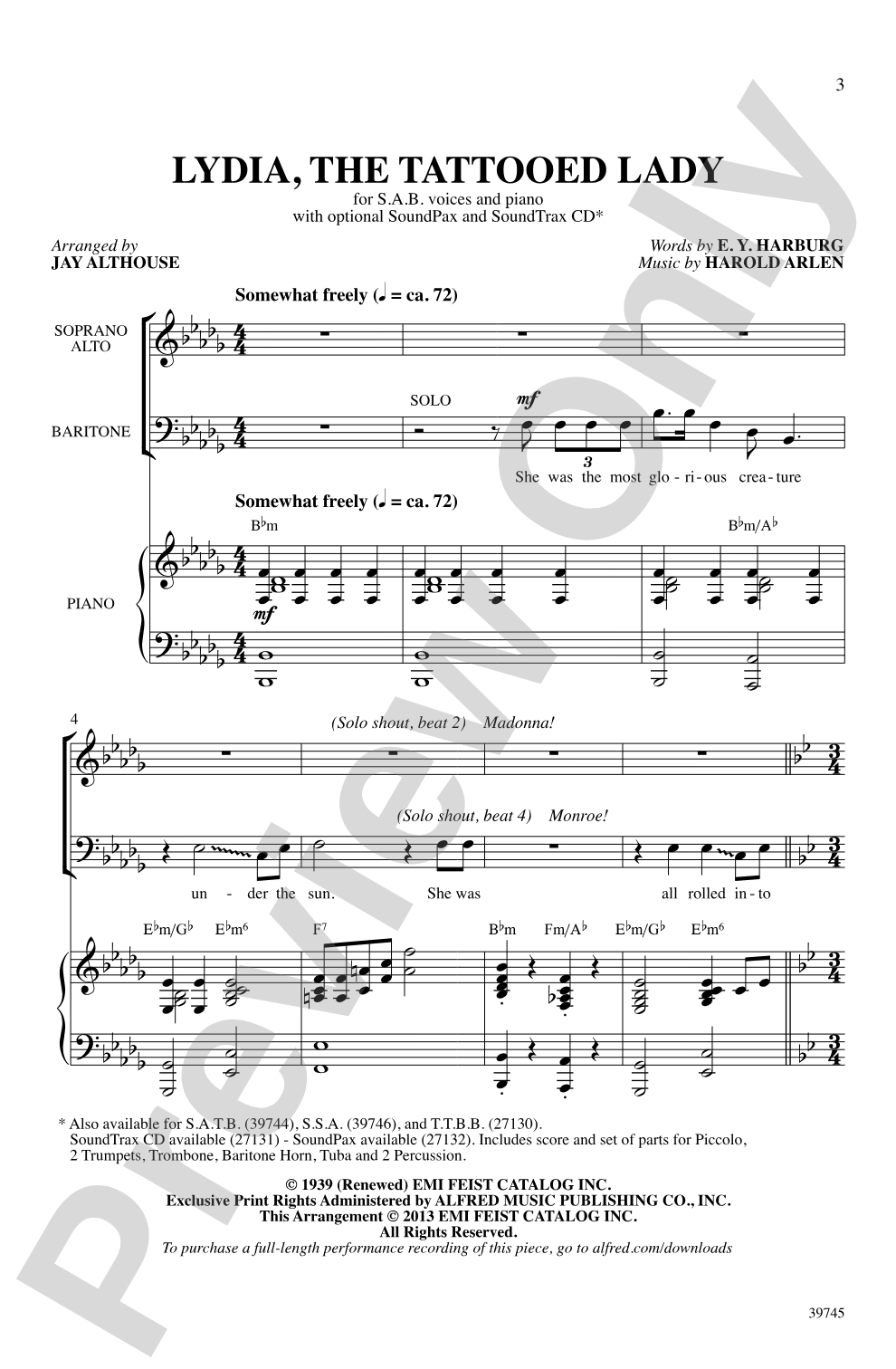
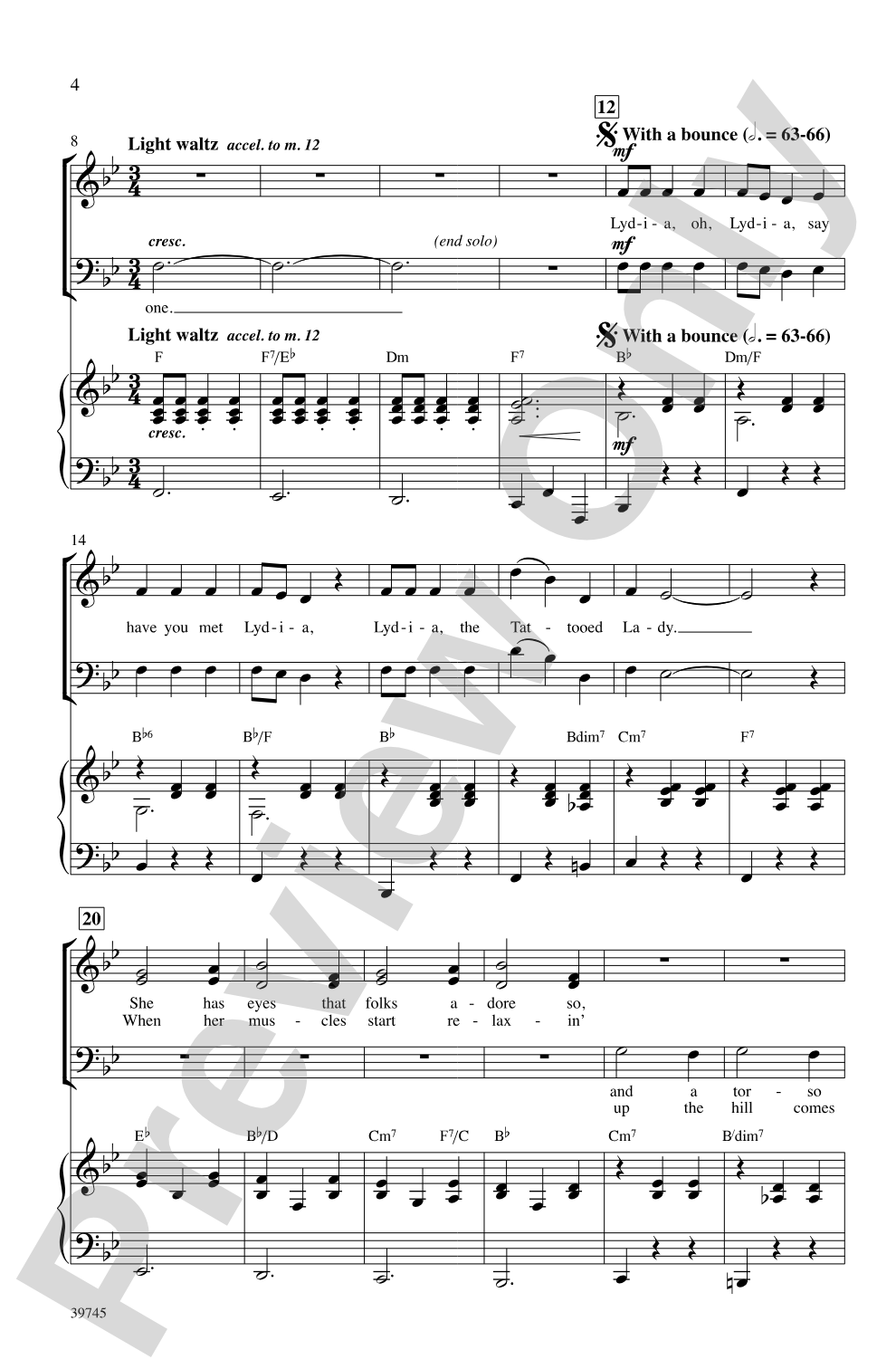

Lydia, the Tattooed Lady: SAB Choral Octavo
Music by Harold Arlen, lyric by E. Y. Harburg / arr. Jay Althouse
Item: 00-PO-0001582

$1.90
Minimum order quantity: 20 copies
One moment…
Related Items
Lydia, the Tattooed Lady: SoundTrax Digital Audio Download |
$27.99
|
View | |
Lydia, the Tattooed Lady: SATB Choral Octavo |
$1.90
|
View | |
Lydia, the Tattooed Lady: SSA Choral Octavo |
$1.90
|
View | |
Lydia, the Tattooed Lady: TTBB Choral Octavo |
$2.10
|
View | |
Lydia, the Tattooed Lady: Choral SoundPax |
$30.00
|
View | |
Lydia, the Tattooed Lady: SATB Choral Octavo |
$1.90
|
View | |
Lydia, the Tattooed Lady: SAB Choral Octavo |
$1.90
|
View | |
Lydia, the Tattooed Lady: SSA Choral Octavo |
$1.90
|
View | |
Lydia, the Tattooed Lady: TTBB Choral Octavo |
$2.10
|
View | |
Lydia, the Tattooed Lady: Choral Octavo SoundTrax CD |
$27.99
|
View | |
Lydia, the Tattooed Lady: Choral SoundPax |
$30.00
|
View |
Description
Would you believe this song was written by the same songwriting team that wrote The Wizard of Oz, Harold Arlen and E. Y. Harburg? It's true. They created this number for comedian Groucho Marx to sing in the 1939 movie At the Circus. It's a tour de force of comedic writing, in the style of Gilbert and Sullivan.


Don't just read it, hear it, play along with it, and watch your students grow with it. In MakeMusic Cloud, Lydia, the Tattooed Lady: SAB Choral Octavo comes alive with professional accompaniment, adjustable tempo, and built-in practice tools that turn solo practice into real progress.
Open in the Player
Jump straight in and assign it today.
Start Your Free Trial
Open this title and explore the full library in minutes.
Sample Audio
1
Audio File
--:--
0:00
0:00
Sample Video
No sample videos found.
Additional Details
Series:
Alfred Pop Choral Series
Publisher:
Alfred Music
Page Count:
12
SKU:
00-PO-0001582
More about this title
About the Composer: Harold Arlen
Harold Arlen (1905-1986) composed some of the most enduring American popular songs of the 20th century, working primarily in theater and film. His gift for melody and harmonic sophistication shaped the sound of the Great American Songbook, and his collaborations with lyricist E.Y. Harburg produced standards that remain central to vocal music education and performance.
Arlen's work demands singers who can balance theatrical character with musical craftsmanship. His melodies often contain unexpected intervallic leaps and chromatic turns that reward careful study, and his harmonic language influenced generations of composers and arrangers.
Why we love this
This arrangement captures the absurdist humor and rapid-fire lyrical wit of the original without demanding operatic voices. The SAB voicing makes the comedic storytelling accessible to mixed choirs at all levels, and Jay Althouse's setting preserves Arlen's sophisticated harmonic language while keeping the piece singable and fun.
What to expect
Playful and absurd, with a vaudeville spirit tempered by genuine musical sophistication. The piece sparkles with Arlen's trademark melodic inventiveness and unexpected harmonic turns, creating a comedy number that respects both the audience's intelligence and the singers' musical abilities.
Who it's for
Choirs seeking repertoire that engages audiences through humor and storytelling, and singers who enjoy theatrical performance and character work. This arrangement is ideal for intermediate to advanced SAB ensembles that can handle rhythmic precision and clear diction under tempo.
How to get the most out of it
- Clarify every word of the lyrics. The humor lands only if the audience hears Harburg's clever wordplay clearly; shape phrases so punchlines land without sacrificing musicality.
- Balance the three voices so no single part dominates. Arlen wrote this as an ensemble number, not a solo vehicle, and the charm emerges when all three parts blend as a unified group.
- Use the recorded accompaniment to lock the comedic rhythm. Groucho Marx's original delivery had impeccable timing, and matching that precision in your interpretation elevates the theatrical impact.
- Find the theatrical style without overdoing it. This is not patter-song parody; it's sophisticated comedy writing. Let the music and words do the heavy lifting rather than resorting to exaggerated character choices.
How to use it
Pair this with other theatrical repertoire from the Golden Age of American songwriting for a concert celebrating classic film and musical theater. It works especially well as a closer or penultimate number, where the comedic energy and audience familiarity send choirs and listeners out on a high note.
Skills your students will build
- Rapid-fire diction and text clarity at varied tempos
- Ensemble blend and balance across three distinct voice parts
- Rhythmic precision and comedic timing
- Interpretation of theatrical character within a choral context
- Navigation of chromatic and unexpected harmonic movement