
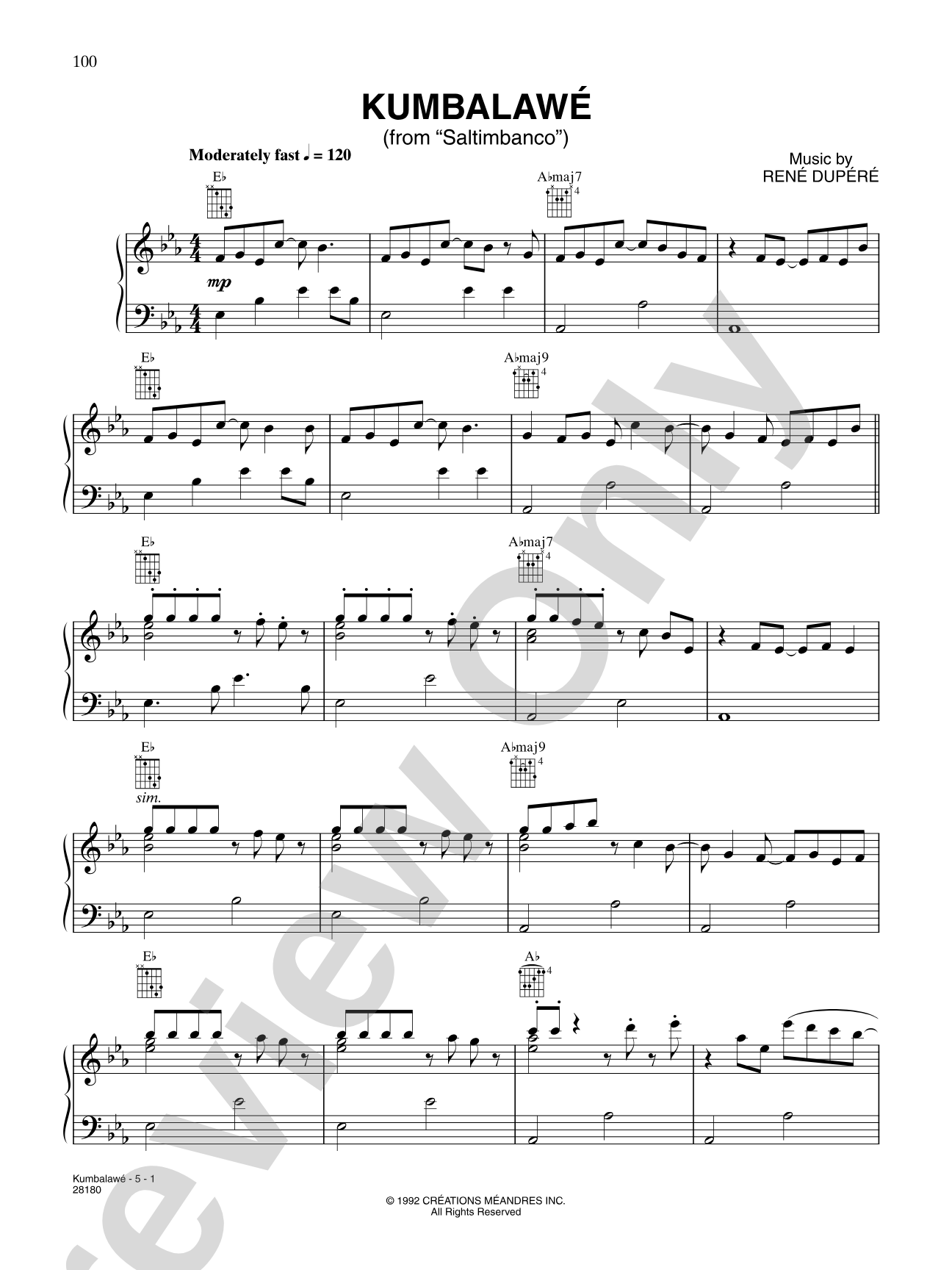

Kumbalawé (from “Cirque Du Soleil: Saltimbaco”): Piano/Vocal/Chords
Cirque du Soleil
Item: 00-PSP-000276
$4.99
Pickup currently not available
Related Items
Alegria (from "Cirque Du Soleil: Alegria"): Piano/Vocal/Chords |
$5.99
|
View | |
Alone (from “Cirque Du Soleil: Delirium”): Piano/Vocal/Chords |
$4.99
|
View | |
Gamelan (from "Cirque Du Soleil:O”): Piano/Vocal/Chords |
$5.99
|
View | |
If I Could Reach Your Heart (from “Cirque Du Soleil: Kà”): Piano/Vocal/Chords |
$4.99
|
View | |
Kunya Sobé (from "Cirque Du Soleil: Mystère"): Piano/Vocal/Chords |
$5.99
|
View | |
L’Innocent (from “Cirque Du Soleil: Kooza”): Piano/Vocal/Chords |
$5.99
|
View | |
Liama (from "Cirque Du Soleil: La Nouba"): Piano/Vocal/Chords |
$5.99
|
View | |
Love Dance (from “Cirque Du Soleil: Kà”): Piano/Vocal/Chords |
$4.99
|
View | |
Mio Bello Bello Amore (from "Cirque Du Soleil: Zumanity"): Piano/Vocal/Chords |
$4.99
|
View | |
Nostalgie (from "Cirque Du Soleil: O"): Piano/Vocal/Chords |
$4.99
|
View | |
O (from "Cirque Du Soleil: O"): Piano/Vocal/Chords |
$4.99
|
View | |
Ombra (from "Cirque Du Soleil: Dralion"): Piano/Vocal/Chords |
$9.99
|
View | |
Pageant (from “Cirque Du Soleil: Kà”): Piano/Vocal/Chords |
$4.99
|
View | |
Pokinoï (from "Cirque Du Soleil: Saltimbaco"): Piano/Vocal/Chords |
$5.99
|
View | |
Querer (from "Cirque Du Soleil: Alegria"): Piano/Vocal/Chords |
$4.99
|
View | |
Quidam (from "Cirque Du Soleil: Quidam"): Piano/Vocal/Chords |
$5.99
|
View | |
Time Flies (from “Cirque Du Soleil: Delirium”): Piano/Vocal/Chords |
$5.99
|
View | |
Triangle Tango (from "Cirque Du Soleil: Corteo"): Piano/Vocal/Chords |
$5.99
|
View |
Description
Cirque du Soleil, French for "Circus of the Sun," is a unique entertainment venture that has been thrilling audiences since its inception by two street performers over 20 years ago. Acts include a unique combination of individual storylines, dance and opera performances, contortionists, jugglers, trapeze artists and many other talented performers, all set to the tune of live music. While performances do not feature the animals typically found in a regular circus, the modern style of Cirque du Soleil has earned it recognition as one of the world's best circuses for their use of extreme creativity, talented performers, and their ability to constantly evolve shows to maintain their enthralling nature.
Alfred now introduces the music to some of Cirque du Soleil's most popular songs, derived from a variety of show soundtracks. Songs come complete with lyrics, melody line, and chord changes with professionally arranged piano accompaniment.
Titles: O (O) * Pageant (Kà) * Mio Bello Bello Amore (Zumanity: Another Side of Cirque du Soleil) * Kunya Sobé (Mystère Live) * If I Could Reach Your Heart (Kà) * Love Dance (Kà) * Nostalgie (O/Le Best of Collection) * Liama (La Nouba/Le Best of Collection) * L'Innocent (Kooza -- Coming Fall 2007) * Querer (Alegría) * Alegría (Alegría) * Pokinoi (Saltimbaco) * Triangle Tango (Coreto) * Kumbalawé (Saltimbaco) * Quidam (Quidam) * Ombra (Dralion/Le Best of Collection) * Gamelan (O/Le Best of Collection) * Let Me Fall (Quidam) * Alone (Delirium) * Time Flies (Delirium).


Alfred now introduces the music to some of Cirque du Soleil's most popular songs, derived from a variety of show soundtracks. Songs come complete with lyrics, melody line, and chord changes with professionally arranged piano accompaniment.
Titles: O (O) * Pageant (Kà) * Mio Bello Bello Amore (Zumanity: Another Side of Cirque du Soleil) * Kunya Sobé (Mystère Live) * If I Could Reach Your Heart (Kà) * Love Dance (Kà) * Nostalgie (O/Le Best of Collection) * Liama (La Nouba/Le Best of Collection) * L'Innocent (Kooza -- Coming Fall 2007) * Querer (Alegría) * Alegría (Alegría) * Pokinoi (Saltimbaco) * Triangle Tango (Coreto) * Kumbalawé (Saltimbaco) * Quidam (Quidam) * Ombra (Dralion/Le Best of Collection) * Gamelan (O/Le Best of Collection) * Let Me Fall (Quidam) * Alone (Delirium) * Time Flies (Delirium).
Kumbalawé (from “Cirque Du Soleil: Saltimbaco”): Piano/Vocal/Chords isn't in MakeMusic Cloud just yet...but it could be. Let us know you'd like to see it, and you'll help shape what comes next. In the meantime, start a free trial and dive into thousands of interactive titles your students can play along with today.
Request This Title
Tell us you want it.
Start Your Free Trial
Explore everything that's ready to play right now.
Sample Audio
No sample audio found.
Sample Video
No sample videos found.
Additional Details
Publisher:
Alfred Music
Page Count:
120
SKU:
00-PSP-000276
More about this title
About the Artist: Cirque Du Soleil
Cirque du Soleil emerged from the creative vision of two Montreal street performers in 1984 and has grown into a globally recognized entertainment phenomenon. The company's distinctive approach fuses circus arts, theater, dance, and live music into immersive spectacles that reject traditional animal-based performance in favor of human artistry, acrobatics, and innovative staging. Each show develops its own musical identity, with composers crafting scores that underscore the physical storytelling and emotional arcs of performers on stage.
For music educators and performers, Cirque du Soleil represents a modern fusion of theatrical music and world influences. The company's commitment to evolving its productions year after year has made its soundtracks valuable teaching tools for exploring contemporary composition, cross-cultural instrumentation, and the integration of music with physical performance.
Why we love this
This collection captures the theatrical energy and world-music sensibility that defines Cirque du Soleil's soundtracks. Offering 20 songs from different shows (including Saltimbaco, Kà, Alegría, and Quidam), it gives singers and pianist collaborators immediate access to material that ranges from rhythmically intricate to lyrically intimate, all arranged with professional accompaniment ready for performance or study.
What to expect
The music evokes wonder and spectacle. Rhythms draw from world percussion and contemporary pop influences, while orchestrations emphasize color and movement. Vocal lines range from soaring and operatic to rhythmically percussive, mirroring the physical diversity of the performers these songs accompany.
Who it's for
Singers preparing performance repertoire from contemporary theater, pianists developing collaborative skills with vocalists, and music students exploring how theatrical music integrates melody, harmony, and storytelling. Music teachers seeking material that bridges classical vocal study with modern entertainment contexts will find this collection particularly useful.
How to get the most out of it
- Study the show context for each song. Knowing whether a piece accompanies aerial acrobatics, comedy, or intimate character moments will inform your phrasing and dynamic choices.
- Pay close attention to the chord changes and use them as anchors for vocal phrasing. Cirque's harmonic language often includes unexpected shifts that create the theatrical color of each moment.
- Balance the melody line against the piano accompaniment texture. These arrangements are designed to support the singer without overshadowing; adjust dynamic balance in rehearsal based on your venue's acoustics.
How to use it
Feature individual selections in a musical theater or cabaret concert, grouping them thematically (songs from the same show, or pieces that share rhythmic or harmonic qualities) to create narrative flow. This collection also works well in a popular music or world music unit where students explore how contemporary composers blend theatrical storytelling with non-Western musical elements.
Skills your students will build
- Sight-reading chord symbols and realizing them on piano
- Collaborative singing and playing (balancing vocal melody with piano accompaniment)
- Interpreting rhythmic complexity drawn from world music traditions
- Understanding how harmonic language supports theatrical character and emotion
- Reading and performing music from contemporary theatrical sources