
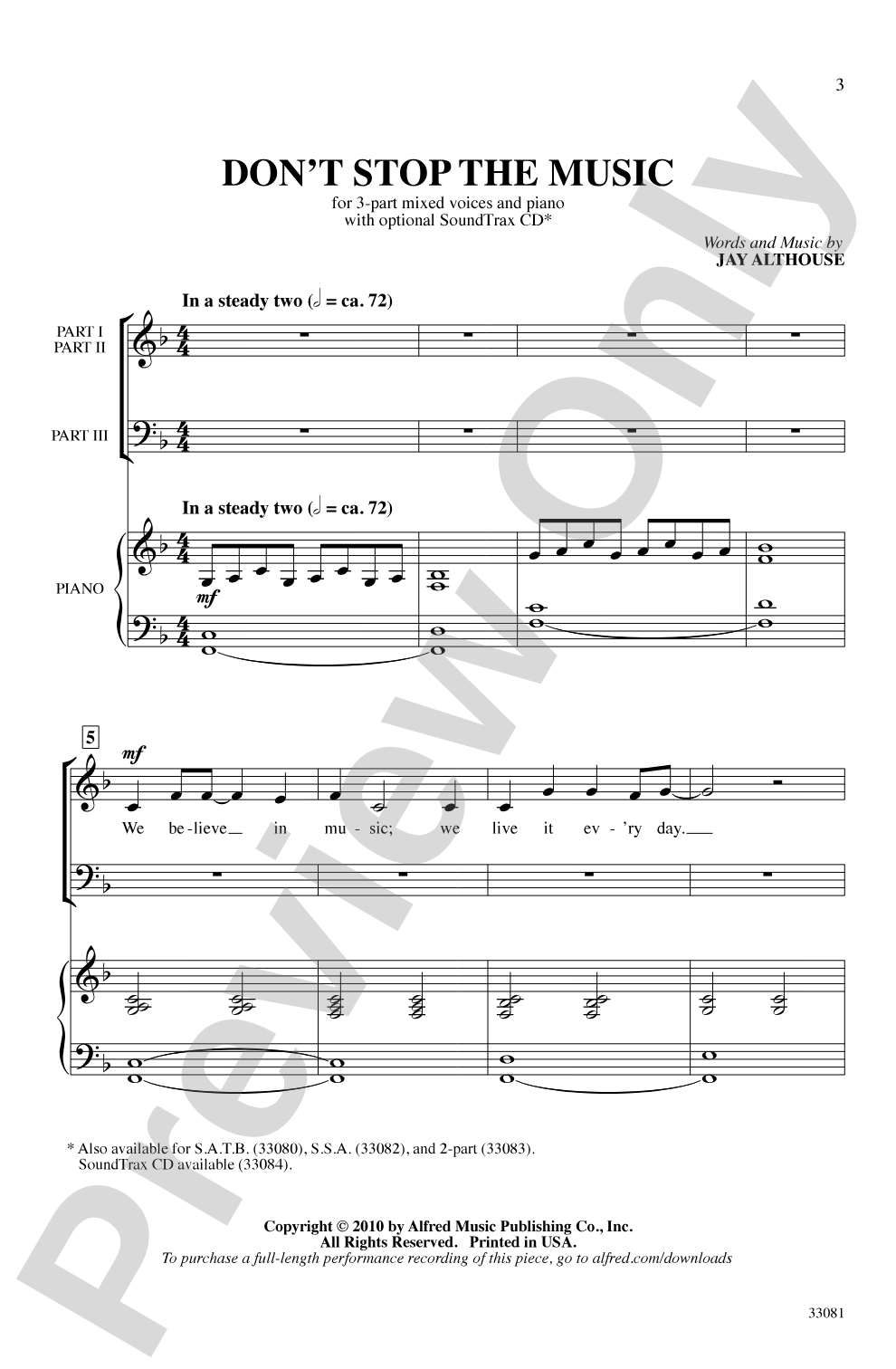
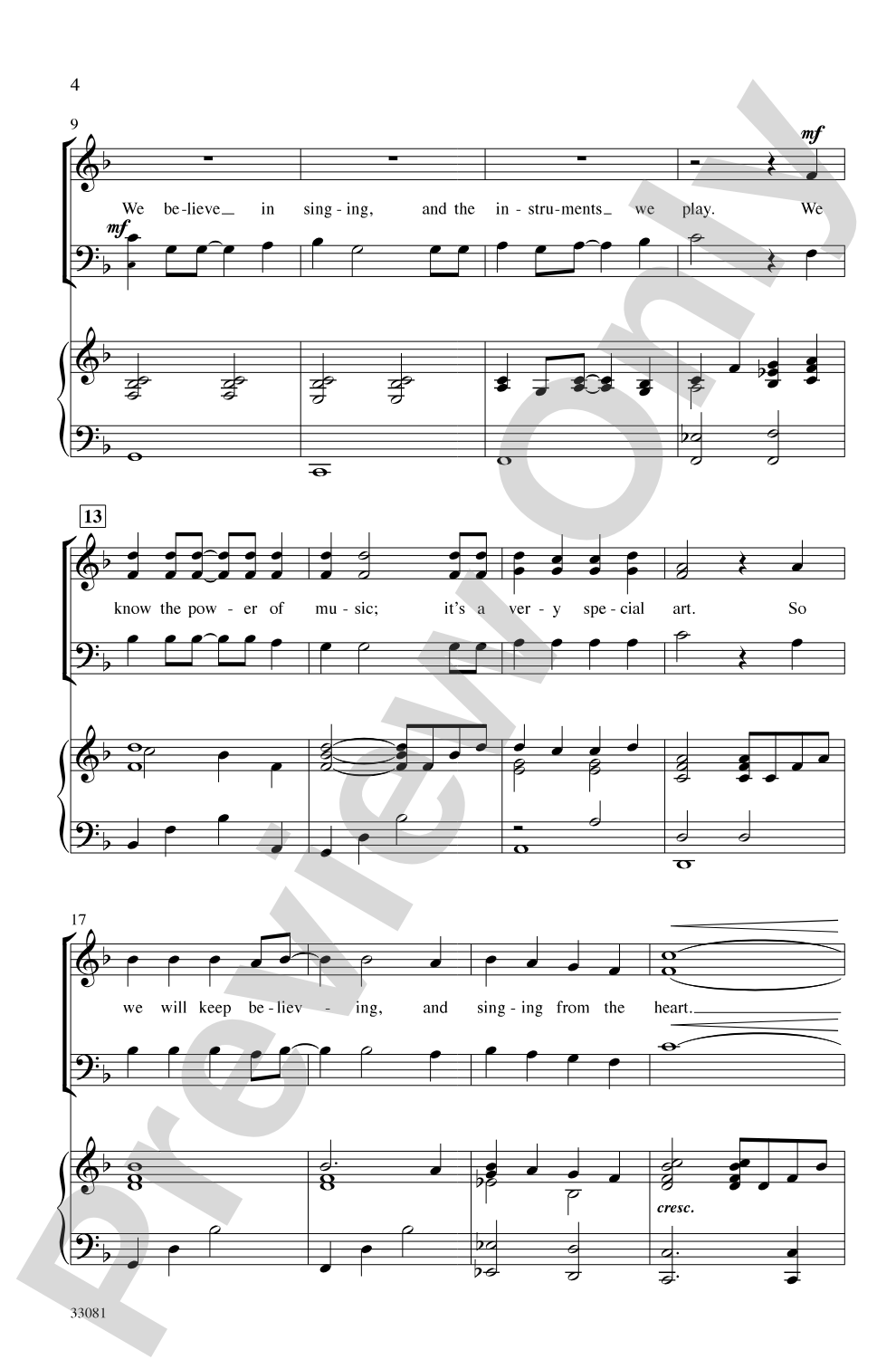

Don't Stop the Music: 3-Part Mixed Choral Octavo
Words and music by Jay Althouse
Item: 00-PO-0008023
$1.75
Minimum order quantity: 20 copies
Pickup currently not available
Related Items
Don't Stop the Music: SoundTrax Digital Audio Download |
$26.99
|
View | |
Don't Stop the Music: SATB Choral Octavo |
$1.75
|
View | |
Don't Stop the Music: SSA Choral Octavo |
$1.75
|
View | |
Don't Stop the Music: 2-Part Choral Octavo |
$1.75
|
View | |
Don't Stop the Music: SATB Choral Octavo |
$1.75
|
View | |
Don't Stop the Music: 3-Part Mixed Choral Octavo |
$1.75
|
View | |
Don't Stop the Music: SSA Choral Octavo |
$1.75
|
View | |
Don't Stop the Music: 2-Part Choral Octavo |
$1.75
|
View | |
Don't Stop the Music: Choral Octavo SoundTrax CD |
$26.99
|
View |
Description
An impassioned salute to the value of music in our lives. Perform it at any public or community event. Great concert opener, closer, or theme song.


Don't Stop the Music: 3-Part Mixed Choral Octavo isn't in MakeMusic Cloud just yet...but it could be. Let us know you'd like to see it, and you'll help shape what comes next. In the meantime, start a free trial and dive into thousands of interactive titles your students can play along with today.
Request This Title
Tell us you want it.
Start Your Free Trial
Explore everything that's ready to play right now.
Sample Audio
1
Audio File
--:--
0:00
0:00
Sample Video
No sample videos found.
Additional Details
Series:
Alfred Choral Designs
Publisher:
Alfred Music
Page Count:
12
SKU:
00-PO-0008023
More about this title
About the Composer: Jay Althouse

Jay Althouse studied music education and music at Indiana University of Pennsylvania, where he was later recognized as a Distinguished Alumni. He spent eight years working in rights and licensing at a major educational publisher and served on the Executive Board of the Music Publishers Association of America, giving him deep insight into what teachers and directors actually need in the rehearsal room.
With over 800 choral works in print, Althouse has established himself as a prolific voice in accessible choral composition. His catalog spans all proficiency levels and is performed internationally. He holds membership in ASCAP and is a regular recipient of their Special Award. Beyond composing, he has co-written children's musicals, edited vocal collections, authored the influential Complete Choral Warm-up Book with his wife Sally K. Albrecht, and contributed to music education resources used in classrooms nationwide. He serves on the National Advisory Board of the Folk Art Society of America.
Why we love this
Althouse writes with an ear for what choirs actually sound like at this level, avoiding the patronizing oversimplifications that can plague SAB repertoire. The text itself carries genuine weight without demanding gymnastic vocal lines, meaning your singers can focus on expressing real sentiment rather than survival. It's the rare piece that works equally well as a season opener, finale, or standalone community performance.
What to expect
A direct, unironic celebration of why music exists in the first place. The piece carries warmth and conviction without sentimentality, inviting singers and listeners alike to remember music's place in human connection and resilience.
Who it's for
Directors seeking concert repertoire that connects with audiences on an emotional level without requiring advanced vocal technique. This works for both school choirs and community ensembles where the message matters as much as the musicianship.
How to get the most out of it
- Resist the urge to rush the opening phrases. The piece builds its power through steady, deliberate pacing rather than bombast, so honor the architecture Althouse created.
- Balance the three parts carefully in the climactic sections. SAB writing can hide muddiness if the middle voice sits too low, so have your sopranos and altos listen actively for clarity.
- The recorded accompaniment is a strong tool for learning, but once your ensemble finds confidence, pull back the volume so singers hear each other making the harmonic statement.
How to use it
Open your spring concert with this piece to set an intentional tone about the work your choir does together. It also serves as a powerful thematic finale if your season has included diverse repertoire, or as a standalone feature at community events where you want the text to carry meaning beyond the music itself.
Skills your students will build
- Shaping lyrical phrases with expressive phrasing in a homophonic texture
- Balancing three-part harmony with attention to voice leading
- Projecting text with clarity while maintaining vocal blend
- Connecting musical interpretation to meaningful text