

¡Danza!: SATB Choral Octavo
Words by Susan Bentall Boersma, music by David Lantz III
Item: 00-PO-0000793
$1.75
Minimum order quantity: 20 copies
Pickup currently not available
Related Items
¡Danza!: SoundTrax Digital Audio Download |
$24.95
|
View | |
¡Danza!: SAB Choral Octavo |
$1.75
|
View | |
¡Danza!: 2-Part Choral Octavo |
$1.75
|
View | |
¡Danza!: Choral SoundPax |
$45.00
|
View | |
¡Danza!: SATB Choral Octavo |
$1.75
|
View | |
¡Danza!: SAB Choral Octavo |
$1.75
|
View | |
¡Danza!: 2-Part Choral Octavo |
$1.75
|
View | |
¡Danza!: Choral Octavo SoundTrax CD |
$24.95
|
View | |
¡Danza!: Choral SoundPax |
$45.00
|
View |
Description
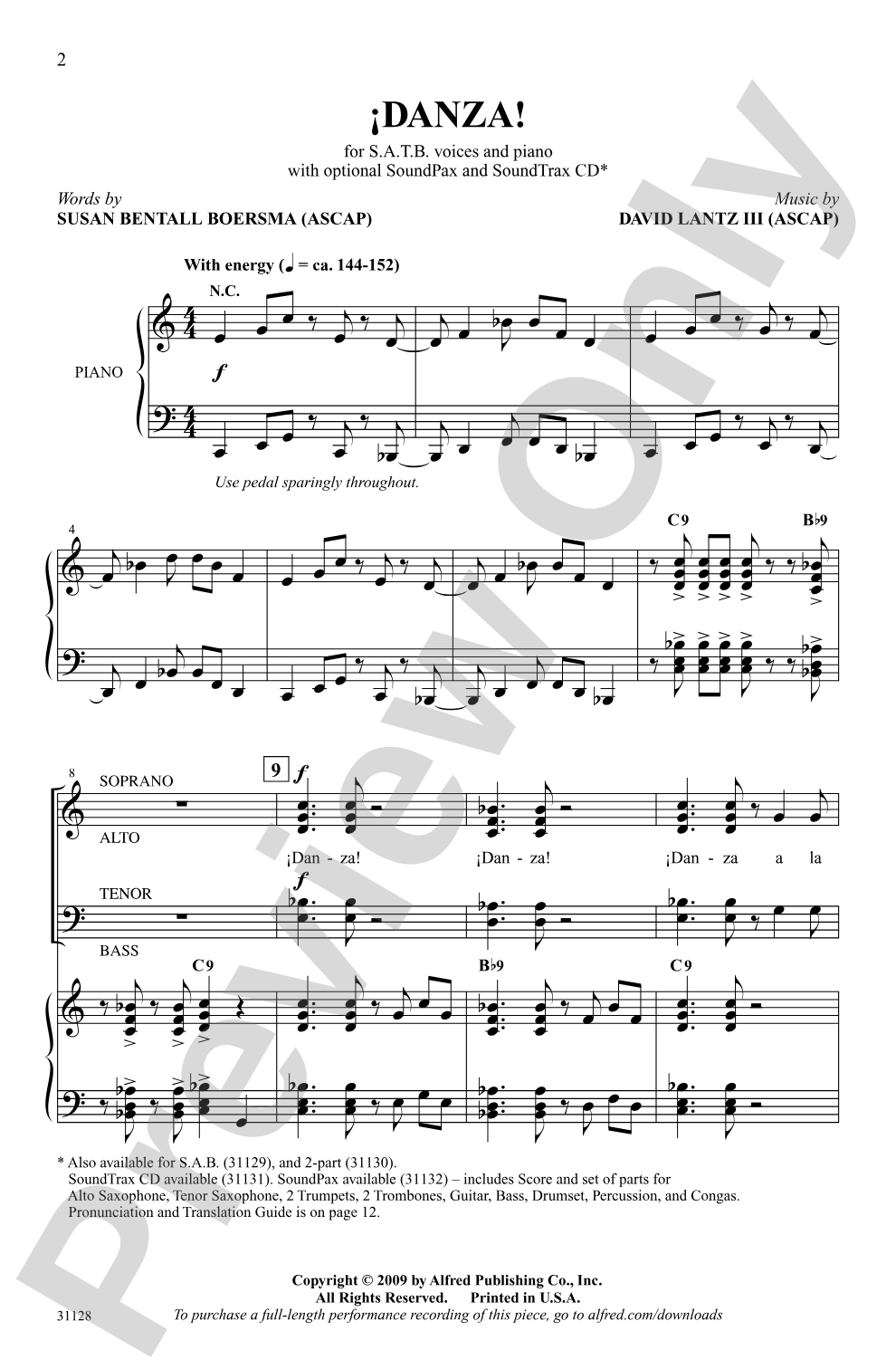
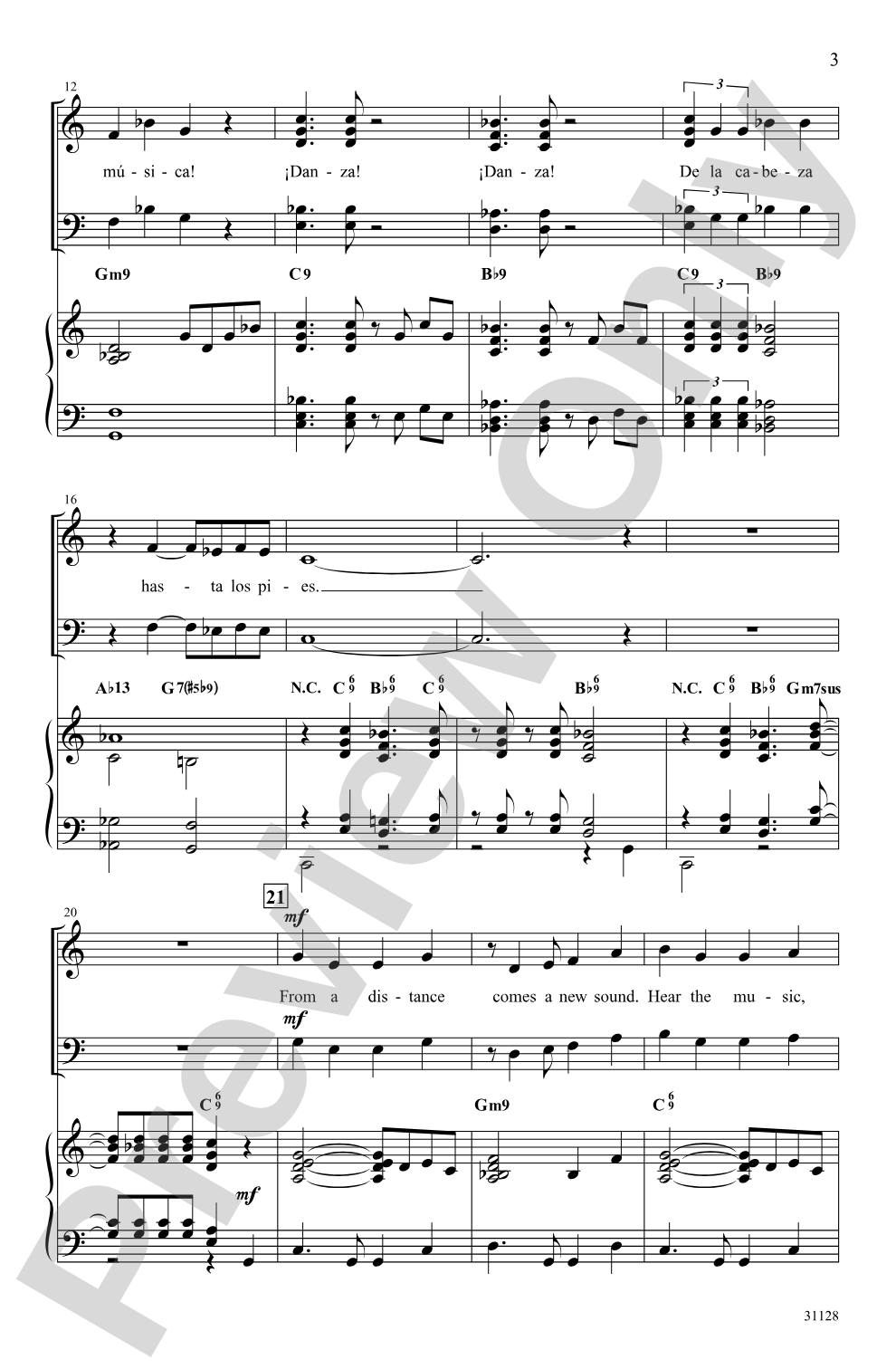
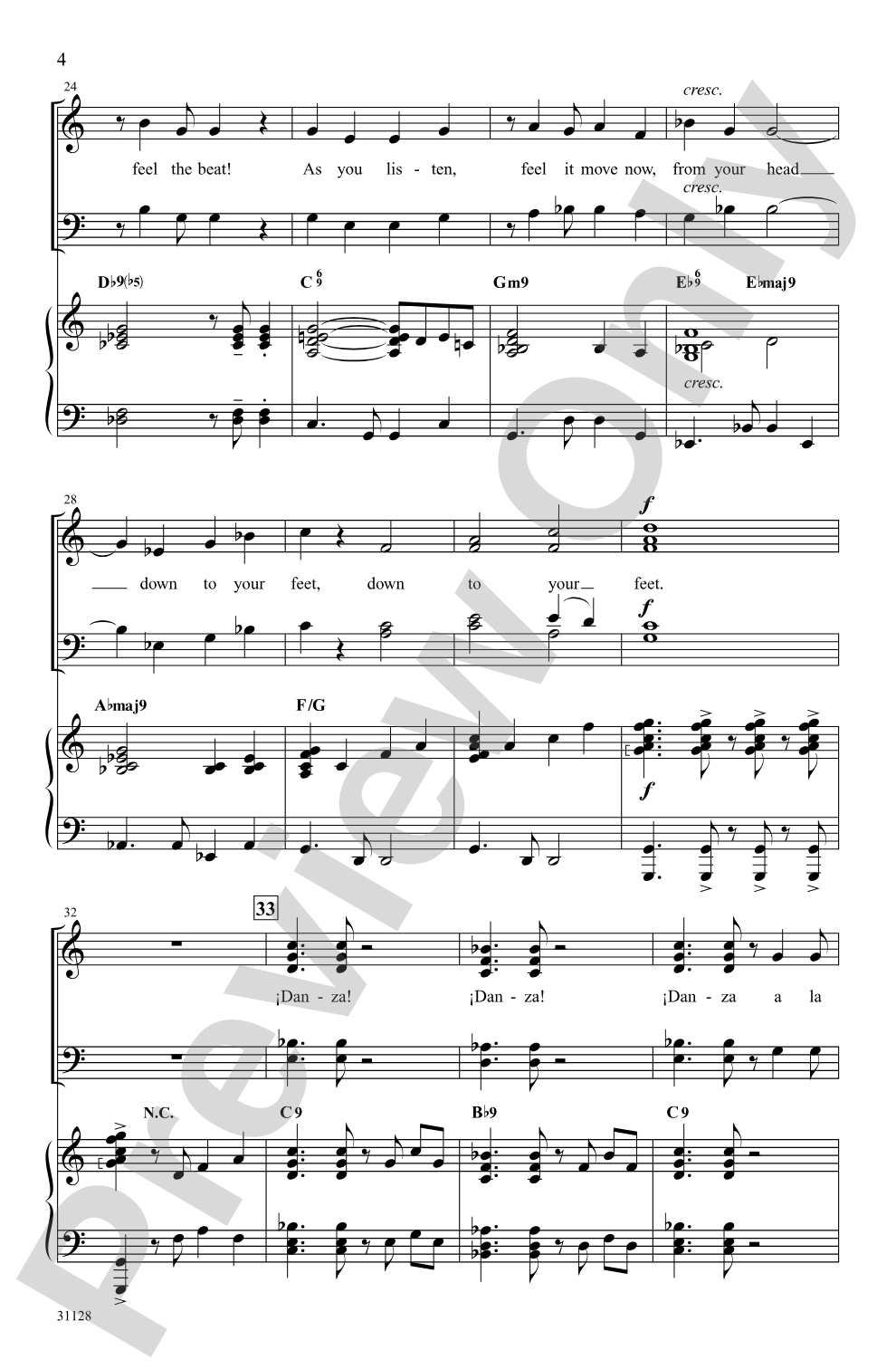
This lively song features equal parts English and Spanish text, telling you to "dance . . . from your head down to your feet." And that's exactly what you'll want to do when performing the infectious Latin rhythms and the fresh contemporary harmonies. Sizzles and grows to the end. Featured on the Danza! Movement DVD (00-31225).


¡Danza!: SATB Choral Octavo isn't in MakeMusic Cloud just yet...but it could be. Let us know you'd like to see it, and you'll help shape what comes next. In the meantime, start a free trial and dive into thousands of interactive titles your students can play along with today.
Request This Title
Tell us you want it.
Start Your Free Trial
Explore everything that's ready to play right now.
Sample Audio
1
Audio File
--:--
0:00
0:00
Sample Video
No sample videos found.
Additional Details
Series:
Alfred Choral Designs
Publisher:
Alfred Music
Page Count:
12
SKU:
00-PO-0000793
More about this title
About the Composer: David Lantz
David Lantz is a composer and arranger whose work spans choral, instrumental, and educational music. Known for writing accessible yet musically substantial pieces, Lantz has developed a catalog that appeals to student ensembles and professional choirs alike. His arrangements and original compositions frequently incorporate world music idioms and contemporary harmonic language, making his work popular in schools seeking repertoire that connects to diverse cultural traditions.
Lantz's educational background and experience in music publishing have shaped his distinctive approach to ensemble writing. His pieces balance technical clarity with expressive depth, allowing singers at various levels to find engagement and growth within the material.
Why we love this
The bilingual text and Latin rhythmic energy create an immediate sense of celebration that translates across skill levels and cultural contexts. Singers connect to the choreographic possibility (movement and staging are built into the design) rather than viewing the music as purely notational, making rehearsal feel like creative collaboration. The piece sizzles rhythmically but remains singable, never sacrificing musical substance for novelty.
What to expect
¡Danza! radiates infectious joy and forward momentum. The Latin rhythms pulse underneath contemporary harmonies, creating a sound that feels both rooted and modern. As the piece builds, energy accumulates steadily, pulling singers and audiences into the celebratory spirit of the text.
Who it's for
This works well for middle school, high school, and young adult choirs seeking uplifting repertoire with cultural relevance and kinetic appeal. It suits directors looking for pieces that feel fresh and contemporary while remaining technically accessible to developing singers.
How to get the most out of it
- Keep the Latin rhythms crisp and consistent; the percussion and instrumental parts (available separately) anchor the groove, so lock your pulse early in rehearsals and resist the urge to slow down during held notes.
- Balance the English and Spanish text equally. Neither language should feel translated or secondary; treat them as complementary voices telling one cohesive message.
- Layer in the movement gradually. Blocking needn't be complex to be effective; even small choreography (head, shoulders, hips, feet) reinforces the text and energizes the singers.
- The contemporary harmonies require clarity in voice leading; blend is less important here than precision in part definition, especially as the piece grows toward its final climax.
How to use it
Program this as an opener or mid-concert energizer to shift mood and engage audiences who respond to rhythmic, kinetic music. It pairs well alongside other world music or cultural celebration pieces in a thematic concert. The movement element makes it memorable in recordings and livestreams, where choir performance benefits from visible engagement.
Skills your students will build
- Maintaining steady Latin rhythms against contemporary harmonic movement
- Singing in English and Spanish with equal fluency and clarity
- Coordinating vocal performance with choreographed movement
- Voice leading in contemporary chord progressions
- Building ensemble energy through dynamic growth and accumulation