
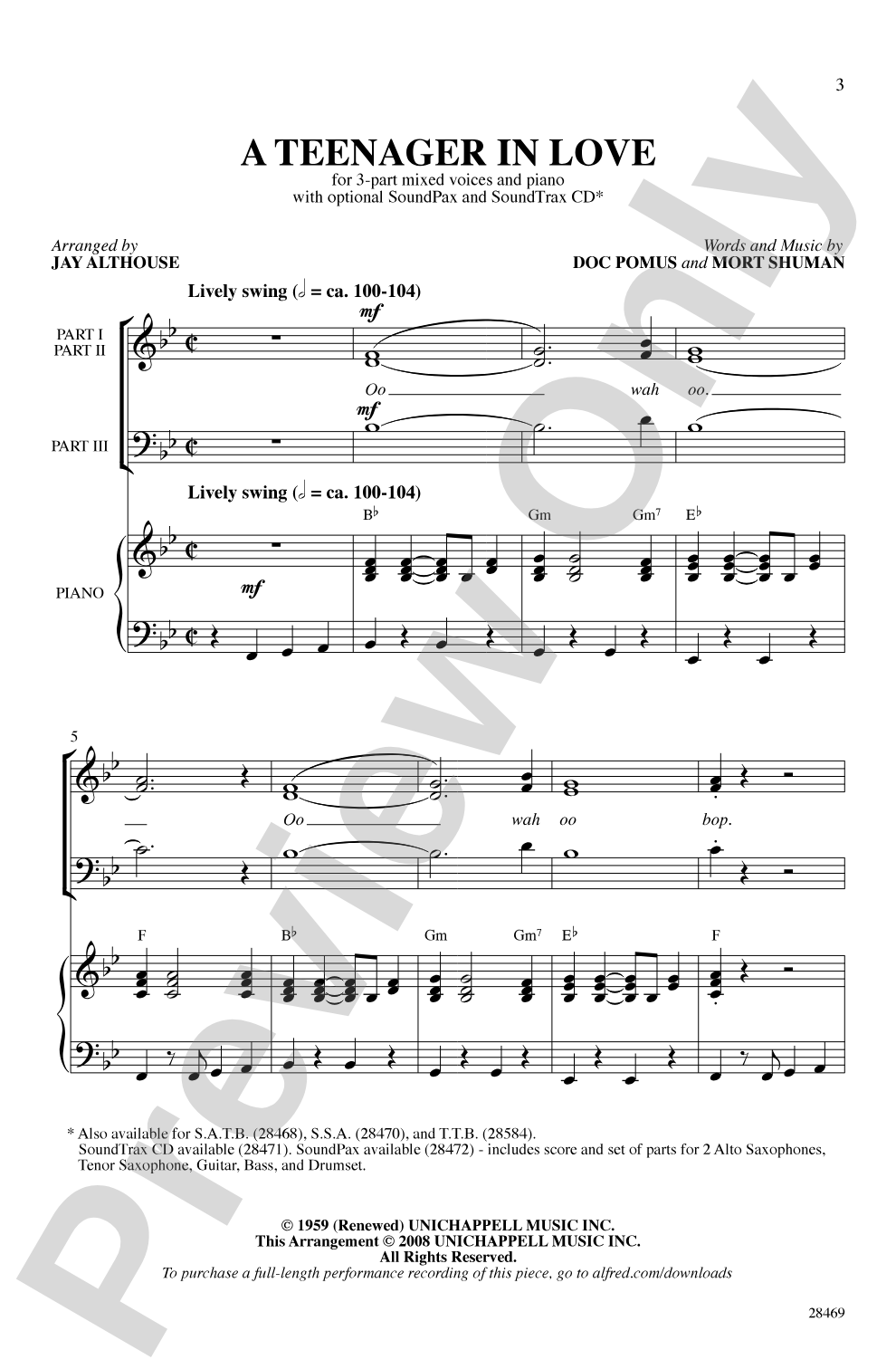
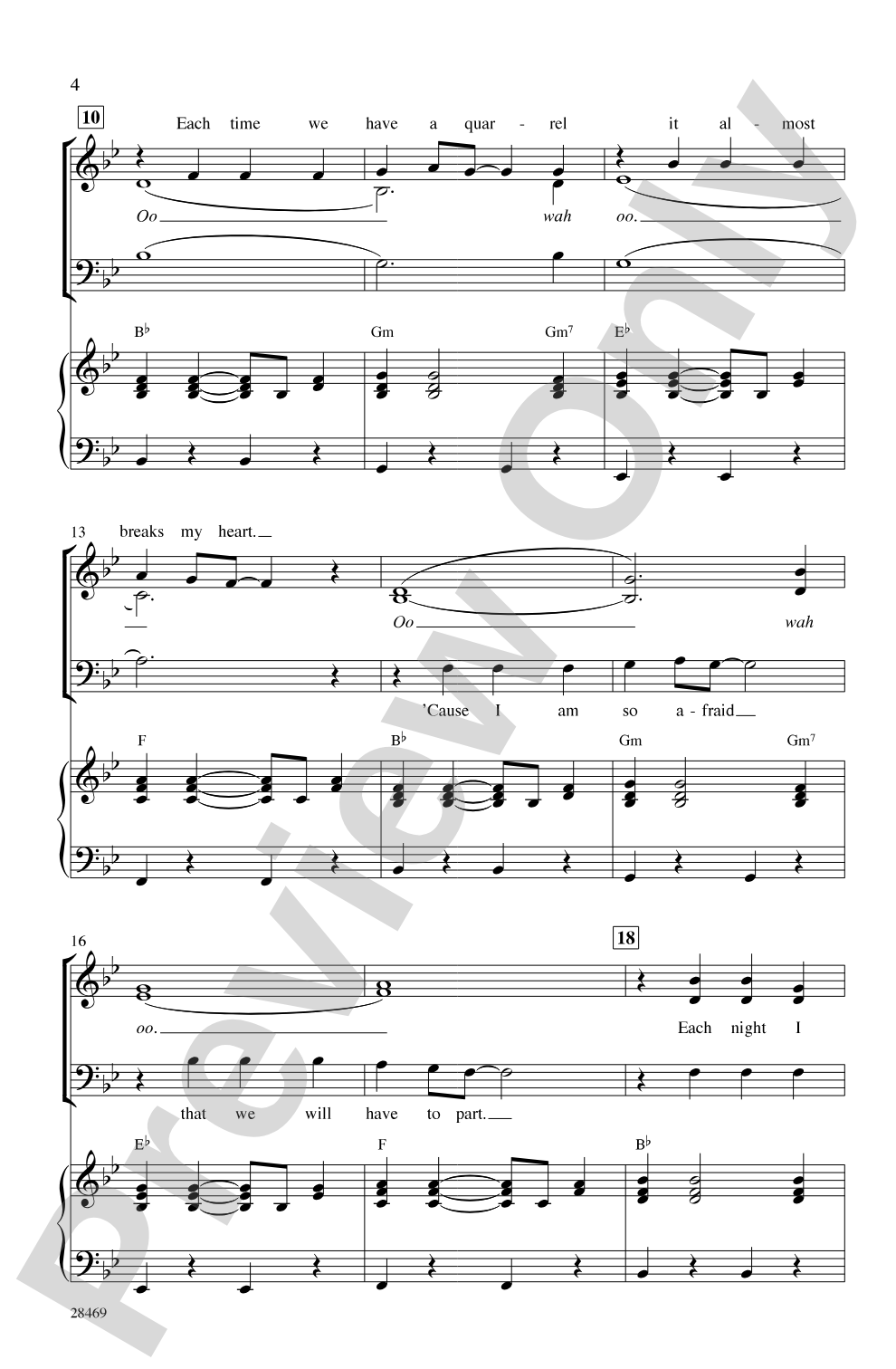

A Teenager in Love: 3-Part Mixed Choral Octavo
Words and music by Doc Pomus and Mort Shuman / arr. Jay Althouse
Item: 00-PO-0007983
$1.85
Minimum order quantity: 20 copies
Pickup currently not available
Related Items
A Teenager in Love: SoundTrax Digital Audio Download |
$27.99
|
View | |
A Teenager in Love: SATB Choral Octavo |
$2.25
|
View | |
A Teenager in Love: Choral SoundPax |
$25.00
|
View | |
A Teenager in Love: SATB Choral Octavo |
$2.25
|
View | |
A Teenager in Love: 3-Part Mixed Choral Octavo |
$1.85
|
View | |
A Teenager in Love: SSA Choral Octavo |
$1.85
|
View | |
A Teenager in Love: TTB Choral Octavo |
$1.85
|
View | |
A Teenager in Love: Choral Octavo SoundTrax CD |
$27.99
|
View | |
A Teenager in Love: Choral SoundPax |
$25.00
|
View |
Description
Oh the heartache! "Why must I be a teenager in love?" It's a musical question from the sock hop days of the fabulous '50s. The jitterbug-style arrangement is lively and fresh, yet captures the feel of a more innocent era.


A Teenager in Love: 3-Part Mixed Choral Octavo isn't in MakeMusic Cloud just yet...but it could be. Let us know you'd like to see it, and you'll help shape what comes next. In the meantime, start a free trial and dive into thousands of interactive titles your students can play along with today.
Request This Title
Tell us you want it.
Start Your Free Trial
Explore everything that's ready to play right now.
Sample Audio
1
Audio File
--:--
0:00
0:00
Sample Video
No sample videos found.
Additional Details
Series:
Alfred Pop Choral Series
Publisher:
Alfred Music
Page Count:
12
SKU:
00-PO-0007983
More about this title
About the Composer: Doc Pomus
Doc Pomus stands as one of the most prolific songwriters of the 1950s, crafting hits that defined the early rock and roll era alongside his writing partner Mort Shuman. His gift for capturing teenage emotion with humor and directness made songs like "A Teenager in Love" resonate across generations. Pomus's legacy in music education centers on how his work bridges popular music and choral learning, offering arrangers rich material that students genuinely want to sing.
For choir directors, Pomus represents an accessible entry point into the American songbook. His melodies sit naturally in the voice, and his lyrics spark immediate engagement from singers who recognize the emotional authenticity beneath the era's polish.
Why we love this
Jay Althouse's arrangement captures the infectious bounce of the original without oversimplifying it for developing singers. The jitterbug energy feels authentic to the era while the SAB voicing keeps the part-writing singable and balanced. Your students will actually want to perform this, and audiences will respond to both the musical charm and the nostalgic wink at 1950s innocence.
What to expect
The arrangement sparkles with the optimism and humor of the sock hop era. You'll hear bright vowels, crisp rhythmic articulation, and an almost theatrical lightness that makes the central romantic anxiety feel both real and delightfully exaggerated. It's the musical equivalent of a vintage newsreel filtered through genuine emotion.
Who it's for
Choirs with developing three-part mixed singers who can handle rhythmic precision and sustain musical storytelling. This arrangement works equally well for middle school choirs seeking age-appropriate pop repertoire and high school groups looking to lighten a concert program with genuine style.
How to get the most out of it
- Shape the melodic line with clear phrase contours rather than treating it as bouncy throughout. The central question 'Why must I be a teenager in love?' deserves a moment of genuine vulnerability before the rhythm kicks back in.
- Balance the parts so the soprano line doesn't overshadow the alto and baritone contributions. This arrangement works best when all three voices feel equally present in the texture.
- Lean into the rhythmic precision of the accompaniment. If using the recorded track, have your singers lock into its tempo and energy from rehearsal one to build confidence in performance.
How to use it
Pair this with other '50s repertoire to build a themed concert segment, or use it as a standalone novelty number that gives your ensemble permission to have fun. The 12 pages and moderate difficulty level make it ideal for a spring pops concert or a program that needs a mood shift after heavier choral works.
Skills your students will build
- Rhythmic accuracy in syncopated pop idioms
- Ensemble balance across three distinct vocal lines
- Stylistic interpretation of mid-century popular music
- Articulation and vowel consistency at faster tempos
- Coordinate with recorded accompaniment tracks