
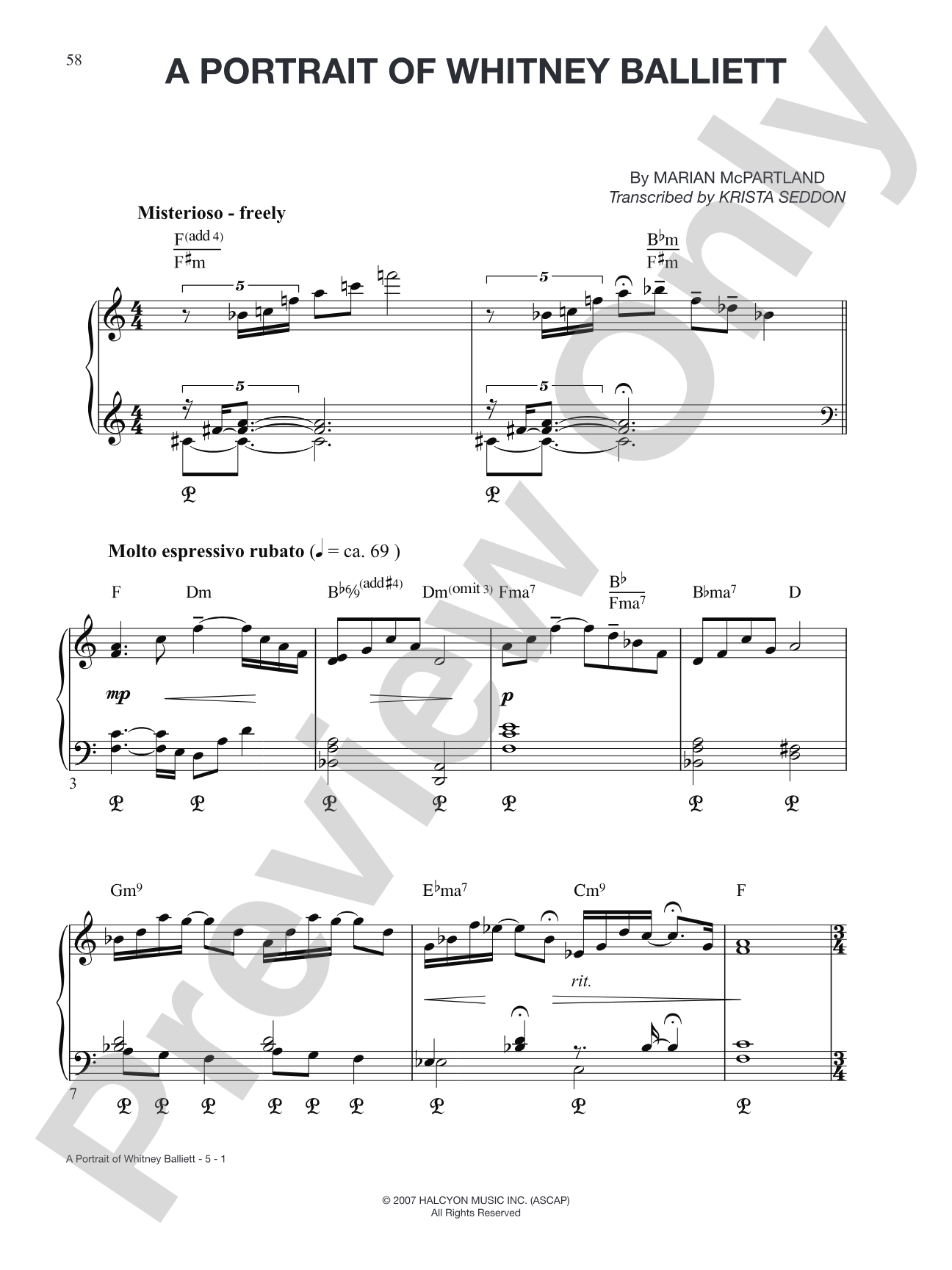

A Portrait of Whitney Balliett: Piano
Marian McPartland
Level: Advanced
Item: 00-PS-0013082
$4.99
Pickup currently not available
Related Items
A Portrait of Clint Eastwood: Piano |
$4.99
|
View | |
A Portrait of Burt Bacharach: Piano |
$5.99
|
View | |
A Song for Earma: Piano |
$5.99
|
View | |
A Portrait of Bix: Piano |
$5.99
|
View | |
A Portrait of Billy Taylor: Piano |
$4.99
|
View | |
A Portrait of Ron Carter: Piano |
$5.99
|
View | |
A Portrait of Keith Jarrett: Piano |
$5.99
|
View | |
A Portrait of Eldar: Piano |
$5.99
|
View | |
Marian McPartland Portraits: The Second Set: Piano Book |
$17.99
|
View |
Description
This book is the sequel to Marian McPartland's previously published collection of musical impressions of personalities interviewed on the National Public Radio program Marian McPartland's Piano Jazz. In this second edition, McPartland's compositions celebrate the personalities and musicality of actor Clint Eastwood, writer Whitney Balliett, composer Burt Bacharach, jazz musicians Ron Carter, Keith Jarrett, and Dr. Billy Taylor, and her own musical reflection of Bix Beiderbecke.


A Portrait of Whitney Balliett: Piano isn't in MakeMusic Cloud just yet...but it could be. Let us know you'd like to see it, and you'll help shape what comes next. In the meantime, start a free trial and dive into thousands of interactive titles your students can play along with today.
Request This Title
Tell us you want it.
Start Your Free Trial
Explore everything that's ready to play right now.
Sample Audio
No sample audio found.
Sample Video
No sample videos found.
Additional Details
Publisher:
Alfred Music
Page Count:
64
SKU:
00-PS-0013082
More about this title
About the Composer: Marian McPartland
Marian McPartland (1918-2013) was a pioneering jazz pianist and composer who shaped American jazz education through her artistry and generosity as a mentor. She founded and hosted Marian McPartland's Piano Jazz on NPR, a program that ran for over three decades and featured conversations with jazz luminaries, classical musicians, and artists from across genres. Her ability to listen deeply and respond musically to the personalities she encountered became the foundation for her compositional voice.
Why we love this
McPartland's approach to portraiture through music demands advanced pianists engage with character and nuance rather than technical display alone. Each piece functions as a musical conversation, rewarding the performer who listens to the harmonic language and responds with interpretive maturity. This collection offers advanced students a sophisticated model for how jazz composition can honor individual personalities while maintaining genuine artistic substance.
What to expect
These pieces breathe with the warmth of genuine conversation. McPartland's harmonies and melodic shapes capture moments of recognition, humor, and reflection, creating an intimate sound world that invites both performer and listener into the minds of remarkable individuals. The music is lyrical yet complex, approachable yet intellectually demanding.
Who it's for
This collection addresses advanced pianists seeking sophisticated jazz repertoire that integrates composition, improvisation, and interpretive depth. Suitable for late-stage jazz piano students, classically trained pianists exploring jazz, or professionals preparing repertoire that demonstrates maturity beyond technical facility.
How to get the most out of it
- Listen closely to the harmonic movement in each piece; McPartland's chord progressions often reveal the emotional core of her subject. Avoid rushing through changes; let them breathe.
- Balance the composer's jazz vocabulary with classical training. These pieces require both the swing sensibility of a jazz player and the voice-leading awareness of a trained musician.
- Study recordings of McPartland's own interpretations if available. Her timing, use of space, and approach to dynamics inform how these pieces are meant to be experienced.
- Treat rubato and tempo flexibility as essential tools. McPartland composed for NPR broadcast conversations, and the pieces reflect conversational pacing rather than metronomic precision.
How to use it
Program individual pieces from this collection in recitals celebrating American composers, jazz history, or women in music. The portraits also work beautifully in a thematic concert pairing the pieces with excerpts from interviews or biographical information about each subject, creating a multimedia performance experience that honors McPartland's original vision from Piano Jazz.
Skills your students will build
- Jazz harmonic analysis and reharmonization
- Improvisation within a portrait-specific emotional framework
- Rubato and interpretive flexibility in a jazz context
- Integration of classical voice-leading with jazz idiom
- Listening for and responding to character through musical choices